
The brief history and highlights of the Fabricatable Machines project
- High degree of diy in a self made machine can give a stronger sense of self reliance
- Using cheap repairable machines makes for more play and different exploration/learning
- Sport
- Spending more hours and less money in sourcing a machine can help more businesses get started
- Lowering the threshold for customization helps more people create new types of machines
- Inspire people to understand more of the tools they use and rely on in their profession or hobby. Encourage hacking of existing machines.
- Greater good / contribute to the pool you drink from
- Social - better to build and share with with peers than on to work on your own
- Marketing of your skills and work
- 6 contributors of machine designs and subsystems
- 7 contributors of documentation
- 23+ unique machines developed and built at least once
- 8+ known individuals and 4+ groups who have reproduced fabricatable machine designs
- 37+ machines built in total from 2015-2025
- 5 international confrences where our reserch work has been presented (FAB12, FAB13, FAB14, TEI2020, Software and Systems Modeling 2022)
- Machines are in use, or have been used, in Fab Labs, business, artists workshops, hobby workshops, schools and academic institutions
- Development of Fabricatable Axis number 6 started by Jens Dyvik: https://github.com/Fabricatable-Machines/Fabricatable-Axis-6
- Fabricatable Machines meetup hosted by Jens Dyvik in January: https://github.com/Fabricatable-Machines/2026-meetup
Highlights:
- Hanzo is rented out the artist Javier Barrios and converted to a classic CNC router conversion
Lessons learned
- Machine conversion can be almost as much work as designing a machine from scratch
Highlights:
- Frikk Fossdal succesfully defends his PhD thesis "Fabricatable Systems: Tools for computational design and digital fabrication"
- Jake Reads hotplate toolchanging design from Clank is added to Hanzo and knife 4th axis developed
- Additive wood experiement
 Clank toolchange system by Jake Read added to Hanzo)
Lessons learned
- Having large work areas in X, Y, and Z is challenging but opens lots of opportunities for experiments
Highlights:
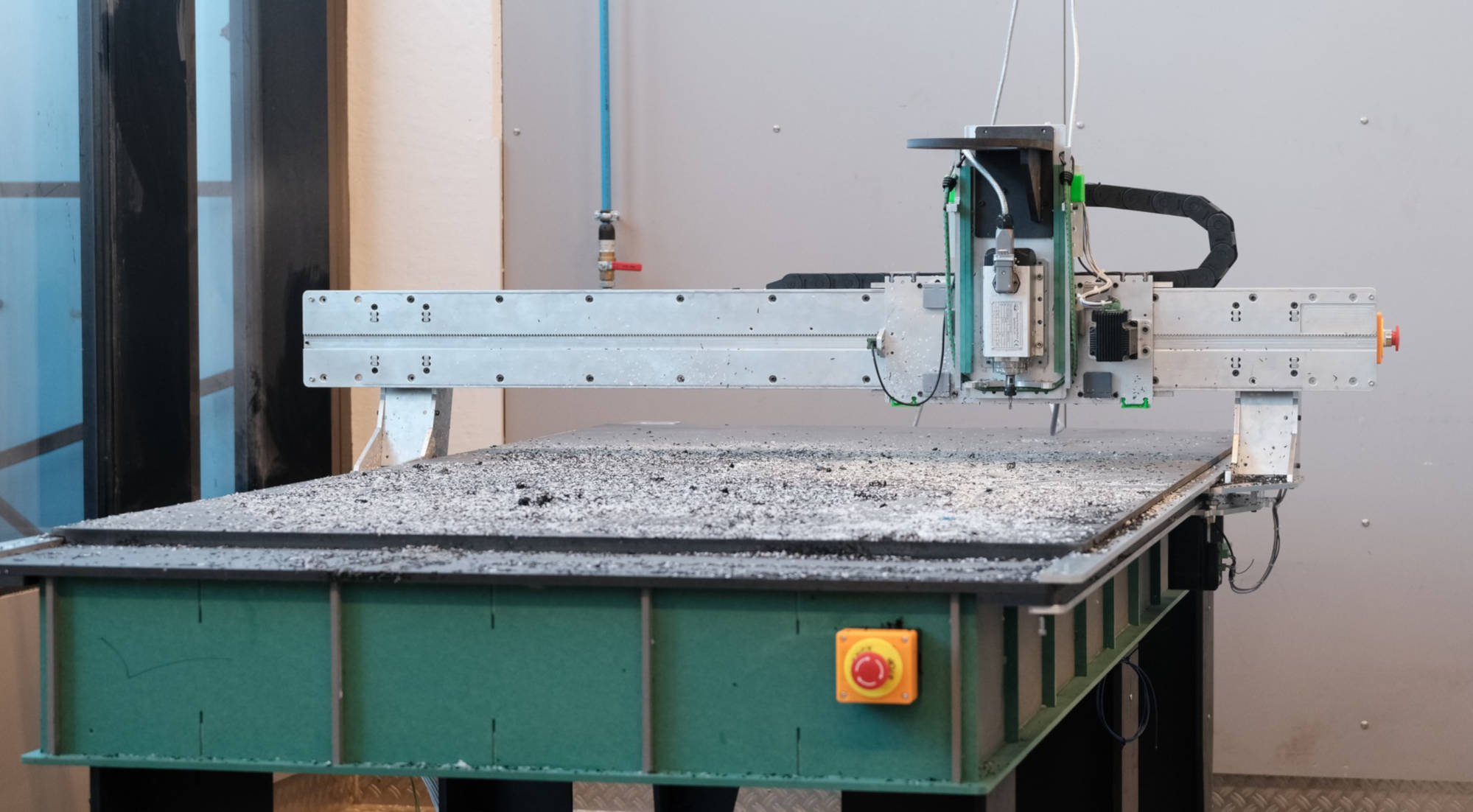
- Hanzo becomes a commercial workhorse in Jens Dyvik's design studio and does its job as a research platform
- Two Huphrey 1.5s are upgraded with linear rails at Kuben vocational high school

Lessons learned
- Traveling tower gantry design works surprisingly well
- Non back drivable z axis drive (like lead screws) would have been a better design choice on Hanzo
- Rack teeth orientation is important in formica compact (fibers are in the X, Y plane)
Highlights:
- Second research paper published at Software and Systems Modeling 2022
- Jens Dyvik creates Hanzo research platform
- Jens Dyvik delivers two Humphrey2's to the Haiti Fab Lab project
- First successful self replication of a machine. One Humphrey2 makes about 80% of the parts for another Humphrey2
- Third generation achines stills holds good performance: Hanzo made a Humphrey2, this Humphrey2 made another Humphrey2
 **
 **
Lessons learned
- Reducing level of DIY by buying linear rails and gearboxes makes performance skyrocket
- The CNC friendly rack and pinion design handles self replication quite well
- Designing for plate based construction with HPL is a lot of work compared to design for aluminum extrusions or rectangular steel tubes
Highlights:
- H-Axis developed by Jens Dyvik
- Construction from HPL plates explored
- The Fabricatable machines project is moved away from the origination page of Fellesverkstedet and is given its own github organization (the R&D department at Fellesverkstedet did not gain sufficient momentum and Jens Dyvik stepped out of Fellesverkstedet to do independent design and research work)

Lessons learned
- HPL (for instance Trespa or Formica Compact) makes an interesting material for smaller machines and M3 screws
Highlights:
- First research paper published at TEI2020
- Frikk Fossdal develops
Lessons learned
- Machines designed for being CNC milled from POM makes it easy to include flexures in design and has ok performance
Highlights:
- First known fabricatable machines replicated in the wild. (Files downloaded from the internet by a thrid party and fabricated without support from the Fabricatable machines team)
- First almost all wood machine with decent performance developed by Jens Dyvik, Wood Humphrey
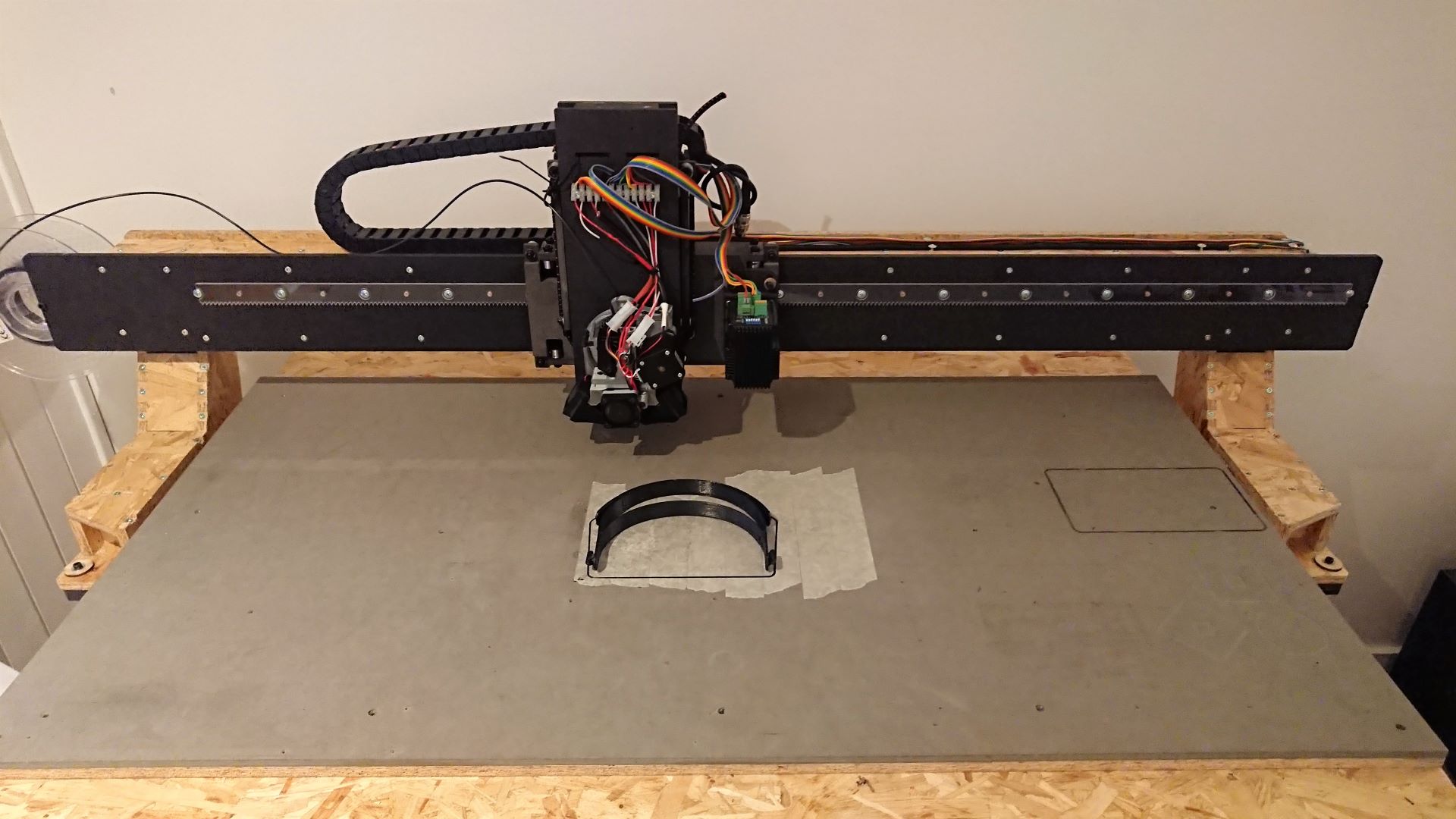
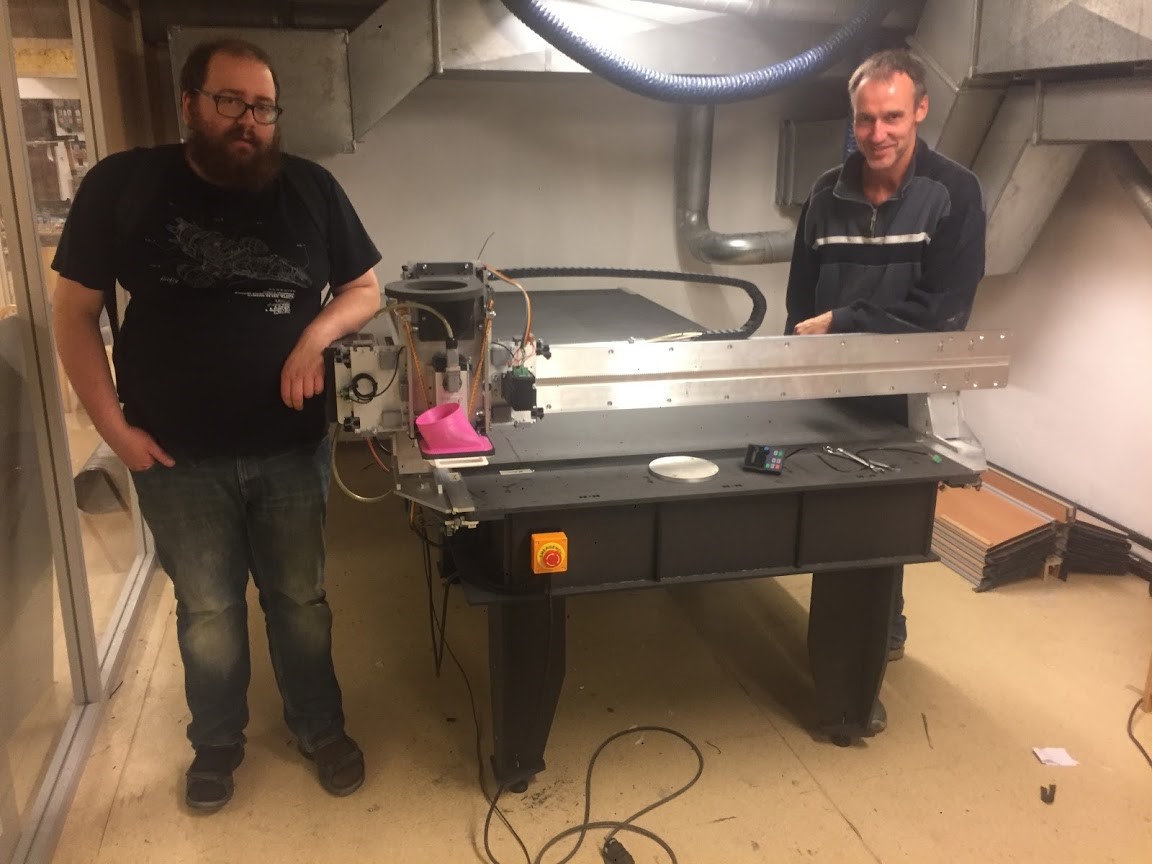
- Nikolai Kolstad, Torbjørn Nordvik Helgesen and high schools students from Kuben makes the fourth Humphrey 1.5
Lessons learned
- Polycarbonte rack works quite well
- Valchomat HDF rails makes ok axes for amateur projects
Highlights:
- Frikk Fossdal makes Hulti research platform, based on the chamfer rail axis generator
- Jakob Nilsson upgrades Humphrey 1.5 to roller bearing design instead of glide blocks, significantly improving performance
- Jakob Nilsson deliver three more Humphrey 1.5s to commercial customers, including Dala Makers makerspace
- Torbjørn Nordvik Helgesen redesigns Hattori from the ground up
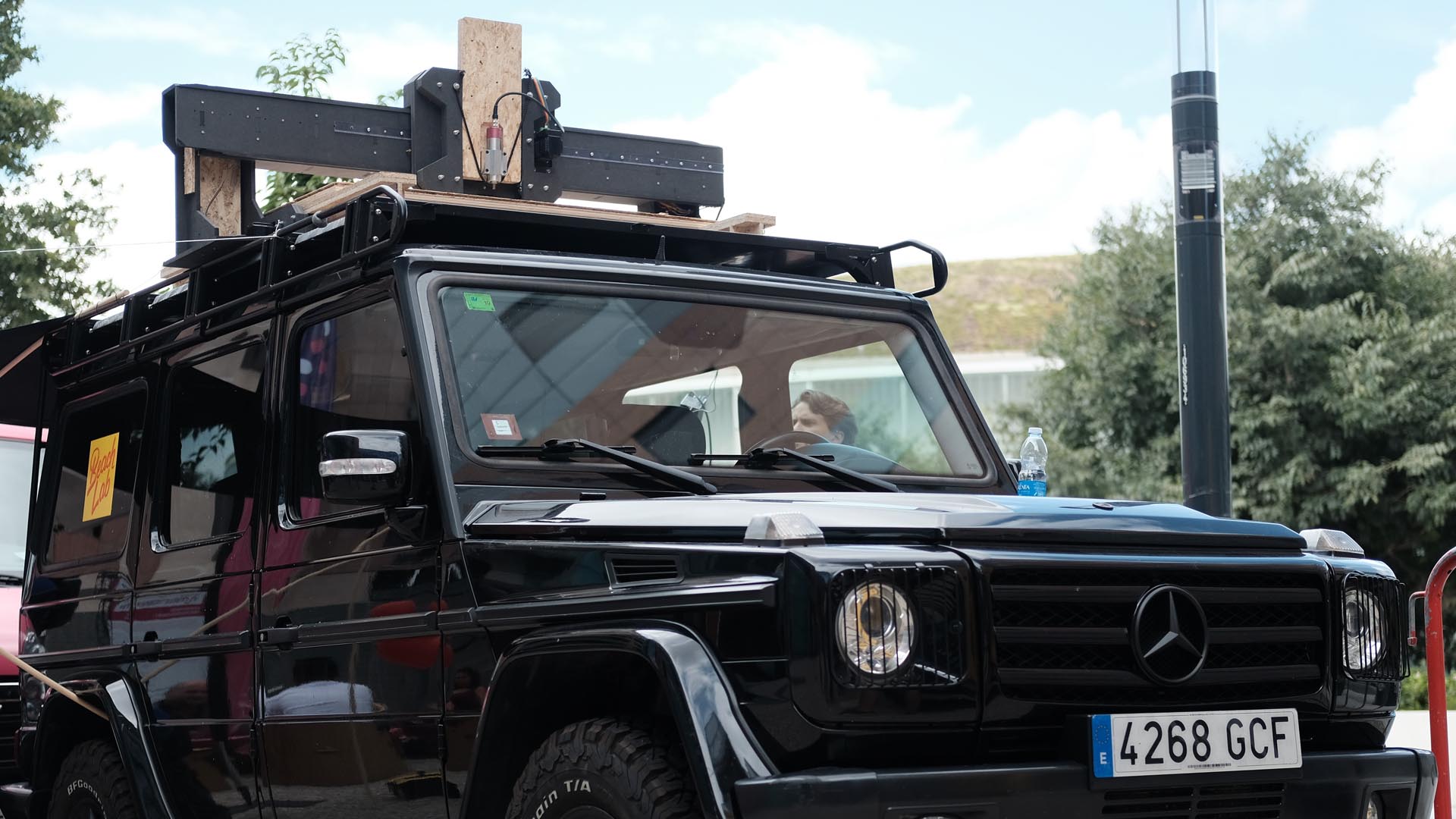
- Hobo is demoed at the Fab14 Conference in Toulouse, France, and test rigged to the roof of a car. Design concept by Jens Dyvik, design and manufacturing by Torbjørn Nordvik Helgesen
- Hector by Jakbob Nilsson is demoed at the Fab14 Conference in Toulouse, France
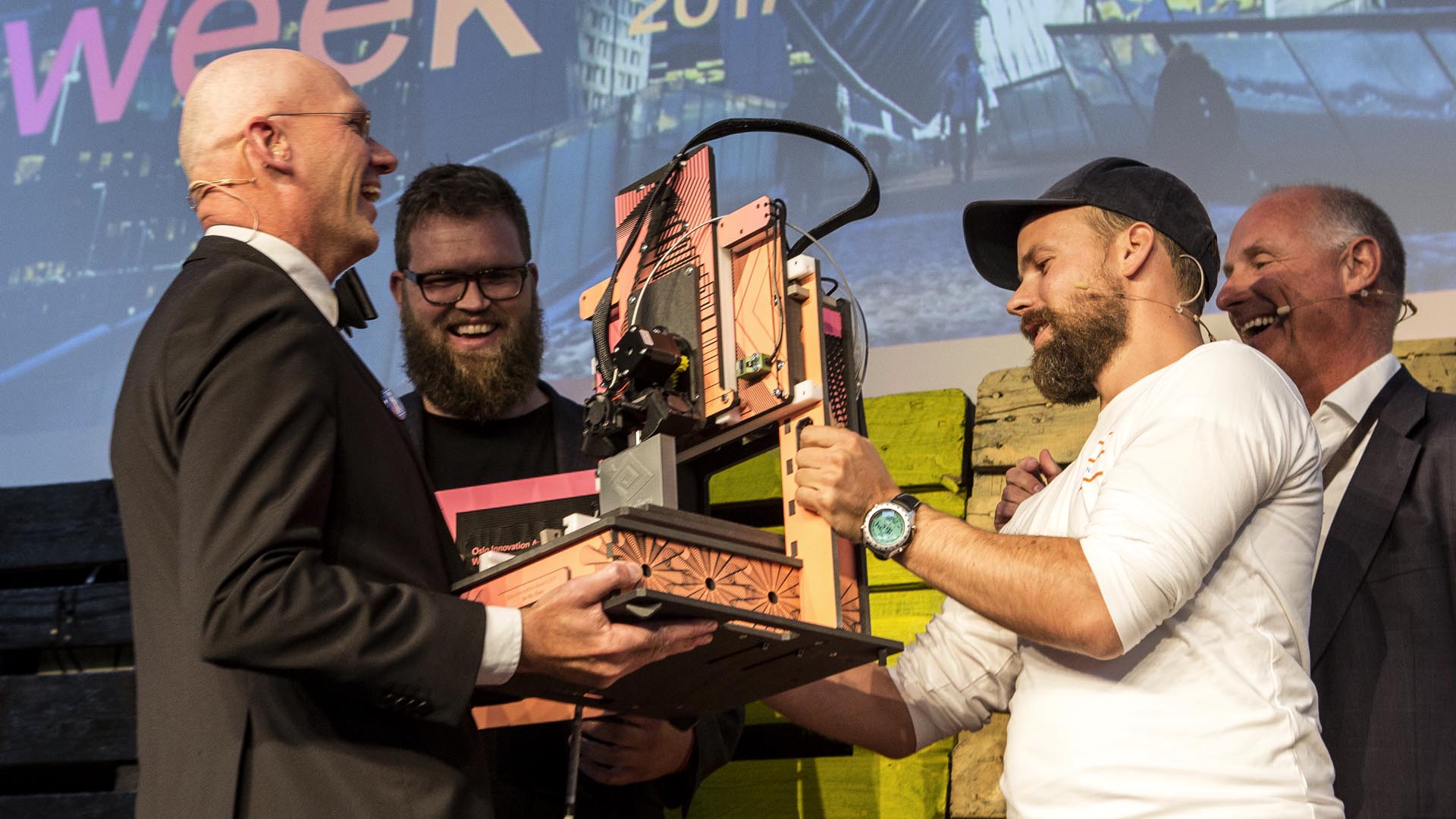
- Hedy is developed as a trophy for Oslo Innovation Award. Design concept by Jens Dyvik, design and manufacturing by Jakbob Nilsson.


Lessons learned
- Parametric axis generators have a lot of potential
- Adding parallel slots to glide blocks (reducing contact surface area) helps improve performance in chamfer rail axis
- Inline rollerskate wheels rolling in v groves makes a squishy and terrible machine axis
Highlights:
- Jakob Nilsson, Torbjørn Nordvik Helgesen, and Frikk Fossdal joined the Fabricatable Machines project
- Fab Academy student Jakbob Nilsson makes Hector, open frame CNC milling machine
- Chamfer rail parametric axis used by global Fab Academy students in machine design week, and How to Make Almost anything students at MIT
- Humphrito - medium format CNC second commercial machine delivered to a customer. Design concept by Jens Dyvik, design and manufacturing by Jakbob Nilsson
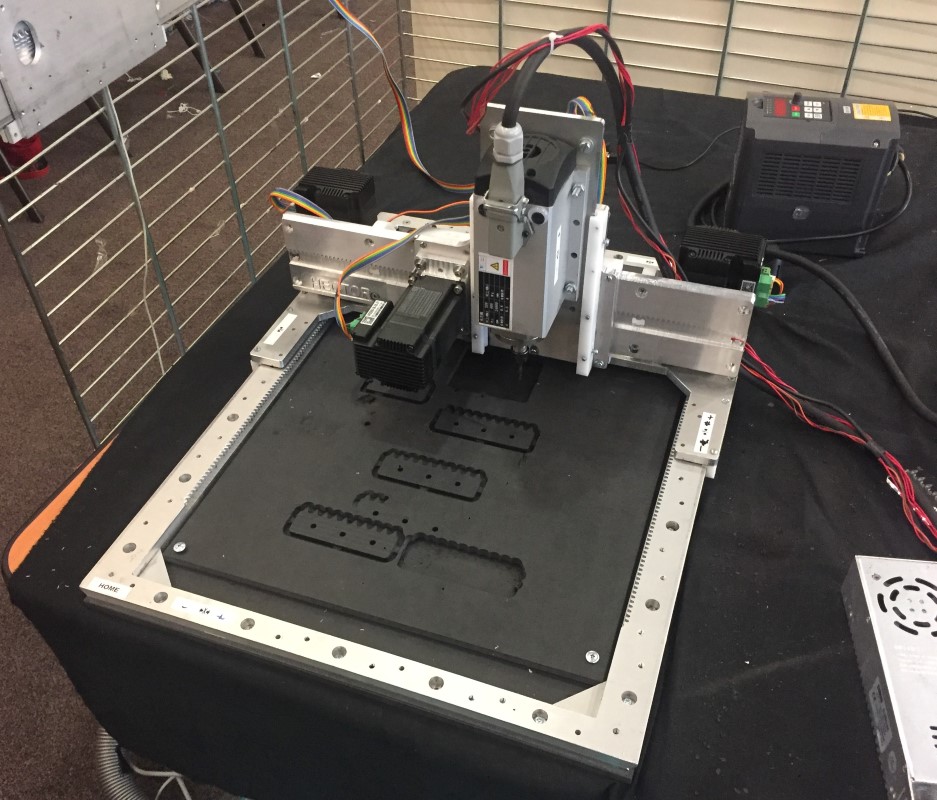
- Hattori small format CNC demoed at Fab13 in Santiago, Chile
- First Humphrey Machine large format CNC milling machine designed by Jens Dyvik and Alex Schaub for Contact Makerspace Amsterdam
- Humphrey redesigned by Jakob Nilsson from the bottom up and delivered to third commercial customer.
- Hattori 3D printer edition made for Oslo Innovation award by Jens Dyvik, Jakb Nilsson and Erling Knutsen.
- Naming convention started, all Fabricatable Machine names start with the letter "H"



Lessons learned
- Making machines from aluminum increases performance, but most potential machine fabbers find milling aluminum scary (lowering the chance of reproduction of a design)
- Open designs based on CNC milling has a much lower chance of reproduction that designs based on FDM 3D printing or laser cutting
- DIY Glide blocks from low friction plastic on self milled axes works terrible on large heavy machines
- Aluminum oxide build up on glide blocks and POM pinion teeth makes accelerates wear of plastic parts (machined aluminum makes for good structural parts, but not suitable rail and self milled racks)
- High quality closed loop motors can help compensate for low quality machine design
Highlights:
- First complete machine made: V-bird
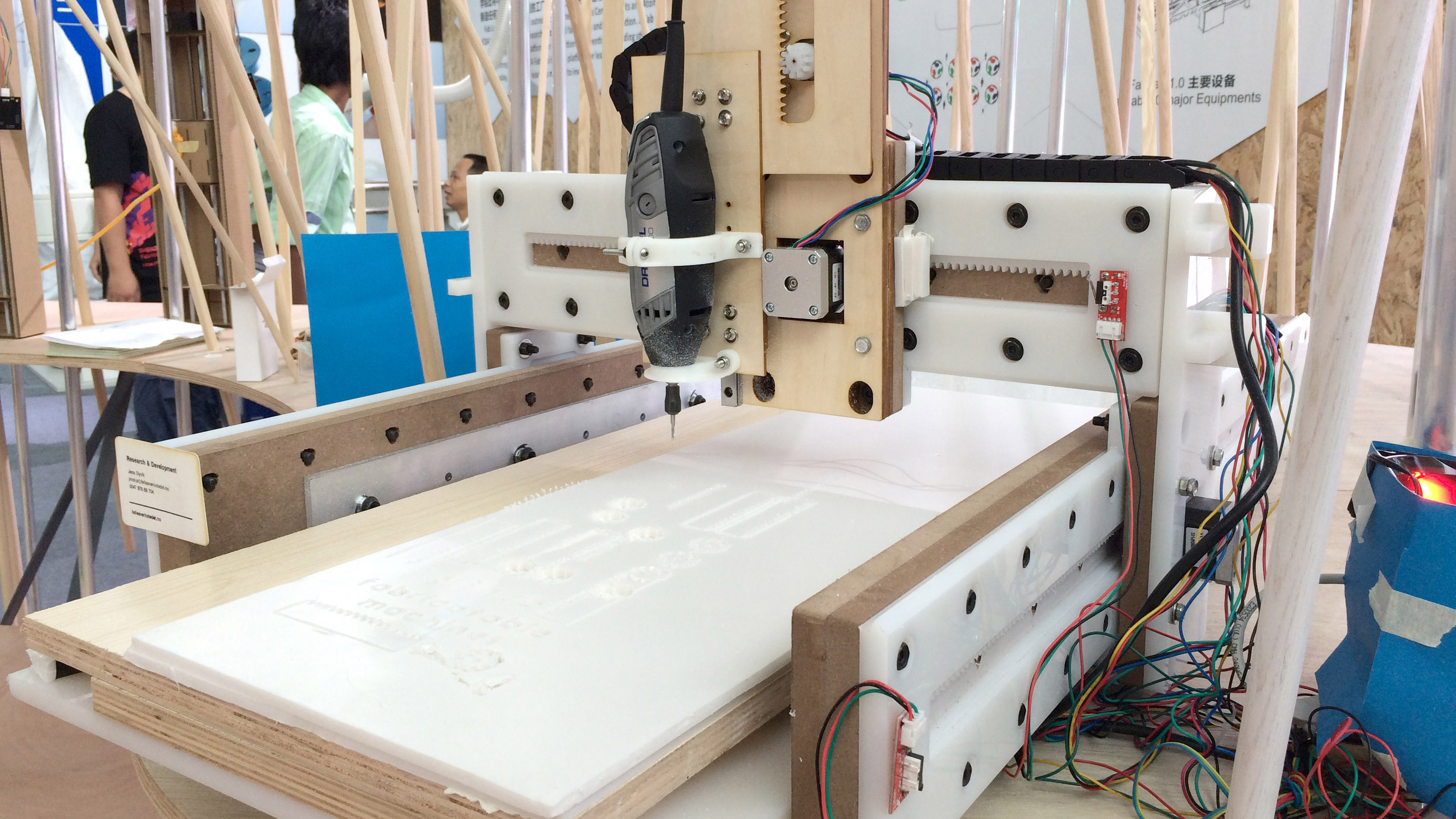
- First test of a fully parametric machine where the output is not geometry but .gcode files so that the machine parts can be directly manufactured (no need to export cad files, import into CAM, make CAM, export gcode)
- Parametric axis generator demoed at Fab12 Conference in Shenzen, China
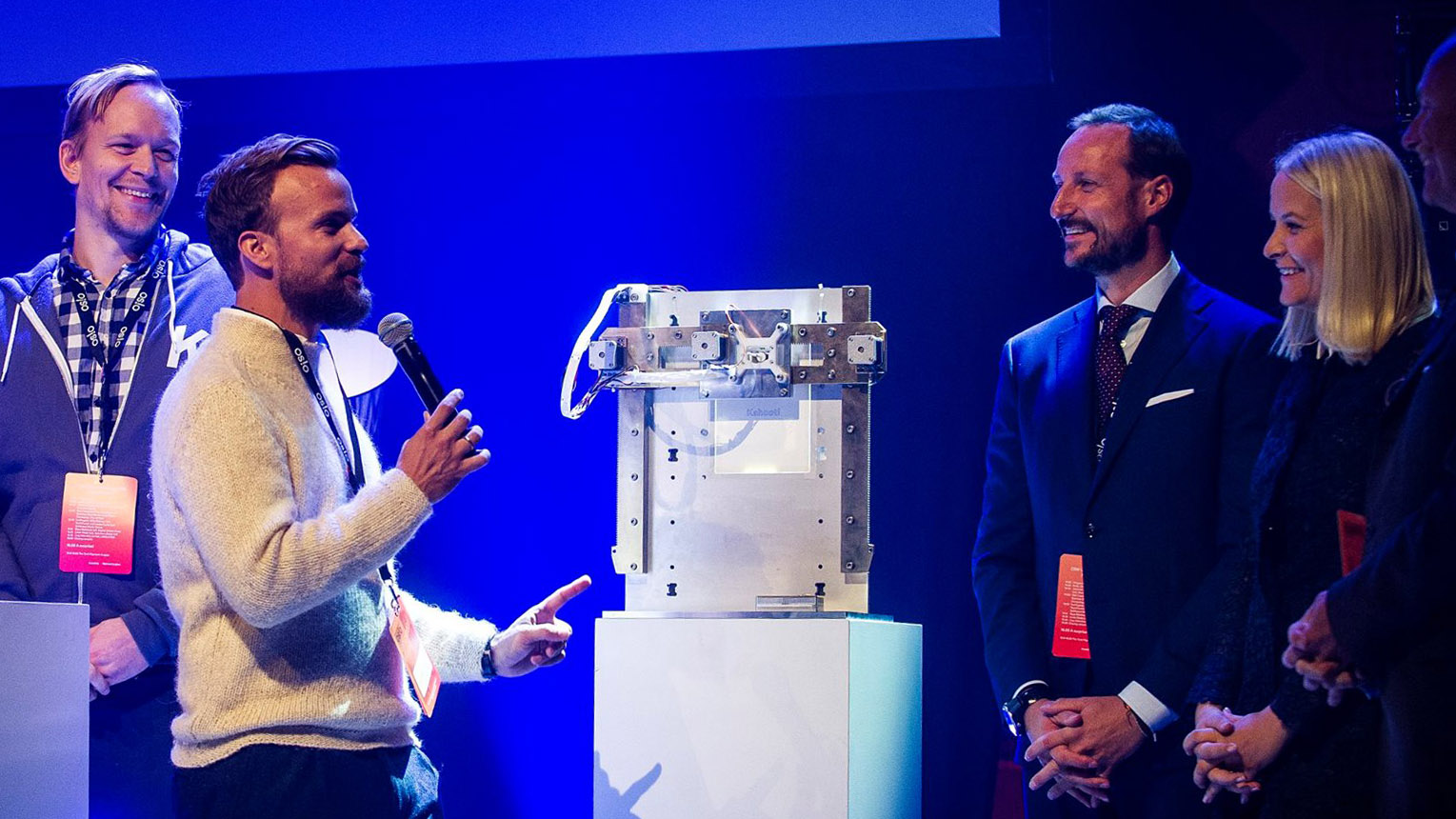
- Award plotter trophy for oslo Innovation Award delivered by Jens Dyvik, Jon Nordby and Fellesverkstedet employees
- First version of CNC friendly rack and pinon developed by Jens Dyvik
- The Fabricatable Machines project is moved to The Fellesverkstedet github organization to help build up momentum for a R&D department at Fab Lab Fellesverkstedet



Lessons learned
- Fully parametric machine models is a lot of work and cumbersome to edit, really cool
- Parametric axes generators have a lot of potential
- DIY glide blocks from low friction plastic can be an alternative to bearings and increase diy level (following this direction would later fool us into making underperforming and high maintenance machines like Humphrey, Hank and Hattori)
- The CNC friendly rack and pinion geometry makes for faster production of DIY drive systems than involute gears, has good performance and makes it easy to integrate rack geometry in other machines parts
Highlights:
- The Fabricatable Machines project was launched by Jens Dyvik and Jon Nordby
- First self made linear actuators


Lessons learned
- Keep part the count low. (Better to put complexity in shapes. Let the machines make complex machines parts, and the humans do less assembling)
Fun fact:
- Jens originally named the project "Tractor systems", because his goal was to make DIY robust enough that would not break down when used by amateurs in shared workshops. Jon and Jens came up with Fabricatable Machines and renamed the project and repository.