RainbowDAO Protocol:a multi-chain DAO infrastructure service protocol
Rainbowcity Foundation
0x140Db6C3947E1AC8645be81E86C619189cfd7621 (eth)
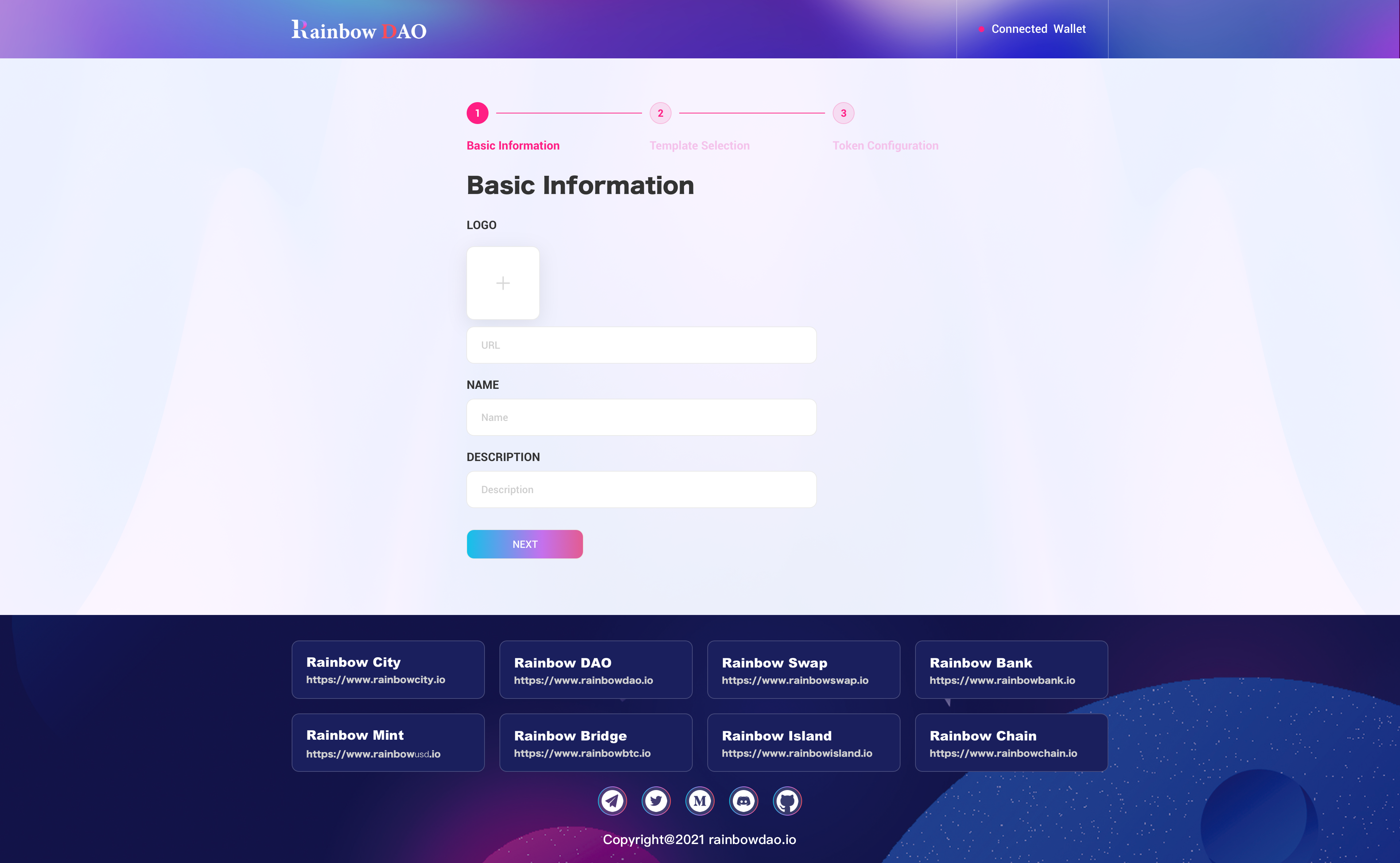
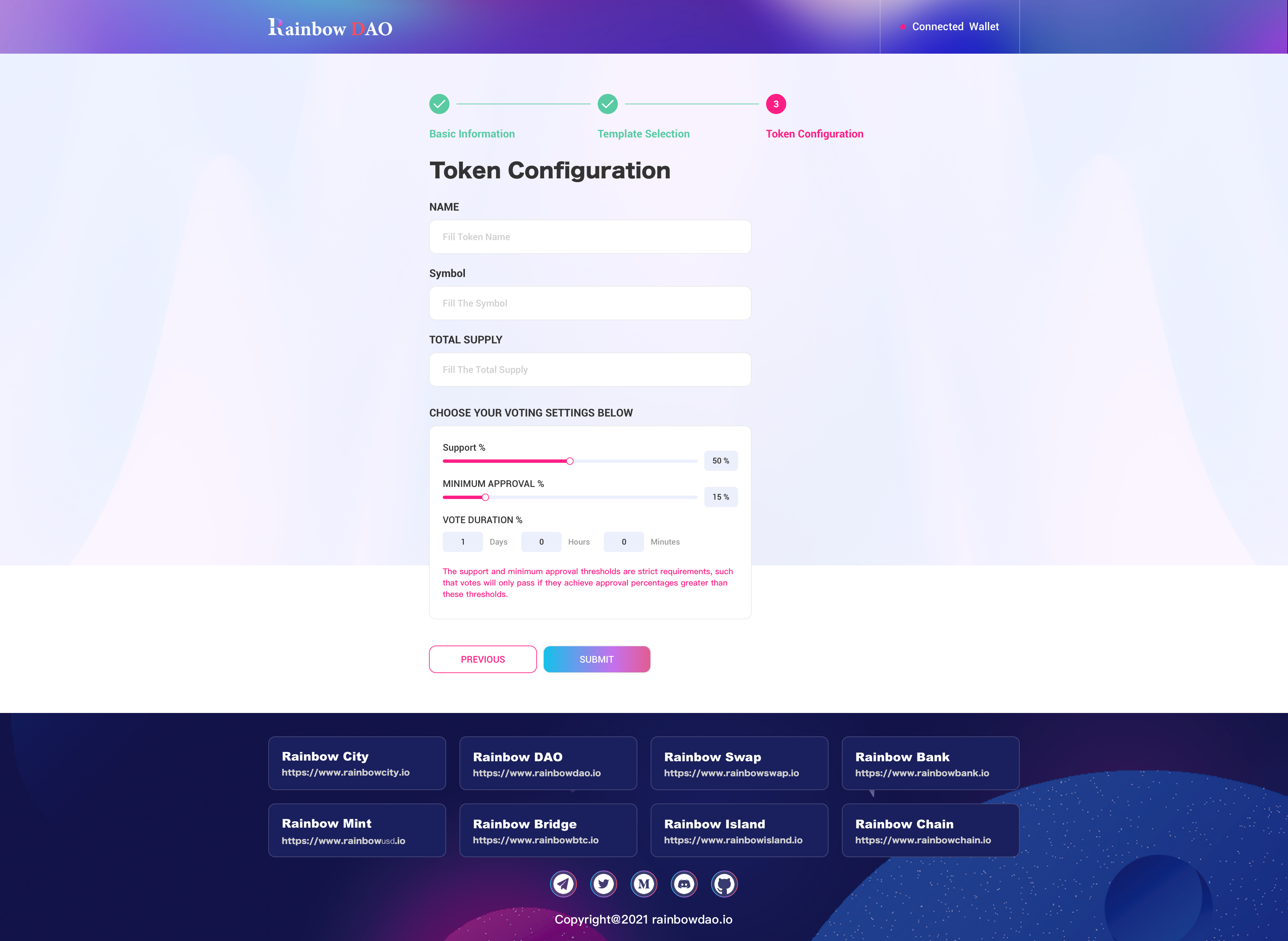
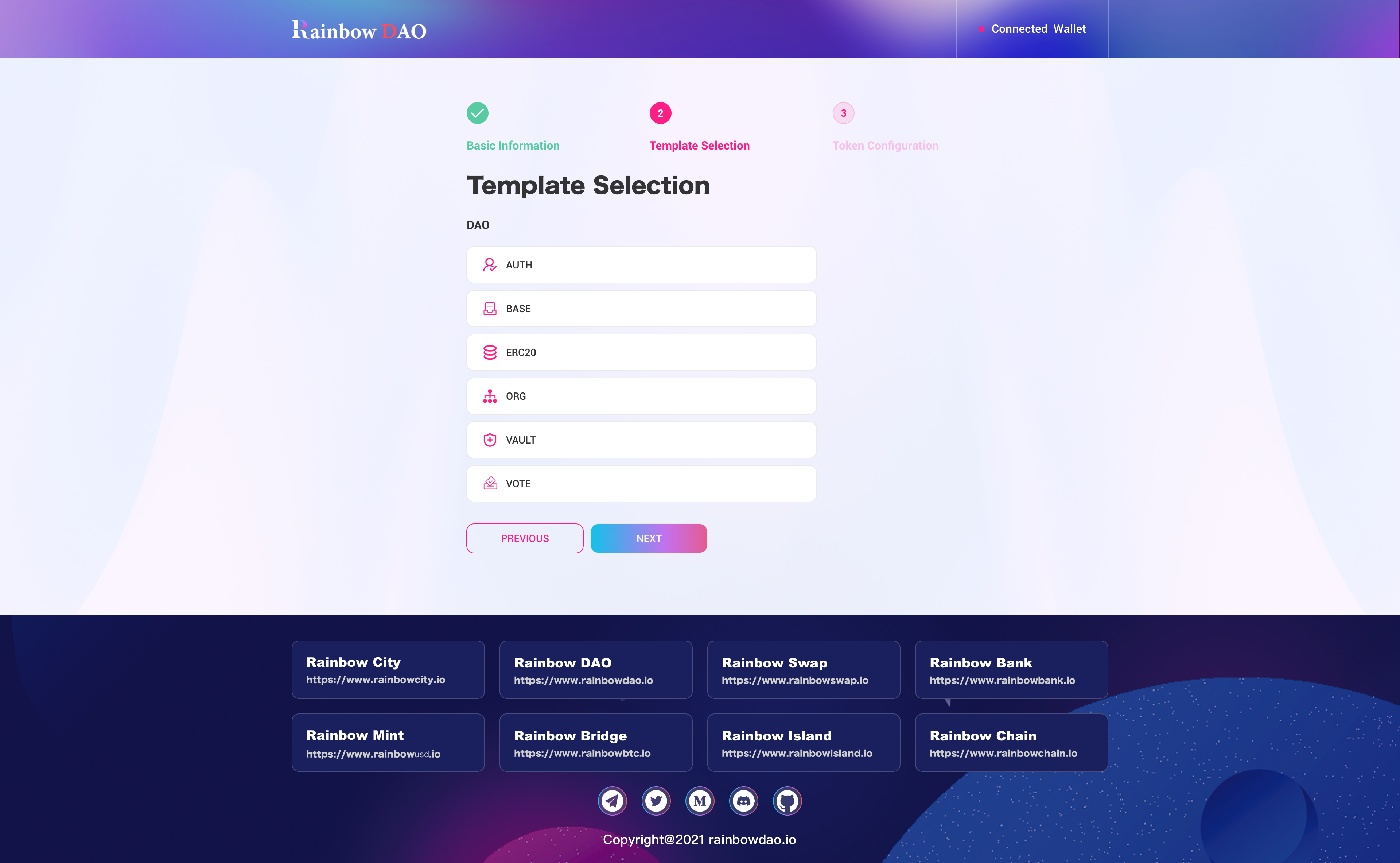
- Website: http://factory.rainbowdao.io/
- Hackathon: https://www.rainbowdao.io/Hackathon
- GitHub repository :https://github.com/RainbowDAO/04-Hackathon-DAO-factory
- Smart contracts (GitHub): https://github.com/RainbowDAO/04-Hackathon-DAO-factory/tree/main/contract
- Frontend code (GitHub):https://github.com/RainbowDAO/04-Hackathon-DAO-factory/tree/main/Front-end%20file
- PIcture (GitHub): https://github.com/RainbowDAO/04-Hackathon-DAO-factory/tree/main/pic
The overall protocol is too large and is currently under development and has not been fully developed.
- November 2021
- RainbowKun
- Email: rainbowcitydao@gmail.com
- Solution:
RainbowDAO Protocol is developed under the authorization of the Rainbowcity Foundation, focusing on the creation of web3 basic component. RainbowDAO Protocol belongs to a multi-chain infrastructure service protocol.
Anyone can create and manage their own DAO organization through RainbowDAO Protocol, including independent DAO,alliance DAO, parent DAO and child DAO. Any DAO can also create a management department within the DAO to achieve multi-level management of the organization.
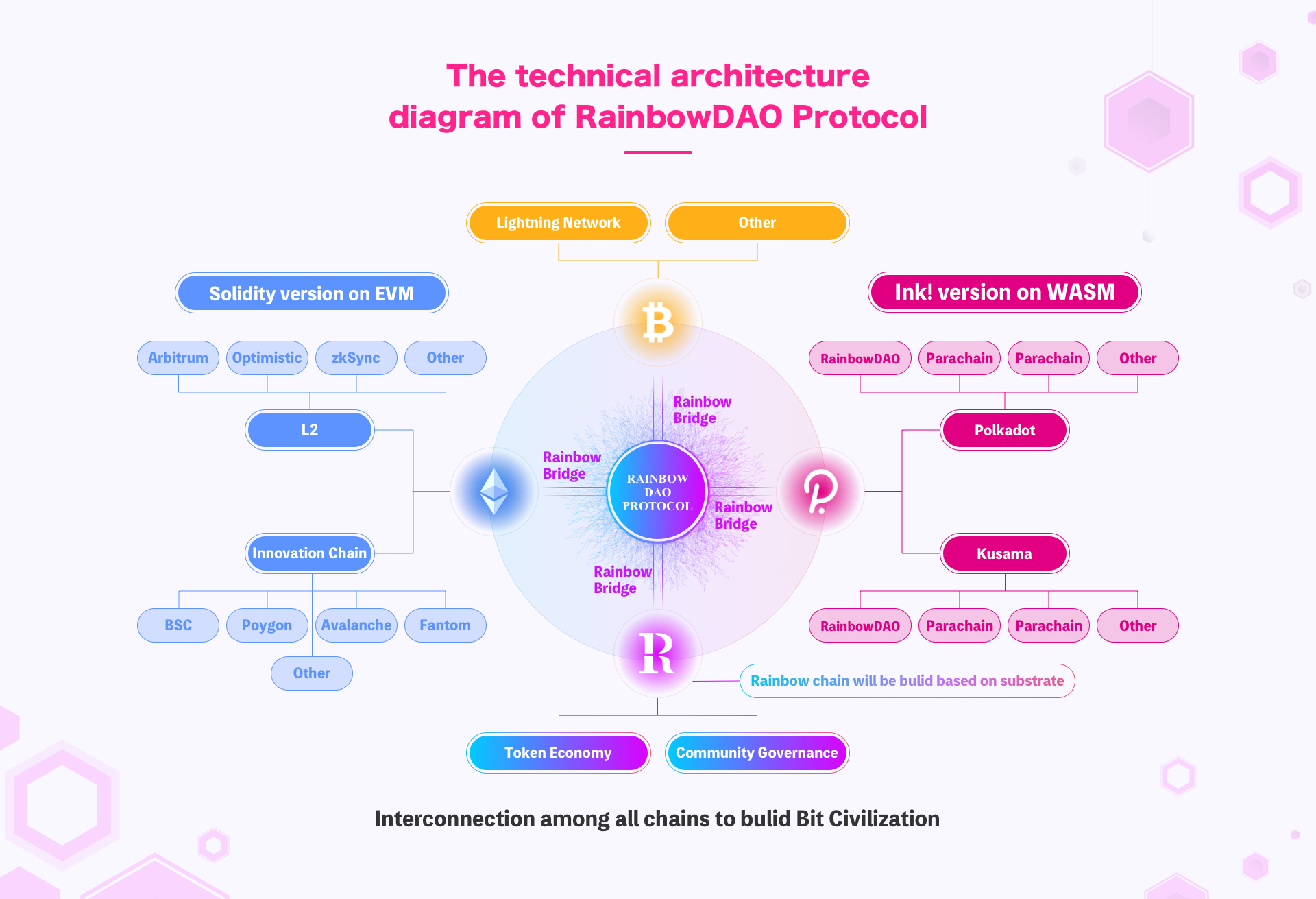
At the same time, the RainbowDAO protocol is a set of multi-chain protocols that can be deployed on multiple different blockchains. It is convenient for DAO organizations on different chains to deploy their own DAO organizations through the Rainbow DAO protocol. At the same time, we will build a cross-chain protocol rainbow bridge in the future. Link DAO organizations on different chains through the Rainbow Bridge protocol to truly realize the cross-chain management of DAO organizations.
There are two versions of RainbowDAO Protocol, Solidity version on EVM and Ink! version on WASM.
The Solidity version is mainly deployed on Ethereum, BSC, Poygon, Avalanche, Fantom, and various L2 networks; the Ink! version is mainly deployed on the parallel chains on the Polkadot and Kusama relay chains, as well as other blockchains developed with the substrate framework.
In the future, we will participate in the parachain auctions of the Polkadot network and the Kusama network to create a parachain with DAO infrastructure service as the core.
- Pain:
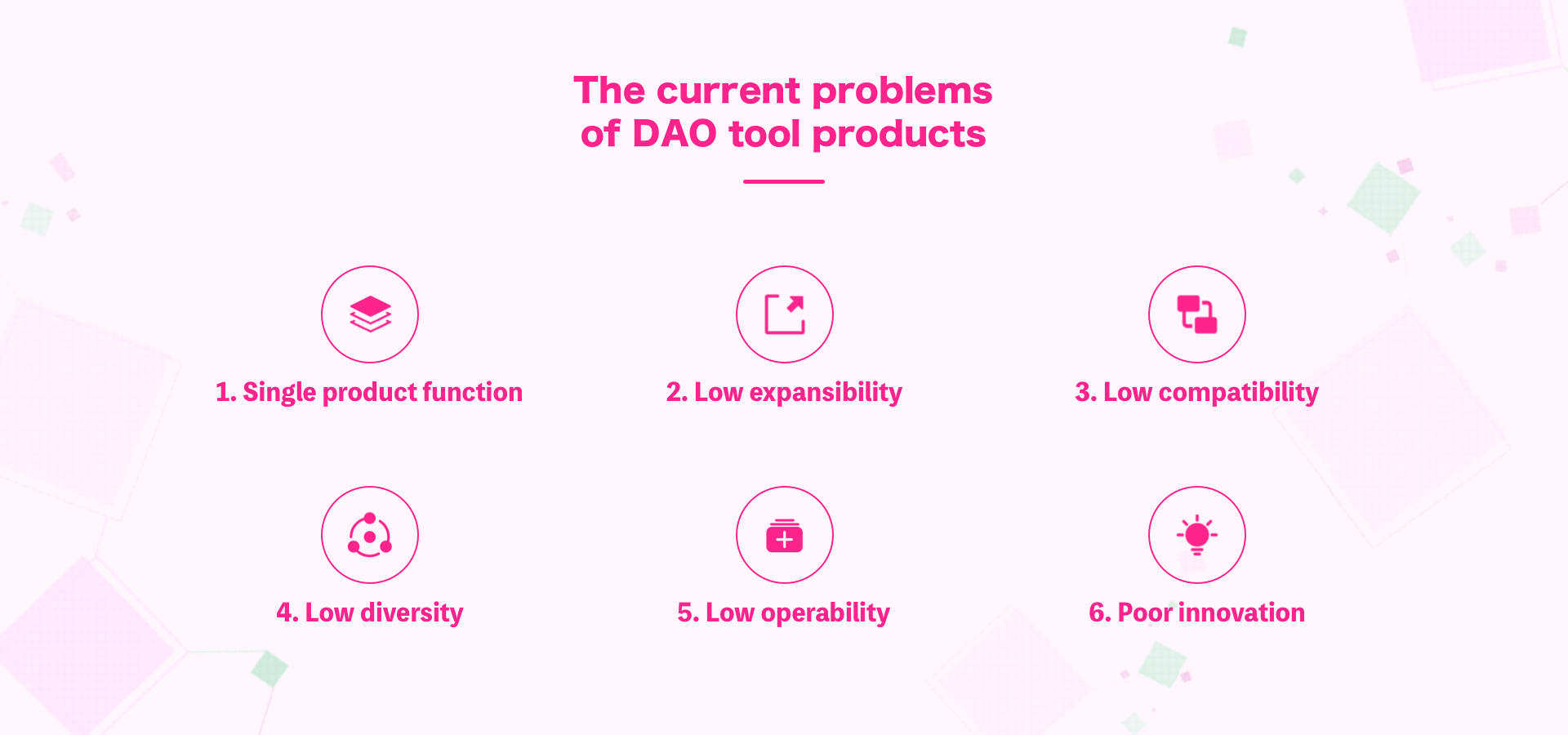
⑴ Single product function
At present, many DAO tool products generally have the characteristics of single function, and they are far from being able to achieve some complex collaborative work. We hope to achieve some relatively complex collaborative work through the establishment of a series of DAO tools.
⑵. Low expansibility
At present, many DAO tool products generally have the characteristics of low expansibility, and cannot achieve function iteration and upgrade, which directly restricts the development of DAO organizations.
⑶.Low compatibility
At present, many DAO tool products generally have the characteristics of low compatibility. There is no unified api interface or unified development document between each other, which can not be effectively compatible, and even more can not realize the role of collaborative governance.
⑷.Low diversity
At present, many DAO tool products generally have the characteristics of low diversity. Most products can only meet some general functions, and cannot meet the diversified and differentiated needs of the DAO organization.
⑸.Low operability
At present, many DAO tool products generally have the characteristics of low operability. Especially for some novice users, the user experience is generally poor, and it is even more difficult to use these DAO tools.
⑹.Poor innovation
At present, many DAO tool products generally have the characteristics of poor innovation. Most of them are learning from each other, the functional models are similar, and they have not essentially solved some of the pain points that are common in the DAO industry.
- Target audience:
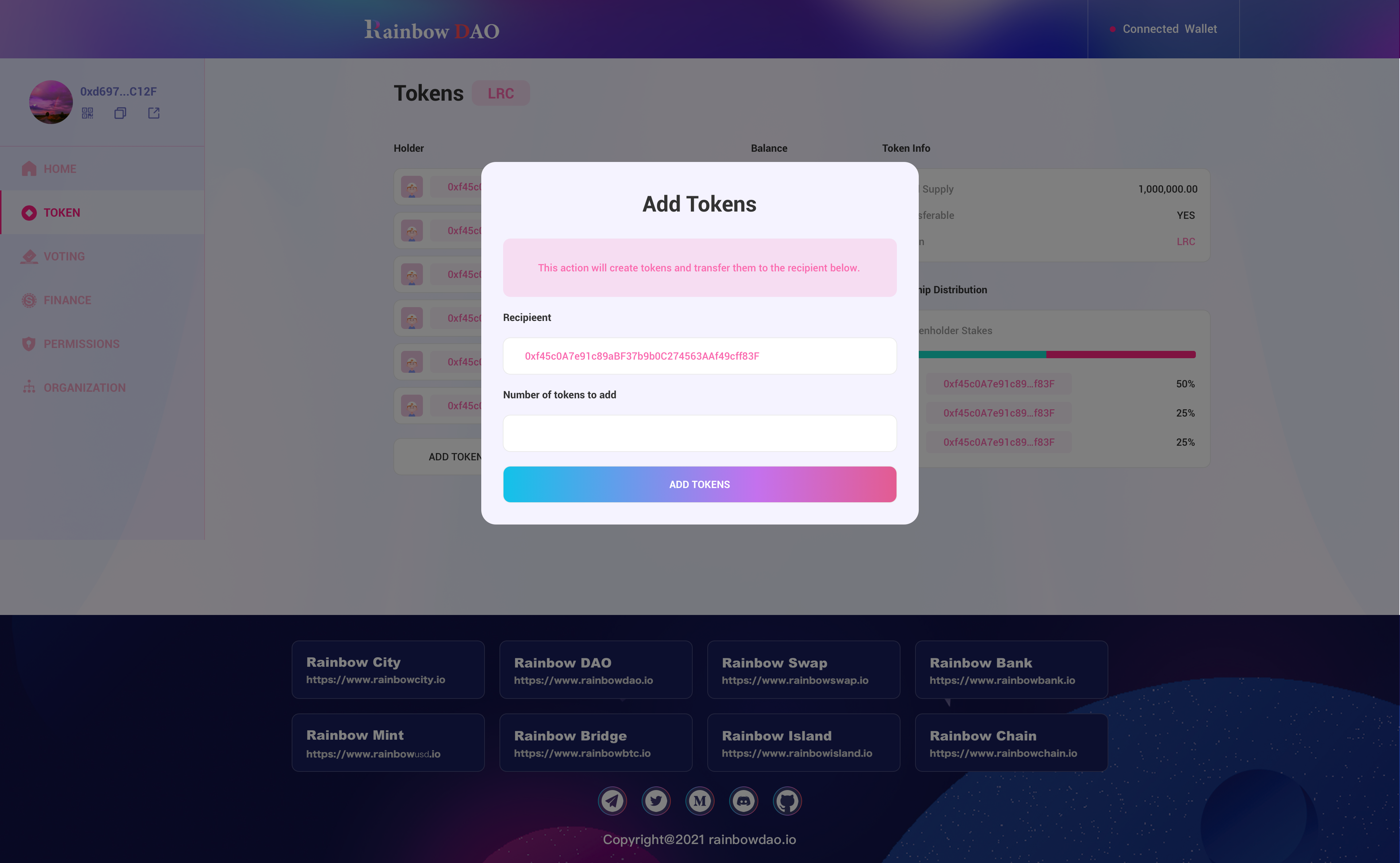
The target audience of the Rainbow DAO Protocol is mainly various types of DAO organizations. Meet their needs for DAO organization and management. Realize the multi-level management of DAO through DAO factory.
This product is suitable for all types of DAO organizations, whether it is a large DAO organization or a small DAO organization. Everyone can apply it to the actual DAO management. Its function is very practical for DAO organization.
- Smart contracts docs: https://github.com/RainbowDAO/04-Hackathon-DAO-factory/blob/main/contract/README.md
Kovan Test Network
Contract Address
DAOMain: 0x90A56aB14f2C9324671385D8B177a1bEb93904a3
- Frontend docs: https://github.com/RainbowDAO/04-Hackathon-DAO-factory/blob/main/Front-end%20file/README.md
Twitter: https://twitter.com/RainbowcityDAO
Discord https://discord.gg/vbnvFEeYRr
Telegram: https://t.me/RainbowDAO
Medium: https://medium.com/rainbowcity
Github: https://github.com/RainbowDAO
Email: Rainbowcitydao@gmail.com
RainbowDAO website :http://www.rainbowdao.io
Rainbowcity website :https://www.rainbowcity.io
DAO is more than a set of smart contracts. In essence, it is a social organization, a physical network composed of individuals with a common purpose. The code of the same smart contract, used by different groups, may demonstrate huge differences. That sparks differences among DAOs. We did some research and collected the information about DAO in the encrypted world and initially divide DAO into eight major types:
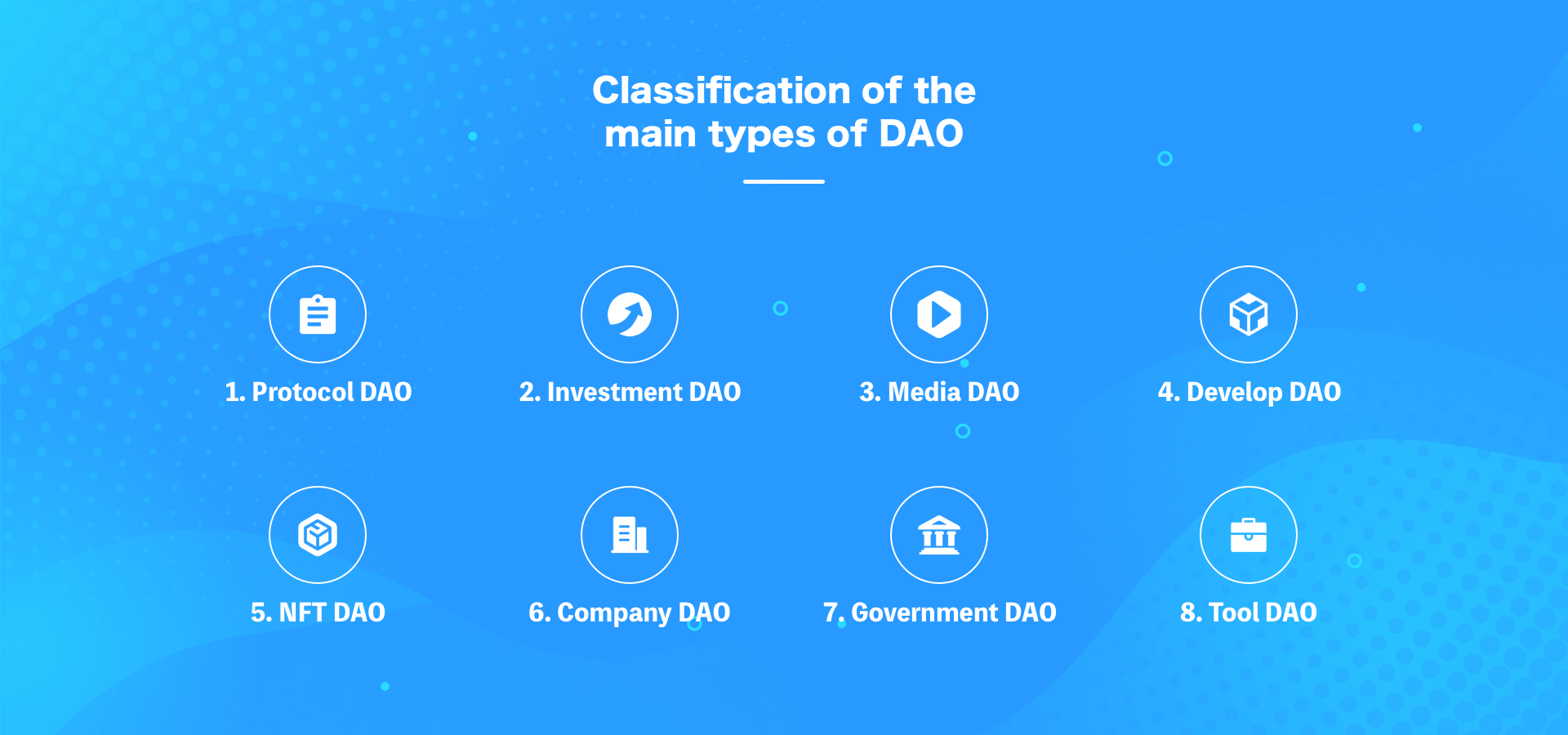
The DAO organization established by various DeFi protocols, the holders of governance tokens make decisions through voting and are responsible for the decentralized upgrade of the protocol.
The DAO organization established by various crypto investors, realizes the investment decision-making and benefit distribution of crypto projects through investment DAOs, making investment behaviors more transparent, fair and equal.
The DAO organization established by various media practitioners, reconstructs the distribution method of media benefits, and allows information creators and consumers to share the value created by media.
The DAO organization established by blockchain developers, is committed to the development of various open source protocols and donates to developers to prosper the entire crypto world.
DAO organization established by NFT holders. Linking specific artists, NFT platforms, NFT works and NFT consumers, etc., to create longer-term value for NFT works.
The DAO organization established by various companies, through the DAO to govern the main body of the company, and gradually improve the transparency of corporate governance.
DAO organizations established by various government organizations, including various international organizations, non-profit organizations,, charitable organizations, etc., make governance more transparent, clean, and accept citizen supervision.
DAO, which provides infrastructure services for various DAO organizations, provides DAO operating system and various web3 tool plug-ins, improves the governance level and governance efficiency of various DAO organizations, and makes governance more diversified.
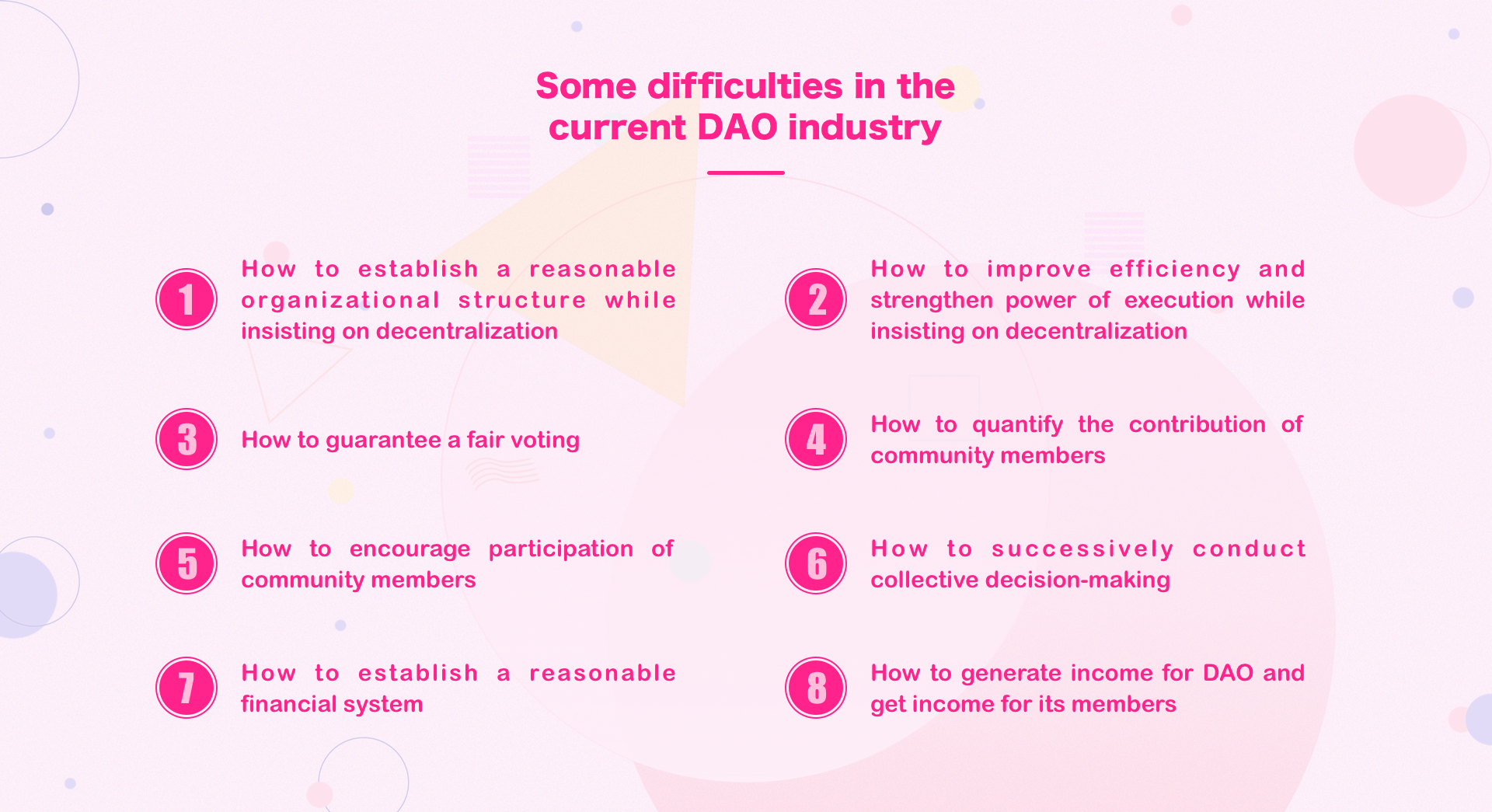
We found that although DAO represents the future and will develop into the basic organizational unit of human civilization in the future, and will reshape the pattern of human civilization, the entire DAO industry is still in the initial stage of development, and there are still a lot of problems and difficulties. We have now summarized some of the common difficulties in the DAO industry, mainly as follows:
Our Rainbowcity Foundation team has been conducting in-depth research on the DAO field. We hope to innovate on the basis of existing products in the industry and develop DAO tool products that truly meet the needs of the DAO market. After exploration and research, we decided to launch the RainbowDAO Protocol, and really set out to solve the pain points in the DAO industry.
In the RainbowDAO Protocol, we innovatively put forward the concept of DCV. The development of all DAO tools revolves around DCV. DCV, namely DAO Controlled Value. That is, the value is not controlled by a single individual or centralized entity, but by DAOs at different levels. Through the DAO governance contract, the DAO can control each core parameter and decision switch in the protocol, and ultimately the holder of the governance token will decide the development direction of the entire DAO through voting.
All DAO rules are open and transparent, and all decisions are open to the community. Fully transparent DAO governance is the most fundamental guarantee for increasing community consensus. Only when everything is transparent and open will it be fairer, better to gain the trust of the community, and to gather consensus among more communities.

In order to better meet the needs of the DAO industry, through the RainbowDAO Protocol, we have achieved three major innovations, which enable the DAO infrastructure to be upgraded and expanded infinitely, and truly meet the diversified needs of the DAO organization.
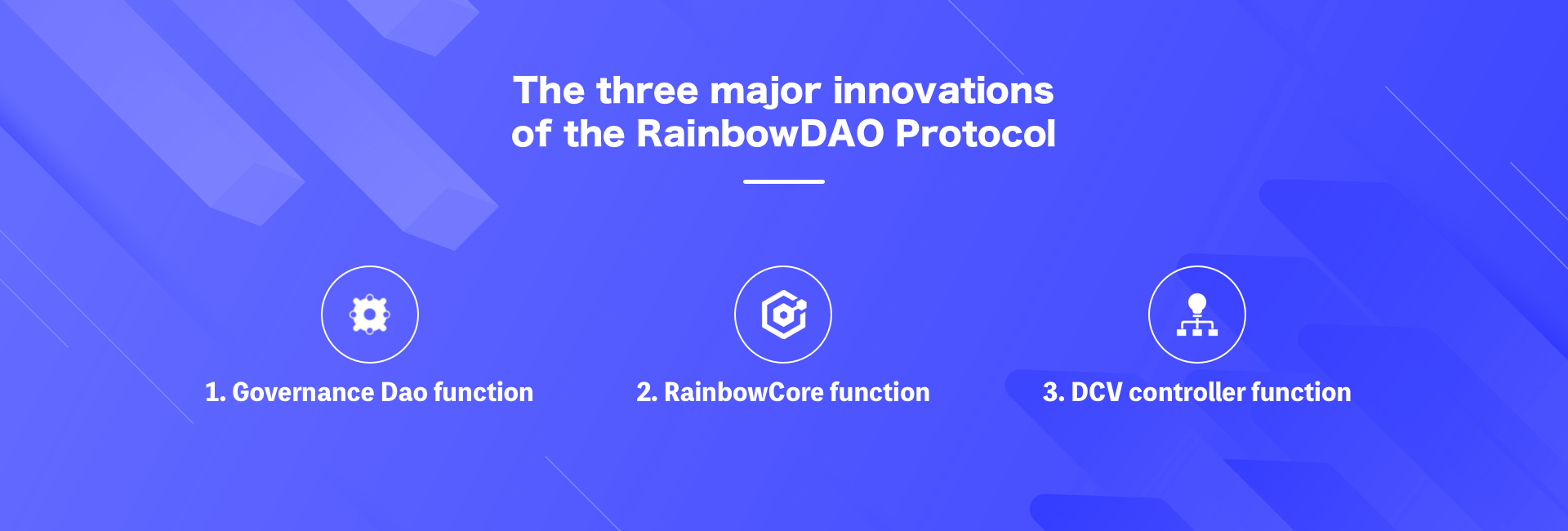
Governance DAO is mainly reflected in two levels. First, the entire RainbowDAO Protocol is controlled by a governance DAO, and this governance DAO is controlled by the governance token RBD. The second point is that each independent DAO created through the protocol will generate a governance DAO, and the governance DAO is responsible for the modification of the independent DAO system parameters.
The Rainbowcore module is divided into four parts, RoleManage, AuthorityManage, RouteManage and CoreManage. The combination of these four functions makes the RainbowDAO Protocol a whole that can be flexibly matched with different roles and different permissions. In this way, unlimited expansion and upgrade of the protocol can be realized.
Each DCV is an independent treasury system. With DCV as the core, we have innovatively developed the DCV controller function. Each controller is composed of a series of smart contracts. Through the DCV controller function, each DAO can flexibly control the assets in the DCV. In this way, the management of DAO has unlimited scalability.
The three innovative functions of the RainbowDAO Protocol can be used independently or combined together. This makes the RainbowDAO Protocol unlimited scalability and upgradeability, and also allows the DAO organization created through the RainbowDAO Protocol to have unlimited Of diversification. It is with these three innovations that our RainbowDAO Protocol has the following eight features:
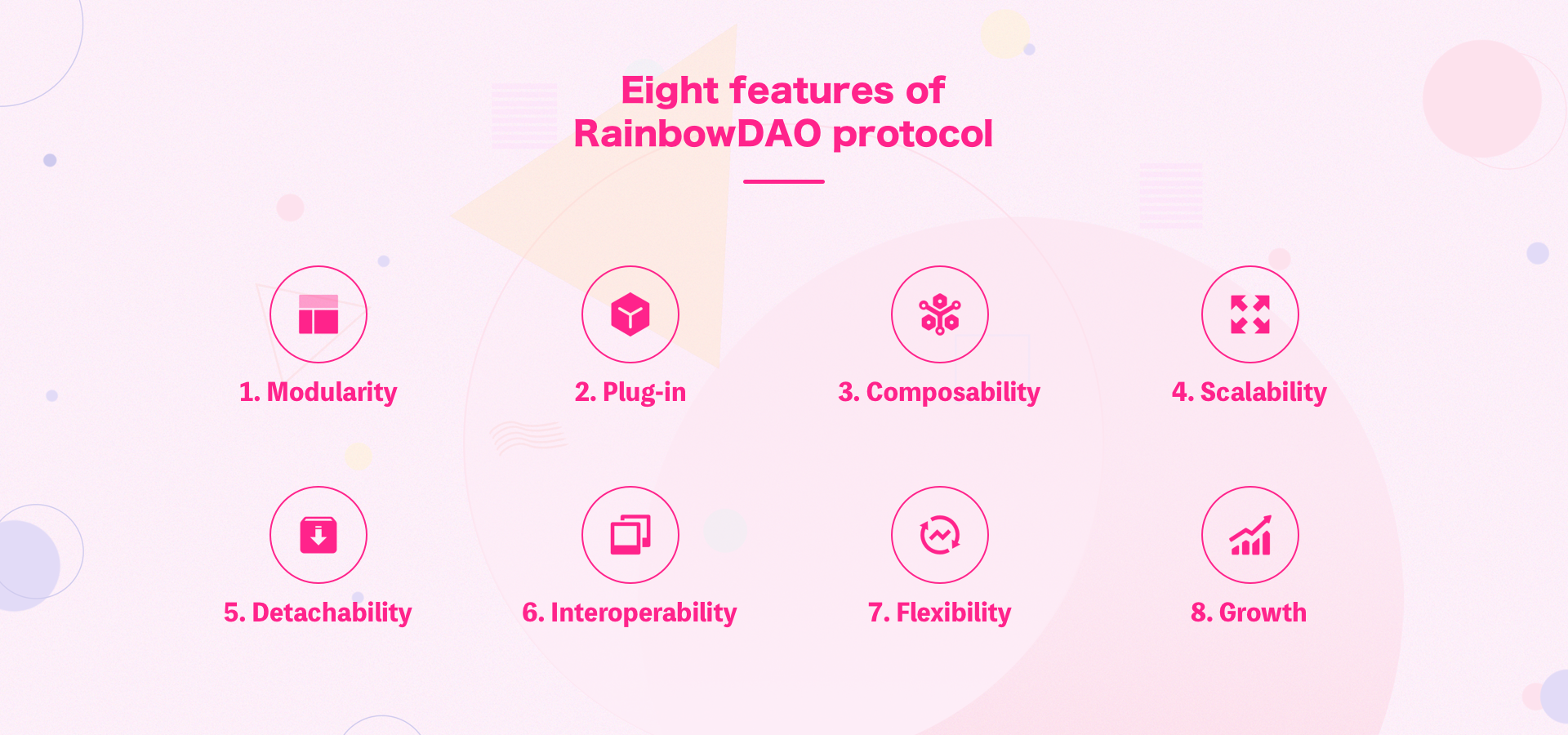
Each function of RainbowDAO Protocol can exist as an independent module, which can easily trigger upgrading and evolution of the protocol.
Each module of the RainbowDAO Protocol is very flexible like a plug-in.
Each module of the RainbowDAO Protocol can be combined with each other. Some simple modules can work together to form a powerful module.
Based on the modular combination, the RainbowDAO Protocol has very strong scalability and new functions can be added through the addition of modules.
The modules of the RainbowDAO Protocol can be disassembled to achieve the simplification of DAO functional modules and adapt to actual needs.
Each module of the Rainbow DAO protocol is can interact with each other.
The RainbowDAO Protocol can be combined, extended, and disassembled. This gives the RainbowDAO Protocol strong flexibility. The protocol can be adjusted according to the actual situation of each DAO.
Based on the first 7 features, the RainbowDAO Protocol will evolve into a living system that can upgrade infinitely with a decentralized idea.
With the idea of decentralization as the core, the RainbowDAO Protocol has always adhered to eight concepts to guide us in the exploration and implementation of the DAO field:
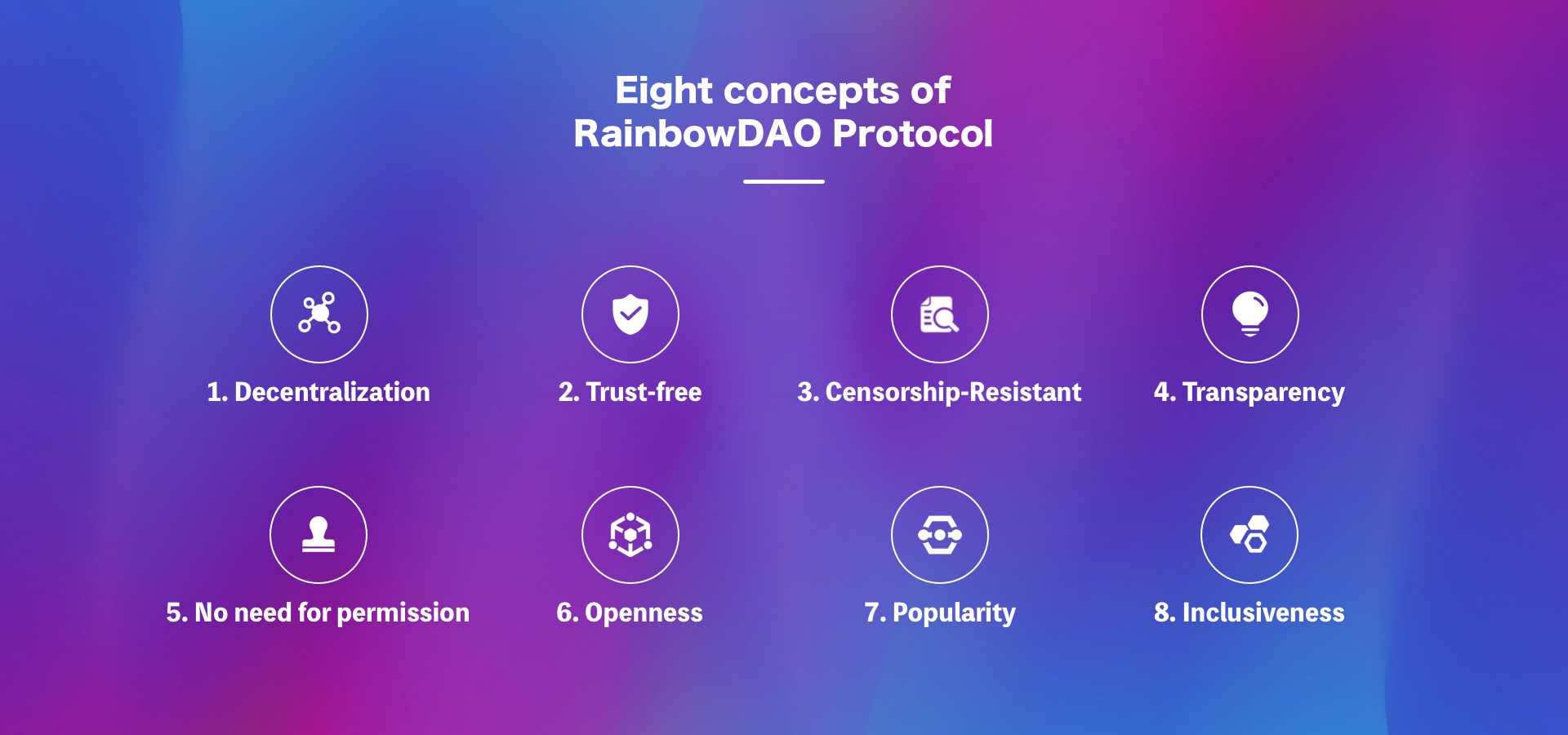
It is the soul of the RainbowDAO Protocol. The protocol itself and DAOs of all levels are decentralized.
RainbowDAO Protocol adheres to the idea of "code is law". All rules are constructed by code with no need for intermediary.
All rules of the RainbowDAO Protocol are set by code to achieve complete on-chain governance, and the value of all assets is controlled by the chain.
The RainbowDAO Protocol realizes complete on-chain governance. All data is clearly displayed on the chain.All data is transparent.
The RainbowDAO Protocol is composed of countless rules that have been set up in advance. They are constructed by smart contracts on the chain. Anyone can use the RainbowDAO Protocol to build a DAO without permission.
RainbowDAO Protocol is a set of open protocols and these protocols can interact with internal modules and external protocols.
RainbowDAO Protocol can be applied to various types of DAOs, large or small in size.
The RainbowDAO Protocol can be employed by different types of people. We always hope to build the RainbowDAO Protocol into a viable, growing, and warm protocol.
Anyone can establish an independent DAO organization through the RainbowDAO Protocol. Through this independent DAO, we can carry out three-part extension, and finally make this DAO infinitely upgradeable and expandable, allowing it to accommodate tens of thousands or even hundreds of thousands of user groups.
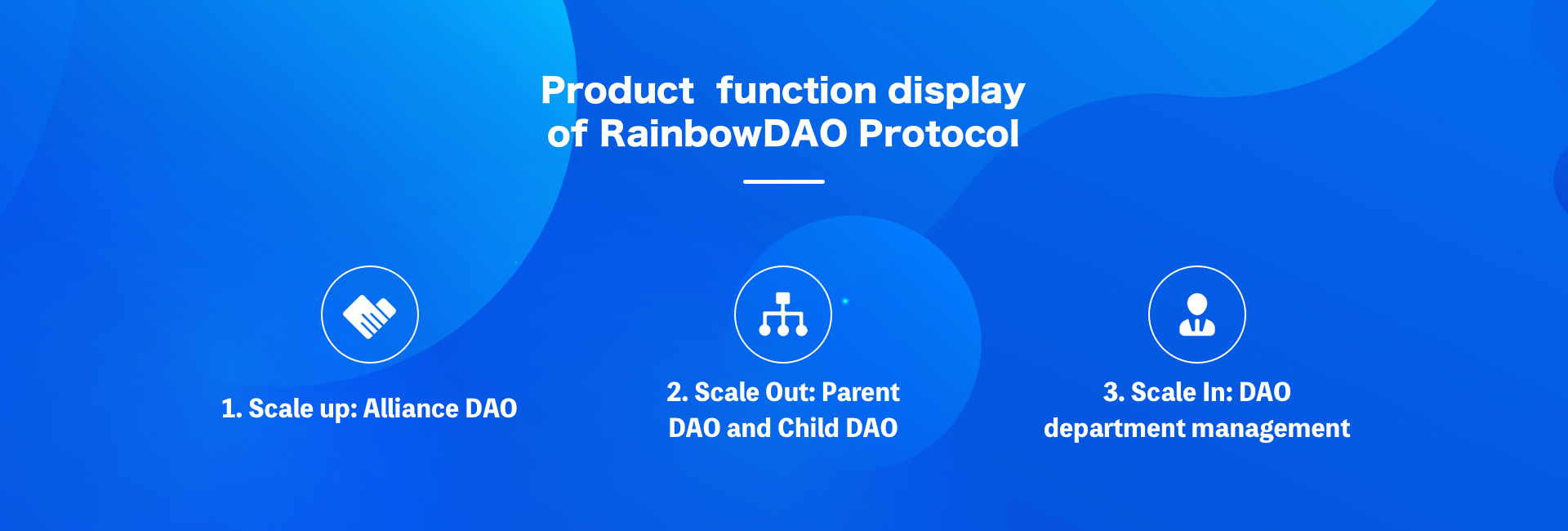
An independent DAO can join a Alliance DAO, such as investment Alliance DAO, media Alliance DAO, social Alliance DAO, and so on.
Each independent DAO can create child DAOs belonging to this independent DAO. This is equivalent to the relationship between the parent company and the subsidiary. The parent DAO can perform cross-level management on the child DAO, but the child DAO cannot cross-level management.
Each independent DAO can also establish a department belonging to this independent DAO. In this way, each independent DAO can establish its own clear organizational structure, and the department is managed by the multi-signature management committee. Only with clear division of labor and clear responsibilities can it be possible to improve efficiency and execution.

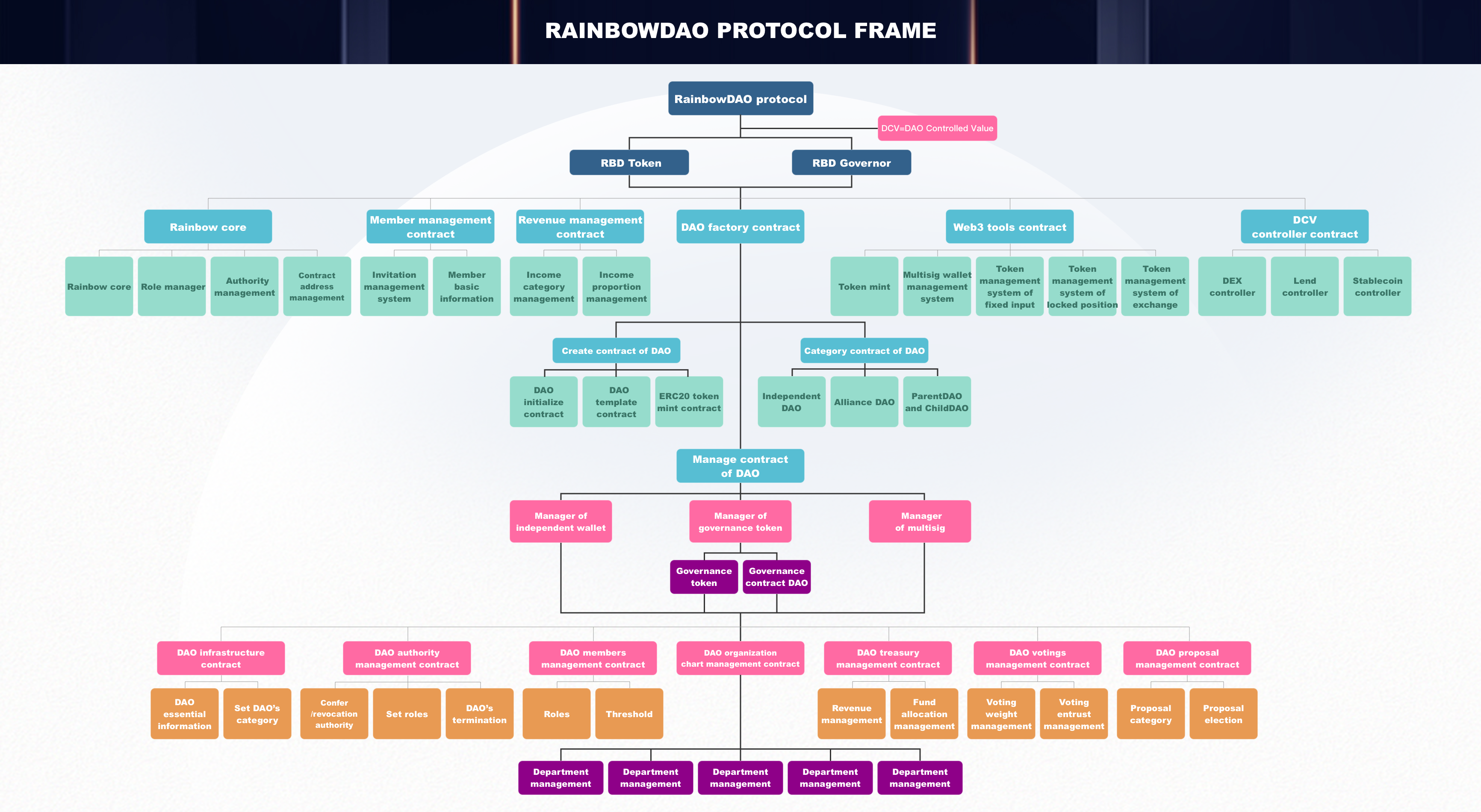
The RainbowDAO Protocol allows unlimited expansion and unlimited upgrades of DAO. This part is the architecture design of the RainbowDAO Protocol, so that everyone can clearly know the design mechanism of the protocol.
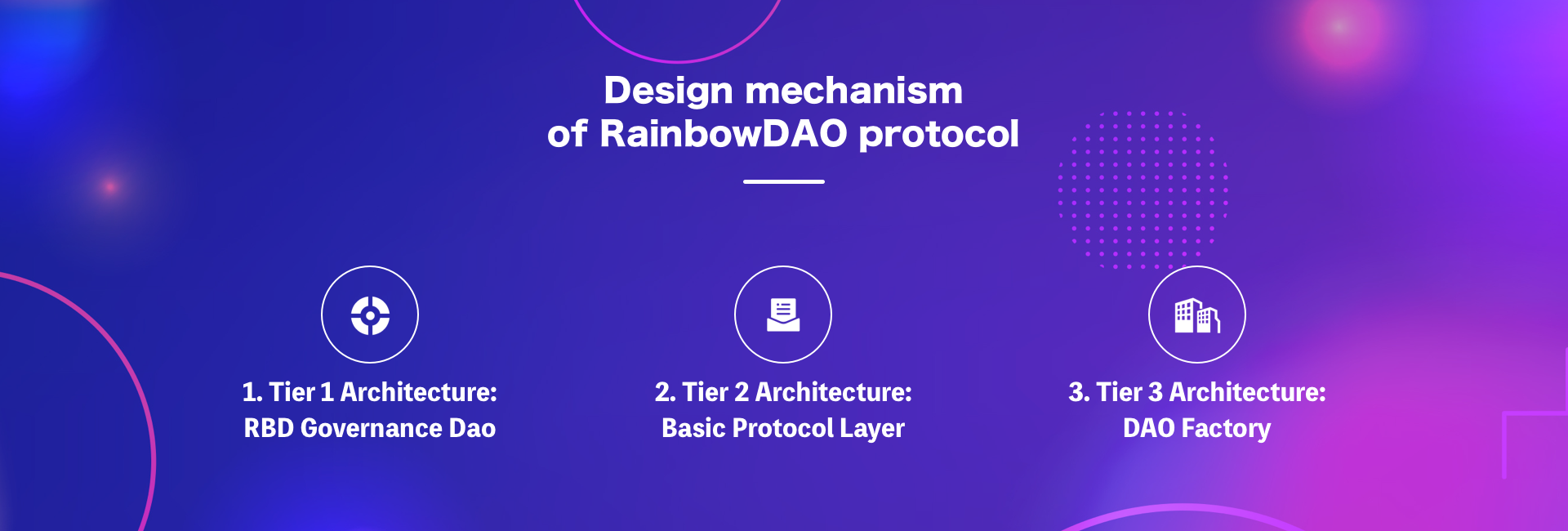
The first layer of the RainbowDAO Protocol consists of RBD governance DAO. RBD belongs to the governance token of the RainbowDAO Protocol. The holders of RBD constitute the DAO and are responsible for the governance and management of the entire RainbowDAO Protocol.
The second layer of the RainbowDAO Protocol is the basic part of the protocol, which mainly contains six parts: rainbow core contract, membership management contract, revenue management contract, web3 tool contract, DCV controller contract, and the DAO factory contract.
The third layer belongs to the DAO factory contract, which is mainly used for the batch creation and management of DAO. The DAO factory contract can be divided into three parts, namely DAO type contract, DAO initialization contract, and DAO management contract.