
Protein fitness benchmarks for real-world generalization
Website · Paper · Data archive · Quick start · Dataset guide · Citation


How well do protein sequence models generalize beyond the variants they were trained on? FLIP2 expands the original FLIP benchmark with seven datasets and sixteen predefined splits covering enzymes, protein interactions, stability, and light-sensitive proteins.
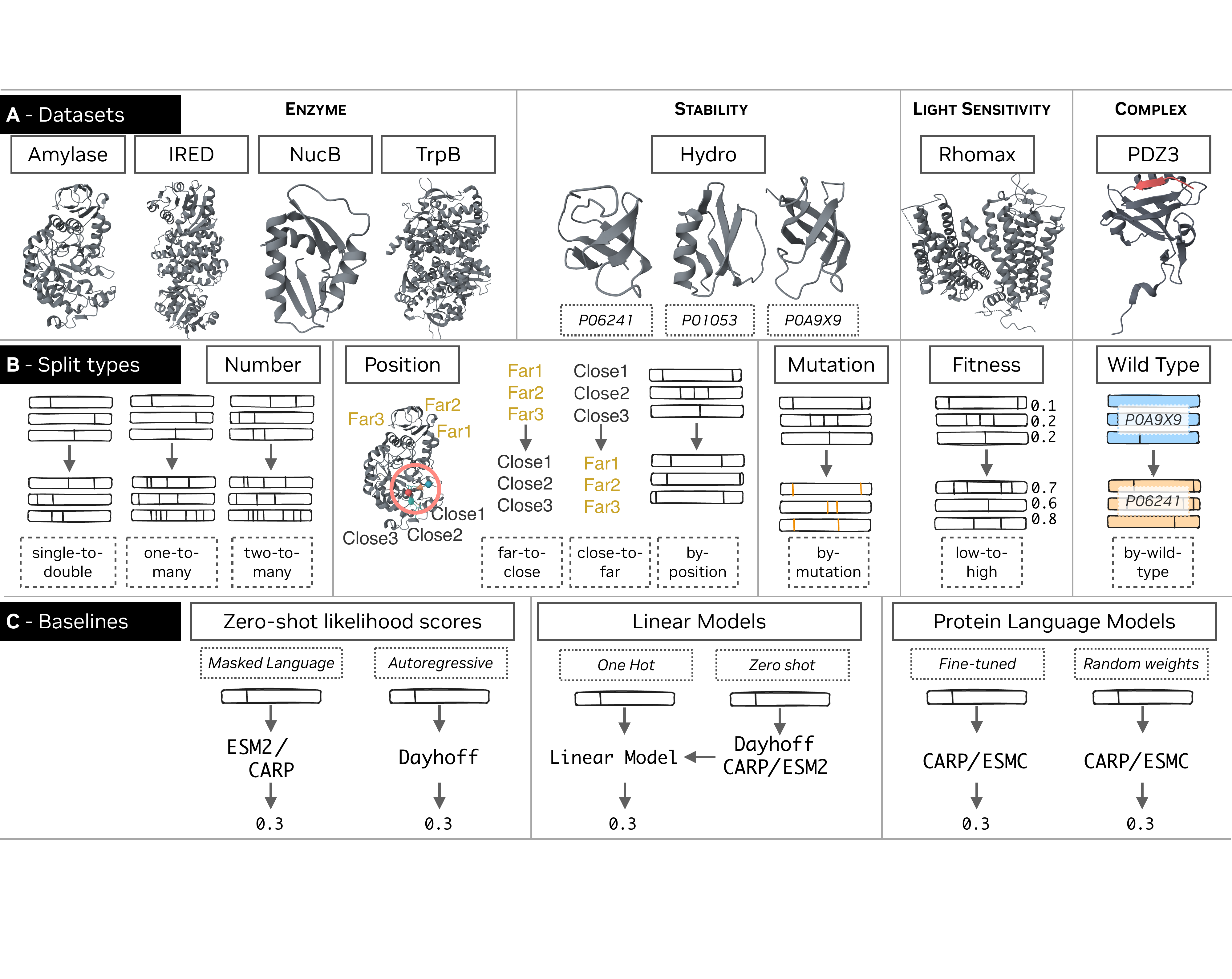
Figure 1 from the FLIP2 paper. Explore the interactive project page for structures and results.
| I want to… | Start with… |
|---|---|
| Evaluate a model on FLIP2 | Load a split, then use the dataset guide |
| Download the benchmark | Individual split downloads or the Zenodo archive |
| Understand the experiments | Paper and baseline results |
| Explore preprocessing or baseline code | Repository map and research-code notes |
| Use the original FLIP tasks | Legacy FLIP |
You only need Python and pandas to load the released CSV files; a GPU and a repository installation are unnecessary for this example. In a fresh environment:
python3 -m venv .venv
source .venv/bin/activate  # Windows: .venv\Scripts\activate
python -m pip install pandas
Load one published split directly from the website:
import pandas as pd

url = "https://flip.protein.properties/assets/splits/amylase/one_to_many.csv.gz"
df = pd.read_csv(url)

# Validation rows may also have set="train". Exclude them before fitting.
is_validation = df["validation"].astype(str).str.lower().eq("true")
is_validation |= df["set"].eq("validation")
train = df.loc[df["set"].eq("train") & ~is_validation].copy()
validation = df.loc[is_validation].copy()
test = df.loc[df["set"].eq("test") & ~is_validation].copy()

print({"train": len(train), "validation": len(validation), "test": len(test)})
# Use train["sequence"] and train["target"] to fit your model.
# Select hyperparameters on validation; evaluate on test only at the end.
For reproducible experiments, keep a local copy and record its source, download date, and checksum. The data guide describes the columns, split filenames, and how to report results. Preserve the released assignments when comparing models.
| Dataset | Prediction task | Splits |
|---|---|---|
| Amylase | Starch stain removal activity | 4 |
| IRED | Imine reductase activity | 1 |
| NucB | Nuclease activity bins | 1 |
| TrpB | Tryptophan synthase fitness | 3 |
| Hydro | Hydrophobic-core stability | 5 |
| Rhomax | Rhodopsin absorption wavelength | 1 |
| PDZ3 | Protein interaction fitness | 1 |
The split families probe generalization across mutation counts, sequence positions, mutation identities, fitness levels, and wild-type backgrounds. See the dataset guide for all sixteen files and the website for the experimental rationale.
| Path | Contents |
|---|---|
collect_splits/ |
Dataset processing scripts and notebooks |
baselines/ |
Baseline training, embeddings, and zero-shot scoring code |
analysis/ |
Result analysis and plotting |
flip/ |
Sequence utilities and zero-shot helpers |
examples/ |
Existing example notebooks |
splits/ |
Legacy FLIP archives, dataset descriptions, and split status |
FLIP2 data are distributed through the website and Zenodo. The checked-in splits/
directory contains legacy tasks. Research scripts may require local data paths, model
dependencies, and compute resources; see research-code notes
before running them.
The original FLIP benchmark remains available here. Start with the split index, including AAV, GB1, and Meltome. Historical raw data and FASTA downloads are hosted separately; the FASTA representation follows biotrainer.
The legacy dataset READMEs use the following status indicators:
- 🟢 Active: suitable for model evaluation.
- 🟠 Not for performance comparisons: may overestimate performance or duplicate the discriminative value of an active split.
- 🔴 Obsolete: do not use to report performance.
Please cite FLIP2 when using the new benchmark, and the original FLIP paper when using its tasks. Cite the underlying experimental datasets as well; provenance and attribution are described on the project website and in the data release.
@article{didi2026flip2,
  title = {FLIP2: Expanding Protein Fitness Landscape Benchmarks for Real-World Machine Learning Applications},
  author = {Didi, Kieran and Alamdari, Sarah and Lu, Alex X. and Wittmann, Bruce and Johnston, Kadina E. and Amini, Ava P. and Madani, Ali and Czeneszew, Maya and Dallago, Christian and Yang, Kevin K.},
  journal = {bioRxiv},
  year = {2026},
  doi = {10.64898/2026.02.23.707496}
}

@inproceedings{dallago2021flip,
  title = {FLIP: Benchmark tasks in fitness landscape inference for proteins},
  author = {Dallago, Christian and Mou, Jody and Johnston, Kadina E. and Wittmann, Bruce J. and Bhattacharya, Nicholas and Goldman, Samuel and Madani, Ali and Yang, Kevin K.},
  booktitle = {Proceedings of the Neural Information Processing Systems Track on Datasets and Benchmarks},
  year = {2021}
}
GitHub's Cite this repository menu is supported by CITATION.cff.
For dataset questions, reproducibility problems, or documentation fixes, open an issue or a pull request. See CONTRIBUTING.md for useful details to include.
Repository code is covered by the existing AFL-3.0 license. The FLIP2 website describes its redistributed data release as CC-BY 4.0; consult the release and individual dataset provenance for source-specific attribution and licensing.