Repository navigation

Replies: 6 comments 2 replies

|
Thanks for testing. No UAT on the LR2021 here either, and your Semtech report explains it: the receiver can't track 1041.667 kbps, so the hardware sync never matches. I/Q mode won't help, the LR2021 I/Q path tops out at 250 kS/s and UAT needs about 2 MS/s. I built a test that works around it. The demodulator runs faster than UAT (1250, 1500 or 2000 kbps) and the symbols and 36-bit sync are recovered in software. In noise here 1250 and 1500 deliver data in bursts and 2000 delivers nothing. I have no UAT source, so I can't tell if it decodes. Would you try it with your test signal? https://github.com/SAMS0N1TE/LakeShark/releases/tag/v2.16.5-rc1 |

I've made few LR2021 experiments with sampling at
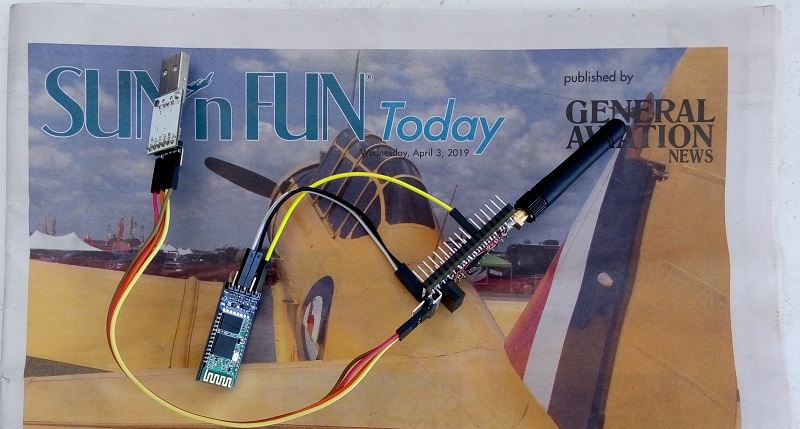
Idea was to sample 2FSK data at higher bitrate then try to apply corrections necessary by means of excluding extra bits. This is my UAT LR2021 test bed - 
When Tx rate was 1000 kbps and Rx rate was 1000 kbps - everything is perfect. Ideal 100% pass rate, every packet received (in HEX) is equal to a previous packet. However, when Rx rate is higher than 1000 kbps - there were two factors observed:
The 2nd factor produces unexpected data flow that does not look like it can be corrected by ECC or similar methods... Let's get back to your experiment. This is a log taken with your RC1 firmware: It looks for me that all 99 packets received has been qualified as bad ones.
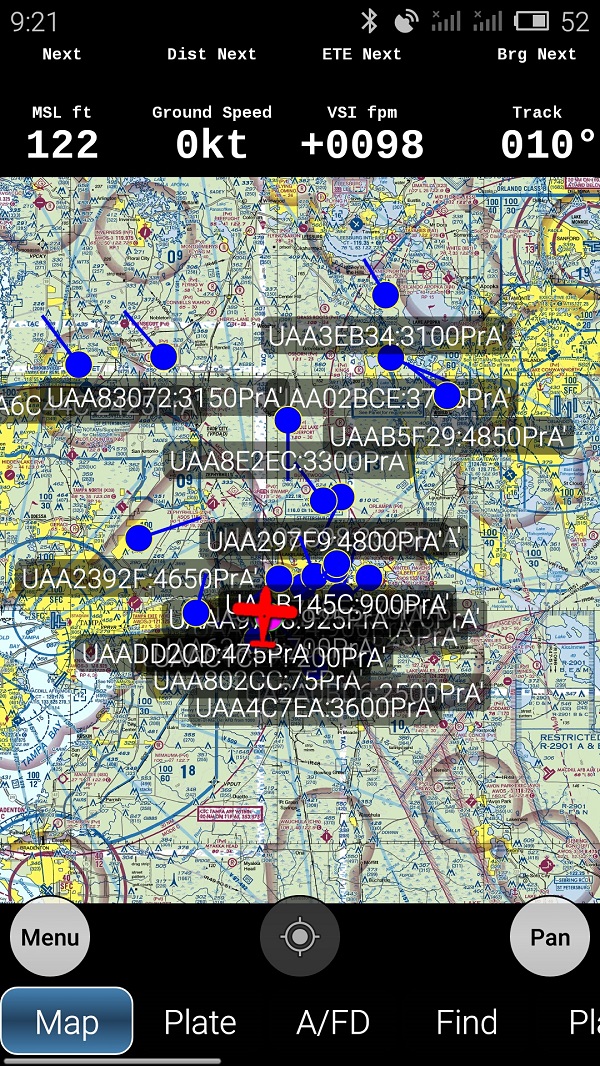
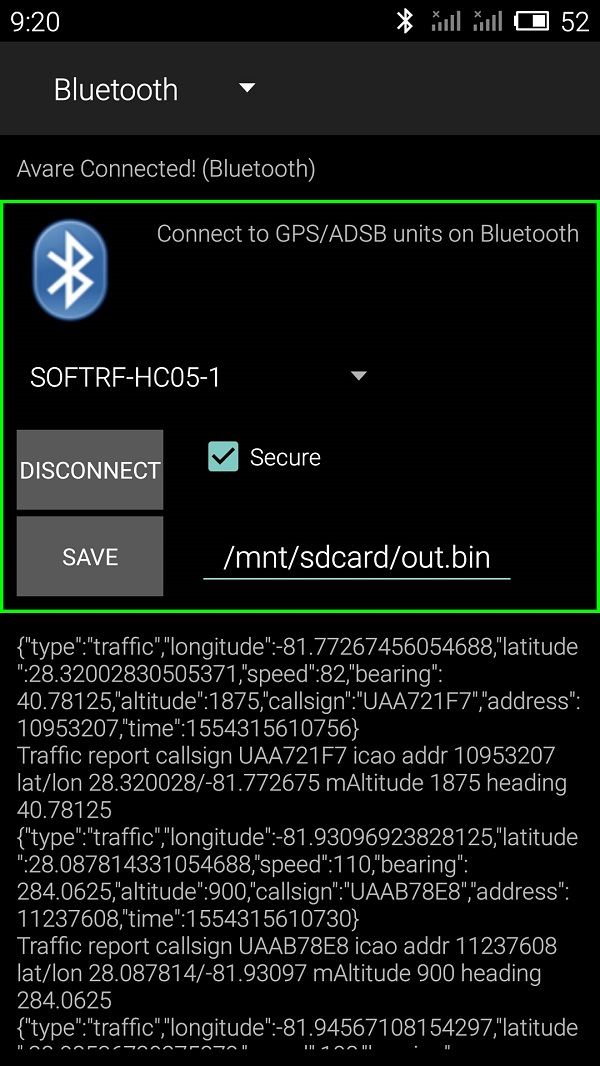
Hmm. Are you in Florida ? https://github.com/lyusupov/SoftRF/tree/master/software/firmware/source/UATbridge
Since you have at least one LR2021 based device - why would not you to make your own UAT test signal source ? Likely, the most quick way to create a UAT test signal from LR2021 radio is to use a RadioLib example
|

|
What an awesome write up. I appreciate all this data!! Unfortunately I don't live in Florida anymore and don't get much air traffic where I'm at. However, I did make my own test bench for this. So I should be able to walk through your steps here and see what I can do to figure this out. Part of the reason why I made a LR2021 only firmware was to dedicate all performance to it and see if I can get a bit more throughput. So far I have it stable and gutted but haven't had the opportunity to optimize everything and give the LR less guard rails. I'll give this a go tomorrow and update you if I find anything new! Thanks again, this is getting interesting. |

|
I need to get one set up, im right in the top left corner of that map! |
|
I can confirm that UAT receive experiment can give positive reception. ADDRESS 1ABBA1 qualifier 5 type 1 II indicates numerous bad packets but I don't know why... |
|
That's awesome, thanks for sticking with it! Good to know the deviation was the problem the whole time and the LR2021 can actually hear UAT. I think I know where the bad packets are coming from, and it's on my end, not the radio. The experiment switches its window every second between basic frames (30 bytes), long frames (48 bytes) and uplink. Your test source only sends long frames, so any long frame that shows up during the basic window gets cut off at 30 bytes and fails the RS check. That lines up with your numbers pretty much exactly: 30 syncs, 15 good long, 15 bad. The good ones needed 0 corrections, so the radio side looks clean. The fix is to always read the full 48 bytes and let the decoder figure out basic vs long, since it already tries both. That should also give downlink more listen time. Still need to look at the radio errors count, might just be from retuning every second. -20 dBm is pretty hot too, so if you can back the source off a bit that would rule out overload. This will be in the next release, along with a frequency offset tool I've been working on for the LR boards. Keep an eye out for it and I'd love to see your numbers again once it's out! |
I use LaunchPad CC1352 as a source. with ( approx. ). +10 dBm Tx power setting 
|
UAT test source transmits 2 packets per second. |


Uh oh!
There was an error while loading. Please reload this page.
Uh oh!
There was an error while loading. Please reload this page.
@SAMS0N1TE
There is a UAT 978 experiment listed here:
https://github.com/SAMS0N1TE/LakeShark/blob/main/docs/apps/EXPERIMENTS.md
I use a .local UAT test source explained there: https://github.com/lyusupov/UAT-test-signal
dump978tool on a Raspberry Pi with assistance of RTL-SDRHowever,, when I execute the
UAT 978 experimentwith LR2021 radio - I see no any UAT packets received.I've filed a GitHub issue report to Semtech earlier this year : Lora-net/usp#4
Thus, it is NOT a surprise for me that LR2021 does not receive UAT ...
I am curious, does your
UAT 978 experimentwith LR2021 have any positive effect for you ?All reactions