Repository navigation
Processes InterviewQuestions
| fork_join | fork_join_any | fok_join_none |
|---|---|---|
| In fork_join the main(parent) threads will execute after all the threads(child threads) in the fork_join is executed | In fork_join_any the main(parent) threads executes if any one of the child threads excecutes | In fork_join_none child threads and main(parent) threads are executed parallely |
 |
 |
 |
We know that in fork_join the main thread is executed only when all the threads in fork_join is executed so here no need of using wait_fork. We can use wait fork after the fork_join_any or fork_join_none statement to wait for all the threads in the fork-join_any or fork_join_none to complete. So here in fork_join wait_fork is not required.
| blocking | Non-Blocking |
|---|---|
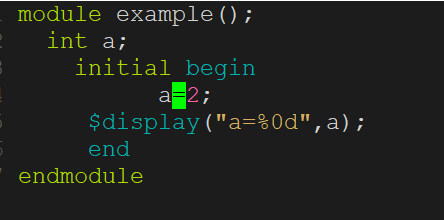
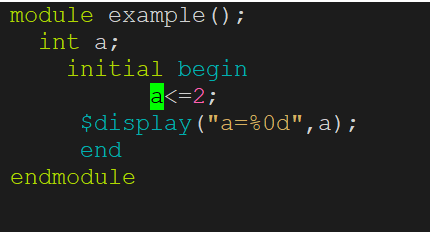
| In Blocking Assignment one statement is executed then the next statement will executed i.e first expression of right hand side is evaluated and immediately assigned to the left hand side variable | In Non-Blocking assignment evaluated all the right hand side expression for the current time unit and assigned to left-hand side variable at the end of the time unit |
| Represented by " = " | Represented by " <= " |
| It executes sequentially | It executes parallely |
| Blocking is used in combinational | Non-Blocking is used in sequential |
 |
 |