Repository navigation
Processes InterviewQuestions
Bhavanasandrala edited this page Sep 13, 2022
·
15 revisions
1.Difference between fork_join,fork_join_any and fork_join_none ?
| fork_join | fork_join_any | fok_join_none |
|---|---|---|
| In fork_join the main(parent) threads will execute after all the threads(child threads) in the fork_join is executed | In fork_join_any the main(parent) threads executes if any one of the child threads excecutes | In fork_join_none child threads and main(parent) threads are executed parallely |
![]() |
![]() |
![]() |
We know that in fork_join the main thread is executed only when all the threads in fork_join is executed so here no need of using wait_fork. We can use wait fork after the fork_join_any or fork_join_none statement to wait for all the threads in the fork-join_any or fork_join_none to complete. So here in fork_join wait_fork is not required.
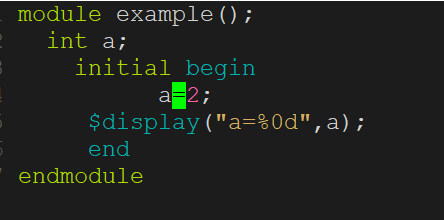
| blocking | Non-Blocking |
|---|---|
| In Blocking Assignment one statement is executed then the next statement will executed i.e first expression of right hand side is evaluated and immediately assigned to the left hand side variable | In Non-Blocking assignment evaluated all the right hand side expression for the current time unit and assigned to left-hand side variable at the end of the time unit |
| Represented by " = " | Represented by " <= " |
| It executes sequentially | It executes parallely |
| Blocking is used in combinational | Non-Blocking is used in sequential |
![]() |
![]() |
-
- Calling a function with values as arguments
- Calling a function with variables as arguments
- Calling a function with values from an expression
- Calling a function with variables with positional arguments
- calling an automatic function
- calling a function with variables with reference of variables
- calling a function with a void return type
- Calling a function by passing an array
- Calling a function by passing an array from display
- Calling a function with variables that had default values
- Calling a task from function(exceptional case by using fork and join_none)
-
- Random Function System
- Random Variables
- Std Randomize
- Constraint Block
- Array Randomization
- Inside Constraint
- Inverted Inside Constraint
- Weighted Distribution
- Bidirectional Constraint
- Implication Constraint
- if-else constraint
- foreach
- Solve before constraint
- Static Constraint
- Randomization methods
- Constraint conflict
- Inline Constraint
- Soft Constraint
- Disable Constraint
- Disable Randomization
- randcase
- constraint memory examples
-
- class
- class handle
- class constructor
- object
- this keyword
- super keyword
- Scope resolution and extern keyword
- Chaining Constructs
- Constant class properties
- copying objects
- parameterized classes
- virtual methods
- static properties and methods
- Over riding class members
- Inheritance
- Polymorphism
- Encapsulation
- Abstraction