Repository navigation

Replies: 5 comments 2 replies

|
Thanks, @smota, for a detailed proposal drawn from a deployment you already run. Your question is about direction: does it make sense, and where should it live? That's with the team now, and we'll come back here with an answer to that question rather than a quick take. |

|
@mvschwarz Please wait to analyze it. I'm implementing it as a full external repositor. Protocol, contract, extension in full as proposed here. Agter implemented the protocol and contract can be moved to the product (ideally!). If not now, it will work externally while I maintain it in sync with the openrig releases (not ideal). |
|
@mvschwarz these ideas are implemented as an independent companion at https://github.com/smota/openrig-seats I'm using it on my company cockpit (web ui) successfully replacing my previous "hacked" implementation with advantages (more fluid, stable, secure, etc.) I will enrich documentation and refine the codebase this week. I will come back with a summary of what I believe could be kept independent and what I propose to bring to the core product repo (contract and protocol) |

|
Thanks again, @smota. It's good to see openrig-seats running in your cockpit. We'll look forward to your summary of what you'd keep independent and what you'd propose for the core repo, and we'll answer here then. |
|
@mvschwarz a follow-up, now that Recommendation. Move into OpenRig what changes when the daemon changes. Keep outside what changes when harnesses or apps change. What should move into the product, and what should stay
This keeps one release train for the contract and lets the edges move fast. The repo is already laid out for the move: New since the last note
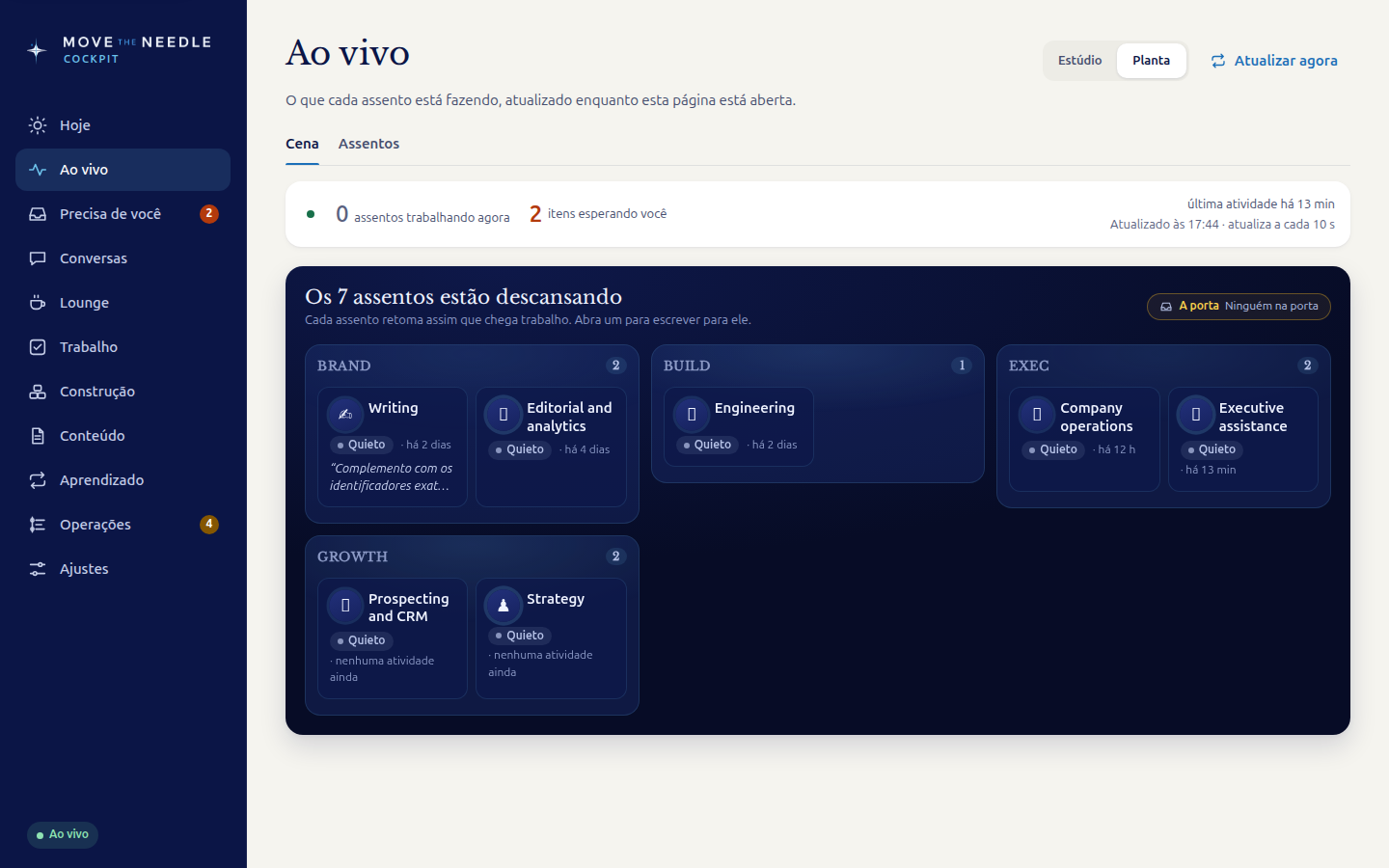
How it looksScreens 1 and 2 are the downstream company cockpit. Screens 3 to 5 are the reference 1. The downstream cockpit's Live view. Every seat's state comes from the gateway, grouped by pod, and refreshes every 10 s.
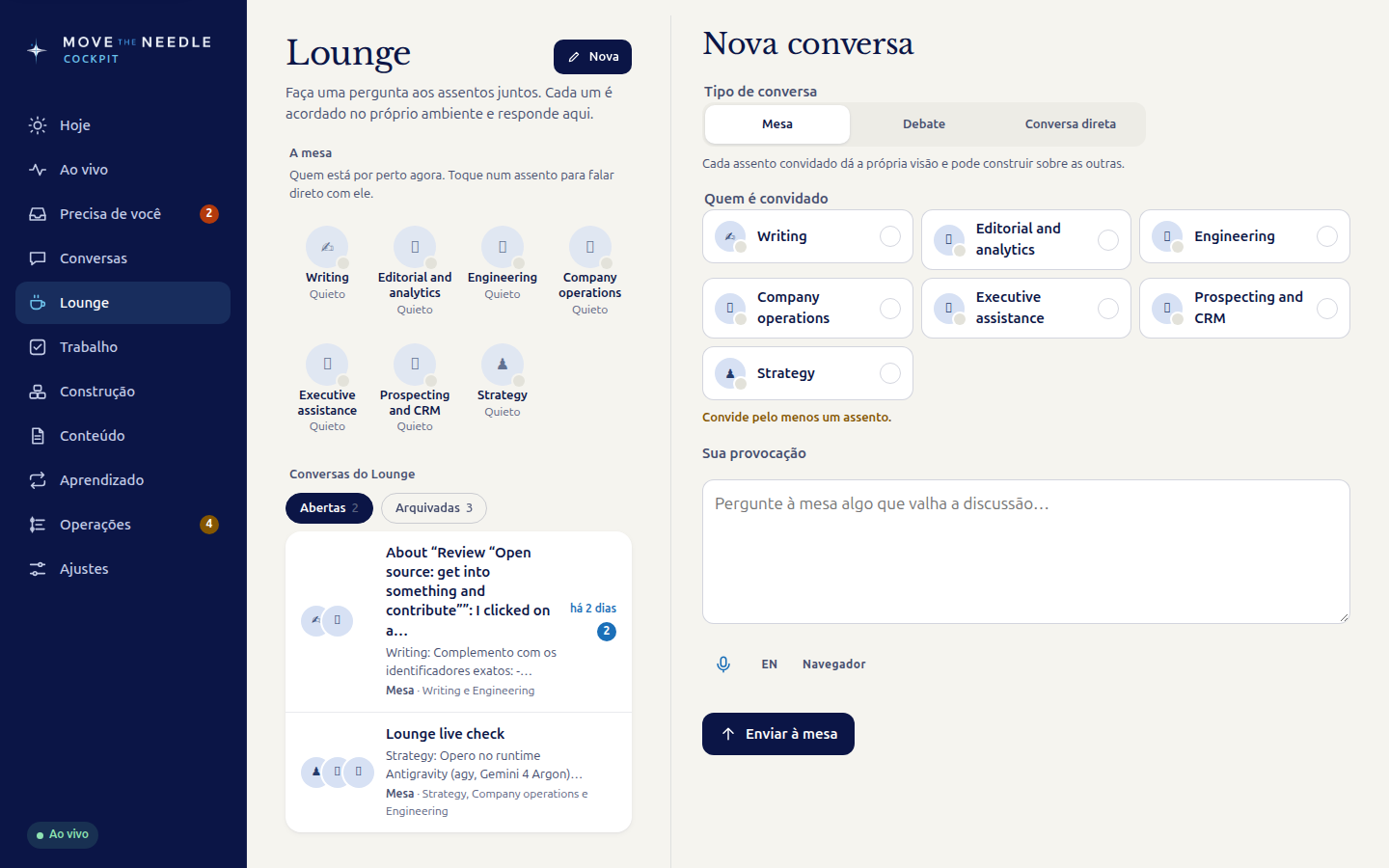
2. The downstream cockpit's Lounge. One question goes to several seats at once. Each seat is woken in its own environment and answers in one thread.
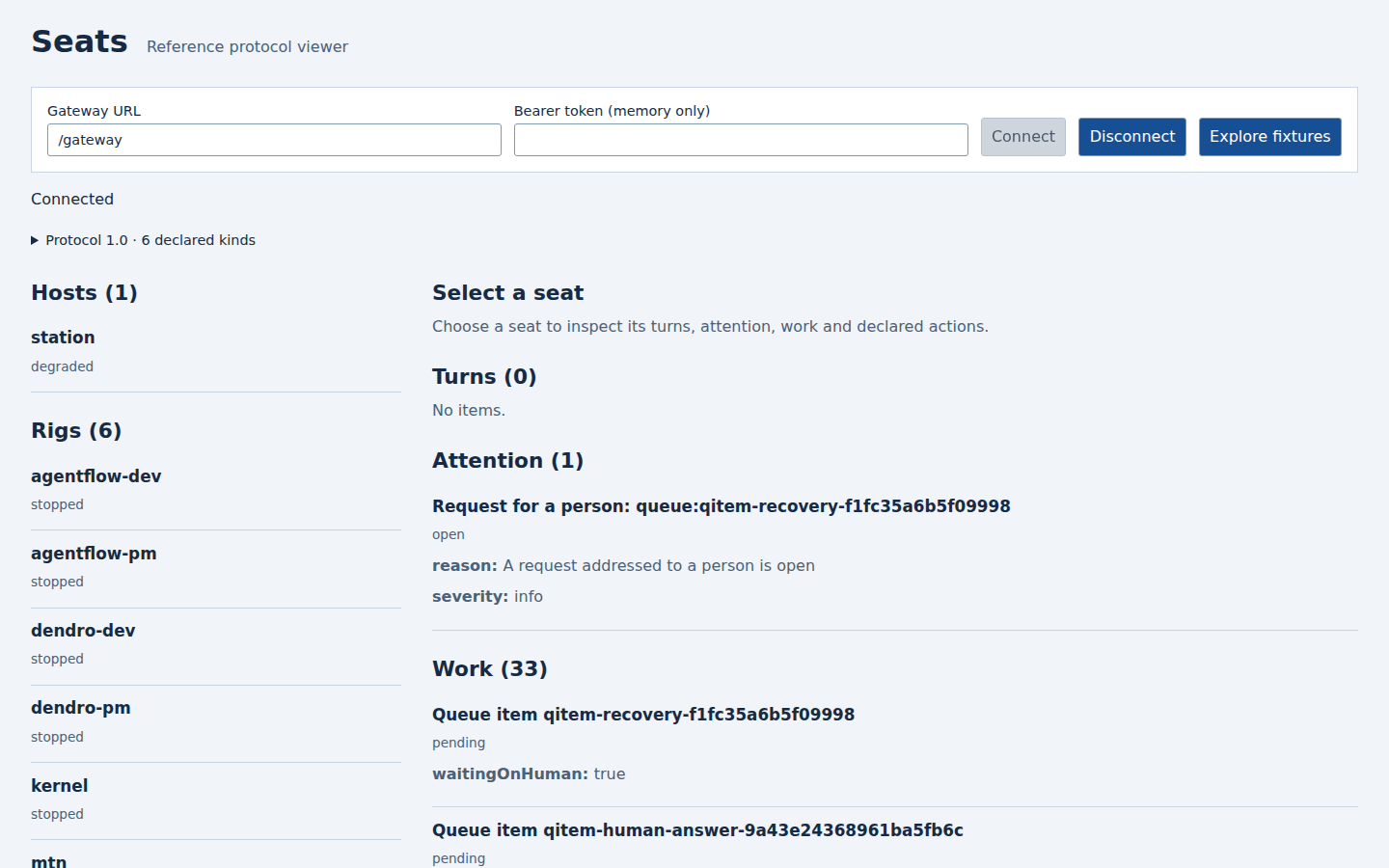
3. The reference
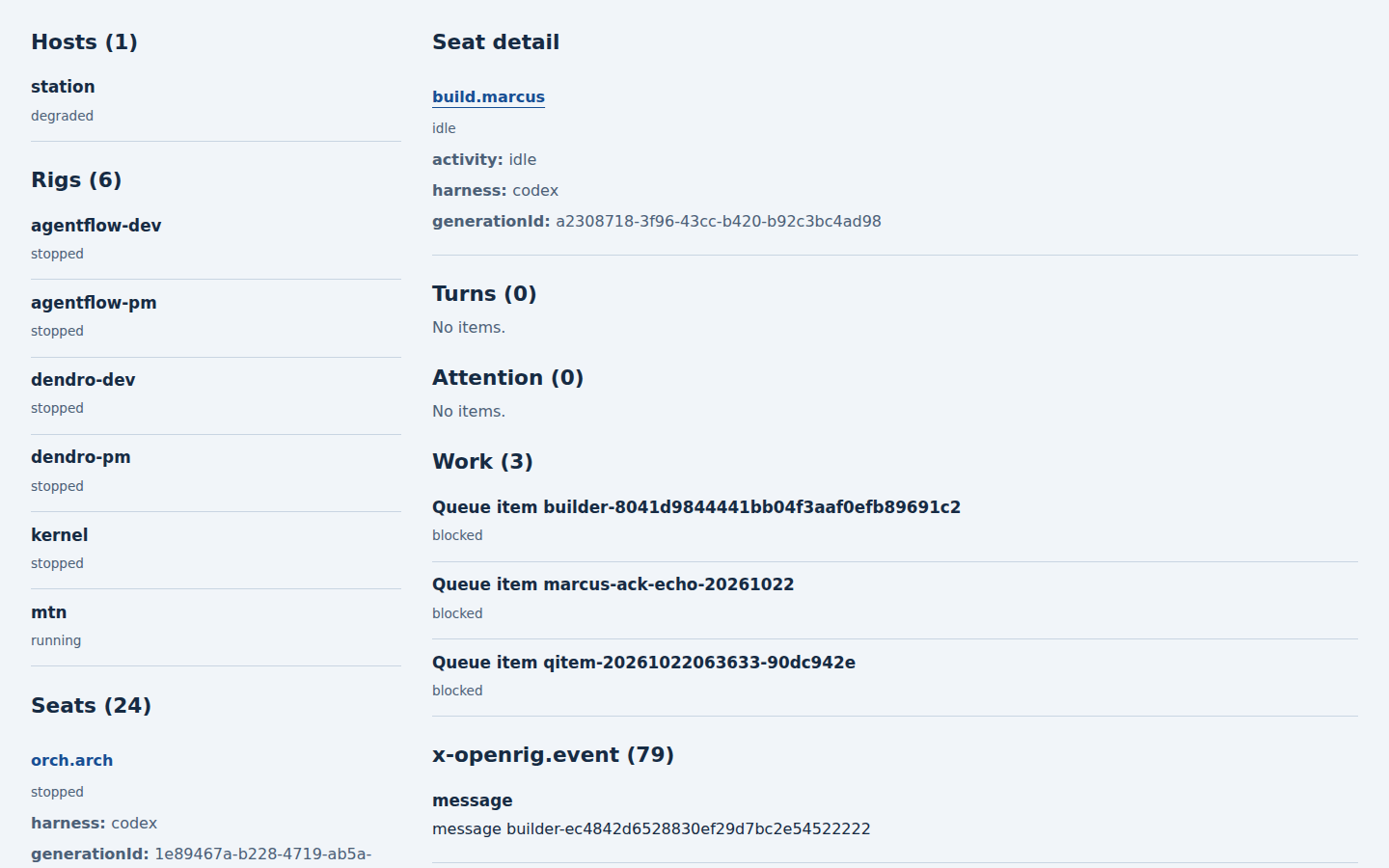
4. One seat in
5. The capabilities document: protocol 1.0, six kinds, the
Questions
Until then, I keep |
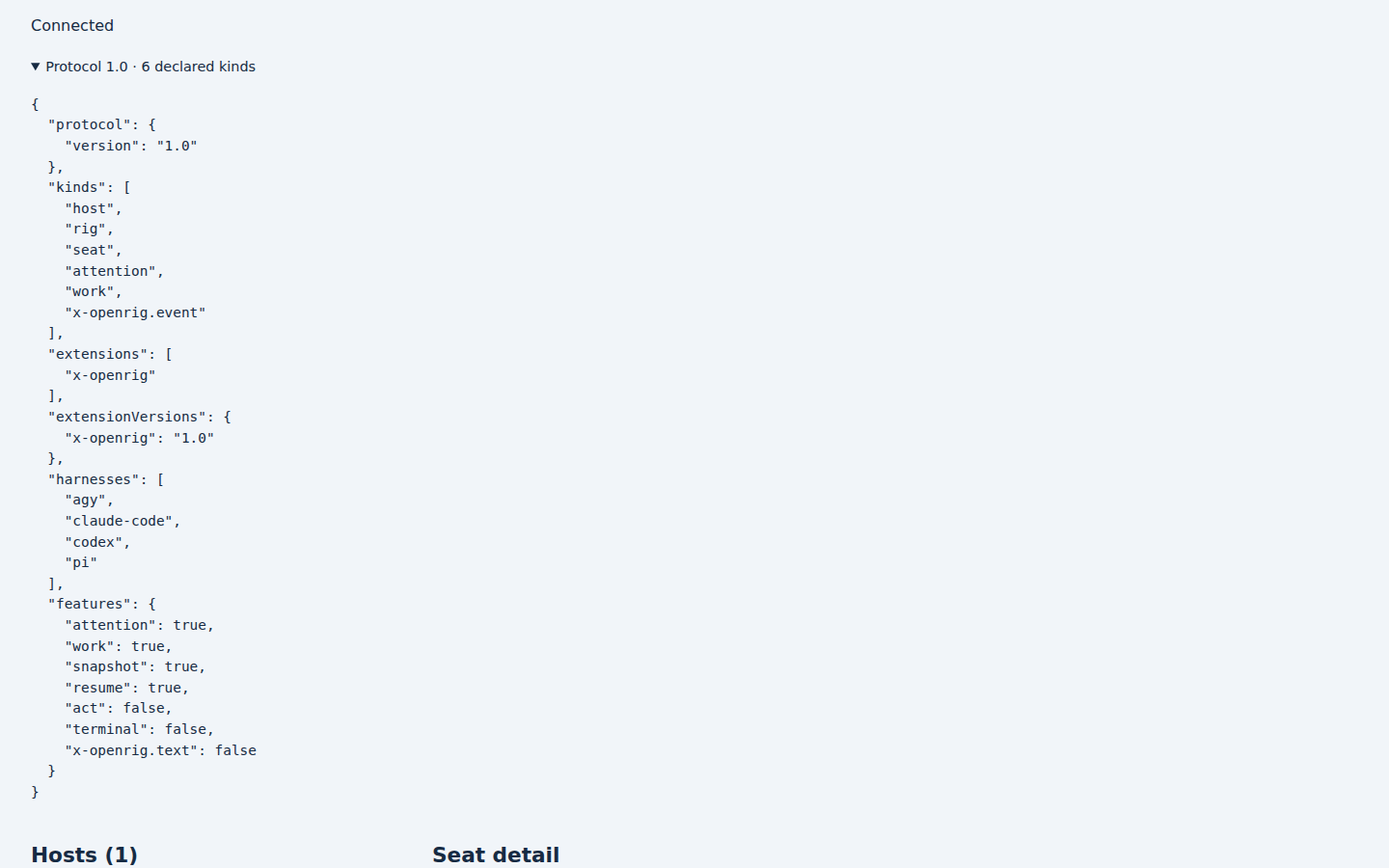
|
Thanks again, @smota, for the follow-up after a day in production, and for the split by who owns each change. We have the summary and the split, and we're looking at it with the team. We'll come back here. |
|
Yes to a narrow, documented, versioned Core interface for outside apps, grown one complete job at a time. The first job is: see what needs me, answer a question as myself, and follow it to its result. That needs explicit request/question/answer links, a stable answer ID for retries, a way to discover the supported contract version and jobs, and a refresh rule. Your cursor stream and server-declared actions are useful input to that design. The gateway, its protocol and the cockpit can stay in your repository. A sender header is attribution, not authentication. Per-app credentials belong in the intended access contract; we should not describe the header as providing that protection today. This agrees the scope, without making the whole gateway a Core dependency or promising a release date. |


Uh oh!
There was an error while loading. Please reload this page.
Related: #65 (GUI) · #1184 (outside-in supervision) · #43 (more harnesses) · #2589 (telemetry contract precedent)
TL;DR
I already built most of this on my own deployment. It works. But it feels like hacking, not a supported path. This proposal comes from that setup + a read of the current code. Before building it properly, I'd like to align on vision and architecture: does it make sense, and where should it live?
1. Current state: core already mostly headless
Good parts exist. They're just not a contract.
/api/eventsSSE, persistedseq,Last-Event-IDreplay/api/attention,queue/open-human-updates,agent.activity(from hooks),seat.attention_*/api/transport/send:deliveryIdidempotency, busy/prompt/draft guards, outcomesdelivered/retained/failed/api/sessions/:s/generation-record?sinceBytes=: native agent transcript from a byte position, file-identity checkui.enabled2. MTN approach (my deployment)
Fleet runs company operations, not code. Humans check in all day. Terminal not scale for that. So I built my own control layer on top:
Correction to my #65 comment: current code does not touch OpenRig SQLite. Everything goes through
rig --json+ HTTP. So the building blocks exist. The glue around them is the hack.3. Gaps and pain points
ps+ nodes for each rig every 3stmux send-keys4. Value
x-acme.*) show up in every UI with no UI changesValue grows with seats × humans × distance from the terminal. A solo developer with 2 seats gains little; the TUI is enough there.
5. Architecture proposal
Protocol v1 (small on purpose):
host·rig·seat·turn·attention·work(stable ID +updatedAt){cursor, kind, id, op: upsert|delete, data}over SSE or WS. Reconnect from cursor, no gaps, no duplicatestext·tool(name, summary, status) ·question(prompt + options) ·status. Event names follow AG-UI (start, content, end).questionfollows ACP's permission-request optionsactions:[{id, label, input?: JSONSchema, danger?}]+POST /actwith an idempotency key. UI draws buttons and forms, no hard-coded verbsx-<ns>.*kinds. Ignore unknown fields. Show unknown kinds as generic cards (title, summary, actions)GET /capabilities: protocol version, kinds, extensions, harnesses, features (terminal, …)Declared actions in practice:
x-mtn.approvalExtension points:
detect(seat)+follow(record, cursor) → turns, tested on recorded transcripts. No reader → plaintextfrom the paneAG-UI and ACP don't cover attaching to already-running seats, cursors, many viewers, or declared actions. That's our own thin layer.
Principles:
openrig.sqlite. Input only viatransport/send.generation-record(cursor = generation + byte position). Wake onagent.activityevents. No polling while seats are idle.x-namespaces need no core change.Failure behaviour:
generationIdchanges → gateway starts a new conversation segment, no mixed history6. Ownership and maintenance
My preference: part of the product architecture. But placement is the last decision, not the first (see §9). A and B both need the same core contract.
openrig-telemetry) + contract doc upstreamPieces and who keeps them alive:
protocol(schemas, version rules)client(generated types + connect/resume/send/act)fetch,EventSourcegateway/apisubset in the coreGraduation (B → A): my fleet runs on it, plus at least 1 independent UI, plus 0 core breakages across 2 releases. The maintainer decides.
7. Impact on current product and roadmap
ui.enabled(1 config key), only for terminal viewdocs/reference/telemetry.md) + contract tests. No new depsNot in scope: multi-user auth/RBAC, UI theming or plugins, marketplace, event-log retention (separate topic).
8. Costs and risks
generation-record)9. Decisions, in critical-path order
Each one unblocks the next. Only the first two need the maintainer now.
events,attention,transport/send,generation-record) + contract tests (I write them) + agree the security position forgeneration-recordui.enabled(1 config key)So the ask now is only D1 + D2. D2 is docs + tests, no new routes, the same pattern as #2589. Everything else is my work or can wait for evidence.
Proof plan after D2: move my fleet to the gateway → report time to answer a seat that needs me, tmux fallbacks (target 0) and bridge code deleted → invite a second, independent UI → come back for D5 with numbers.
All reactions