Skip to content

Progress Update

Robert Chapman edited this page Nov 22, 2026 · 2 revisions

ActiveRobot — Progress Update

TimbreWorks · November 2026. From a single muscle-wire limb to a distributed, biomimetic multi-limb body.

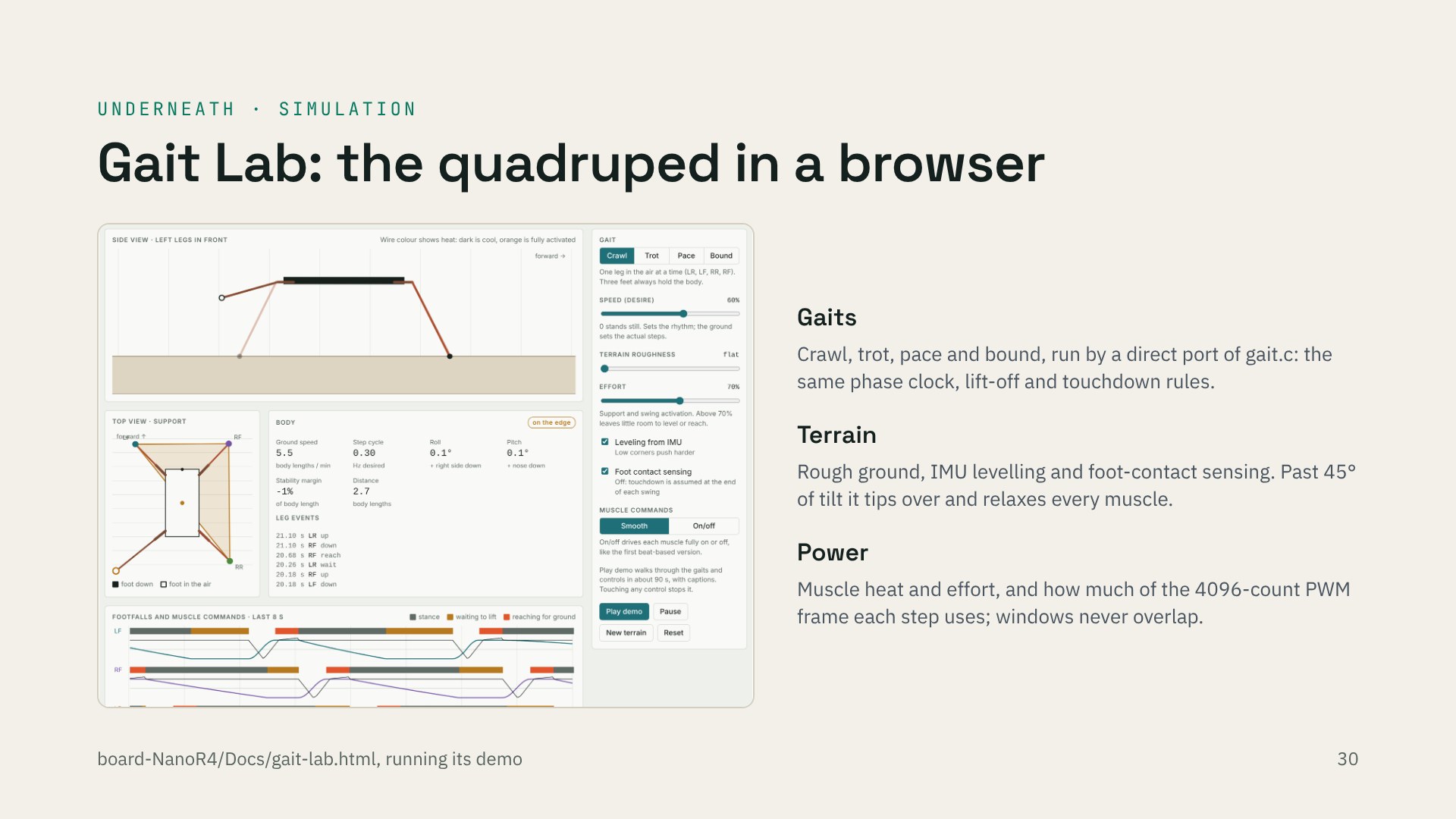
View the live slideshow: arrow keys or click to move through it, with the limb video playing on slide 7. Or try the Gait Lab simulation.

Slides

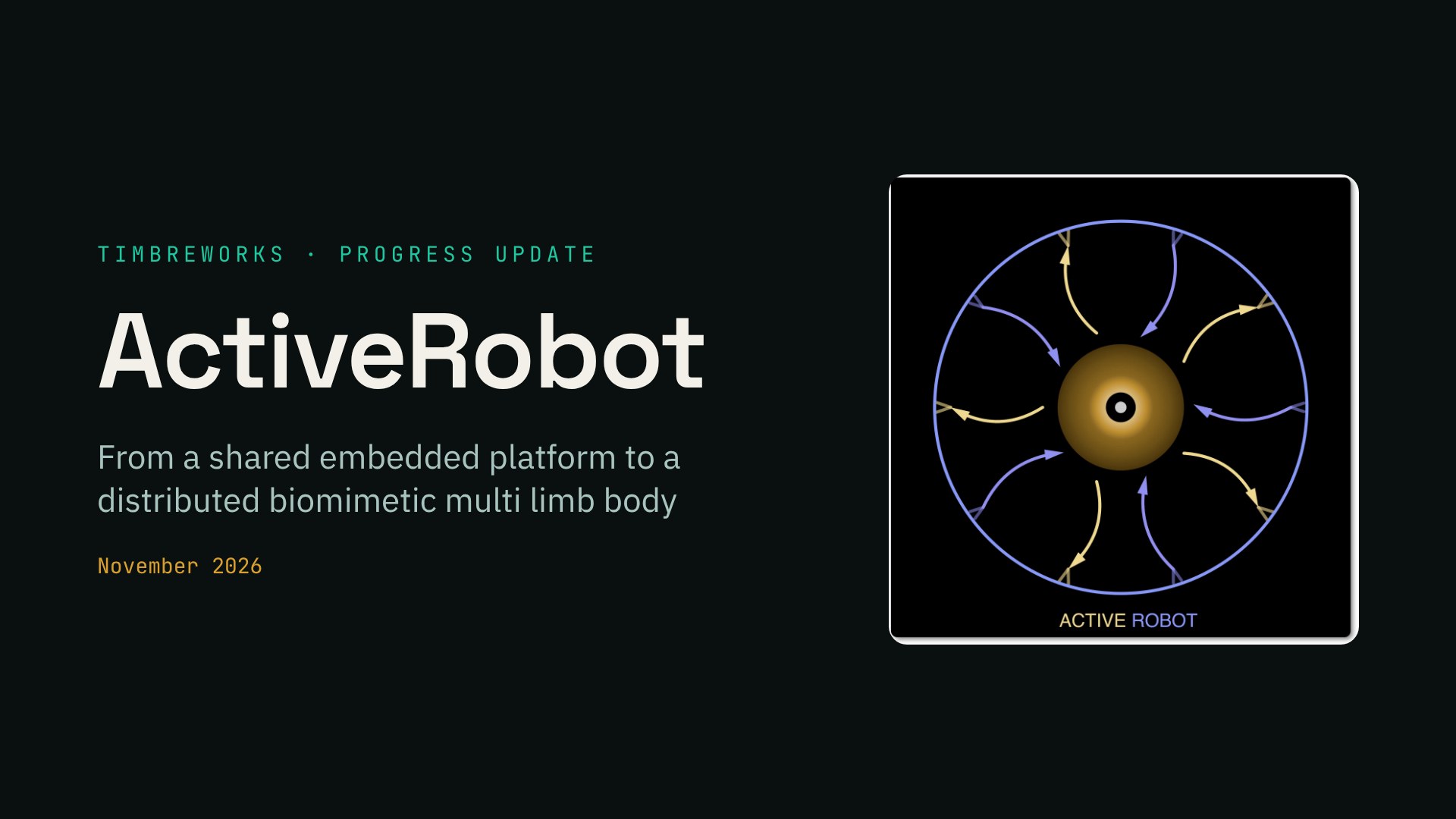
  1. ActiveRobot
  2. A muscle that feels its own actuation, usage, condition and pain — and remembers it.
  3. Strawbotics began with a motorless limb
  4. Eleven steps to a modular limb
  5. A limb that works, and something to drive it
  6. A reliable analog current loop
  7. A four-muscle limb, full movement
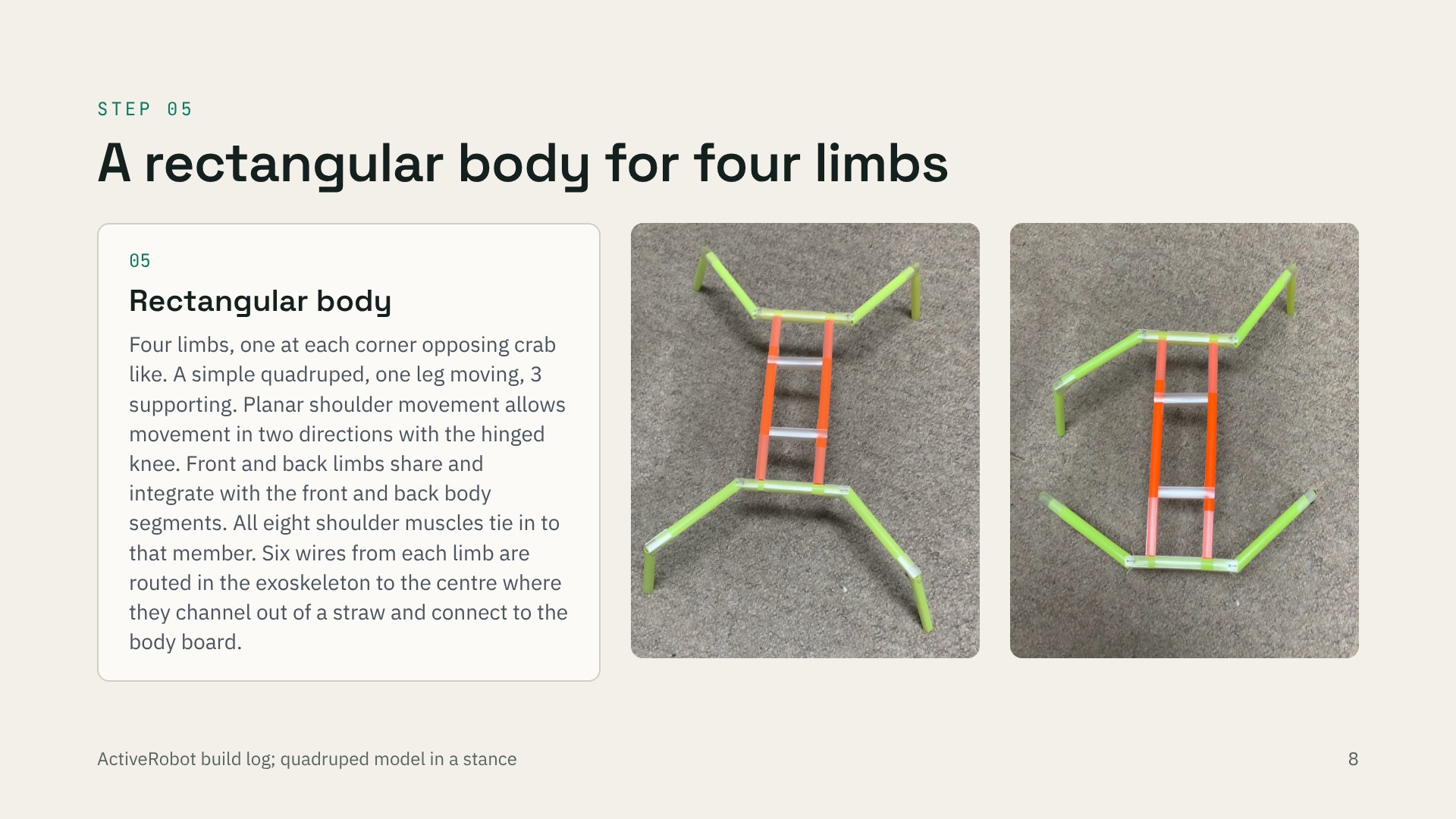
  8. A rectangular body for four limbs
  9. The first working analog body board
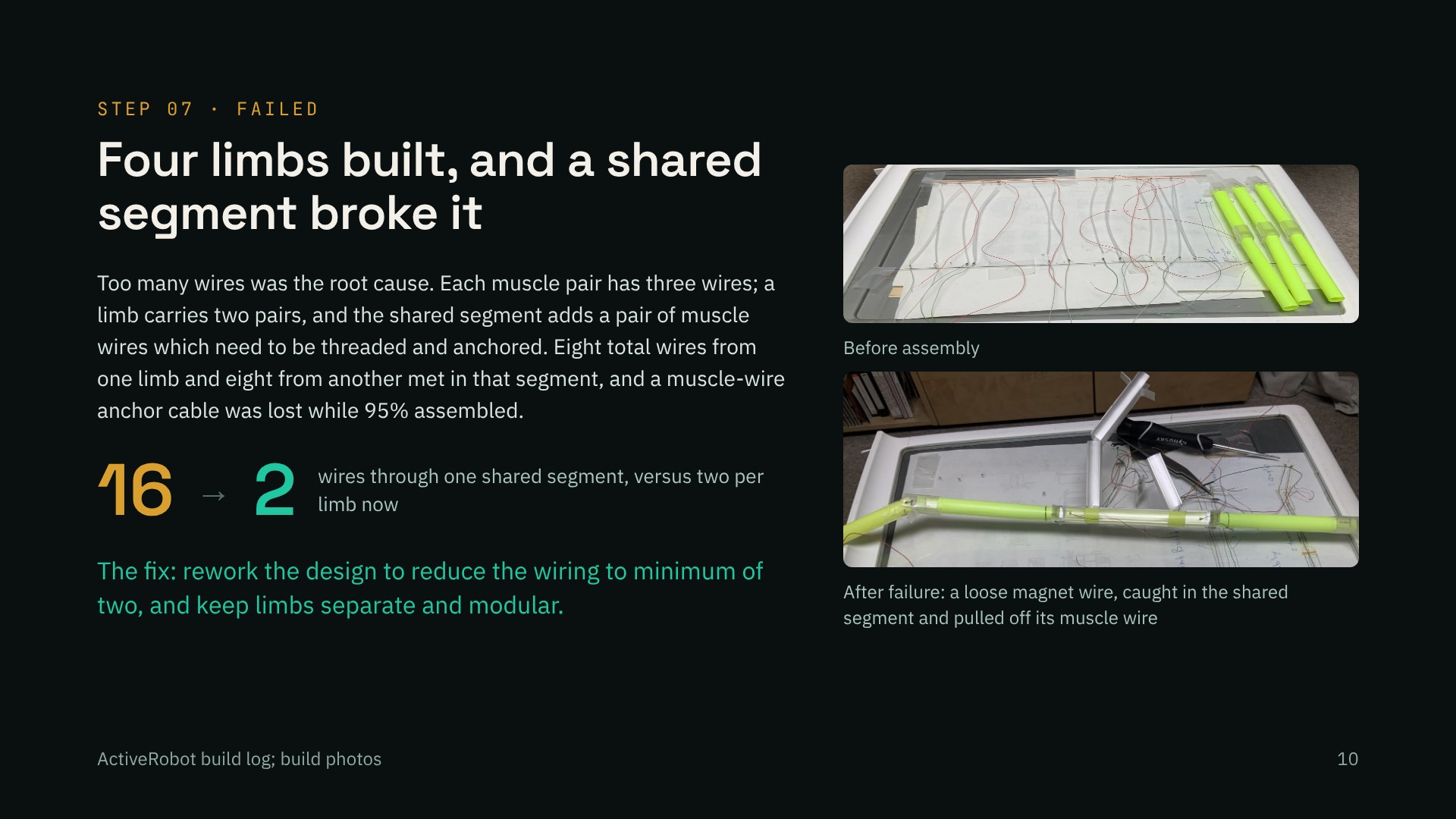
  10. Four limbs built, and a shared segment broke it
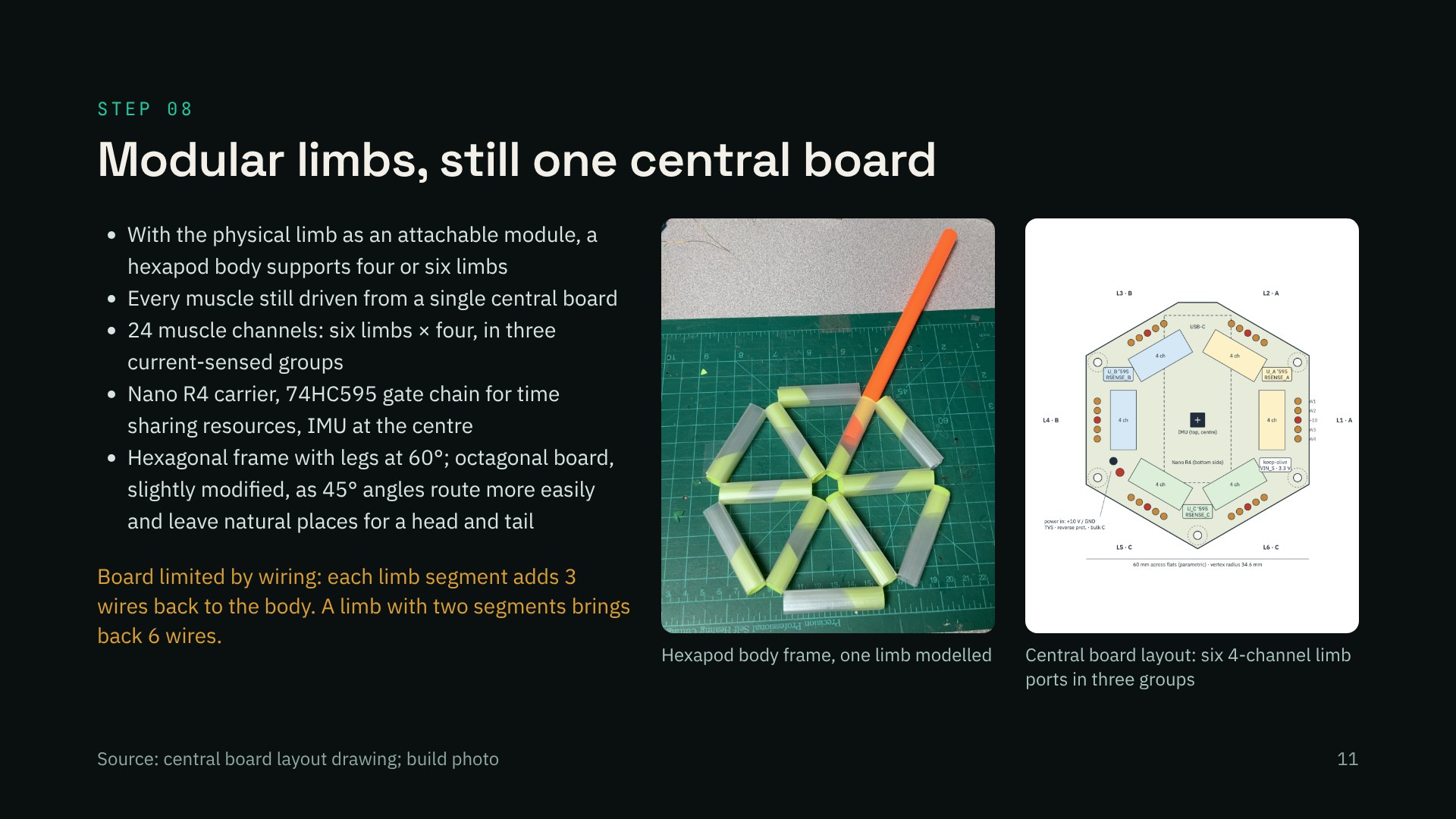
  11. Modular limbs, still one central board
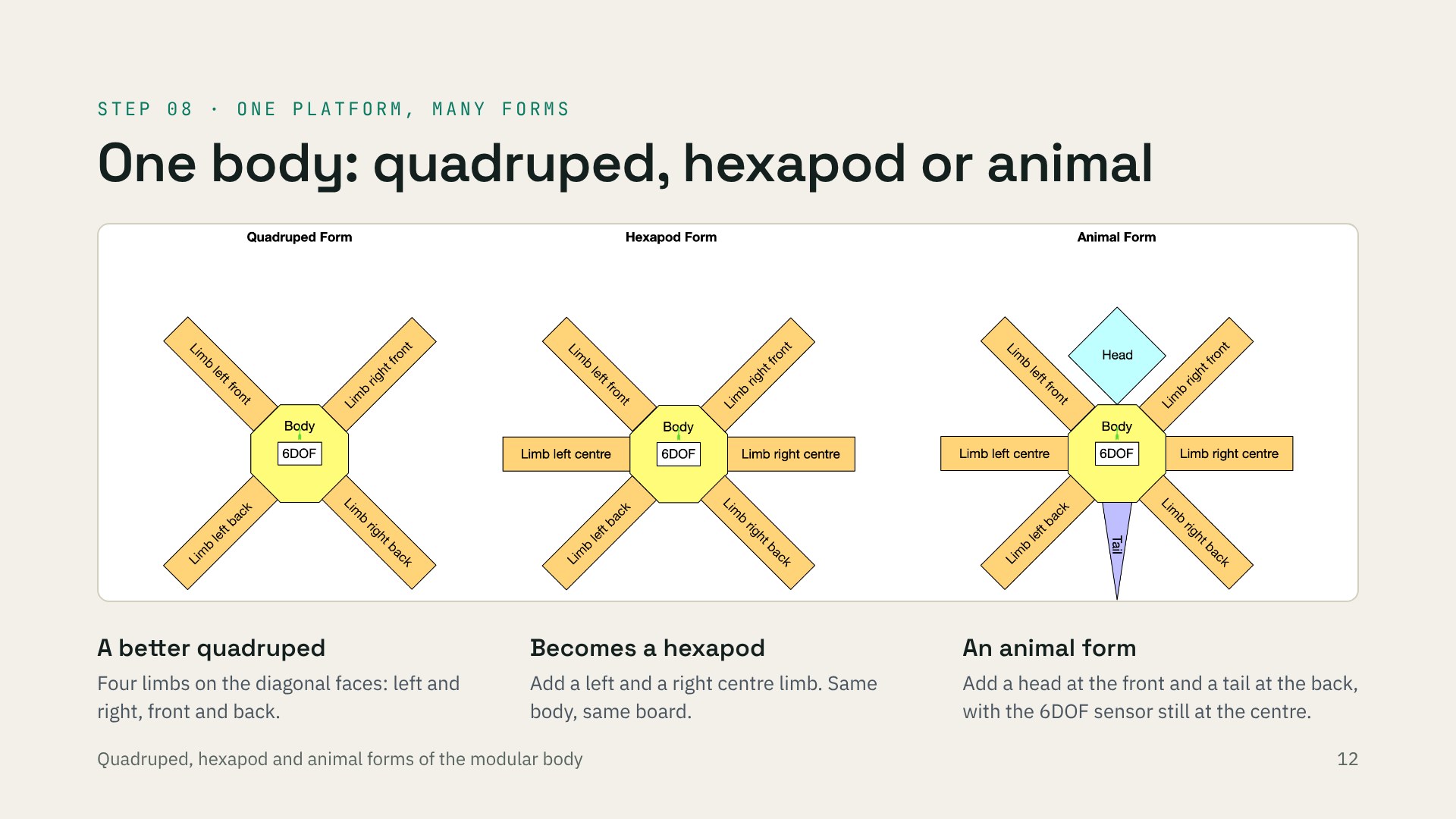
  12. One body: quadruped, hexapod or animal
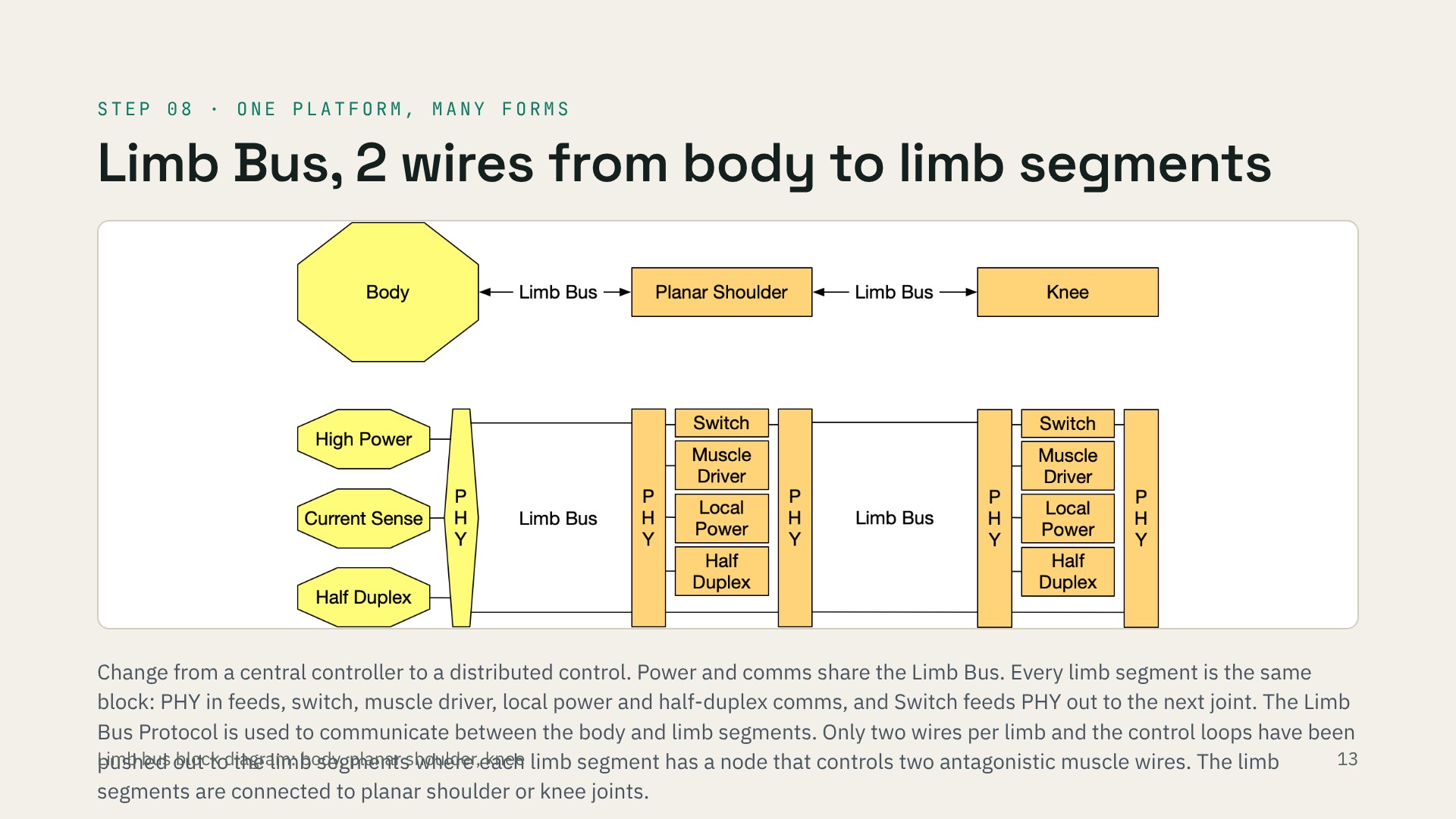
  13. Limb Bus, 2 wires from body to limb segments
  14. Modular segments open new body plans
  15. Same control loop, digital parts
  16. Phase transition detection
  17. Muscle safety
  18. Two wires per limb carry power and comms
  19. Two early boards, designed in KiCad
  20. The protocol is specified to the byte
  21. Volts down the bus, current back up
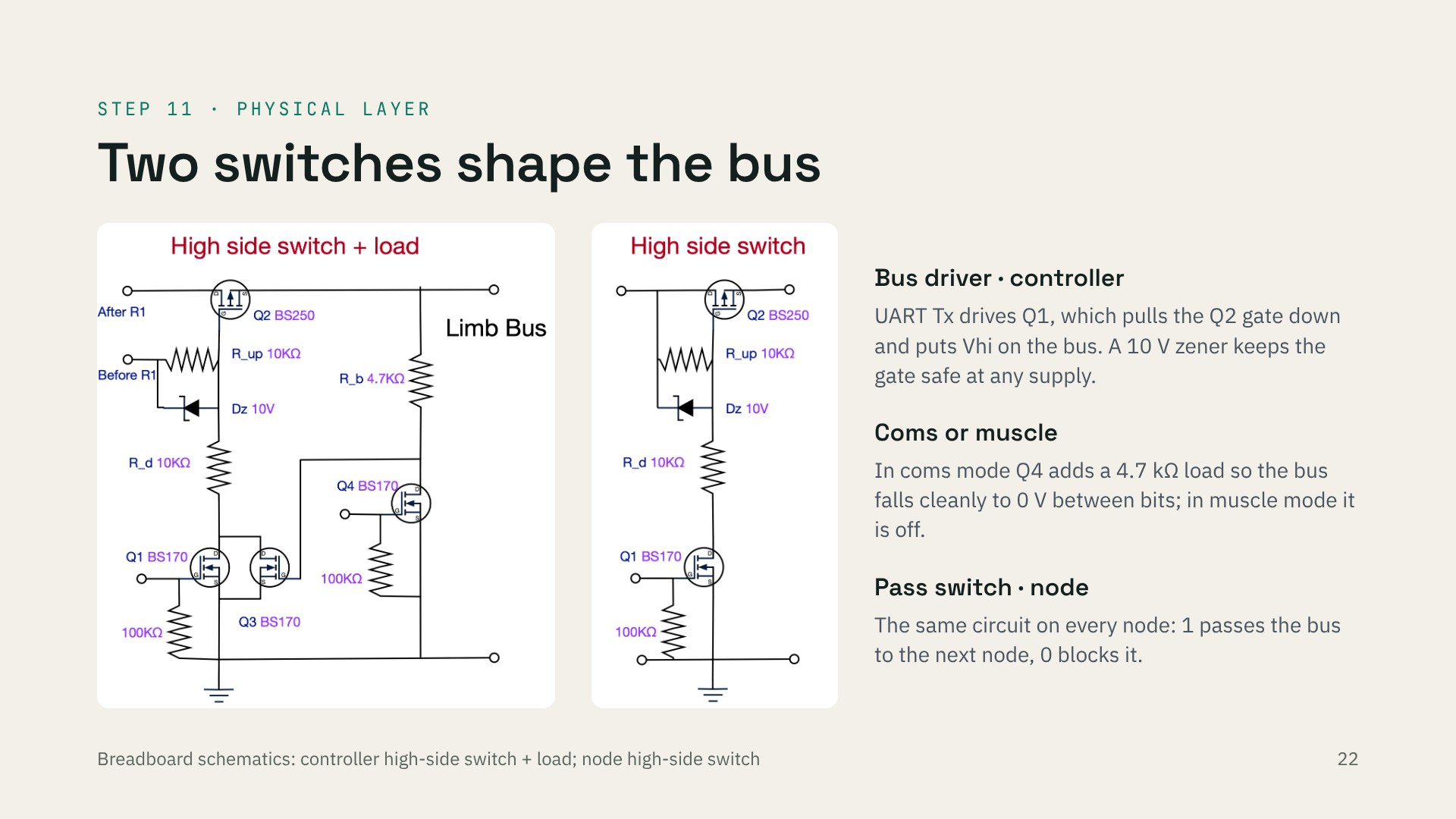
  22. Two switches shape the bus
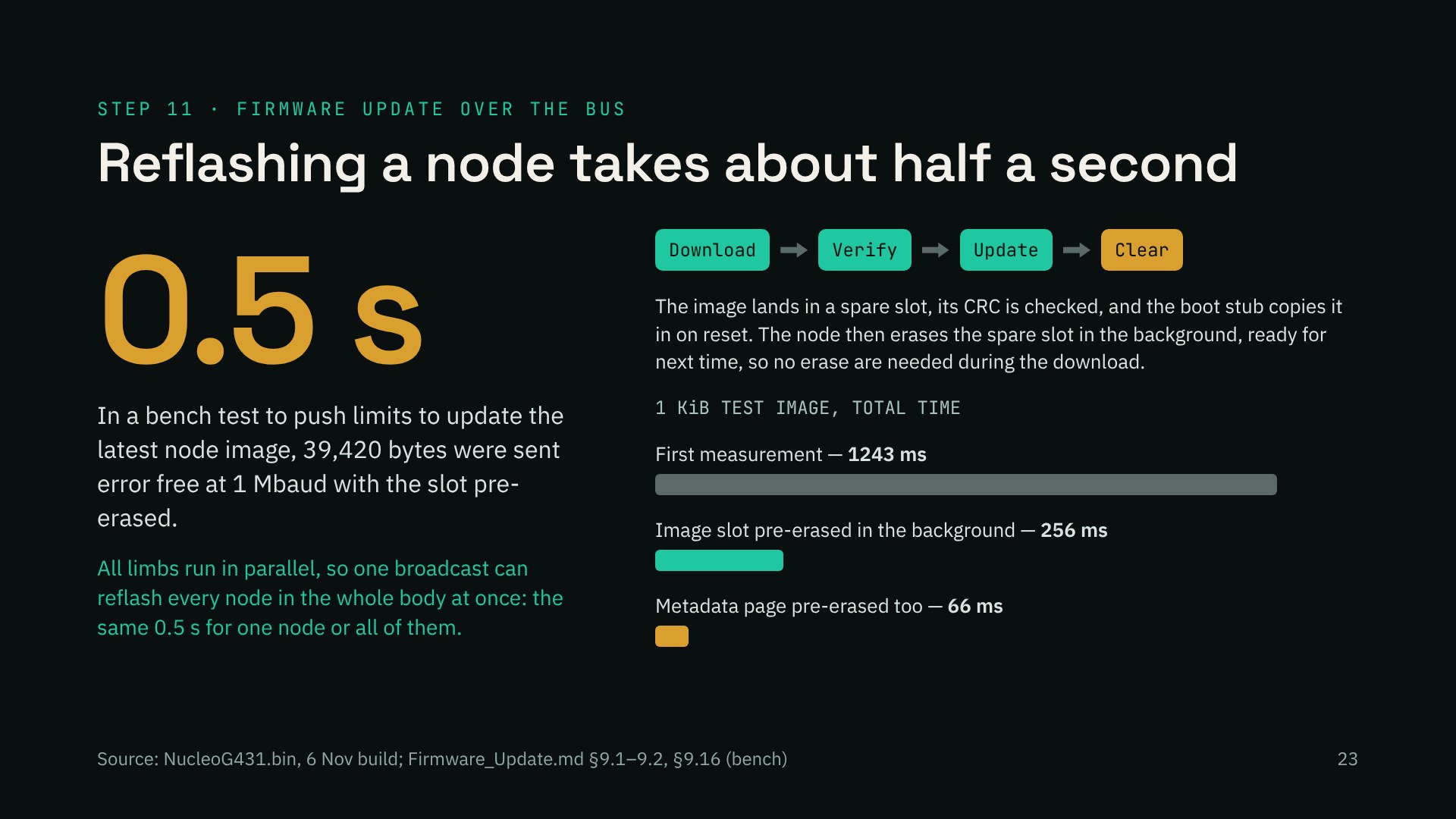
  23. Reflashing a node takes about half a second
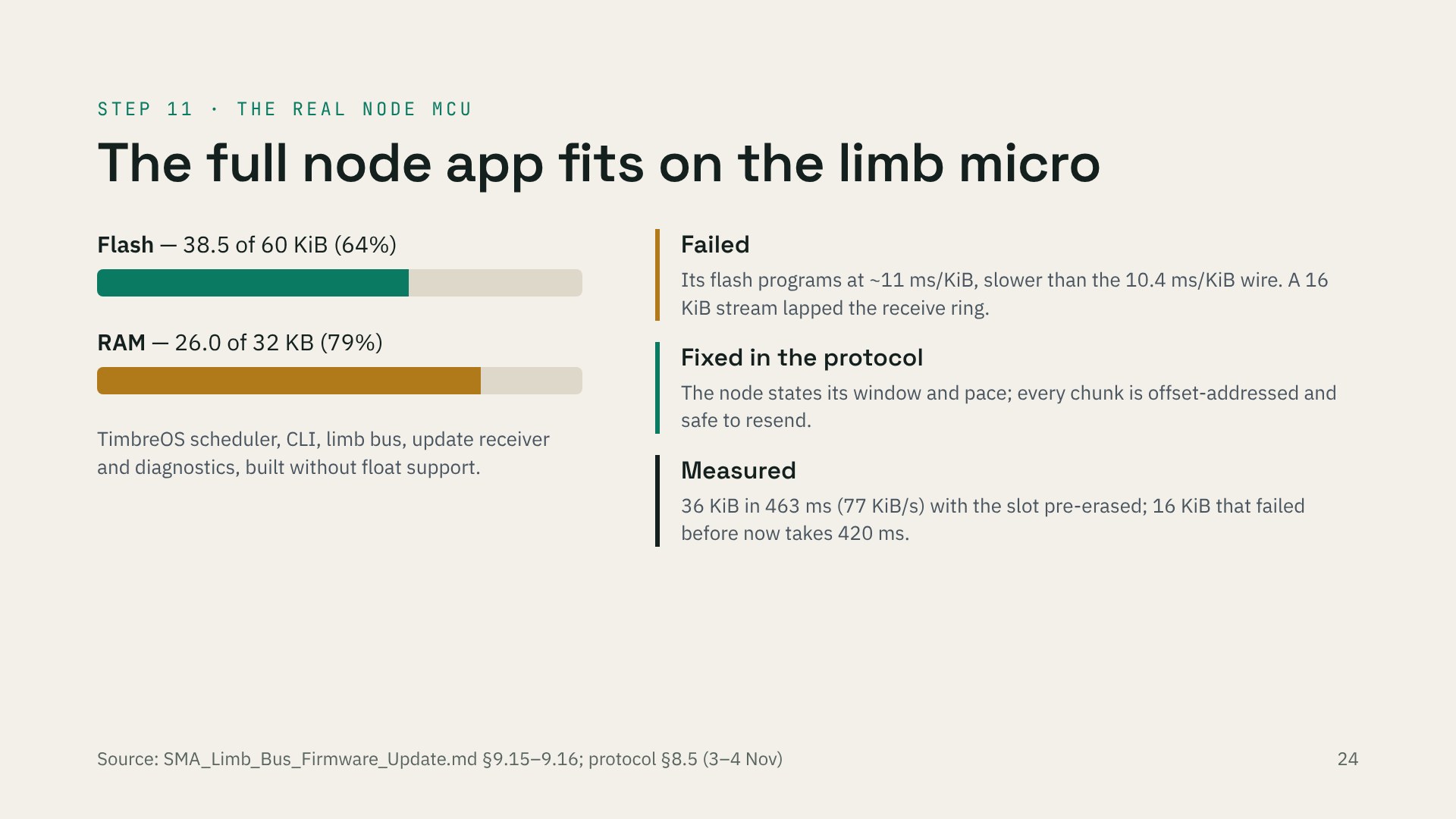
  24. The full node app fits on the limb micro
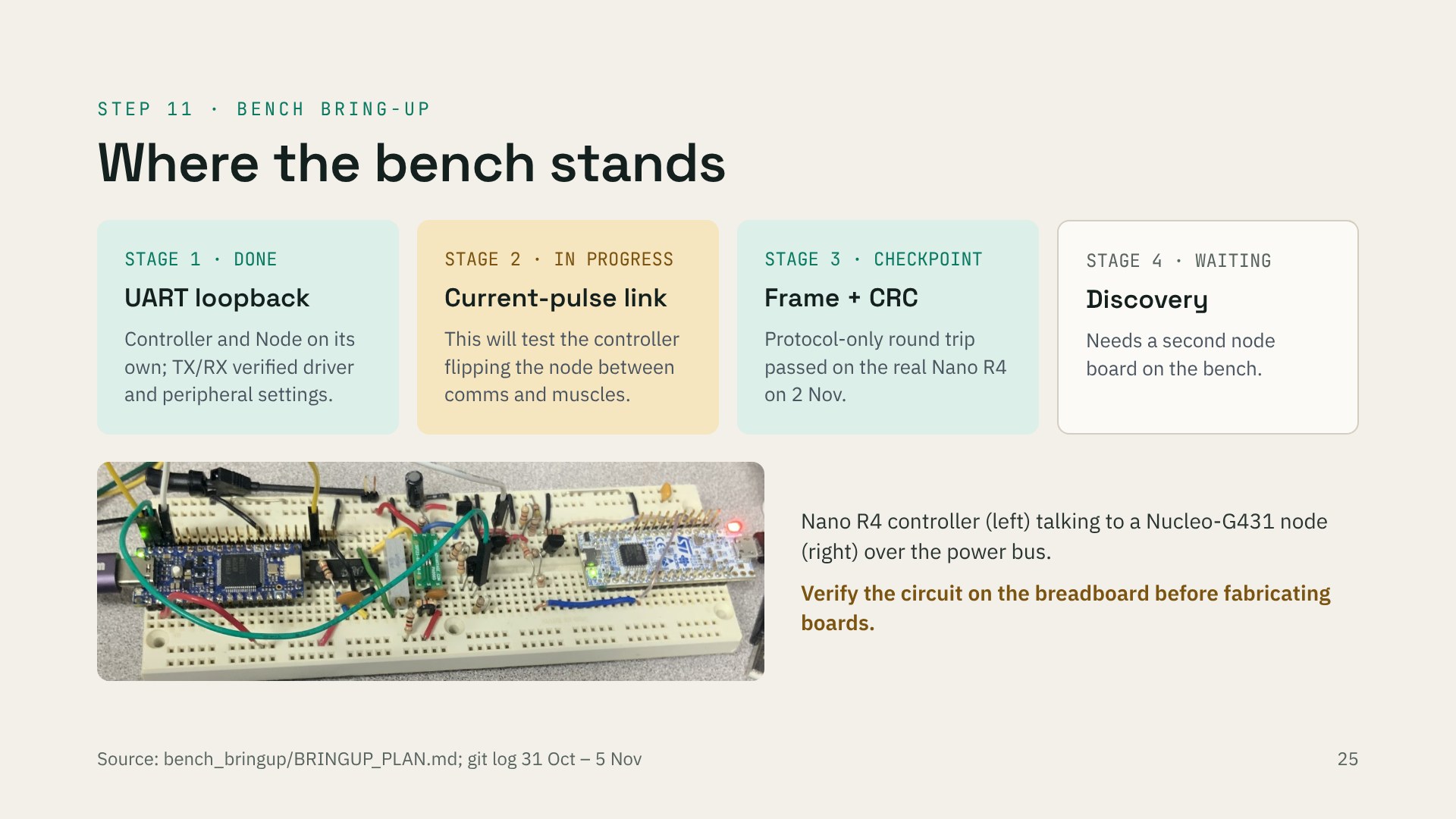
  25. Where the bench stands
  26. Immediate Agenda
  27. TimbreOS, one shared layer, nine board ports
  28. A command line in every node
  29. Muscle-level software
  30. Gait Lab: the quadruped in a browser
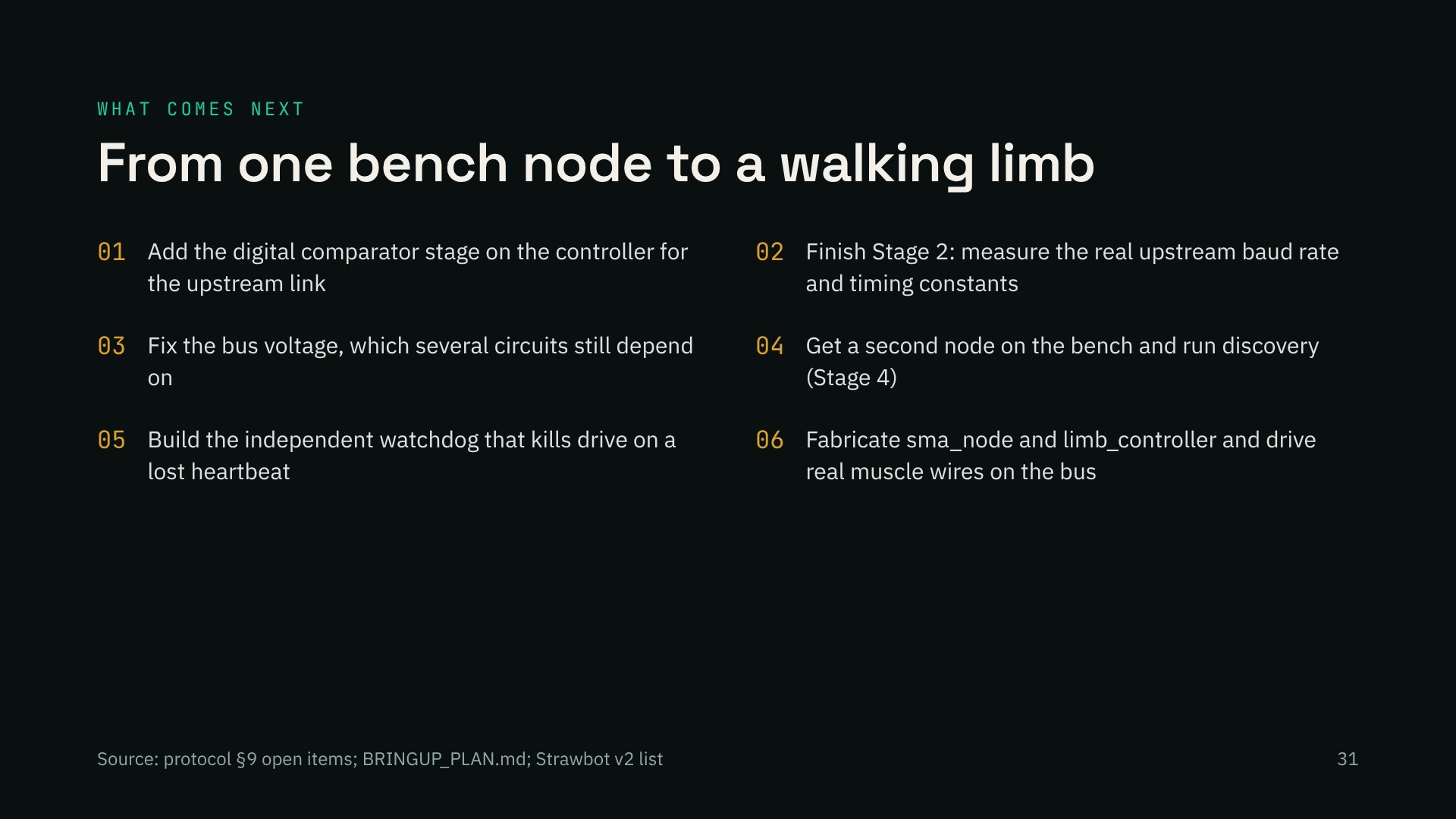
  31. From one bench node to a walking limb
  32. Updates to follow...

1. ActiveRobot

Slide 1: ActiveRobot


2. A muscle that feels its own actuation, usage, condition and pain — and remembers it.

Slide 2: A muscle that feels its own actuation, usage, condition and pain — and remembers it.


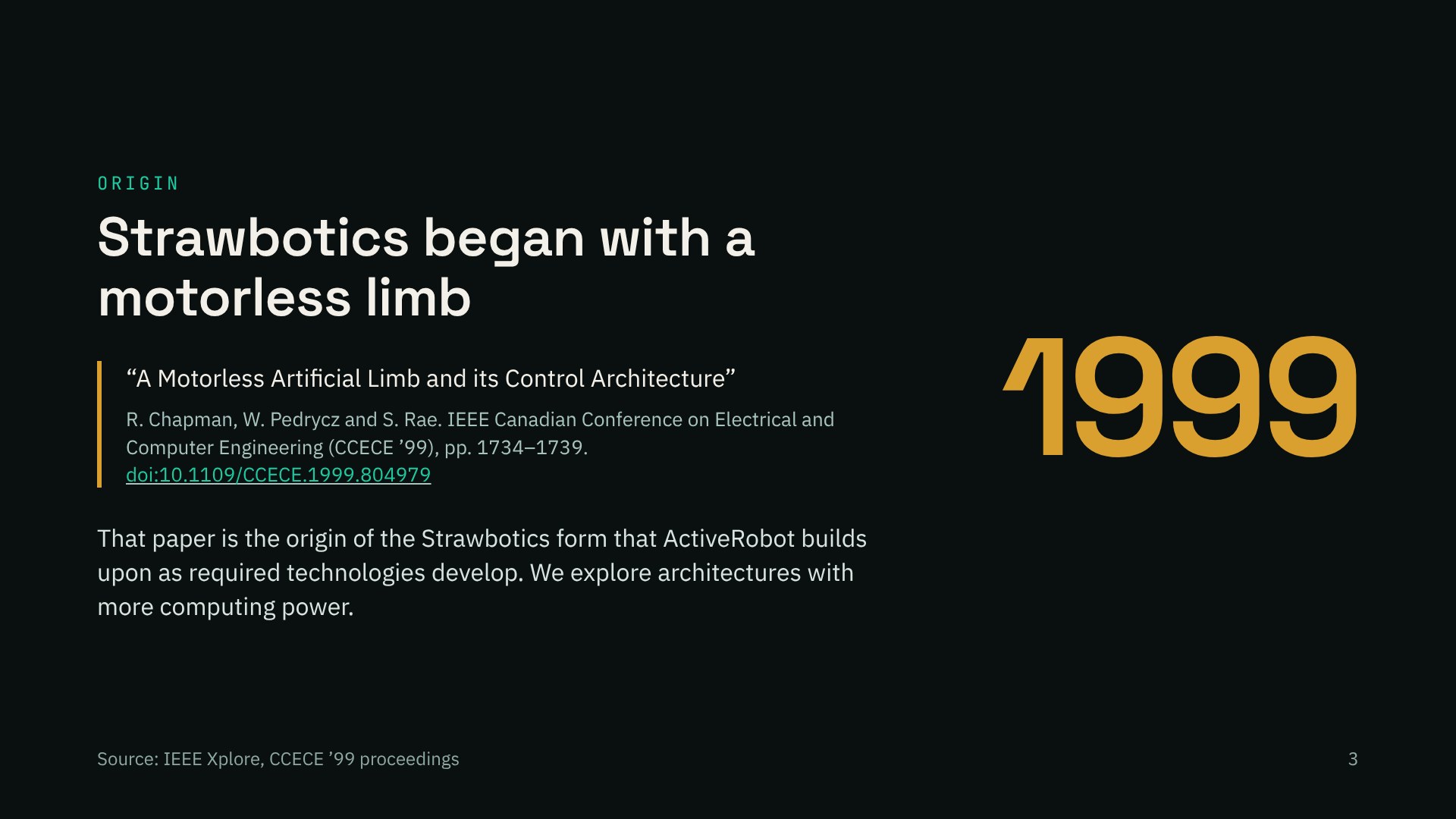
3. Strawbotics began with a motorless limb

Slide 3: Strawbotics began with a motorless limb


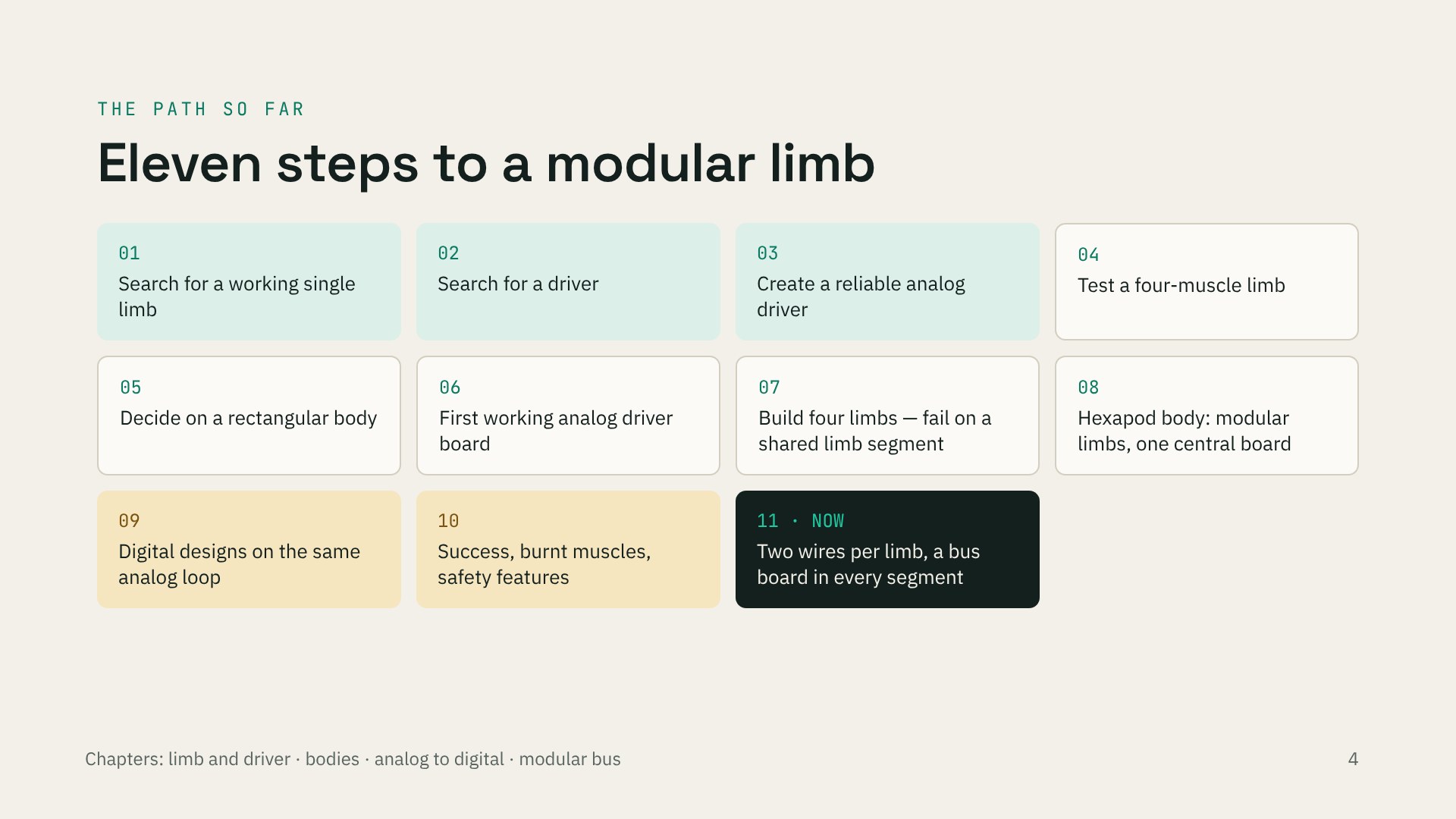
4. Eleven steps to a modular limb

Slide 4: Eleven steps to a modular limb


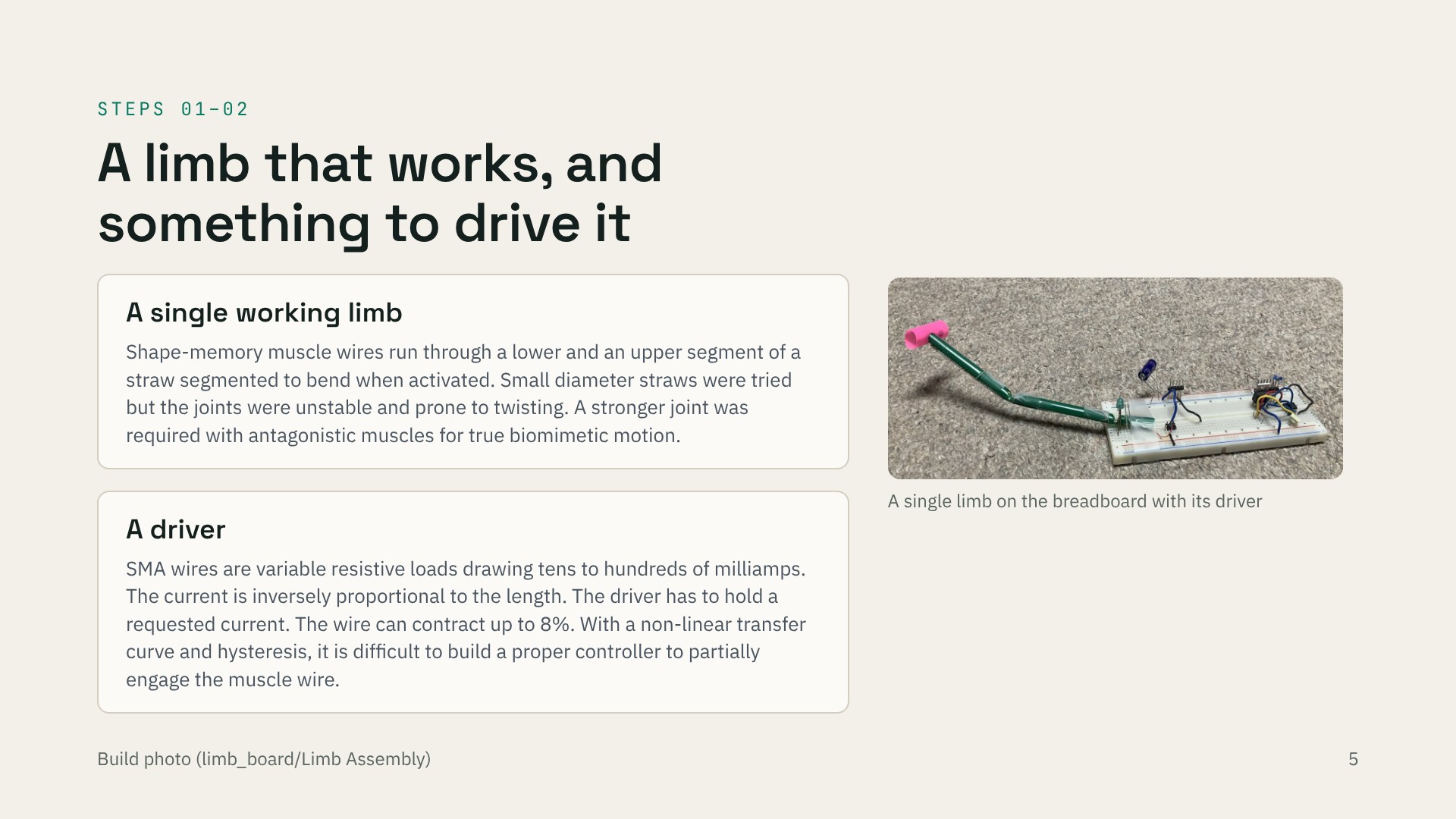
5. A limb that works, and something to drive it

Slide 5: A limb that works, and something to drive it


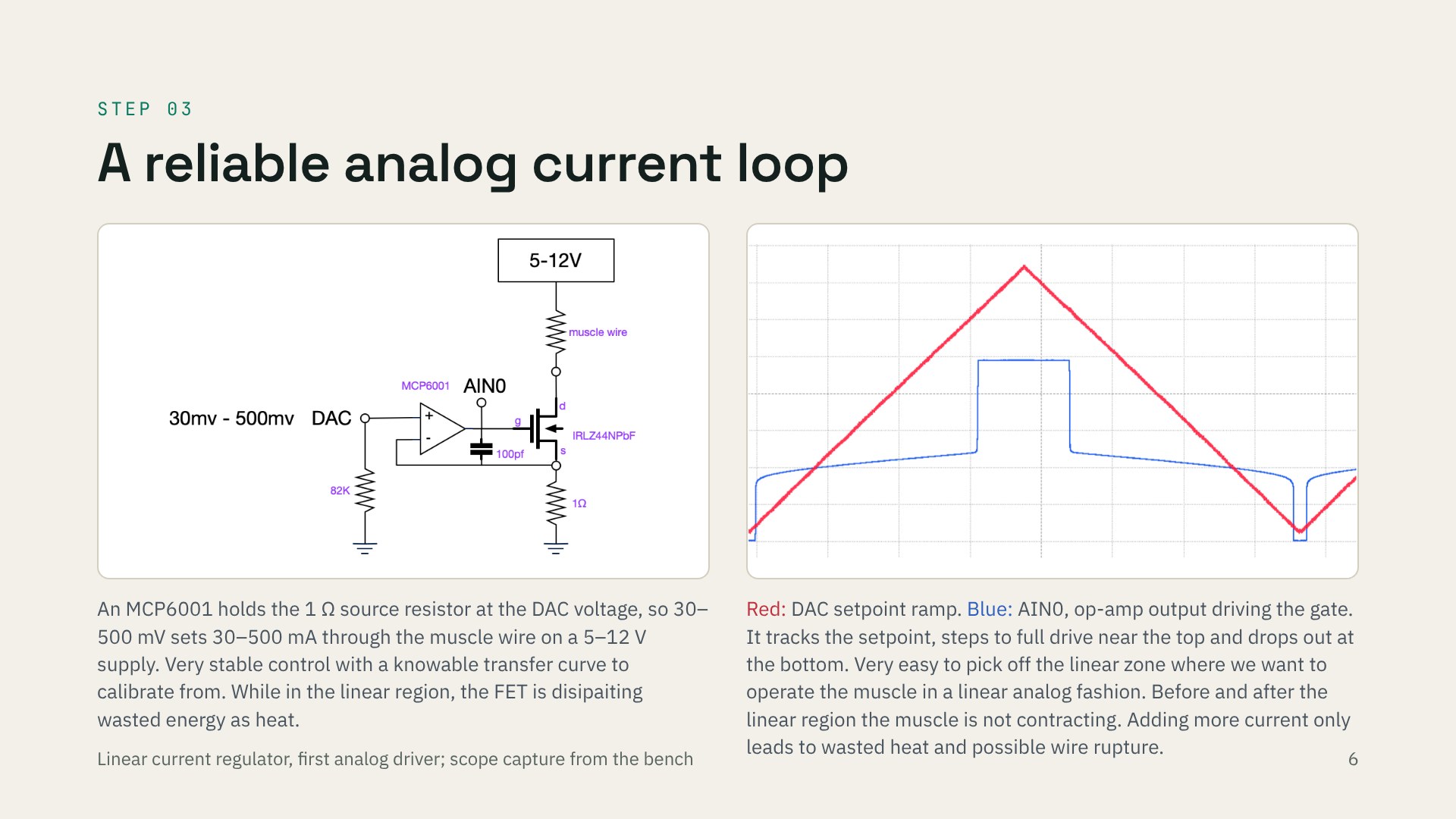
6. A reliable analog current loop

Slide 6: A reliable analog current loop


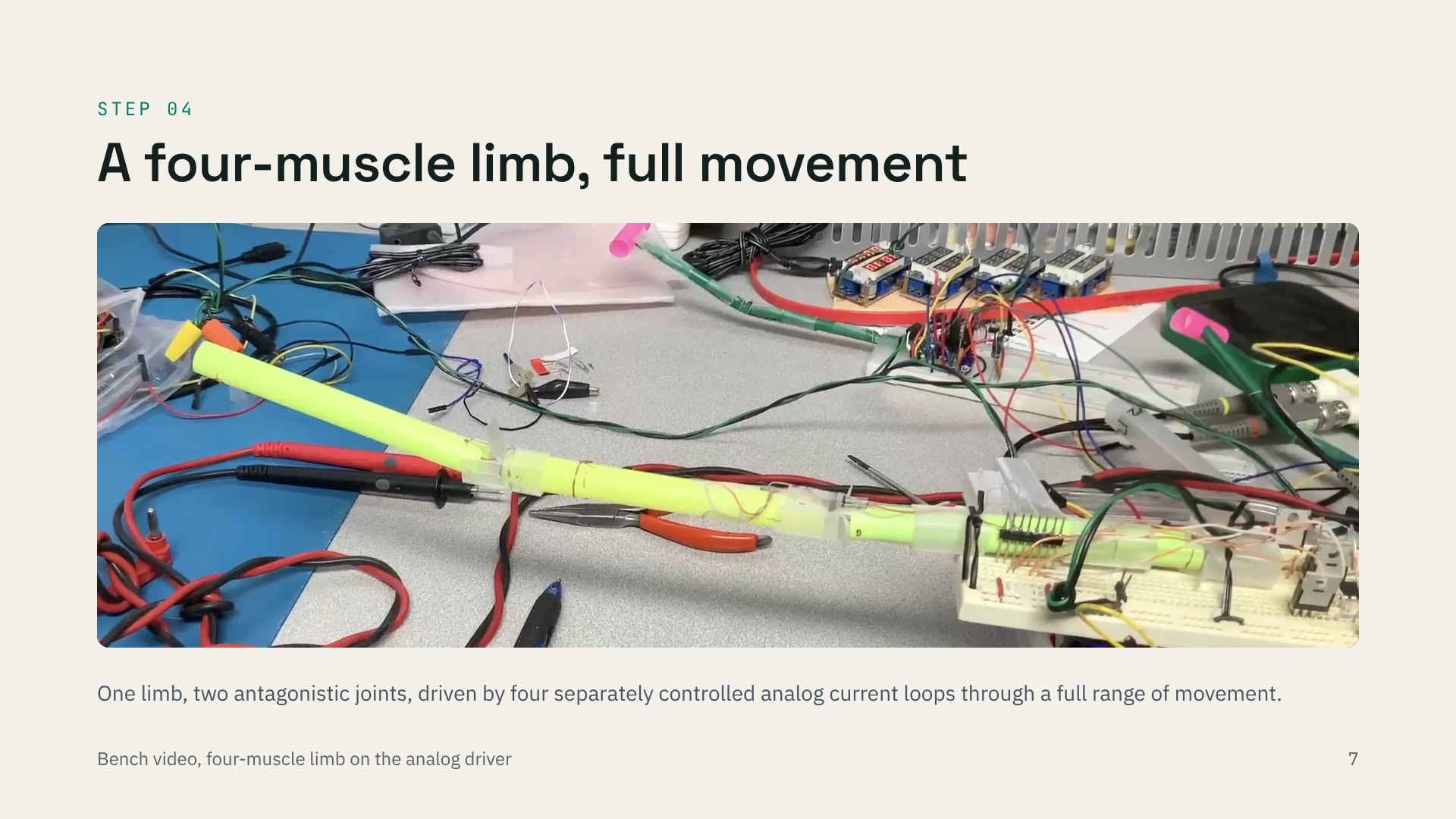
7. A four-muscle limb, full movement

Slide 7: A four-muscle limb, full movement

▶ Watch the four-muscle limb video

8. A rectangular body for four limbs

Slide 8: A rectangular body for four limbs


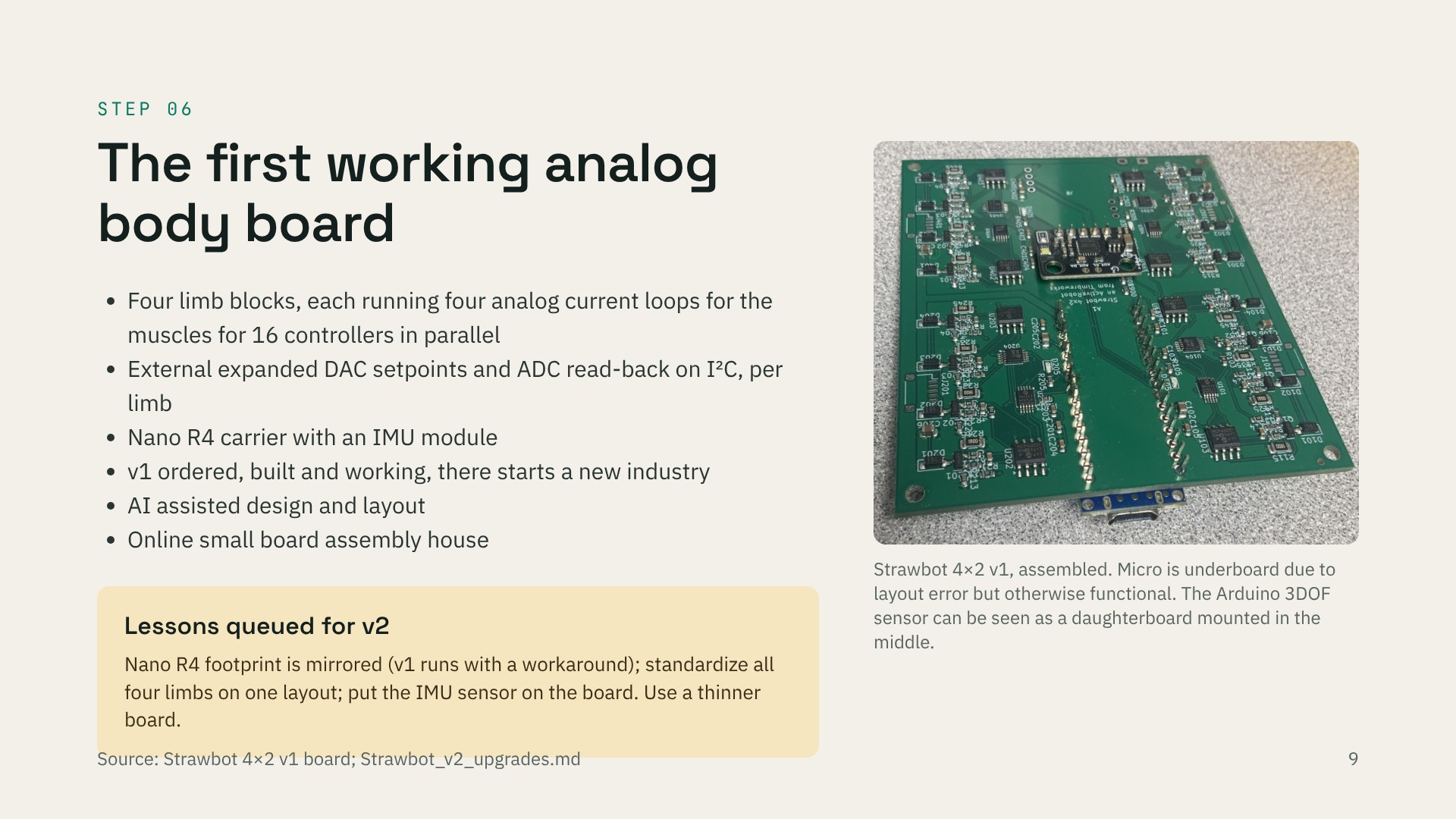
9. The first working analog body board

Slide 9: The first working analog body board


10. Four limbs built, and a shared segment broke it

Slide 10: Four limbs built, and a shared segment broke it


11. Modular limbs, still one central board

Slide 11: Modular limbs, still one central board


12. One body: quadruped, hexapod or animal

Slide 12: One body: quadruped, hexapod or animal


13. Limb Bus, 2 wires from body to limb segments

Slide 13: Limb Bus, 2 wires from body to limb segments


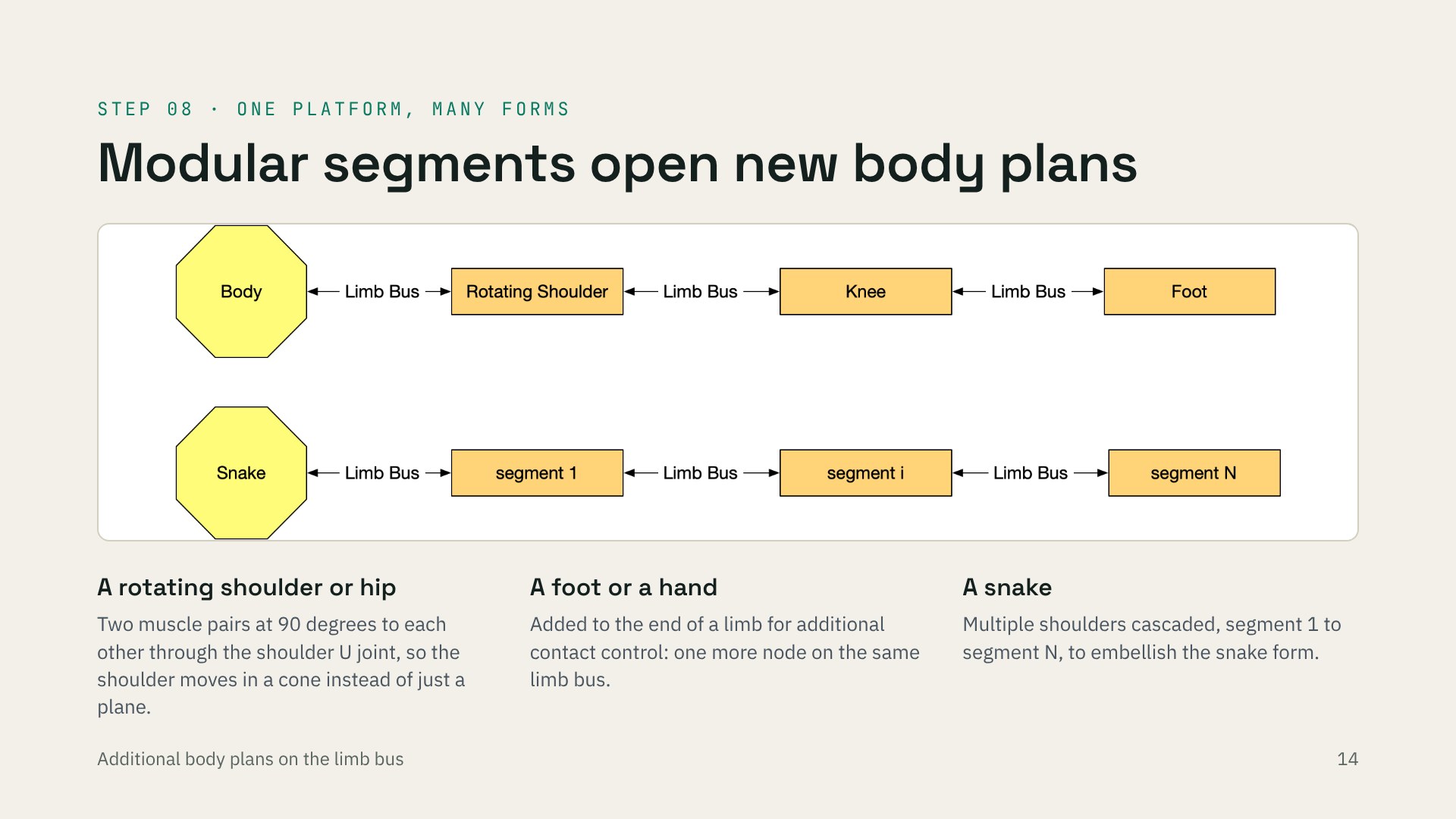
14. Modular segments open new body plans

Slide 14: Modular segments open new body plans


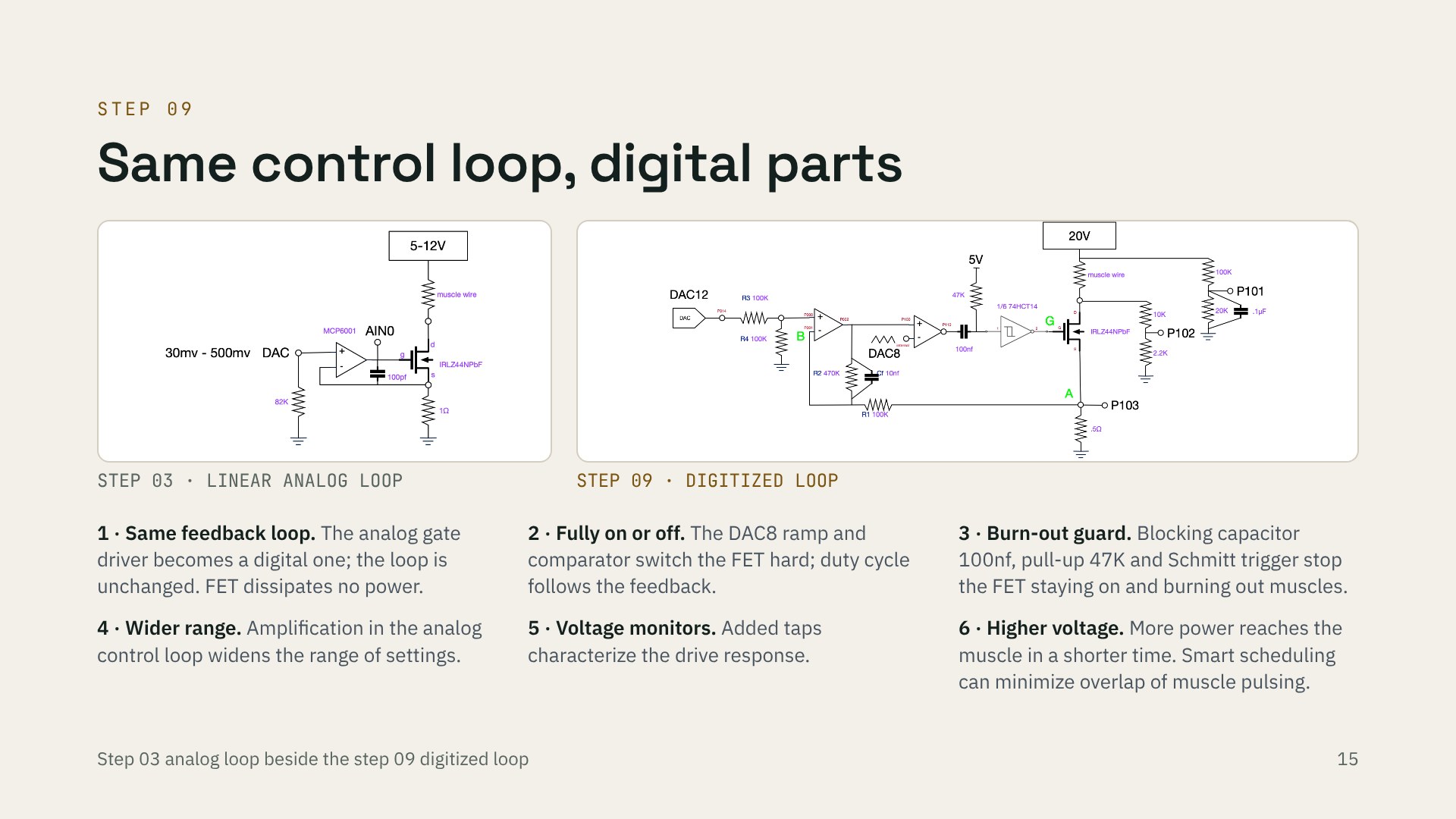
15. Same control loop, digital parts

Slide 15: Same control loop, digital parts


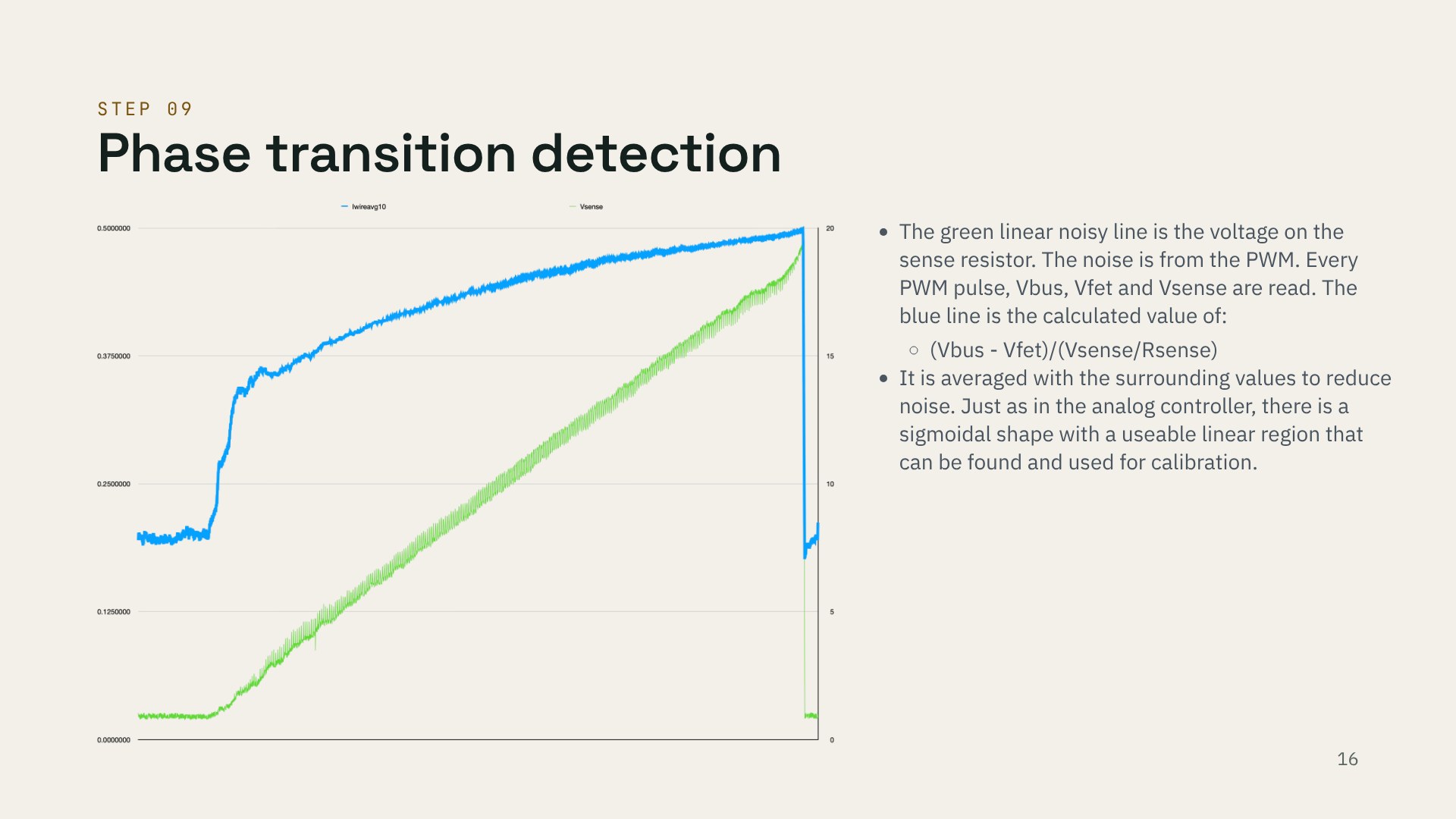
16. Phase transition detection

Slide 16: Phase transition detection


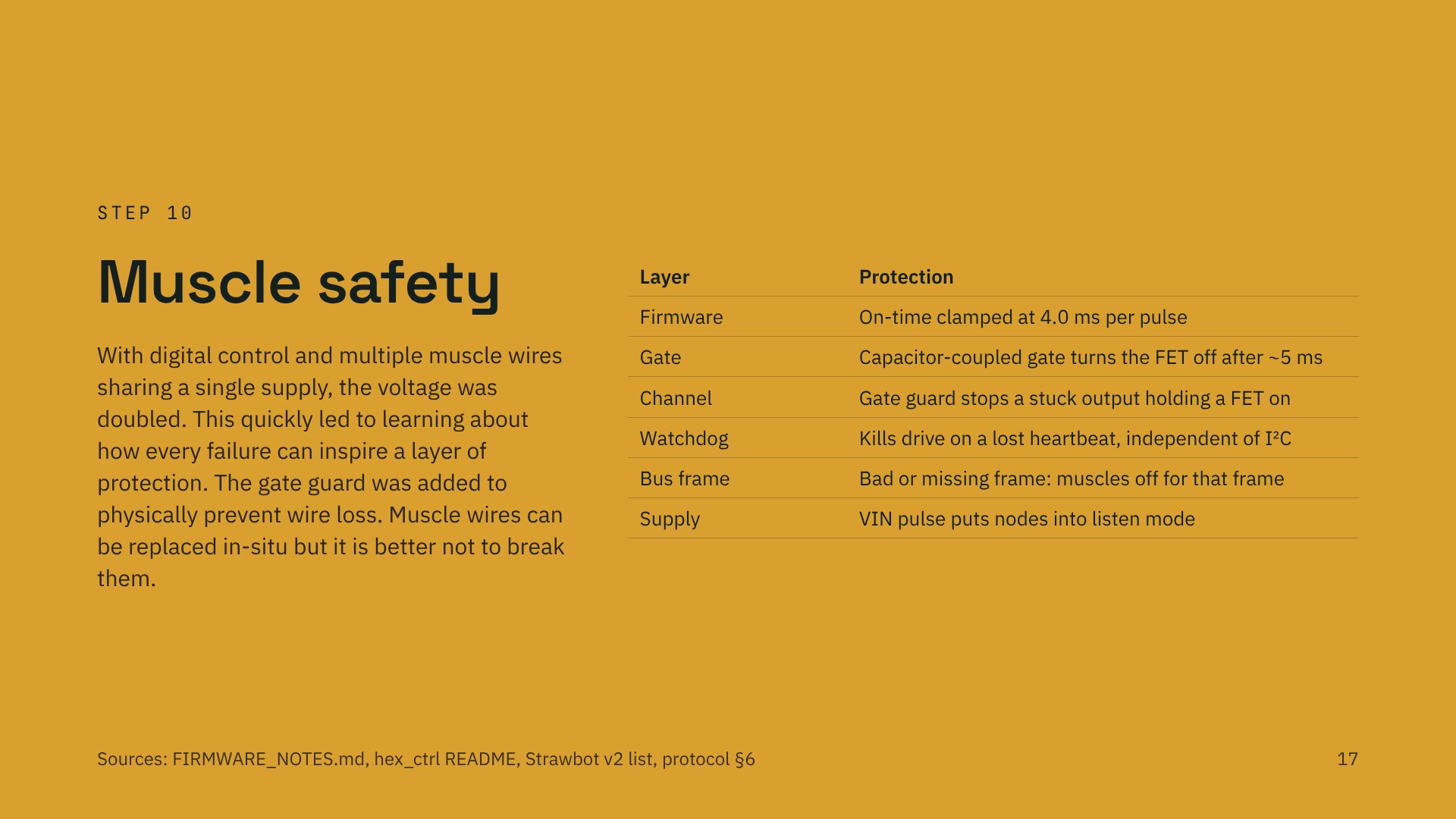
17. Muscle safety

Slide 17: Muscle safety


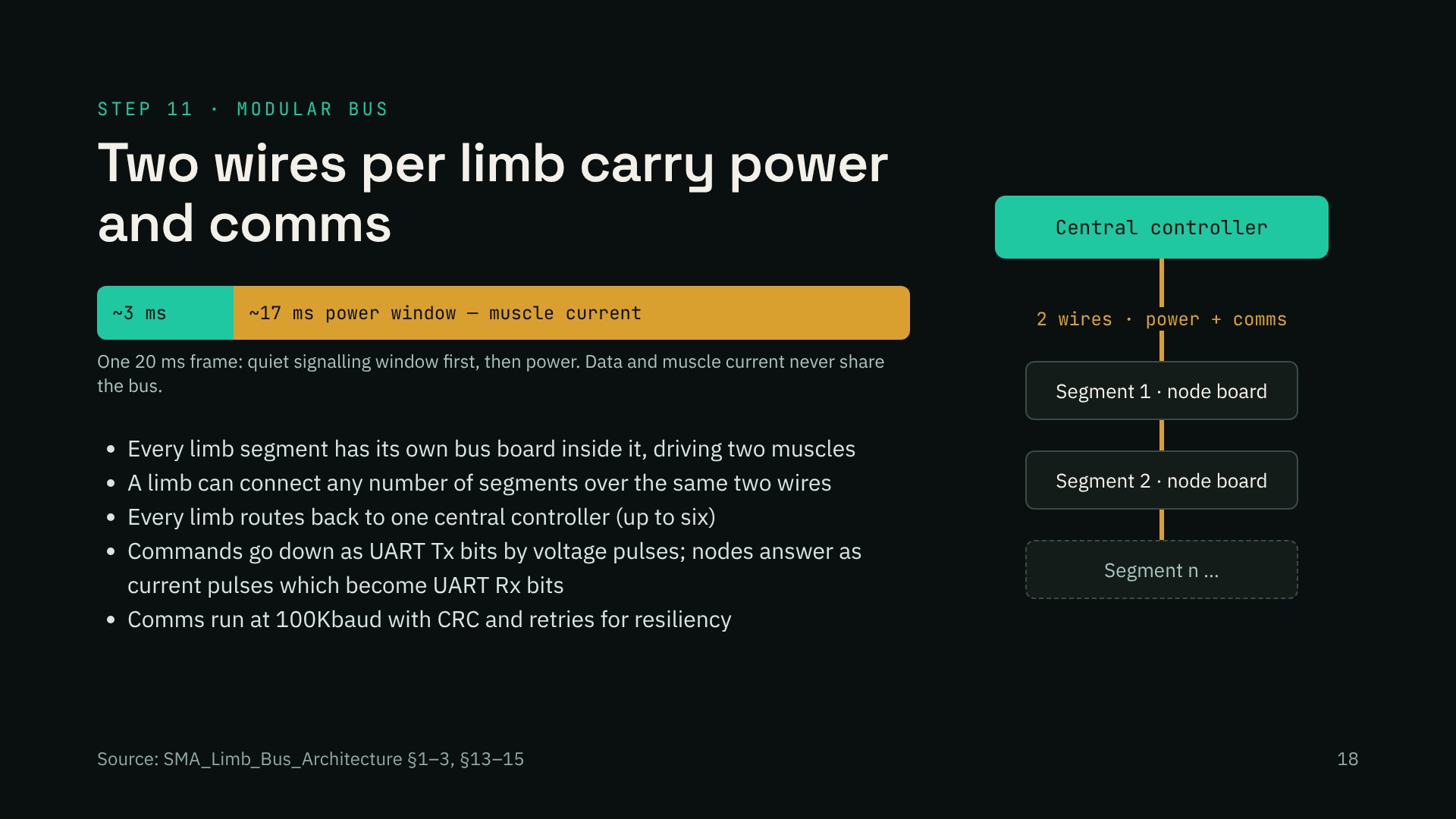
18. Two wires per limb carry power and comms

Slide 18: Two wires per limb carry power and comms


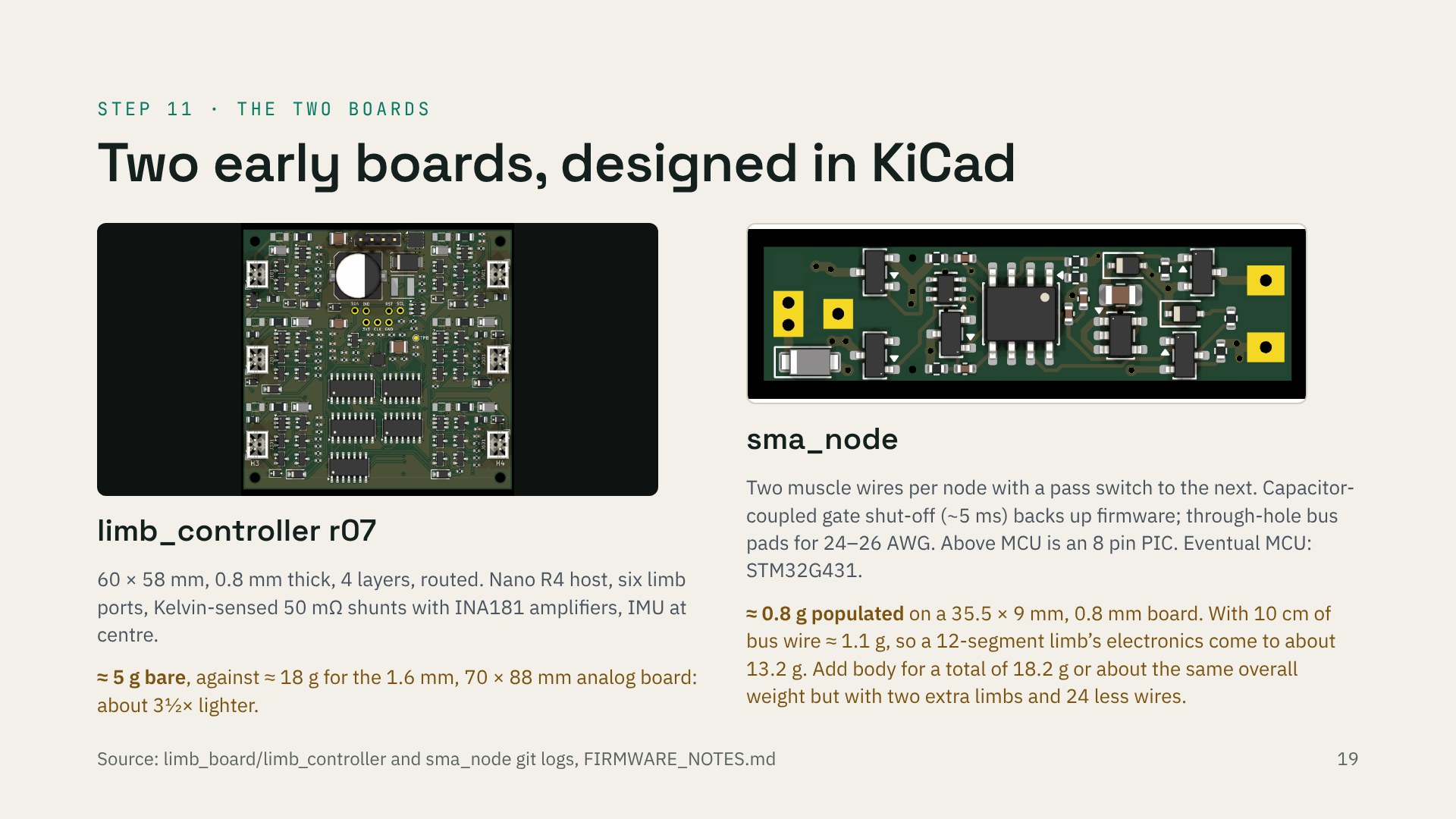
19. Two early boards, designed in KiCad

Slide 19: Two early boards, designed in KiCad


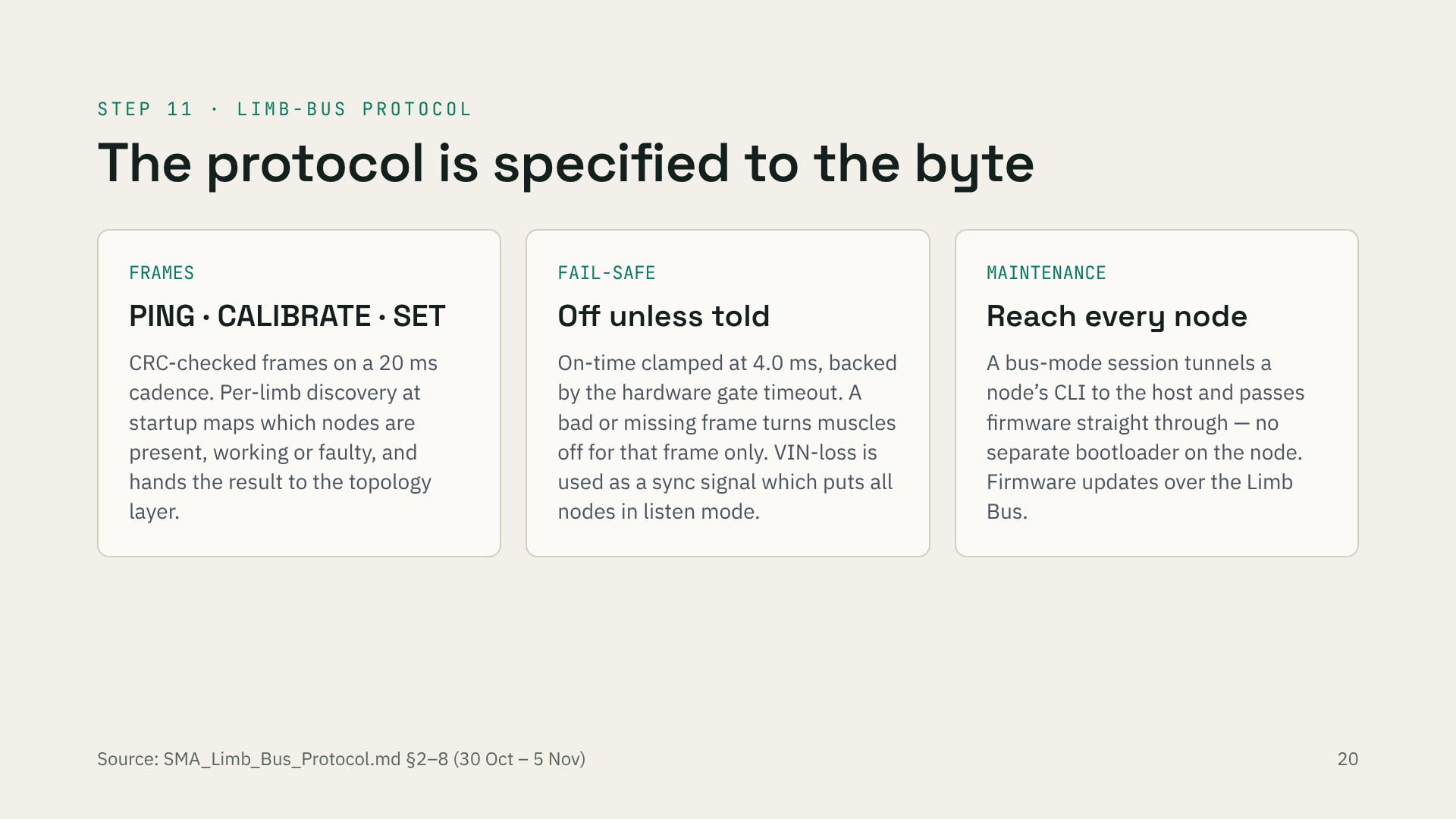
20. The protocol is specified to the byte

Slide 20: The protocol is specified to the byte


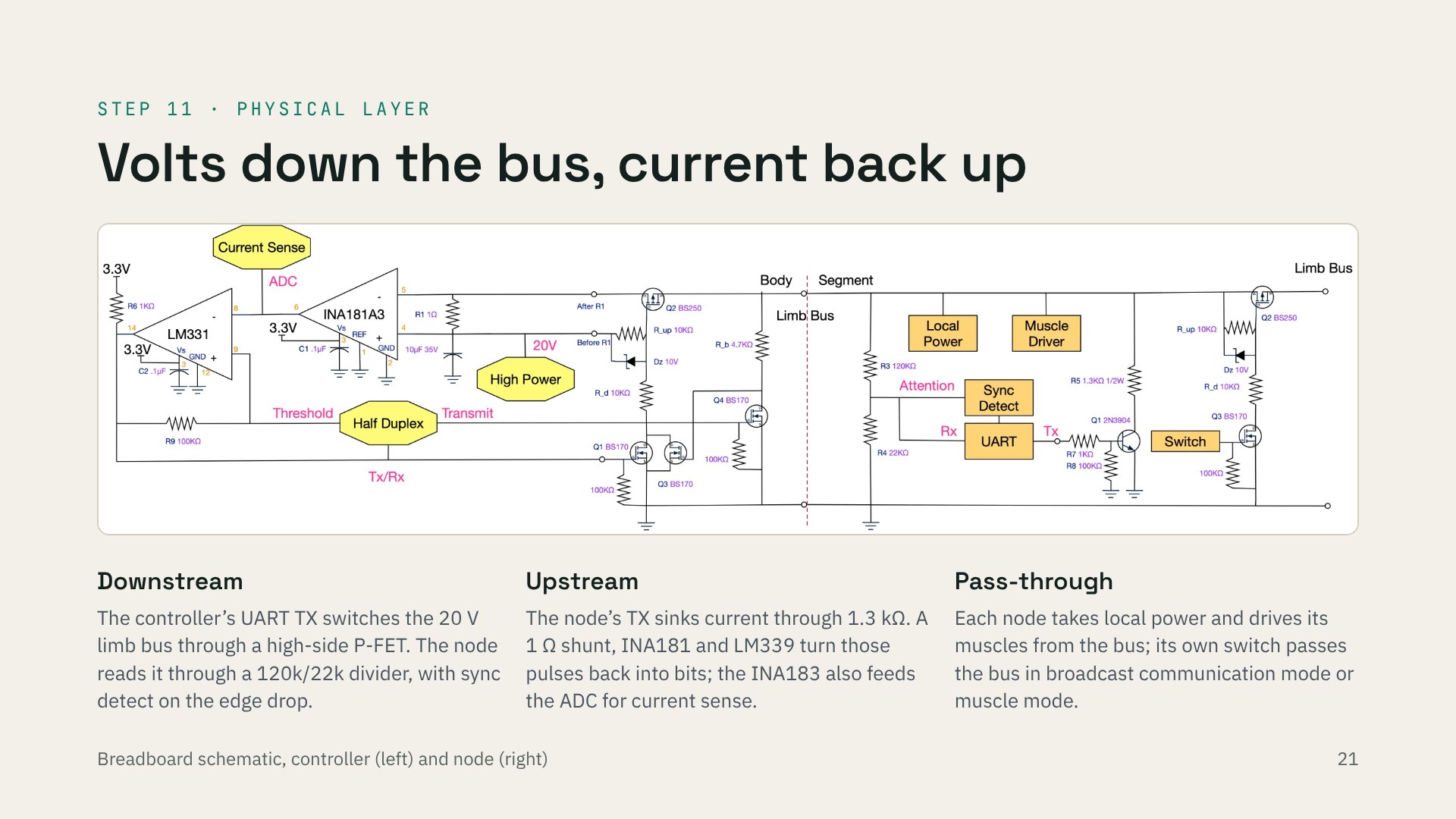
21. Volts down the bus, current back up

Slide 21: Volts down the bus, current back up


22. Two switches shape the bus

Slide 22: Two switches shape the bus


23. Reflashing a node takes about half a second

Slide 23: Reflashing a node takes about half a second


24. The full node app fits on the limb micro

Slide 24: The full node app fits on the limb micro


25. Where the bench stands

Slide 25: Where the bench stands


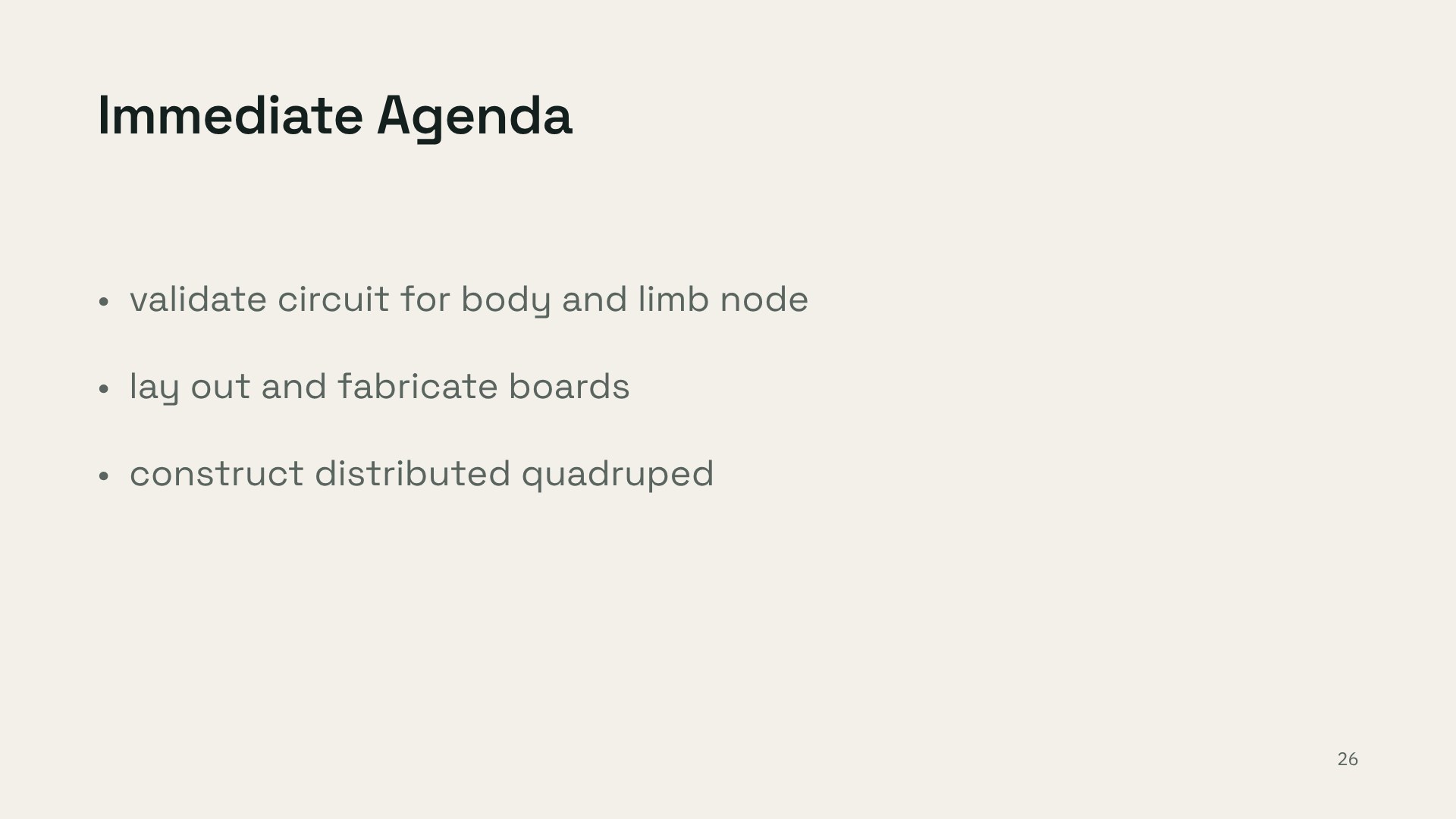
26. Immediate Agenda

Slide 26: Immediate Agenda


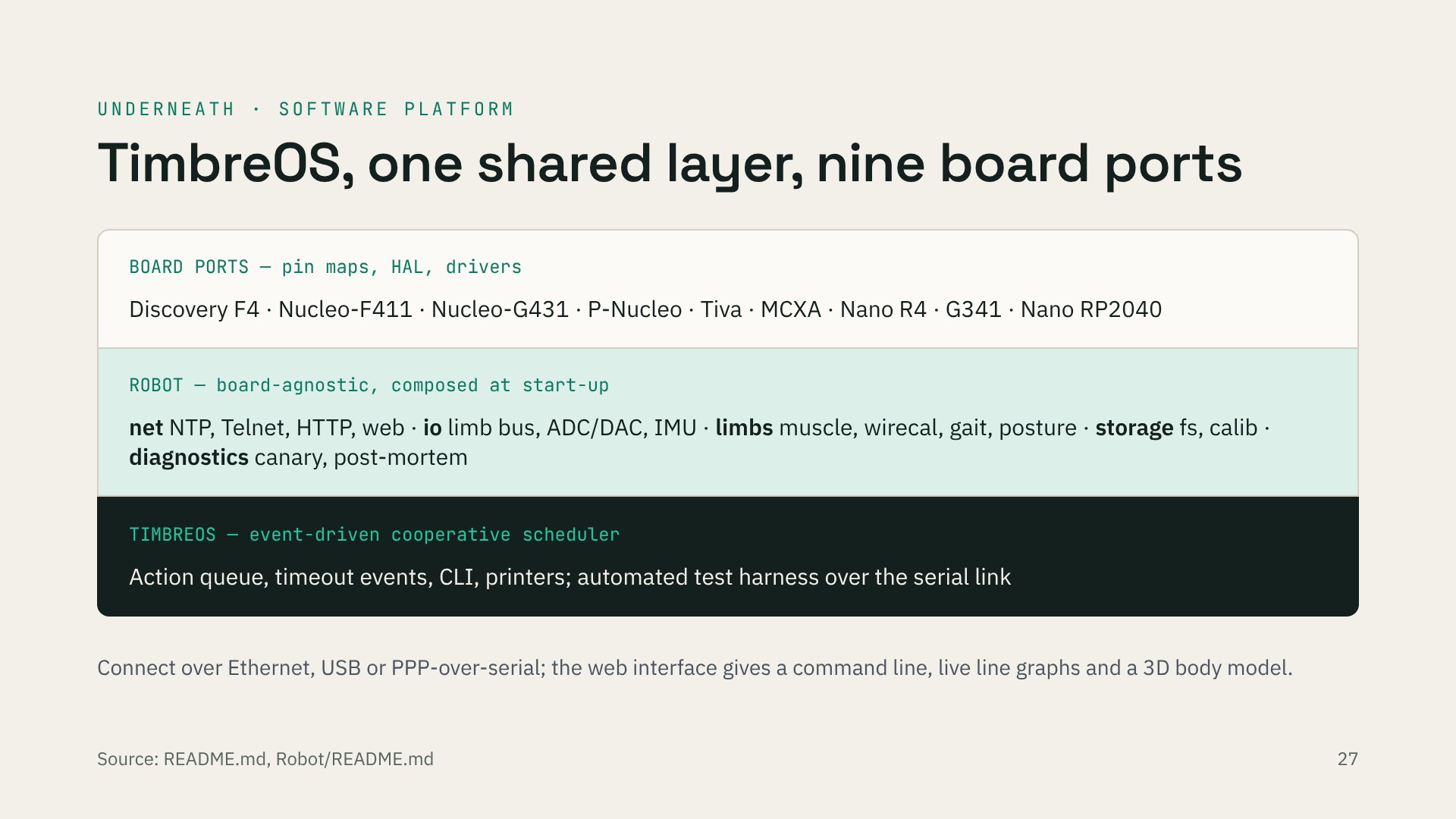
27. TimbreOS, one shared layer, nine board ports

Slide 27: TimbreOS, one shared layer, nine board ports


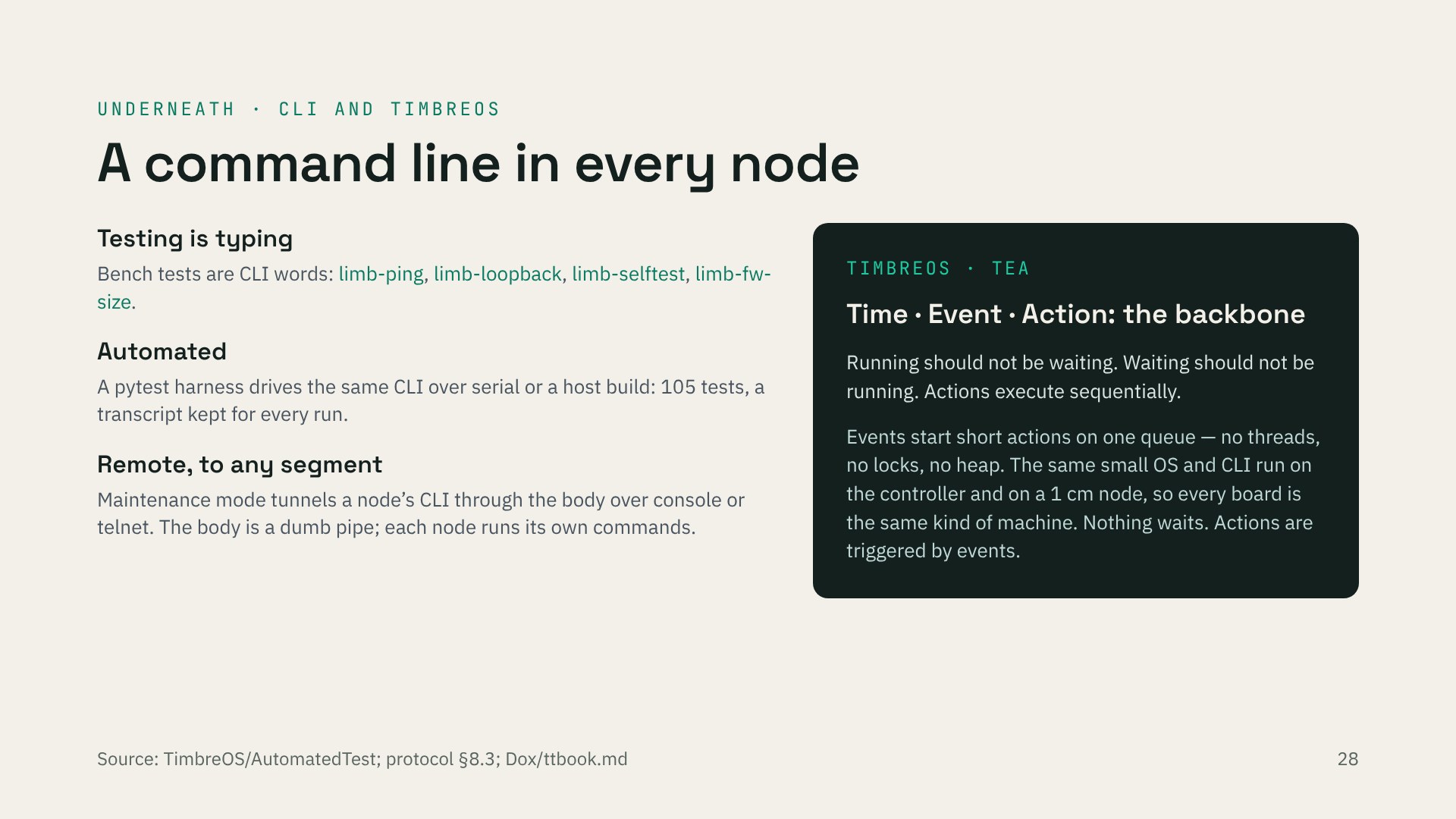
28. A command line in every node

Slide 28: A command line in every node


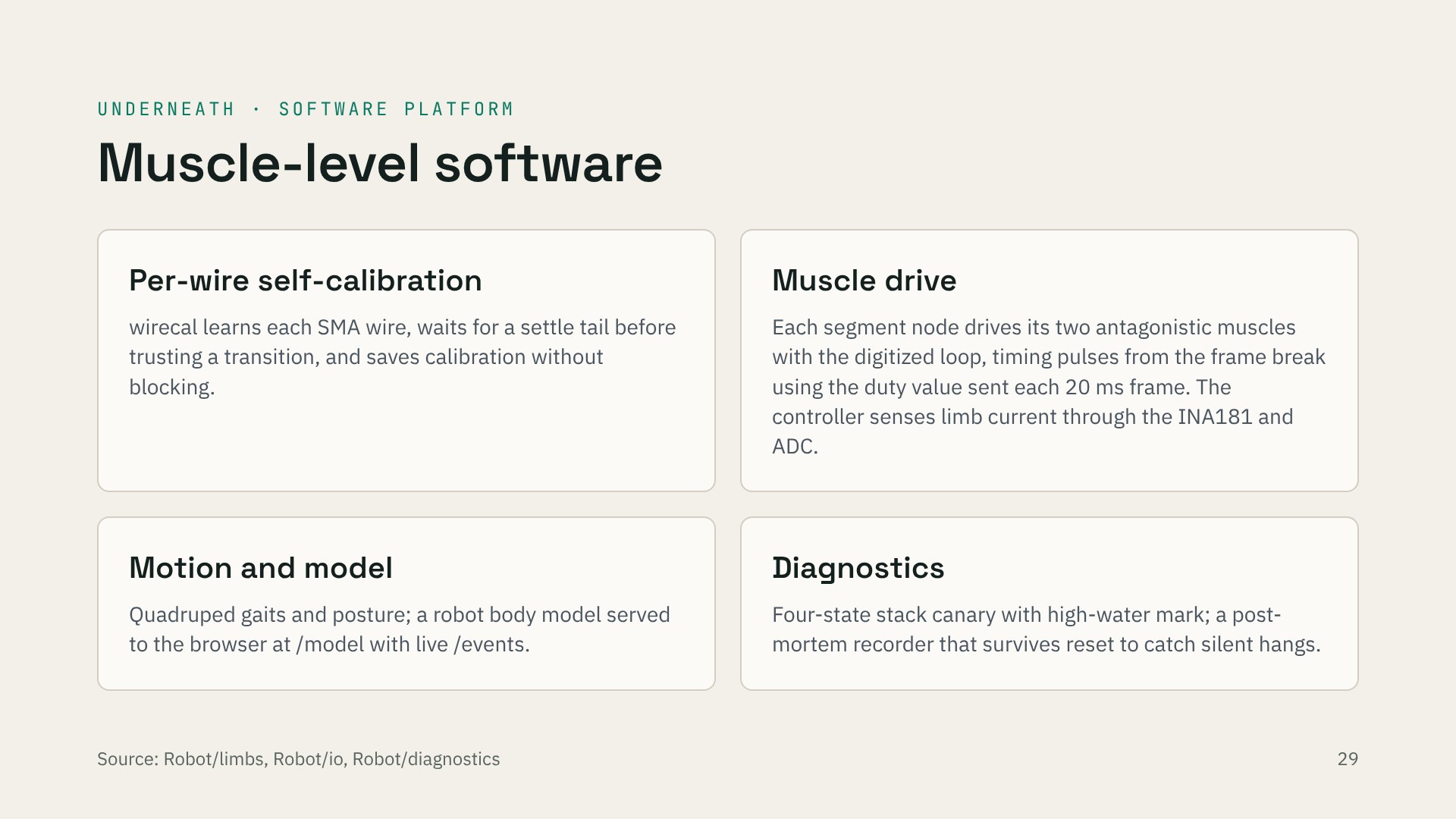
29. Muscle-level software

Slide 29: Muscle-level software


30. Gait Lab: the quadruped in a browser

Slide 30: Gait Lab: the quadruped in a browser

▶ Try the Gait Lab in your browser

31. From one bench node to a walking limb

Slide 31: From one bench node to a walking limb


32. Updates to follow...

Slide 32: Updates to follow...


Clone this wiki locally