Repository navigation
Customer Milestone 3 Report
- Final SRS
- Final Design
- API Documentation-Swagger
- Deployed Web App: communitygarden.app
- Mobile Release: GitHub Release with apk
As of the final project phase, the Garden Planner application has successfully evolved from initial requirements specification to a fully functional, production-ready system. The project demonstrates comprehensive fulfillment of the Software Requirements Specification (SRS) through iterative development cycles, with all functional and non-functional requirements implemented across three integrated platforms: a Django REST Framework backend with PostgreSQL database, a React web frontend built with Vite, and a cross-platform React Native mobile application using Expo.
Requirements Fulfillment: The system addresses all core SRS requirements as verified through comprehensive codebase analysis. User Management: Implemented with role-based access control (Admin, Moderator, Member, Guest roles) including profile management, following/follower relationships, user blocking, and account suspension/banning capabilities. Authentication & Security: Secure authentication system with OTP verification via email, device fingerprinting for trusted device management, password reset functionality, and session management. Garden Management: Complete CRUD operations for gardens with geolocation support (latitude/longitude), public/private visibility controls, garden image management with cover image support, and membership system with Manager/Worker roles and Pending/Accepted/Rejected status workflows. Task Management: Full task lifecycle management with recurring task support (daily, weekly, monthly, yearly), multi-assignee capabilities, custom task types per garden, predefined task types (Harvest, Maintenance), task status tracking (Pending, Accepted, Declined, In Progress, Completed, Cancelled), and due date management with automated reminder generation. Community Forum: Complete forum system with post creation, editing, and soft deletion, comment threading with soft deletion, like functionality for both posts and comments, best answer selection for posts, image attachments for posts and comments, and comprehensive moderation tools. Real-time Messaging: Firebase Firestore-based messaging system with direct messages between users, garden group chats for community communication, real-time message synchronization, unread message tracking, and chat widget integration in web frontend. Notifications: Firebase Cloud Messaging integration for push notifications, in-app notification system with categories (Task, Social, Forum, Weather, Badge), notification links for deep navigation, and read/unread status tracking. Badge System: Badge management with unique keys and categories, user badge tracking with earned timestamps, and badge requirement definitions via JSON. Event Management: Garden event creation and management, event categories (Workshop, Potluck, Exchange, Treasure Hunt, Photography, Celebration, Other), attendance tracking with status (Going, Not Going, Maybe), and event visibility controls (Private/Public). Information Hub: Plant database integration with detailed plant information, soil type guides, tool guides, and categorized information resources. Accessibility Features: Internationalization (i18n) supporting multiple languages with RTL layout support for Arabic, Persian, and Urdu, theme customization with light/dark mode switching, responsive design for various screen sizes, and keyboard navigation support.
Evolutionary Development: The project has evolved through multiple development iterations, as evidenced by 26 database migrations tracking feature additions from initial models through advanced features like recurring tasks, user suspension/banning, multi-assignee tasks, and notification systems. End-to-end test scenarios (such as Tansel's complete user journey) validate the evolutionary requirements covering language selection, theme switching, authentication, garden creation, forum participation, and task management. The codebase demonstrates incremental feature development with proper version control practices, code review processes, and comprehensive documentation.
Backend Implementation: The Django REST Framework backend provides a robust API layer with RESTful endpoints documented via Swagger/OpenAPI. The system implements comprehensive business logic including scheduled background tasks for automated reminders, weather-based notifications, and recurring task generation. Security measures include user suspension and banning capabilities, content moderation tools, user reporting mechanisms, and proper permission management. The backend integrates with external services including Firebase for push notifications and messaging, and supports image storage for profiles and gardens.
Frontend Implementation: The React web application delivers a modern, responsive user experience with Material-UI component library, ensuring consistent design patterns and accessibility. The application supports multiple languages with dynamic language switching and RTL layout support for languages like Arabic, Persian, and Urdu. Theme customization allows users to switch between light and dark modes, addressing accessibility needs. The frontend implements comprehensive error handling, loading states, and user feedback mechanisms. All major user flows are implemented including authentication, garden management, task assignment and tracking, forum interactions, profile management, and moderation workflows.
Mobile Implementation: The React Native mobile application provides native mobile experiences for both iOS and Android platforms, ensuring feature parity with the web application while leveraging platform-specific optimizations. The mobile app includes tab-based navigation optimized for mobile interaction patterns, push notification support for real-time updates, offline capability considerations, and responsive layouts adapted for various screen sizes. Firebase integration enables seamless synchronization between web and mobile platforms.
Testing and Quality Assurance: The project maintains comprehensive test coverage including unit tests for critical business logic and utility functions, integration tests for API endpoints, and end-to-end tests using Selenium WebDriver for complete user scenarios. Test scenarios validate core user journeys including language selection, theme switching, authentication flows, garden creation, forum participation, and task management. The testing infrastructure supports multiple browsers (Chrome, Firefox) and headless execution for CI/CD pipelines.
Deployment and DevOps: The application is fully containerized using Docker Compose, enabling consistent deployment across development, staging, and production environments. The deployment configuration includes Nginx reverse proxy for the frontend with HTTPS support, PostgreSQL database with persistent volumes for data retention, environment variable management for secure configuration, and health checks for service monitoring. The project follows DevOps best practices with proper separation of concerns, scalable architecture, and production-ready configurations.
Current State and Compliance: All SRS requirements have been successfully implemented and validated through testing. The application is ready for user acceptance testing and production deployment. The codebase adheres to software engineering best practices including proper error handling, security measures, code documentation, and maintainable architecture. The system demonstrates scalability through proper database design, API optimization, and efficient frontend rendering. Compliance with accessibility standards is ensured through i18n support, theme customization, and responsive design patterns. The project successfully fulfills the CMPE352/451 course requirements for a comprehensive full-stack software engineering project.
| Deliverable | Description / Link | Status |
|---|---|---|
| Weekly Lab Reports | Lab Reports | Done |
| Meeting Notes | Meeting Notes | Done |
| Final Software Requirements Specification (SRS) | SRS | Done |
| Final Software Design | Software Design | Done |
| Project Review | Final Milestone Report | Done |
| Individual Contributions | Individual Contributions | Done |
| Final release of Software | Release Tag | Done |
We are pleased to announce the final release of the Garden Planner application, marking the successful completion of all Software Requirements Specification (SRS) requirements.
This release delivers a fully functional system across three integrated platforms: a robust Django REST Framework backend with PostgreSQL database, a modern React web frontend built with Vite, and a cross-platform React Native mobile application using Expo.
Key achievements include comprehensive user management with role-based access control, secure authentication with OTP verification, complete garden and task management systems with recurring task support, a fully-featured community forum with moderation tools, real-time messaging and notifications via Firebase, badge system for user achievements, event management capabilities, and an information hub with plant database integration.
The application demonstrates accessibility features including internationalization with RTL support for multiple languages, theme customization with light/dark modes, and responsive design patterns. All features have been thoroughly tested through unit, integration, and end-to-end testing scenarios, and the application is fully containerized with Docker for seamless deployment.
Before our first milestone, our workflow was inefficient, which caused us to spend a lot of time developing an application that still contained many bugs. After completing the first and second milestones, we decided to make several changes to address these issues.
First, we started requiring screenshots from manual testing in pull request reviews. This ensured that reviewers did not merge pull requests without properly checking them, but instead reviewed the code and manually tested the changes to identify potential problems. As a result, we encountered fewer bugs and spent less time debugging.
Second, we decided to cover every new feature with tests. This further reduced the number of bugs in our application and helped us catch issues earlier, again saving time on debugging.
Finally, we changed our strict division of labor. Previously, back-end developers focused only on the back end and front-end developers focused only on the front end. This slowed down development, especially for smaller features. We switched to a more flexible approach where a single developer handles both the front-end and back-end parts of small changes, leading to a more efficient workflow.
These changes were very helpful in reaching the final milestone while fulfilling all requirements and delivering a more stable, bug free application.
During the Final Milestone Demo, we identified several areas where our preparation and execution could have been improved. First, the structure of the demo scenario could have been communicated more clearly, particularly regarding the role of the mobile user and their membership in a non-legitimate garden. Since this context was not explicitly explained during the demo, it led to questions from the teaching assistants about the consistency of the scenario. Providing clearer narrative context at the beginning would have helped avoid this confusion.
Additionally, our coordination and communication during the final stage of demo preparation could have been better. Although all components were functionally ready the day before, a lack of final synchronization resulted in a one-hour delay in publishing the final GitHub release. This highlighted the importance of clearer ownership and earlier final checks before the demo.
Finally, we recognized that our demo time management needs improvement. While the content was comprehensive, we spent more time than planned on earlier parts of the demo, which caused us to feel rushed toward the end. Feedback from the customers emphasized the need for stricter time allocation and rehearsal to ensure that all planned features can be presented comfortably within the given time frame.
Looking back at the project from its initial stages, there are several aspects that could have been handled differently to improve the overall development and finalization process. First, we could have used GitHub Projects more effectively from the beginning to better track tasks, dependencies, and progress. While we relied on issues and milestones, a more consistent use of project boards could have improved visibility and coordination across the team.
Second, our deployment strategy in the second milestone could have been planned more carefully. The server infrastructure at that stage was not sufficiently prepared to handle concurrent users, which caused instability during demo preparation. Choosing a more robust deployment setup earlier, or performing load-related testing in advance, could have prevented these issues.
Additionally, we could have held meetings more frequently, especially during periods of intensive development. Although we communicated often through messaging platforms, having regular meetings with written notes would have helped formalize decisions, align priorities, and reduce ambiguity.
We also could have established a more structured pull request review routine. At times, insufficiently reviewed merges led to avoidable issues in shared branches. A clearer review checklist or stricter approval rules could have improved code quality and branch stability.
Furthermore, keeping the README consistently up to date from the start would have been beneficial. We received feedback indicating that the documentation did not always reflect the current state of the project, which could have been avoided with more frequent updates tied to major changes.
Finally, environment configuration management could have been handled in a more systematic way. Since sensitive .env files could not be shared publicly, we occasionally resorted to sharing updates manually. Using a standardized environment template or a centralized secret management approach earlier in the project would have reduced friction and improved consistency across development environments.
| Team Member | Contributions (Summary) | Major PRs / Issues |
|---|---|---|
| Süleyman Tolga Acar | Test coverage reports for all platforms (backend, frontend, mobile) | PR #506 |
| Süleyman Tolga Acar | Impact summary feature showing user contributions | PR #494, issue #457 |
| Süleyman Tolga Acar | Profile visibility (public/private profiles) | PR #473, issue #459 |
| Süleyman Tolga Acar | User location masking (showing only neighborhood information) | PR #472, issue #460 |
| Süleyman Tolga Acar | Chat user removal on garden leave/kick | PR #471, issue #445 |
| Süleyman Tolga Acar | UI/UX testing documentation | issue #446 |
| Süleyman Tolga Acar | Notification deeplinks for Firebase notifications | PR #420, issue #419 |
| Süleyman Tolga Acar | Infohub page implementation | PR #399, issue #400 |
| Süleyman Tolga Acar | Frontend unit tests for many components/pages | PR #372 |
| Süleyman Tolga Acar | Real-time chat system implementation (backend, frontend, mobile) | PR #356, issue #357 |
| Süleyman Tolga Acar | Task management features (drag-and-drop, accept/decline, backend endpoints) | PR #351, issue #279, #280, #281, #282, #286 |
| ---------- | ---------- | ---------- |
| Eymen Çelikturk | Mobile cleanup and foundation from previous course | PR #272, issue #271 |
| Eymen Çelikturk | Language and translation options for mobile | PR #274, issue #266 |
| Eymen Çelikturk | Forum filtering functionality | PR #273, issue #245 |
| Eymen Çelikturk | Mobile task utilities with comprehensive unit tests | PR #381 |
| Eymen Çelikturk | Mobile geolocation feature with interactive maps | PR #392 |
| Eymen Çelikturk | Mobile notifications with push notification support | PR #396, issue #395 |
| Eymen Çelikturk | Mobile garden events with RSVP functionality | PR #394, issue #361 |
| Eymen Çelikturk | Mobile badges system implementation | PR #411, issue #362 |
| Eymen Çelikturk | APK configuration for production deployment | PR #388, PR #425 |
| Eymen Çelikturk | Mobile scenario fixes and bug resolution | PR #423 |
| ---------- | ---------- | ---------- |
| Bora Depecik | Badge Notifications | PR #497 |
| Bora Depecik | Event Badges | PR #424 |
| Bora Depecik | Badge System | PR #416, issue #359 |
| Bora Depecik | Moderation (Reporting) System | PR #294, PR #495, issue #253 |
| Bora Depecik | Bug fixes | PR #498, PR #333 |
| Bora Depecik | Revise requirements | issue #243 |
| ---------- | ---------- | ---------- |
| Dağhan Erdönmez | E2E Testing with Selenium | PR #481, Issue #480, Issue #377, Issue #458, Documentation |
| Dağhan Erdönmez | Font Resizing on Web | PR #476, Issue #454 |
| Dağhan Erdönmez | Garden Events Feature | PR #410, Issue #361 |
| Dağhan Erdönmez | Manual Testing of the Screen Reader Compatibility | Issue #453 |
| Dağhan Erdönmez | Unit Test Fixes & Improvements | PR #397, Issue #405 |
| Dağhan Erdönmez | Color Themes on Web | PR #307, Issue #255, Issue #254 |
| Dağhan Erdönmez | Multiple Language Options on Web | PR #326, Issue #262, Issue #261 |
| Dağhan Erdönmez | Fixing Bugs Spotted by the Team | Issues #310, #313, #315, #318, #320, #339, #340, #369, #387, |
| Dağhan Erdönmez | WoT Applicability Report | Report |
| Dağhan Erdönmez | Report About the New Expectations of 451 | Report |
| ---------- | ---------- | ---------- |
| Şimal Güven | High-contrast color mode (WCAG 2.1 AA) & Tests | #263, PR #321 |
| Şimal Güven | Language Selection Extension (TR/EN) | #266, PR #329 |
| Şimal Güven | Garden Utilities Unit Tests | #384, PR #385 |
| Şimal Güven | Forum Utilities Unit Tests | #383, PR #383 |
| Şimal Güven | Nearby Garden Recommendation Toggle | #246, PR #418 |
| Şimal Güven | Mobile Scenario Bug Fixes | PR #423 |
| Şimal Güven | Google Maps API Integration | #493, PR #492 |
| Şimal Güven | Updated Sequence Diagrams | #251 |
| Şimal Güven | Updated Scenarios | #292, Related Scenario |
| ---------- | ---------- | ---------- |
| Bahadır Kuşcan | Deliverable status, requirement status and API endpoints sections of final milestone report | Issue #503 |
| Bahadır Kuşcan | Web application final demo presentation | Demo Documentation |
| Bahadır Kuşcan | Testing subdomain setup, data backup and transfer | Issue #489 |
| Bahadır Kuşcan | Deployment update and demo data population | Issue #485 |
| Bahadır Kuşcan | 2FA authentication with OTP, trusted device system, rate limiting (frontend, backend, mobile) | PR #490, Issue #461 |
| Bahadır Kuşcan | Multiple task assignee support (frontend & backend) | PR #477, Issue #447 |
| Bahadır Kuşcan | Project requirements revision | Issue #442 |
| Bahadır Kuşcan | Project plan and roadmap creation (Issues #447 to #462) | Issue #438, Roadmap |
| Bahadır Kuşcan | MVP Milestone Report coordination, "Requirements Addressed" section | Issue #437 |
| Bahadır Kuşcan | Garden events categories feature | PR #410, Issue #406 |
| Bahadır Kuşcan | Garden events feature implementation (backend) | PR #373, Issue #361 |
| Bahadır Kuşcan | Backend unit tests coverage increase from 77% to 96% (53 to 188 tests) | PR #370, Issue #363 |
| Bahadır Kuşcan | Bug fixes (duplicate email registration, password reset, zombie gardens, role promotion, migration chain, task permissions) | PR #324, PR #366, PR #367, PR #368, PR #428, Issue #311, #314, #317, #319, #320, #427 |
| Bahadır Kuşcan | Infrastructure Milestone Report requirements section | Issue #346 |
| Bahadır Kuşcan | Comprehensive manual testing - 12 bugs reported | Issue #301, Issues #309-#320 |
| Bahadır Kuşcan | HTTPS configuration and SSL certificate setup | PR #306, Issue #298 |
| Bahadır Kuşcan | Image upload/retrieval for gardens, posts, and comments (backend) | PR #303, Issue #257 |
| Bahadır Kuşcan | GCP deployment with reverse proxy configuration | Issue #264 |
| Bahadır Kuşcan | Captcha removal from frontend, backend, and mobile | PR #277, Issue #276 |
| ---------- | ---------- | ---------- |
| Basak Tepe | Implement Information Hub | #464, PR #496 |
| Basak Tepe | Implement RTL UI Support | #348, PR #349 |
| Basak Tepe | Implement Garden Badges (with Bora's support on backend) | #359, PR #416 |
| Basak Tepe | Implement Garden Events (with Dağhan's help on frontend) | #361, PR #410 |
| Basak Tepe | Implement Gardens Near Me | #260, PR #389 |
| Basak Tepe | Implement Keyboard Navigation | #256, PR #304 |
| Basak Tepe | Implement Maps / Location Pickers (Geolocation & OpenStreetMap Nominatim API) | #295, PR #302 |
| ---------- | ---------- | ---------- |
| Ceylanberk Tola | Moderation System Backend & Frontend | #364, PR #495 |
| Ceylanberk Tola | Recursive Task Implementation | #448, PR #478 |
| Ceylanberk Tola | Bug Fixes | PR #433, PR #432, PR #426, PR #386, PR #335 |
| Ceylanberk Tola | Git branch tree fix | PR #345 |
| Ceylanberk Tola | Forum Post Edit & Delete with Image Management | #259, PR #334 |
| Ceylanberk Tola | Profile Picture Uploading and Displaying | #309, PR #328 |
| Ceylanberk Tola | Gardem Gallery Tab & Garden Photo Upload | #289, PR #322 |
| [Name] | [Summary] | [Link #1], [Link #2] |
- Completed: All requirements except 8.1.2
- In Progress: None
- Not Started: 8.1.2
- Endpoint: POST https://communitygarden.app/api/tasks/
- Scenario Description: Manager of the garden "Yasemin Apartmanı Bahçesi" creates a daily recurring watering task for basils in the garden and assigns it to multiple members (bahadirkuscan and elif).
The Request:
curl -X POST 'https://communitygarden.app/api/tasks/' \
  -H 'Authorization: Token <GARDEN_MANAGER_TOKEN>' \
  -H 'Content-Type: application/json' \
  -d '{
    "garden": 4,
    "title": "Daily Basil Watering",
    "description": "Water the basils with 0.5 liters of fresh water",
    "status": "PENDING",
    "assigned_to": [3, 9],
    "due_date": "2025-12-20T18:02:40.668Z",
    "custom_type": 2,
    "is_recurring": true,
    "recurrence_period": "DAILY",
    "recurrence_end_date": "2026-02-17T18:00:00.000Z"
  }'
The Response:
{
  "id": 1337,
  "garden": 4,
  "garden_name": "Yasemin Apartmanı Bahçesi",
  "title": "Daily Basil Watering",
  "description": "Water the basils with 0.5 liters of fresh water",
  "task_type": "CUSTOM",
  "custom_type": 2,
  "custom_type_name": "SULAMA",
  "assigned_by_username": "bahadirkuscan",
  "assigned_to": [3, 9],
  "assigned_to_usernames": ["bahadirkuscan", "elif"],
  "status": "PENDING",
  "due_date": "2025-12-20T18:02:40.668Z",
  "is_recurring": true,
  "recurrence_period": "DAILY",
  "recurrence_end_date": "2026-02-17T18:00:00.000Z",
  "parent_task": null,
  "created_at": "2025-12-20T10:12:31Z",
  "updated_at": "2025-12-20T10:12:31Z"
}
Notes:
- Requires the caller to be an ACCEPTED member of the garden; managers can assign others.
- Recurrences are not immediately shown, they are added as the scheduler runs every day.
- Endpoint: POST https://communitygarden.app/api/verify-otp/
- Scenario Description: After sending valid credentials and receiving an OTP, user verifies the OTP code for a new device and obtain an auth token and trusts the device for bypassing OTP in the next logins.
The Request:
curl -X POST 'https://communitygarden.app/api/verify-otp/' \
  -H 'Content-Type: application/json' \
  -d '{
    "username": "bahadir",
    "otp_code": "607156",
    "device_identifier":"62d18984722ed057781bce4342a00927",
    "trust_device": "true"
  }'
The Response:
{
  "token": "8c00f6db0c7342a08d9b9f6a3b1d7f1b",
  "user_id": 42,
  "username": "bahadir",
  "email": "bahadirkuscan@gmail.com",
  "first_name": "Bahadır",
  "last_name": "Kuşcan",
  "message": "Login successful.",
  "is_suspended": false
}
Notes:
- POST /api/login/ needs to be sent with user credentials first to receive OTP via email. If the device is already trusted, login via POST /api/login/ returns a token directly without OTP.
- Endpoint: POST https://communitygarden.app/api/admin/reports/{report_id}/suspend_user/
- Scenario Description: A moderator reviews a user report (AdanaLi01 is reported) and applies a 7-day suspension to AdanaLi01 from the platform with reason "System abuse".
The Request:
curl -X POST 'https://communitygarden.app/api/admin/reports/6/suspend_user/' \
  -H 'Authorization: Token <MODERATOR_TOKEN>' \
  -H 'Content-Type: application/json' \
  -d '{
    "suspension_days": 7,
    "reason": "System abuse"
  }'
The Response:
{
  "detail": "User AdanaLi01 has been suspended until 2025-12-27 19:48:10038254+00:00."
}
Notes:
- Only moderators may access these endpoints, make sure you have an access token with moderator role.
- Link to Frontend Code: Link
- Homepage
- Gardens
- Gardens (continued)
- Garden Details
- Garden Details (continued)
- Forum
- Forum (continued)
- Infohub
- Infohub (continued)
- Infohub (continued)
- Infohub (continued)
- Profile and Chat
- Notifications
- Badges
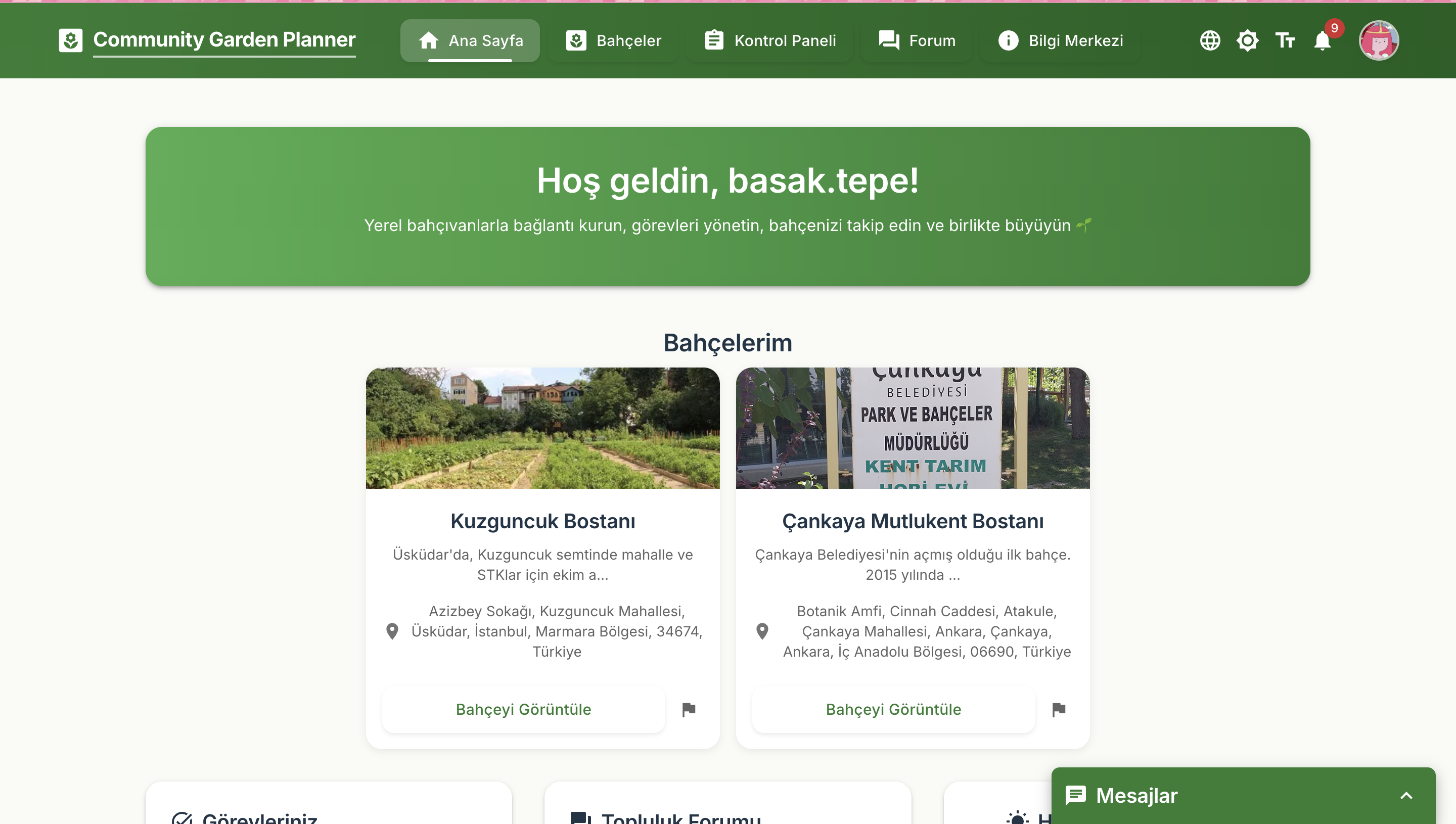
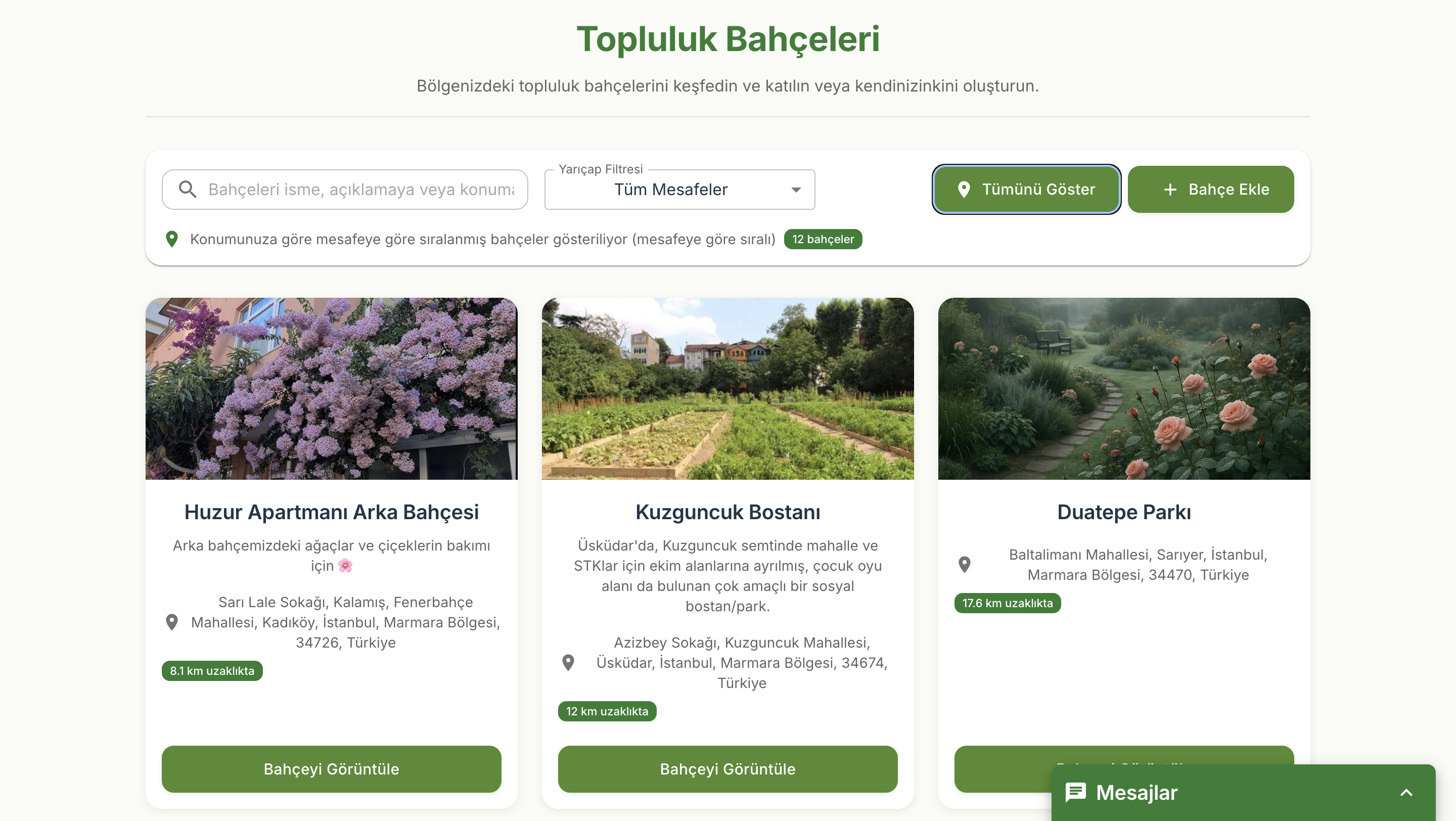
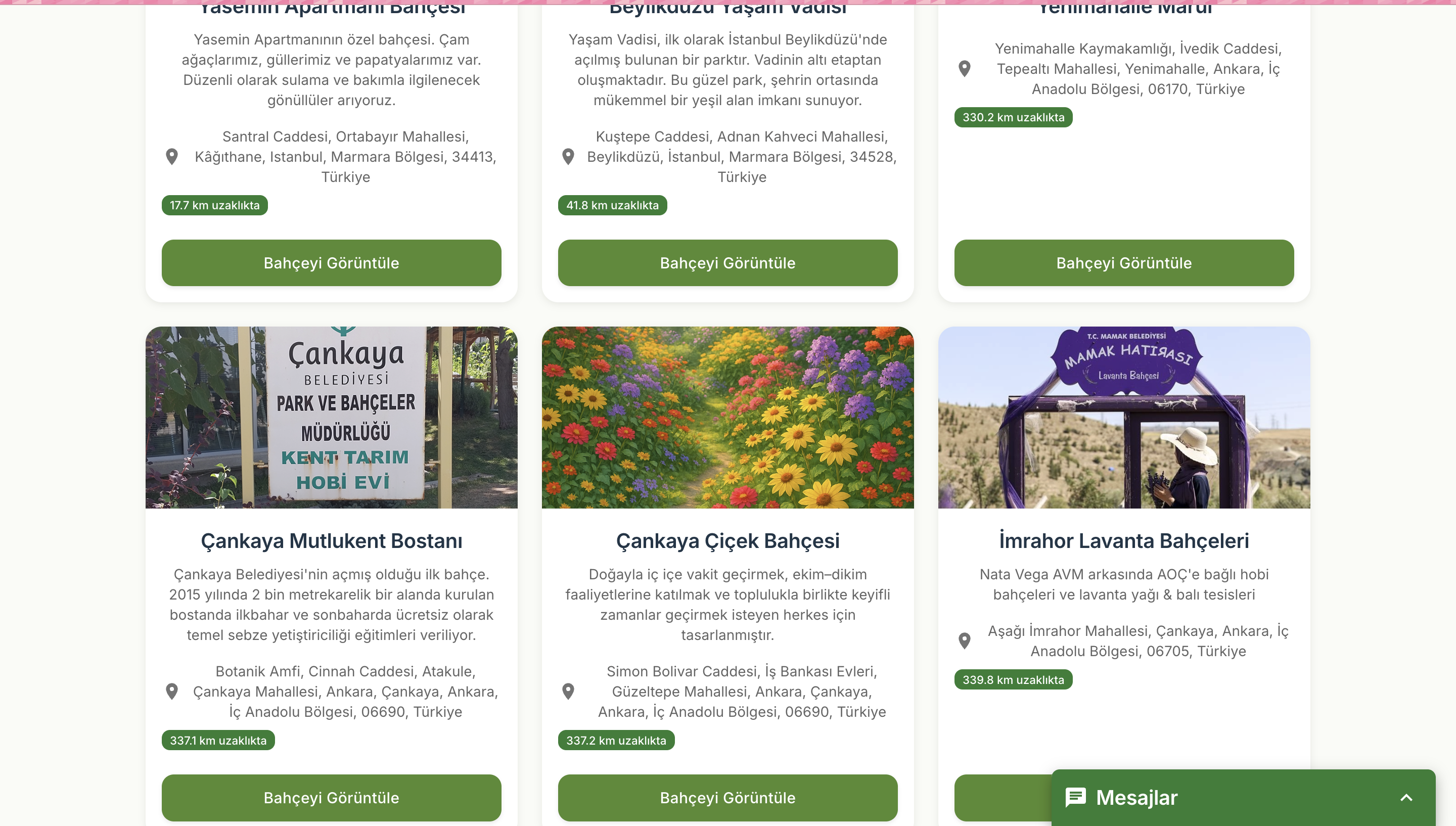
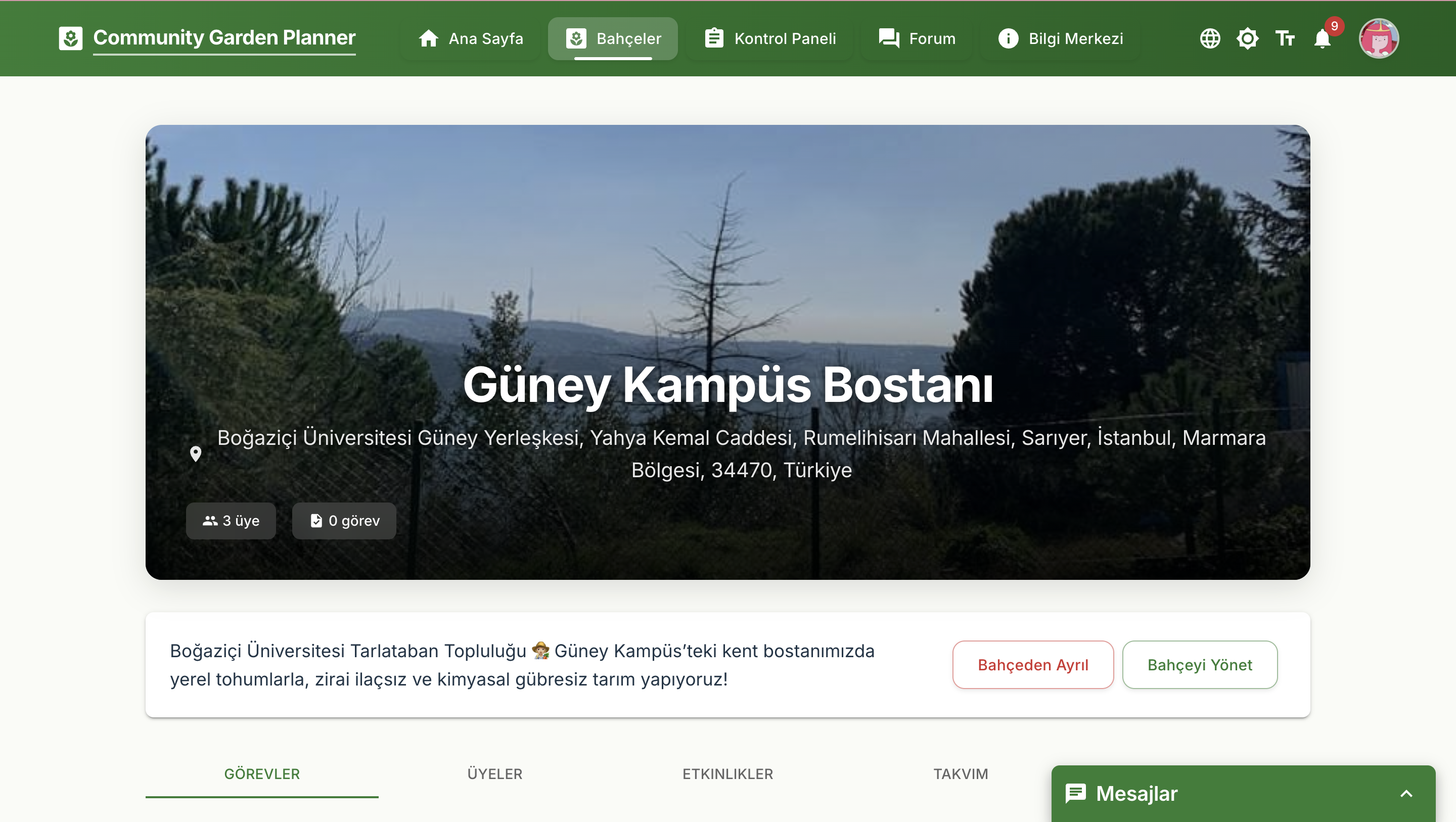
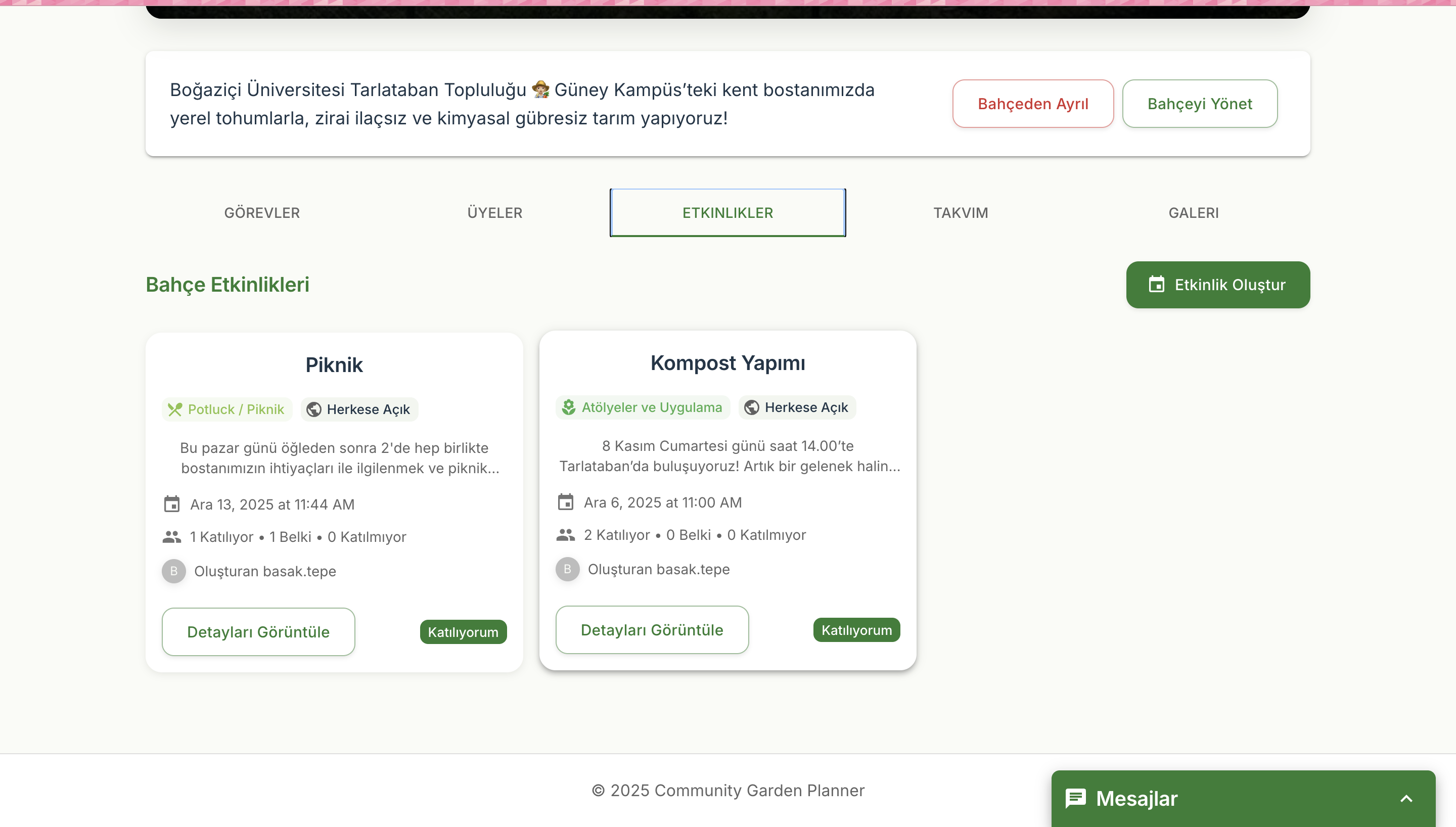
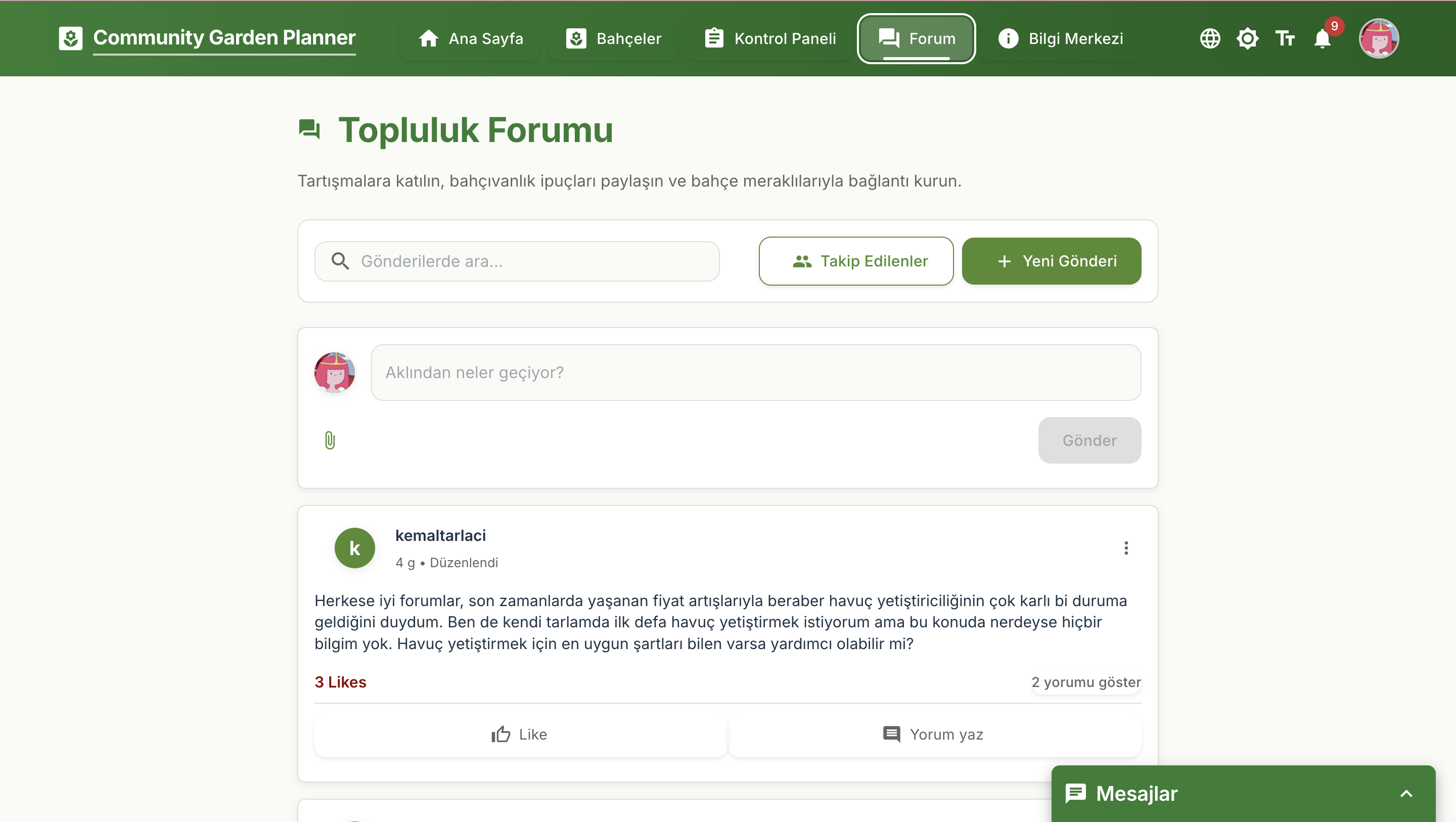
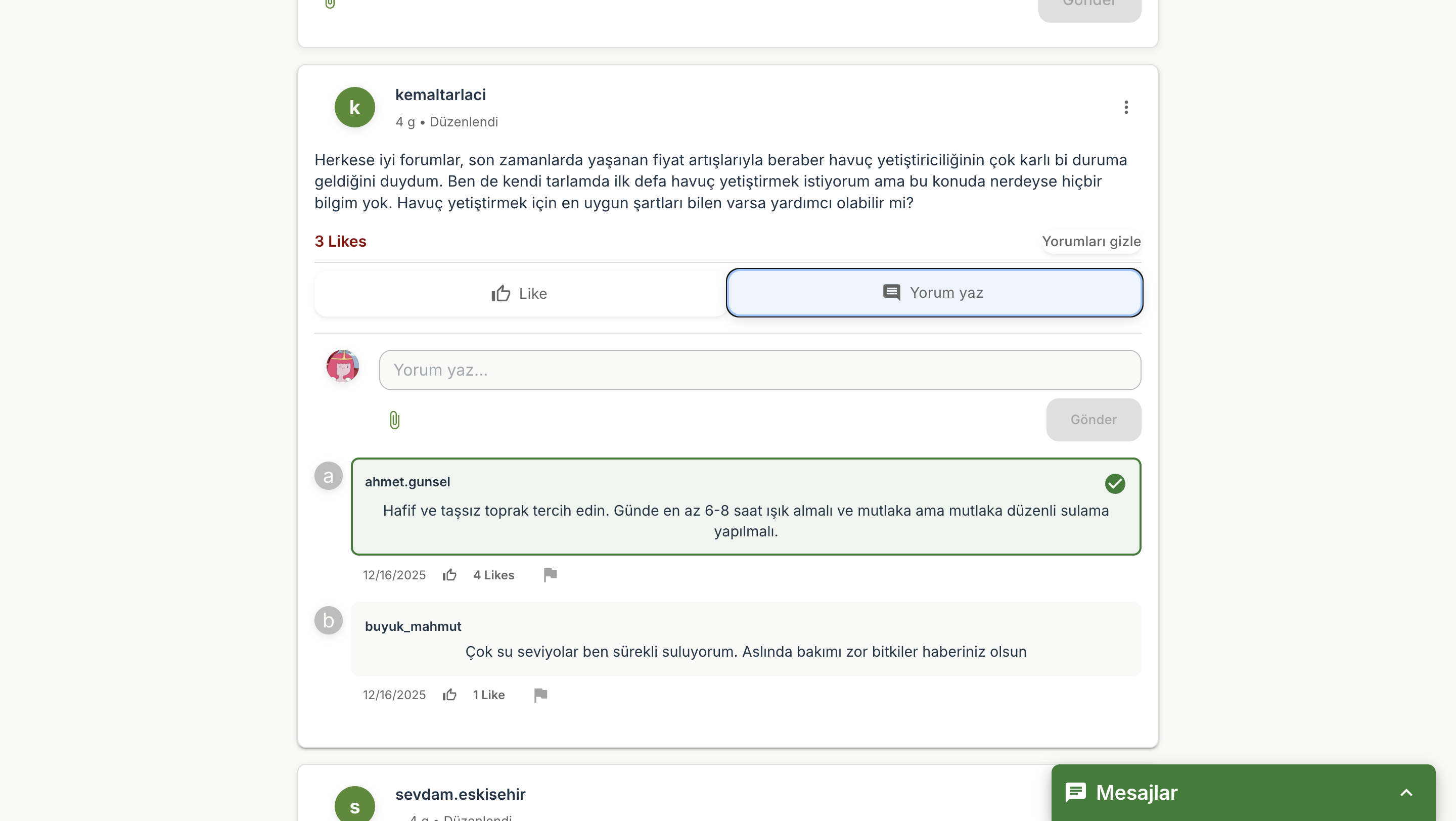
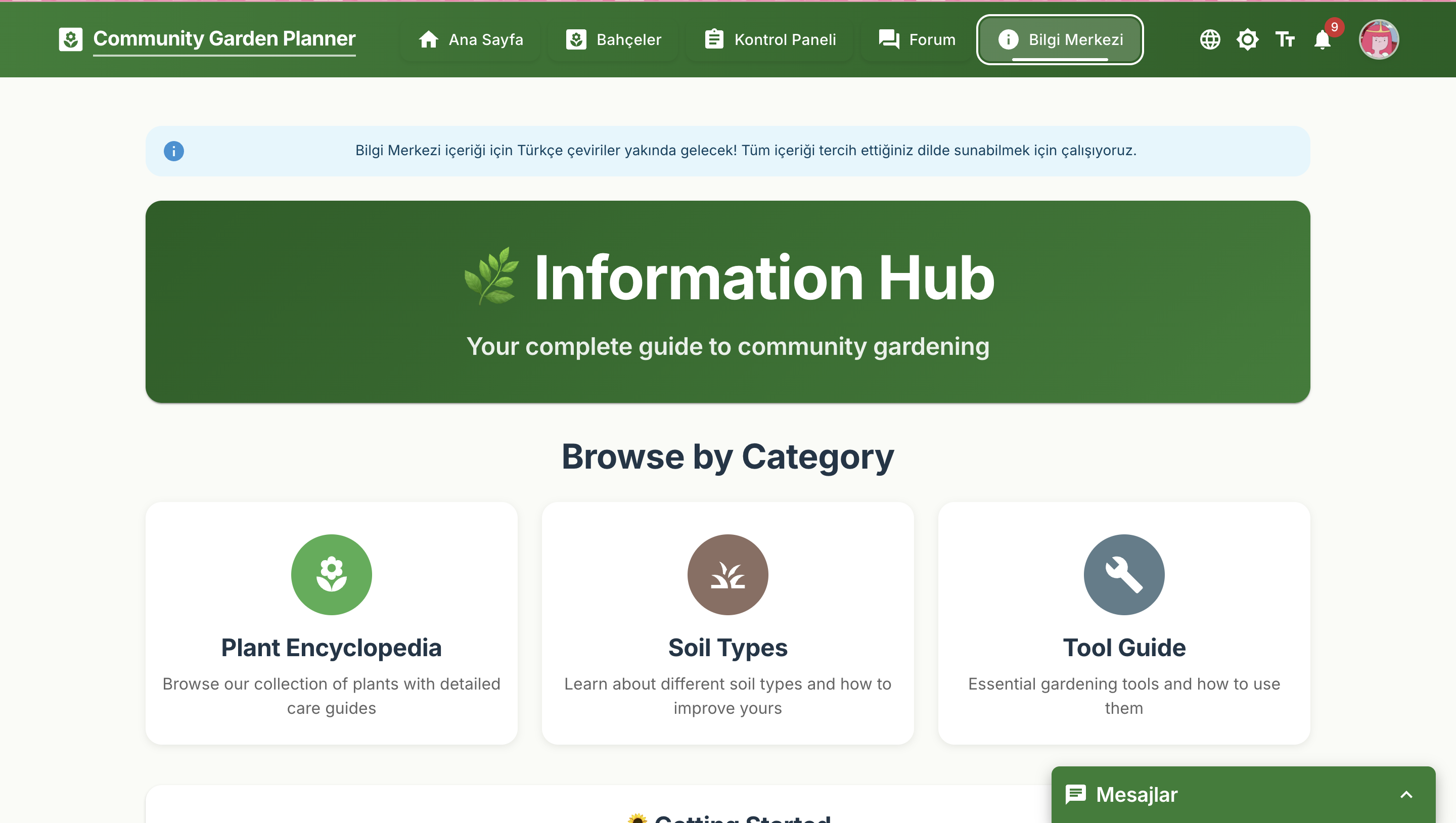
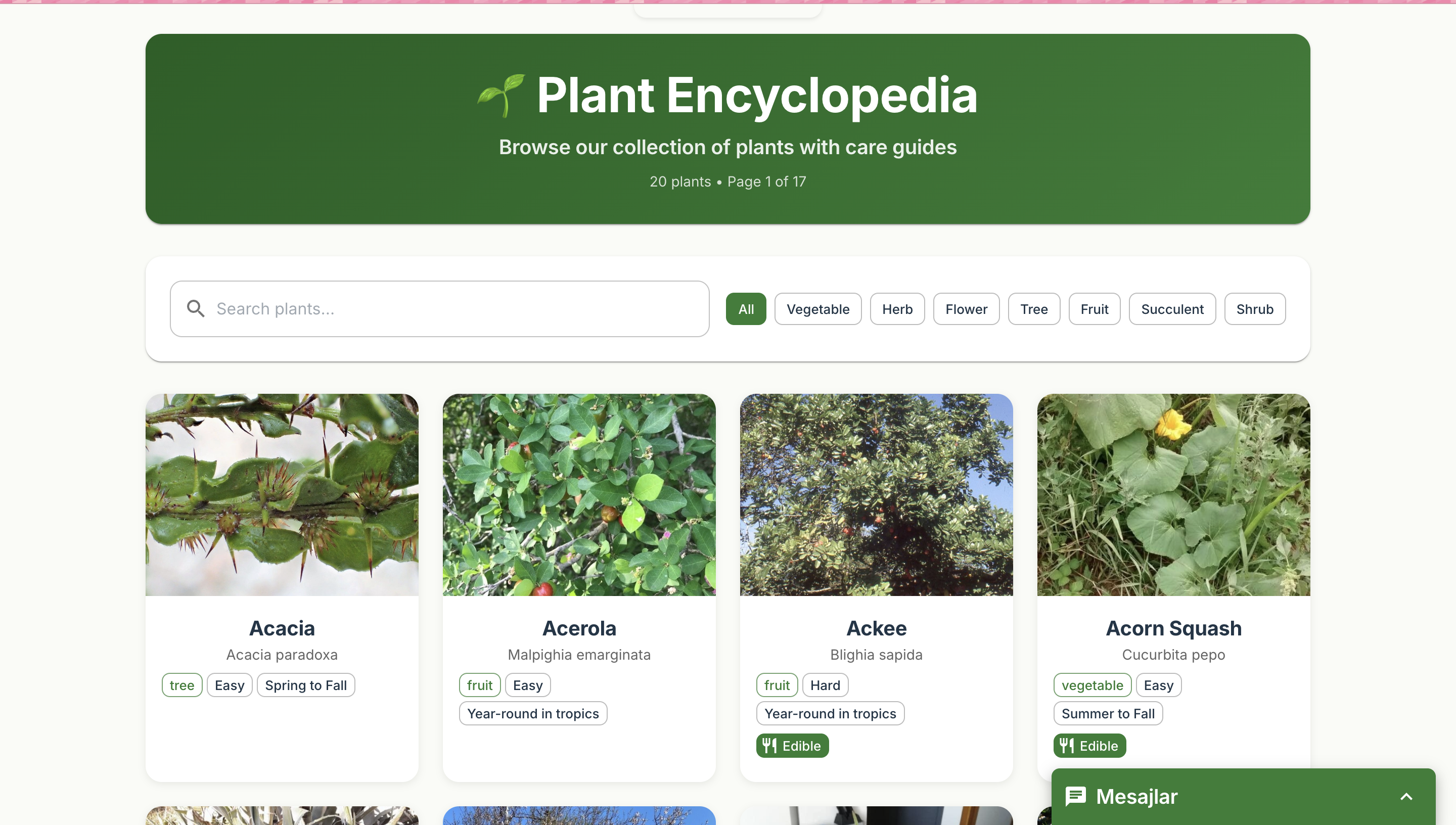
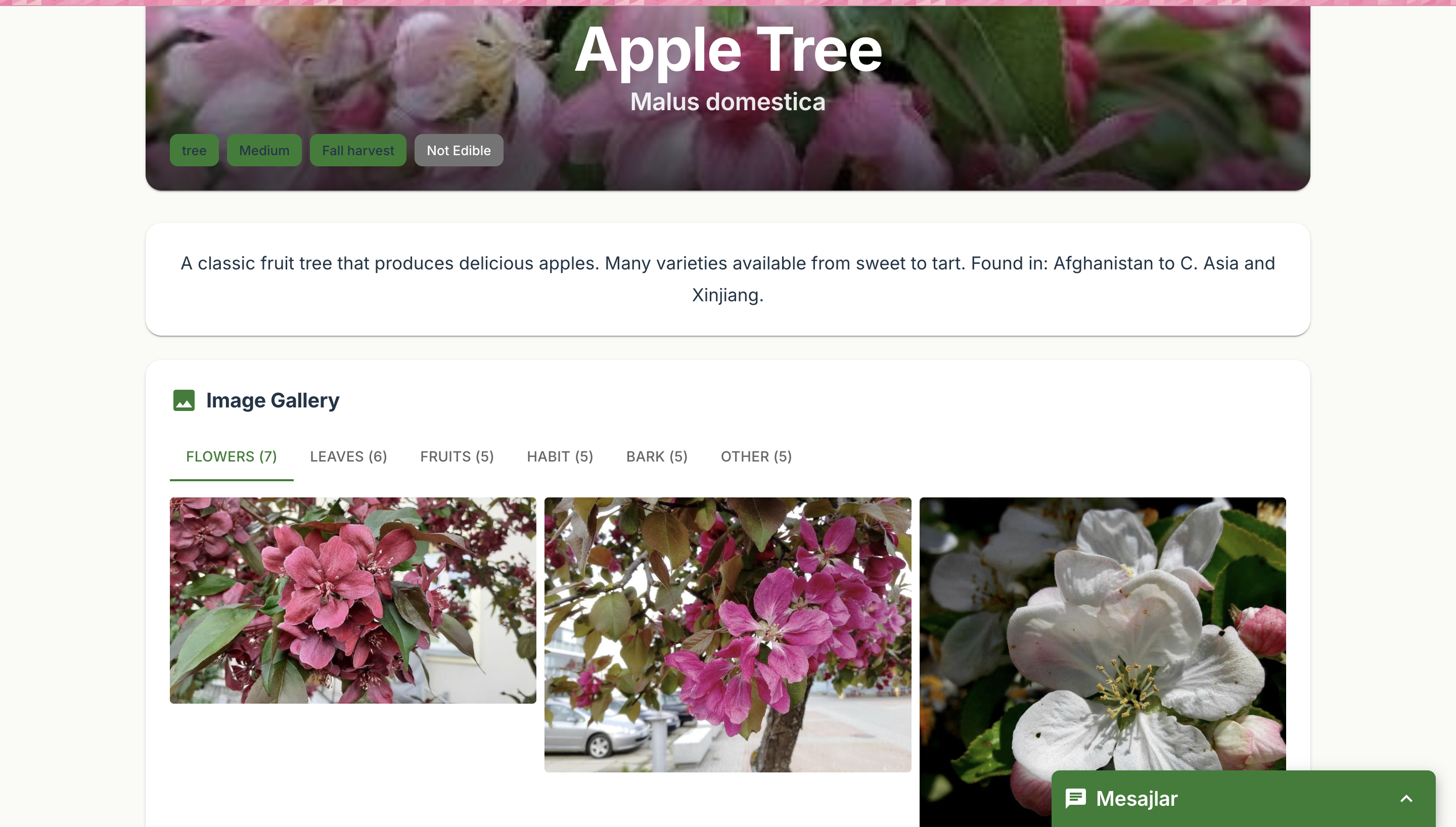
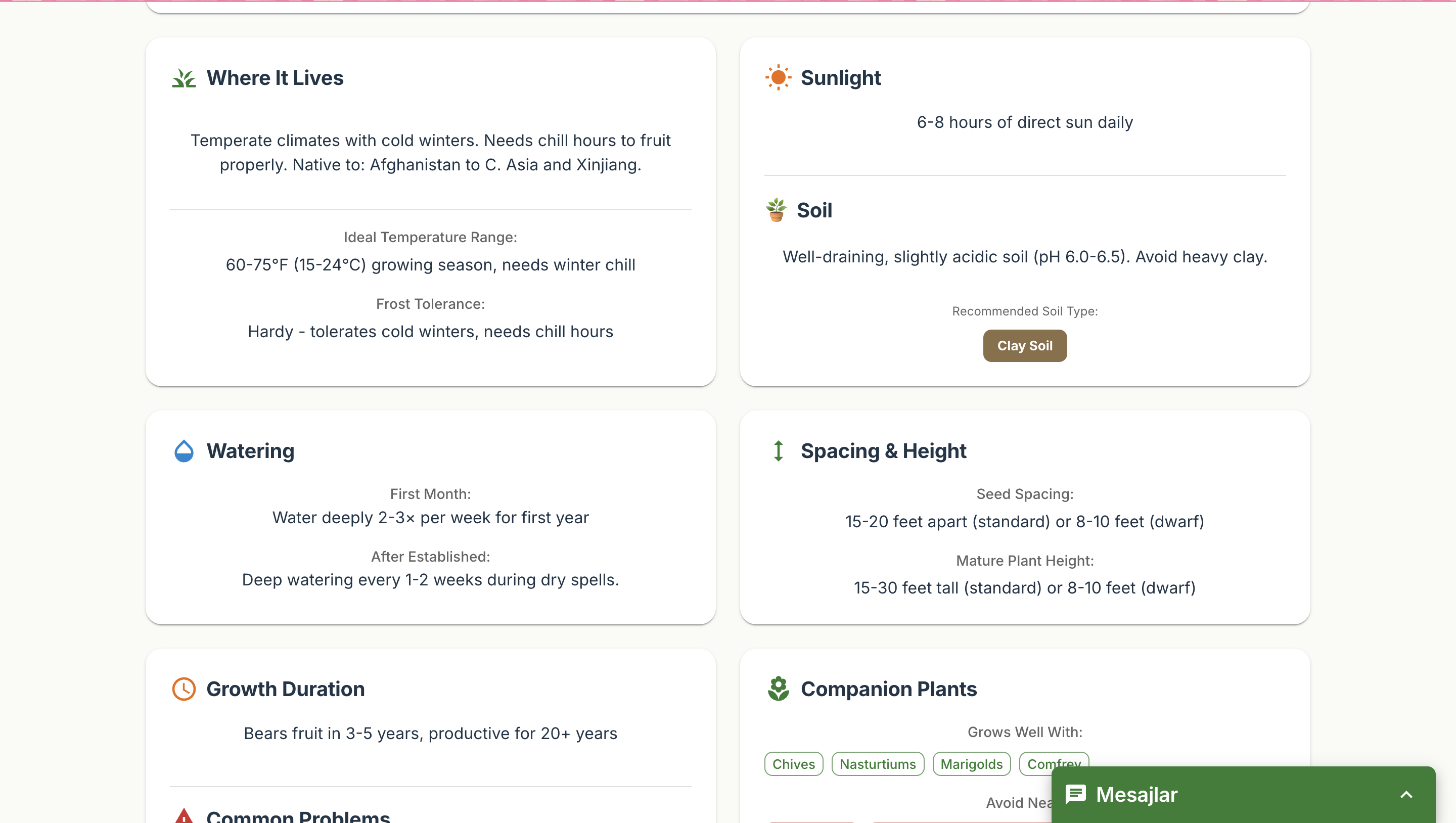
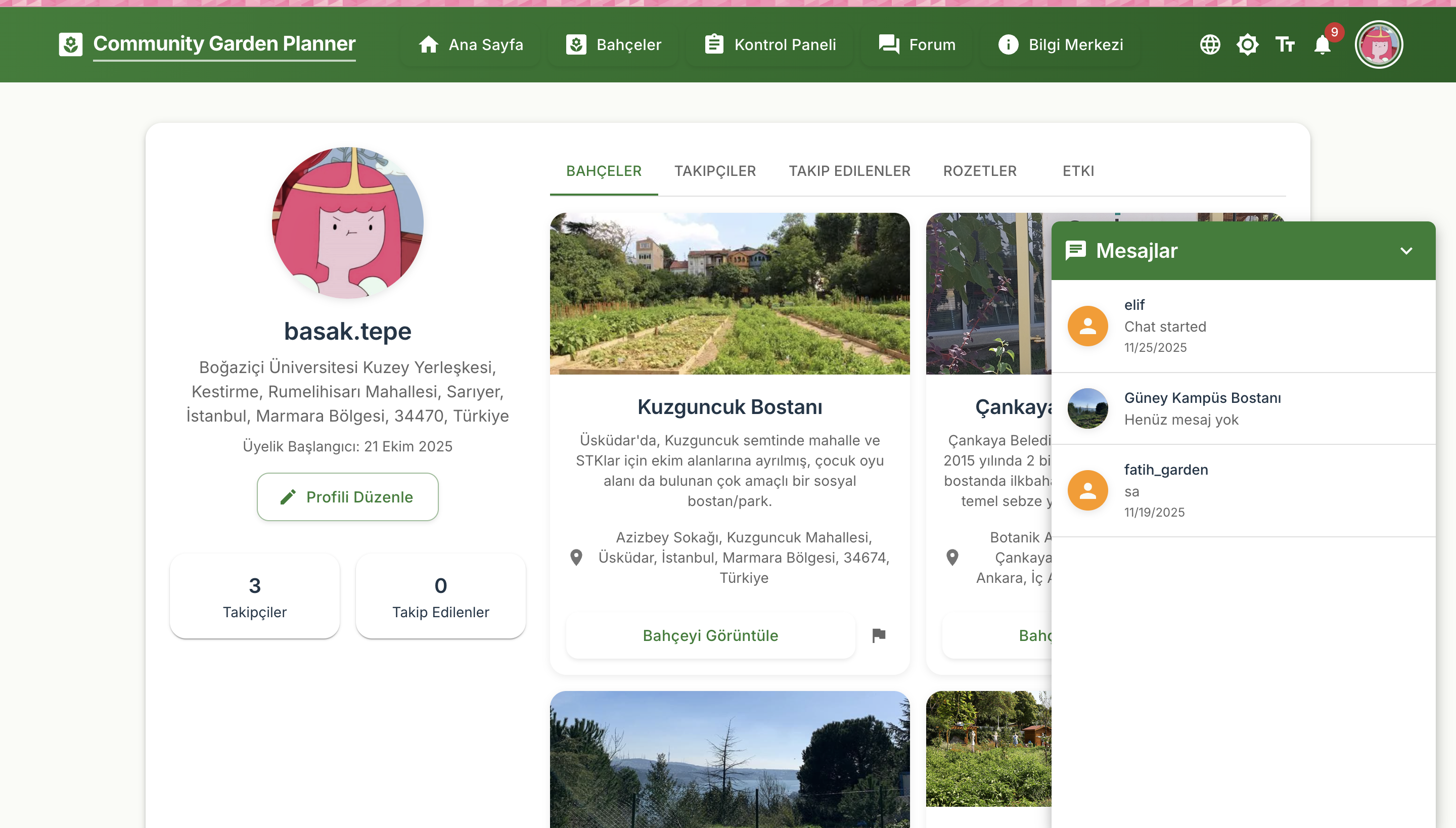
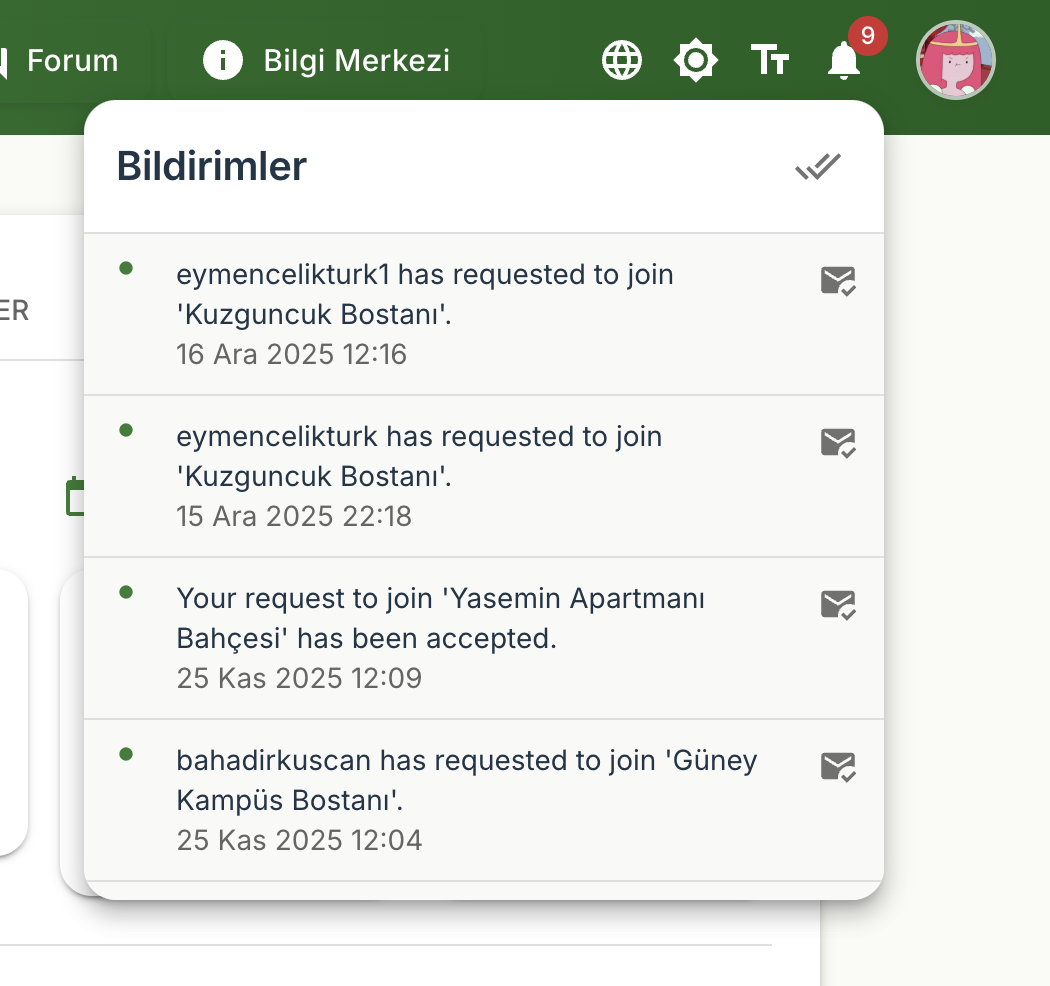
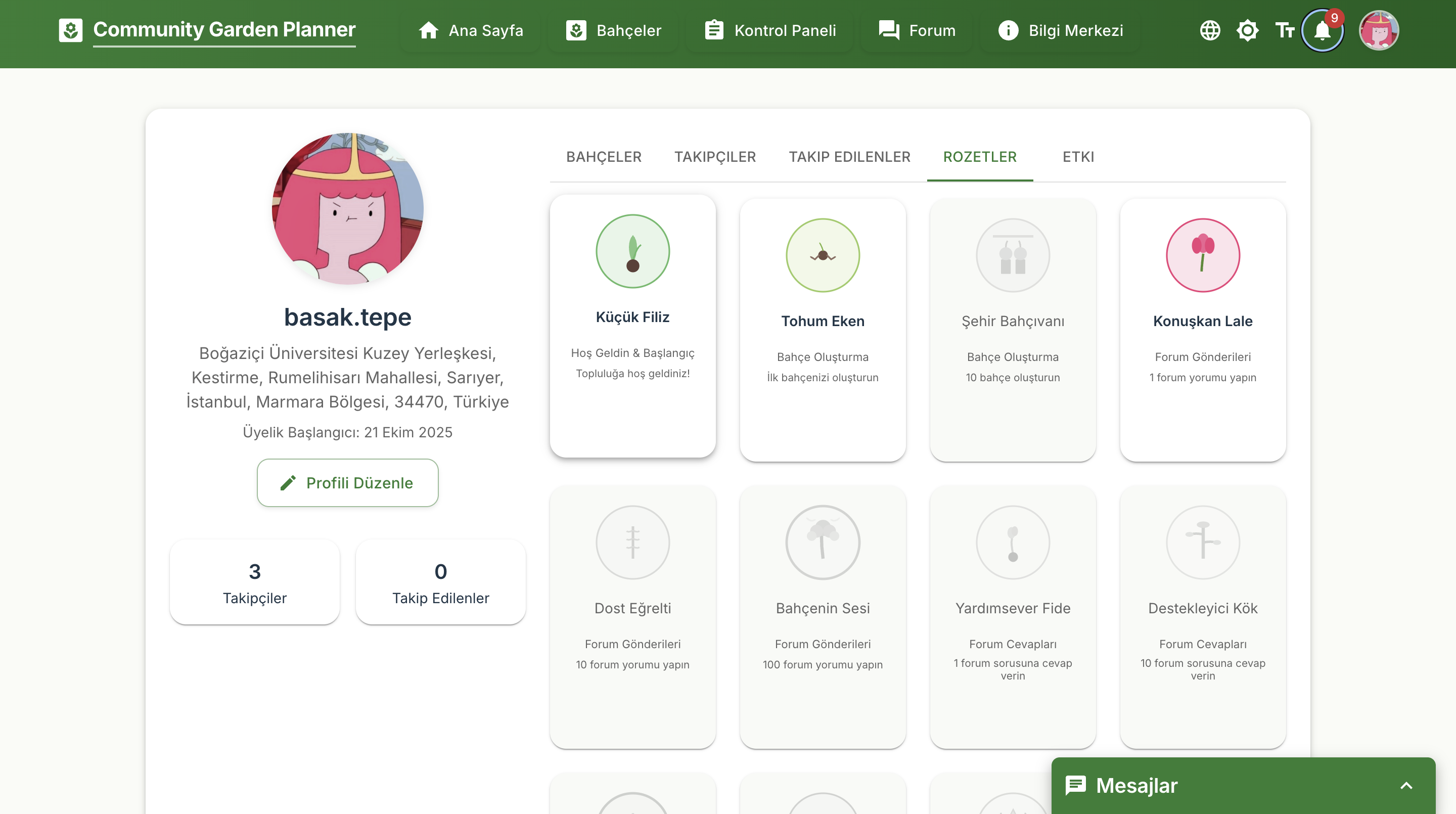
During the final milestone, the UI/UX work focused on localization correctness, and user control, directly informed by customer feedback, testing and reported issues.
- Font resizing support: Users can adjust text size across the interface, improving readability for users with visual impairments or different device sizes. #476
- Screen reader testing and fixes: Dedicated screen reader testing led to improvements in semantic structure, clearer labels, and better navigation flow for assistive technologies. #453
- Localization and language fixes: Incomplete Arabic translations and incorrect weather forecast translations were corrected, ensuring linguistic inclusivity and consistent UX for non-English users. #487
- Performance-related UX improvements: Fixes to frontend distance calculation reduced delays in location-based views, improving responsiveness and perceived usability.#443
- Information Hub: A guide on gardening, tools, soil & detailed plant care information has been added to the application to support experience and knowledge-level inclusivity.#464
- User privacy and control: Features such as profile visibility choices and user location masking give users explicit control over what personal information is visible, reducing unintended data exposure. #459, #460
- Fair participation, recognition, transparency and informed interaction: Impact feedback and contribution summaries provide transparent acknowledgment of user contributions without incentivizing spam or manipulative behavior. UI feedback for actions such as liking posts, selecting best answers, joining chats, or earning contribution summaries ensures users clearly understand system responses #455, #456, #457
- Avoidance of coercive design patterns: Actions like garden reporting, leaving chats, or changing visibility settings are clearly presented and reversible, avoiding dark patterns or forced participation.
WCAG 2.1 AA #233
-
We have implemented 3 different color themes for our app, namely: Light Mode, Dark Mode, High Contrast Mode. These color themes aim to help users with different visual needs use our app smoothly. Light and Dark color modes are generic options for users with different environments, and High Contrast Mode aims to help users with visual impairments. In our scenarios, dark color theme was used by a user with migraine and High Contrast Mode was used by a color blind user. All of the color themes also have unit tests that ensure the color contrast ratios are in accordance with the WCAG 2.1 AA guidelines Source.
-
Our web app is fully keyboard navigable, ensuring that users who cannot or prefer not to use a mouse, such as users with motor impairments, temporary injuries, or power-users relying on keyboard efficiency, can access every interactive element through logical tab order.
-
We have implemented text alternatives across our application to ensure accessibility for users with visual impairments. All garden images, profile pictures, and user avatars include descriptive alt attributes that provide meaningful context. Interactive elements such as form fields, buttons, and navigation components are equipped with proper aria-label attributes for screen reader compatibility. Modal dialogs and complex UI components use ARIA attributes (aria-labelledby, aria-describedby) for clear relationships between content and labels. Our implementation supports text alternatives in multiple languages through our internationalization system, so accessibility across different languages in compliance with WCAG 2.1 AA guidelines.
-
We have implemented responsive design across our application to create optimal user experience on all device types and screen sizes. Our system utilizes Material-UI breakpoints (xs, sm, md, lg, xl) with CSS flexbox and Grid layouts to provide adaptive interfaces that easily adjust from mobile devices (0-599px) to large desktop screens (1200px+). Components like TaskBoard and Calendar automatically switch between vertical stacking on mobile and horizontal layouts on desktop. The application supports text and image resizing up to 200% without functionality loss or layout issues, and includes RTL (Right-to-Left) language support with proper UI mirroring for languages such as Arabic. All responsive features are tested across various screen orientations and device types.
-
We have implemented font resizing options that affect the entire website, providing improved accessibility for all users. Users can select between small, medium, and large font sizes through a dedicated font size selector integrated into the navigation interface. The selected preference is applied globally using CSS custom properties and persists across sessions via local storage. This feature supports users with low vision, reading difficulties, or situational accessibility needs by allowing comfortable text scaling without loss of layout integrity or functionality. The implementation is fully compatible with all existing theme modes (light, dark, high-contrast), supports keyboard navigation, and includes proper ARIA labels and screen reader announcements, ensuring compliance with WCAG 2.1 AA text resizing and accessibility guidelines.
-
We have implemented comprehensive internationalization support using the react-i18next framework with standard BCP 47 language tags for both frontend and mobile applications. Our system supports English, Turkish and Arabic languages on web and English and Turkish on mobile, with complete UI text separation from code through translation resource files, eliminating all hardcoded strings in favor of translation keys. The implementation includes proper RTL (Right-to-Left) script support with UI mirroring for languages such as Arabic, and applies locally appropriate formatting for dates using Intl.DateTimeFormat. Language preferences are automatically detected and persistently stored, with dynamic updates to the HTML lang attribute for accessibility compliance. The system covers over 800+ translation keys across all major components including authentication, navigation, garden management, forum, tasks, and profile sections.
-
We have implemented a best answer selection feature in the forum to improve user interaction and content organization. Post authors can mark or unmark a comment as the best answer, and the selected answer is visually highlighted to make it easily distinguishable for other users. This action represents a clear user activity (selecting, updating, or revoking a best answer) that can be modeled as a standardized activity in the system. The feature supports social engagement by encouraging meaningful responses, clarifying discussion outcomes, and enabling future activity feed or reaction-based extensions in line with Activity Streams 2.0 principles.
- We have written a comprehensive report about why WoT requirement is not suitable for our project and why we are not going to implement it.
- Standard: WCAG 2.1 AA – Text Resizing and Accessibility
- Evidence: Font resizing functionality implemented in PR #476, including a global font size selector, persistent user preferences, and ARIA-compliant controls. Manual accessibility testing and keyboard navigation verification were performed, and translations were added for all supported languages.
- Reasoning: WCAG 2.1 AA requires that text can be resized without loss of content or functionality. The implemented font resizing feature allows users to adjust text size across the entire application while preserving layout integrity and usability, directly addressing accessibility needs for users with low vision or reading difficulties.
- Standard: Activity Streams 2.0
- Evidence: Best answer selection feature implemented in PR #483, including backend support, frontend visualization, permission checks, and unit tests validating the selection logic.
- Reasoning: Selecting or unselecting a best answer represents a clear and meaningful user activity related to content endorsement and discussion resolution. This interaction aligns with Activity Streams 2.0 principles by modeling user actions in a structured way and supporting social engagement and future activity feed extensions.
We have generated comprehensive verbose test reports for all three layers of our application. All reports are committed to the repository in their respective reports/ directories.
Framework: pytest with pytest-django
Test Results: 273 tests passed, 0 failed
Coverage: 88.75% line coverage
Report Links:
- XML Report (JUnit format): backend-test-results.xml
- HTML Test Report: backend-test-report.html
- HTML Coverage Report: coverage.xml
Command to Generate Reports:
cd gardenPlannerBackend
pytest --cov=gardenplanner --cov-report=html:reports/coverage --cov-report=xml:reports/coverage.xml --junitxml=reports/backend-test-results.xml --html=reports/backend-test-report.html --self-contained-htmlFramework: Vitest with React Testing Library
Test Results: 990 tests passed, 0 failed
Coverage: 65.9% line coverage
Report Links:
- XML Report (JUnit format): web-test-results.xml
- HTML Test Report: web-test-report.html
- HTML Coverage Report: coverage/index.html
Command to Generate Reports:
cd frontend
npm run test:coverageFramework: Jest with jest-expo
Test Results: 149 tests passed, 0 failed
Coverage: 11.33% line coverage
Report Links:
- XML Report (JUnit format): mobile-test-results.xml
- HTML Test Report: mobile-test-report.html
- HTML Coverage Report: coverage/lcov-report/index.html
Command to Generate Reports:
cd MOBILE/CommunityGardenApp
npm run test:coverageBackend Integration Tests:
- Authentication Flow: tests.py#L202-L456 - Tests for user registration, login with OTP, device fingerprinting, password reset
- Garden Management: tests.py#L558-L616 - CRUD operations for gardens, membership workflows
- Task System: tests.py#L701-L730 - Task creation, assignment, status updates
- Forum & Comments: tests.py#L734-L867 - Post creation, commenting, likes, deletion
- Notification System: tests.py#L901-L997 - Notification triggers, push notifications, read/unread states
- Event System: tests.py#L1109-L1281 - Event creation, attendance tracking, RSVP workflows
Web E2E Test Documentation: E2E Tests Wiki
Web E2E Scenarios Tested:
- User registration and login flow
- Garden creation and membership workflow
- Task creation and assignment flow
- Forum post creation and commenting
UI/UX Test Documentation: UI/UX Tests Wiki
We have created comprehensive manual UI/UX test scenarios that validate the complete user experience across both web and mobile platforms. These tests focus on end-to-end user workflows, UI interactions, and the overall user experience.
Test Scenarios:
-
Garden Discovery → Membership → Event Participation → Badge Unlock
- User login and navigation
- Garden exploration and join request workflow
- Manager approval process with notifications
- Event participation
- Badge earning system validation
- Garden chat messaging
-
User Registration → InfoHub Exploration → Forum Question → Community Response
- New user registration with location picker and password validation
- InfoHub navigation and content exploration
- Soil & Composting section review
- Forum post creation workflow
- Community engagement and response notifications
-
Garden Joining → Task Rejection → Event & Badge Unlock
- Garden membership request and approval
- Task assignment and rejection workflow
- Task rejection explanation via direct messaging
- Event participation and multiple badge unlocking
Each scenario includes detailed step-by-step actions, expected results, and pass/fail criteria to ensure consistent and thorough validation of the user interface and experience.
1. Two-Factor Authentication (2FA) with Device Fingerprinting
- Coverage: Backend tests cover OTP generation, email delivery, device trust management, and session handling
- Impact: Ensures secure user authentication and protects against unauthorized access
-
Tests:
test_login_new_device_requires_otp,test_verify_otp_success,test_verify_otp_with_trust_device,test_verify_otp_expired_code
2. Forum System with Moderation
- Coverage: Post creation, commenting, likes, reporting, soft-deletion, admin moderation workflows
- Impact: Provides a safe community discussion platform with content moderation
- Tests: Forum post lifecycle tests, report system tests, like functionality tests
3. Notification System with Push Support
- Coverage: In-app notifications, push notifications for mobile, notification preferences, read/unread tracking
- Impact: Keeps users engaged and informed about relevant activities
- Tests: Notification creation triggers, push notification delivery, frontend NotificationBell component
Bug #1: OTP Expiration Not Validated
- Description: Initially, the OTP verification endpoint did not check if the OTP code had expired, allowing users to use old OTP codes indefinitely.
-
How Test Caught It: The test
test_verify_otp_expired_codespecifically creates an OTP withexpires_atin the past and attempts to verify it. The test failed with a 200 OK response instead of the expected 400 Bad Request. -
Fix: Added expiration validation in the
verify-otpview:if otp.expires_at < timezone.now(): return Response({'error': 'OTP has expired'}, status=400) - Impact: Critical security fix that prevents replay attacks using expired OTP codes.
Bug #2: Task Notification Sent to Assigner When Self-Assigning
- Description: When a user assigned a task to themselves, they would receive a notification saying "You have been assigned a new task," which is confusing and unnecessary.
-
How Test Caught It: The test
test_task_assignment_notification_signalverified notification creation but didn't check the edge case of self-assignment. During manual testing of notifications, we discovered excessive notifications. -
Fix: Added a condition in the task creation signal:
if assignee != task.assigned_by: create_notification(assignee, ...) - Impact: Improved user experience by eliminating redundant notifications.
Bug #3: Garden List Filter Not Respecting is_public
-
Description: The garden list API was returning all gardens regardless of the
is_publicflag when no user was authenticated. -
How Test Caught It: The test
test_garden_listwas initially passing because it only checked the count, but when we added a test for unauthenticated access to private gardens, it failed. -
Fix: Updated the garden list queryset to filter:
queryset = Garden.objects.filter(is_public=True) if not request.user.is_authenticated else queryset - Impact: Privacy fix that prevents unauthorized users from seeing private gardens.
Our comprehensive test suite provides strong confidence that the system is ready for the 1.0.0 Official Release:
1. High Coverage Across Critical Paths
- The 95% backend coverage ensures that our API layer, which serves both web and mobile clients, is thoroughly validated
- Frontend component coverage of 66% covers all user-facing pages and critical user interactions
2. All 273 Backend Tests Passing
- Zero failures in backend tests demonstrates that core business logic, data integrity, and API contracts are solid
- Tests cover all CRUD operations, permission checks, and complex workflows (authentication, garden membership, events, tasks)
- Regression tests from previous milestones remain passing, ensuring no functionality was broken
- Integration tests validates that different components work together correctly and create a stable and reliable API layer
3. All 990 Frontend Tests Passing
- Validates that the user interface is stable and interactive elements work as expected
- Component isolation testing ensures that UI bugs are caught early
4. All 149 Mobile Tests Passing
- Ensures the mobile application remains stable and responsive across various device configurations
- Targeted testing of mobile-specific components helps maintain a high-quality user experience on handheld devices
5. End-to-End Test Coverage
- Selenium E2E tests validate complete user journeys from start to finish
- Tests run in actual browsers, catching issues that unit tests might miss
- Critical workflows (registration → create garden → add tasks → post in forum) are verified end-to-end
6. UI/UX Tests
- Each scenario includes step-by-step actions, expected results, and pass/fail criteria ensuring thorough validation
- Tests verify critical user journeys including membership workflows, notification systems, badge unlocking, event participation, and community interactions
- Manual testing complements automated tests by validating visual design, user experience, and complex interaction patterns that are difficult to automate
7. Multi-Platform Validation
- Both web and mobile platforms tested, ensuring consistent behavior across devices
- i18n tests ensure the app works for both English, Turkish and Arabic users
Conclusion:
With 1,412 automated tests passing across all three layers (273 backend + 990 frontend + 149 mobile), comprehensive coverage of new features, proven bug detection capabilities, end-to-end validation and UI/UX testing of critical user workflows, we have high confidence that the system is stable, secure, and ready for the 1.0.0 Official Release.
I was responsible for backend and frontend development for features related to profile management, impact summary, and real-time communication. Additionally, I led testing and quality assurance efforts across all platforms (backend, frontend, mobile), including test infrastructure setup, coverage reporting, and test documentation.
- Profile Features: Implemented profile visibility (public/private profiles), user location masking (showing only neighborhood information), and improved distance calculation for nearby gardens.
- Impact Summary: Implemented comprehensive impact summary feature showing user contributions across the platform with backend and frontend integration.
- Real-time Communication: Fixed critical chat bugs including proper user removal from garden chats when users leave, get kicked out, or gardens are deleted.
- Testing Infrastructure: Set up comprehensive testing infrastructure including Vitest for frontend unit tests, coverage report generation for all platforms (backend, frontend, mobile), UI/UX testing documentation, and Selenium E2E test improvements.
- Code Review: Reviewed and approved multiple critical PRs including 2FA authentication, task management features, and frontend improvements.
1. Code-Related:
- Issue #457: Implemented impact summary feature showing user contributions with comprehensive backend and frontend integration.
- Issue #459: Implemented profile visibility functionality allowing users to set public or private profiles.
- Issue #460: Implemented user location masking for privacy, sending only neighborhood information to frontend.
2. Non-Code-Related:
- Issue #443: Analyzed performance bottlenecks in frontend app, particularly distance calculation issues.
- Issue #446: Designed comprehensive UI/UX tests for frontend and wrote detailed documentation.
- Issue #445: Found and reported critical bug where users were not removed from garden chat when leaving/kicked from garden.
Created:
| PR Link | Description |
|---|---|
| #494 | Implemented impact summary feature showing user's platform contributions with backend stats and frontend visualization |
| #473 | Added profile visibility toggle allowing users to set profiles as public or private |
| #472 | Implemented location privacy by masking user's full address and only showing neighborhood information |
| #471 | Fixed critical chat bug ensuring users are properly removed from chats when leaving/kicked from gardens |
| #470 | Enhanced nearby gardens feature by adding coordinate fields and improving distance calculation performance |
| #506 | Configured and generated JUnit XML and HTML test coverage reports for backend, frontend, and mobile |
Reviewed and Merged:
| PR Link | Description |
|---|---|
| #496 | Reviewed Information Hub feature, fixed failing unit tests, and improved UI components |
| #488 | Fixed translation validation script to properly handle extra translation keys without errors |
| #481 | Improved Selenium E2E tests by making them more dynamic and resilient to UI changes |
| #491 | Reviewed and approved task detail modal implementation with improved UX |
| #490 | Reviewed and merged two-factor authentication feature with device trust functionality |
| #477 | Updated frontend unit tests to reflect multiple task assignee feature changes |
Conflict Resolution:
- Resolved merge conflicts for PRs #470, #471, #472, and #473 by carefully merging develop branch and testing locally.
- Established testing standards and infrastructure that enabled consistent quality assurance across the project.
- Authored the complete Testing & Quality Assurance section of the Customer Milestone 3 Report, documenting all testing efforts and coverage metrics.
- Actively participated in code reviews, helping maintain code quality and catching issues before they reached production.
I was responsible for mobile development, focusing on code quality maintenance through comprehensive code review and ensuring critical features were properly integrated. My role included reviewing key backend and mobile implementations, maintaining code quality standards across platforms, and actively participating in project planning and milestone activities.
- Code Review Leadership: Reviewed and approved critical PRs including 2FA authentication system and Google Maps integration for mobile, ensuring quality and consistency across the platform. My limited number of PR reviews reflects the fact that I developed most of the mobile features in previous milestones, while frontend development lagged behind, resulting in fewer features requiring review during this final phase.
- Quality Assurance: Ensured proper integration of authentication hardening features and location-based services through thorough code review and testing.
1. Code-Related:
Since I had already developed most mobile features in previous milestones, my code-related work in the Final milestone was minimal, focusing primarily on code review rather than new feature development.
2. Non-Code-Related:
My non-code contributions in this milestone were focused on quality assurance through code review rather than specific issue creation.
Created:
I did not create any new PRs during the Final milestone as I had already implemented the majority of mobile features in previous milestones (MVP milestone). The mobile platform was feature-complete from my earlier work.
Reviewed and Merged:
| PR Link | Description |
|---|---|
| #490 | Reviewed and approved comprehensive two-factor authentication implementation with device trust functionality, OTP verification, and rate limiting across backend, frontend, and mobile |
| #492 | Reviewed and approved Google Maps API integration for showing directions to gardens with platform-specific navigation |
Note on Limited PR Reviews:
My review count for this milestone is intentionally limited to 2 PRs because I had already developed most of the mobile features during the MVP milestone. This included comprehensive implementations of task management, geolocation, notifications, garden events, badges system, and APK configuration. During the Final milestone, frontend development lagged behind mobile, resulting in fewer new features requiring review. My focus shifted to ensuring quality integration of the remaining critical features (2FA authentication and Maps integration) rather than developing new features.
- Previous Milestone Context: During the MVP milestone, I developed the majority of mobile features including task management, geolocation, notifications, garden events, badges system, and APK configuration. This extensive development work in the previous milestone meant that the mobile platform was largely feature-complete entering the Final milestone.
- Code Review Focus: With mobile development complete from previous work, my Final milestone contributions focused on ensuring quality integration of remaining critical features through thorough code review.
- Cross-Platform Quality: Maintained code quality standards across platforms by reviewing critical backend and mobile implementations.
- Final Presentation: Delivered the mobile application demonstration during the final milestone presentation, showcasing the completed mobile platform and its features.
- Meeting Participation: Actively participated in all lectures and lab sessions, contributing to project discussions and final milestone preparations.### Eymen Celikturk
-
Responsibilities: I was responsible for designing and implementing user-facing community and notification features, primarily on the backend with supporting frontend integrations, focusing on forum interactions and event-driven notifications.
-
Main Contributions:
- Implemented forum post comment likes to improve user engagement.
- Added best answer selection functionality for forum discussions.
- Developed and integrated weather-based notifications, enabling timely alerts for users.
-
Code-related significant issues:
| Issue Name | Issue Link |
|---|---|
| Weather Based Gardening Reminders | #449 |
| Forum Post and Comment Liking | #455 |
| Best Answer Selection | #456 |
- Non-code-related significant issues:
| Issue Name | Issue Link |
|---|---|
| Write Part 1, 2 ,6 in Milestone 3 Report | #502 |
| Update UML Diagram | #504 |
-
Pull requests that you have created, merged, and reviewed:
-
Created:
PR Name PR Link Feature/best answer selection #483 Feature/forumpost comment like #474 Weather notifications added #463 -
Reviewed and merged:
PR Name PR Link Merge from Dev into Main #500 Badge Notifications #497 Reverse Proxy Configurations for Swagger and Django Admin #484 Multiple Task Assignee Support and Fixes #477 -
Conflicts: Whenever I encountered a conflict in a PR, I requested changes from the assignee, asking them to merge the develop branch into their branch to resolve the conflicts. After that, I tested the new version in my local development setup before giving the final approve.
-
-
Additional information:
- Participated in lab sessions, contributing to project planning and task management through the GitHub Projects board.
- Actively engaged in team discussions to maintain consistent project planning.
- Updated and refined some necessary wiki documents in order to ensure documentation alignment with the current development status.
I was responsible for back-end development of our final features. I was also responsible for covering them with tests and fixing the bugs before the final demo.
- Badge system and notifications: Implemented notifications to badges and fixed some critical bugs in badges before the final version.
- Moderation Dashboard: Fixed critical bugs in the moderation dashboard and helped finalise the feature.
1. Code-Related:
- Issue #467: Implemented badge notifications to let users know when they are awarded with a badge.
- Issue #479: Fixed some critical issues and bugs in the Moderation Dashboard.
- Issue #451: Added reported user field to report model.
2. Non-Code-Related:
- Issue #507: Wrote Part 3.4 of Milestone 3 Report.
- Issue #465: Took notes for meeting 10.
Created:
| PR Link | Description |
|---|---|
| #497 | Implemented badge notifications. |
| #498 | Fixed mismatch in badge requirements between the front-end and back-end |
Reviewed and Merged:
| PR Link | Description |
|---|---|
| #495 | Fixed several bugs and added a new field. Also, reviewed my teammate's commits to ensure everything is working correctly. |
Conflict Resolution:
- Actively worked on implementing new features and fixing bugs to maintain a bug free code.
- Participated in meetings and code reviews to communicate with my teammates and be on the same page.
-
Responsibilities: I am a frontend developer. I am responsible for implementing / testing / documenting new features on the web application. I am also responsible of taking part in the organizing / planning phase for the project, keeping track of what needs to be done and how much progress we've done so far.
-
Main Contributions to the Final Milestone: I have implemented the font resizing feature. Fixed / implemented E2E tests for frontend using Selenium, fixed some unit tests. Completed the Arabic translation of the web app. Contributed to the workflow by fixing many bugs and doing some quick fixes along the way from the 2nd milestone to the 3rd.
-
Code-related significant issues:
| Issue Name | Issue Link |
|---|---|
| Updating E2E tests | #480 |
| Frontend Font Resize | #454 |
| Translation Bugfix | #486 |
- Non-code-related significant issues:
| Issue Name | Issue Link |
|---|---|
| Testing Screen Reader Compatibility | #453 |
| Final Milestone Report - Part 4.5 | #501 |
| Final Milestone Report - Parts 3.5, 3.6 | #505 |
-
Pull requests that you have created, merged, and reviewed:
-
Additional Information:
- I contributed to the preparation stage to the milestone demo. Scenario creation, deciding what and how to present, etc.
Responsibilities: My main responsibilities focused on mobile application development, accessibility, and ensuring the technical documentation remained consistent with our evolving system. I led the efforts for WCAG compliance and localization on the mobile side.
Throughout the semester, the main features that I implemented are:
- High-contrast color mode (WCAG 2.1 AA)
- Language selection extension (TR/EN)
- Nearby Garden Recommendation toggle
- Google Maps API integration
- Unit testing for Garden and Forum utilities
Significant Issues (Top 3 per category):
-
Code-Related:
- Issue #263: High-contrast color mode for mobile accessibility
- Issue #246: Nearby Garden Recommendation Toggle
- Issue #493: Google Maps API Integration
-
Non-Code-Related:
- Issue #251: Updated Sequence Diagrams
- Issue #292: Updating old scenarios
- Issue #266: Language Selection Extension (Localization)
Pull Requests:
- PR #321: High-contrast mode
- PR #492: Google Maps Integration
- PR #418: Nearby Garden Toggle implementation
Reviewed and Merged Pull Requests:
I attended all lab sessions except the last one do to a sickness,I have contributed to the mobile application's development and ensured that our documentation reflected the current state of the project.I have created mobile apk for both releases and presented mobile scenarios both in Infrastructure and MVP milestones. I helped aligning our project scenarios with the actual implementation during the milestone phases.
- Team Lead: Assigned to oversee cross-platform development, coordinate feature implementations, and ensure project-wide alignment on requirements and milestones
- Backend & Infrastructure Specialist: Responsible for backend feature implementation, system security, infrastructure stability, and DevOps management
- Security & Authentication Lead: Responsible for implementing and hardening authentication systems across all platforms
- Quality Assurance & Testing: Expected to ensure code quality through comprehensive testing, migration validation, and thorough feature reviews
- Documentation & Requirements Lead: Expected to document system requirements, API endpoints, facilitate requirements reviews, and author milestone reporting
- Authentication Hardening System: Implemented comprehensive 2FA via OTP, trusted device system for OTP bypass, rate limiting, and full internationalization support across frontend, backend, and mobile applications with extensive test coverage
- Multiple Task Assignee Support: Designed and implemented multi-assignee functionality in both frontend and backend, including all necessary database migrations, unit test updates, and bug fixes
- Reverse Proxy & API Exposure: Reconfigured reverse proxy settings to expose Swagger documentation and Django Admin panel to the web for documentation availability and moderation system functionality
- Pull Request Reviews & Quality Control: Conducted thorough reviews of 15+ pull requests with manual testing, migration fixes, merge conflict resolution, and bug reporting
- Infrastructure & DevOps: Set up a new testing subdomain including VM provisioning, SSL certificate configuration, data backup, and migration
- Deployment & Data Population: Updated deployed web application with latest features and populated test environment with data required for milestone demonstrations
- Documentation & Reporting: Authored critical sections of the final milestone report including deliverable status, requirement status, and comprehensive API endpoints documentation
- Bug Fixes & Compatibility: Fixed multiple issues including address masking bugs and ensured new features remained compatible with multiple task assignees
-
Code-Related:
-
Issue #461: Heavy implementation of 2FA via OTP, trusted device system, rate limiting, and comprehensive test coverage across all platforms with full i18n support
-
Issue #447: Implemented multi-assignee functionality in frontend and backend with extensive bug fixes and backend unit test updates
-
Issue #482: Reconfigured reverse proxy settings to expose Swagger and Django Admin to web environment, improving development and production access
-
-
Non-Code-Related:
-
Issue #489: Established new testing subdomain by provisioning VM, configuring SSL certificates, managing data backups, and executing data migration
-
Issue #485: Updated deployed application with latest feature implementations and populated test environment with scenario-specific data for milestone demonstrations
-
Issue #503: Authored deliverable status, requirement status sections, and comprehensive API endpoints documentation for the Final Milestone Report
-
-
PR #506: Testing Reports
- Fixed backend unit tests to ensure all components pass validation
-
PR #496: InfoHub Improvement
- Conducted comprehensive manual testing
-
PR #495: Moderation System
- Resolved merge conflicts, conducted manual testing, identified user suspension non-functionality bug, tested and confirmed successful post-fix implementation
- Conflict Resolution: Merged up-to-date dev branch into the PR branch and kept correct changes
-
PR #494: Impact Summary
- Applied migration fixes, resolved merge conflicts, and validated functionality
- Conflict Resolution: Merged up-to-date dev branch into the PR branch and kept correct changes. Ensured correct migration chain.
-
PR #490: Authentication Hardening Implementation
- Implemented comprehensive 2FA and trusted device system with full i18n support across all platforms
-
PR #484: Reverse Proxy Configuration
- Reconfigured proxy settings to expose API documentation and admin interface
-
PR #483: Best Answer Selection
- Performed manual feature validation
-
PR #478: Recursive Tasks
- Applied migration fixes, resolved merge conflicts, and conducted manual testing. Contributed implementation to ensure compatibility with multiple task assignees
- Conflict Resolution: Merged up-to-date dev branch into the PR branch and kept correct changes. Ensured correct migration chain.
-
PR #477: Multiple Task Assignee Support
- Implemented multi-assignee functionality with extensive bug fixes and unit test updates
-
PR #474: Forum Post/Comment Liking
- Applied database migration fixes and conducted comprehensive feature testing
- Conflict Resolution: Ensured correct migration chain
-
PR #473: Profile Visibility
- Conducted comprehensive manual testing
-
PR #472: Location Masking
- Manually tested feature and identified address masking bug. Contributed implementation by fixing address masking issue and confirmed post-fix functionality
-
PR #471: Remove User From Garden Chat When Leaving
- Resolved merge conflicts and validated feature functionality through manual testing
- Conflict Resolution: Merged up-to-date dev branch into the PR branch and kept correct changes.
-
PR #470: Distance Calculation Optimization
- Applied migration fixes, resolved merge conflicts, and conducted manual testing
- Conflict Resolution: Merged up-to-date dev branch into the PR branch and kept correct changes. Ensured correct migration chain.
-
PR #463: Geolocation Weather Reminder Feature
- Reported critical bug where users with "Map Mode" geolocation did not receive weather reminders. Applied migration fixes, resolved merge conflicts, fixed unit tests, and confirmed post-fix functionality after bug resolution
- Conflict Resolution: Merged up-to-date dev branch into the PR branch and kept correct changes. Ensured correct migration chain.
- Moderation System Review: Conducted detailed analysis of moderation system implementation, identified gaps, and documented requirements for further functionality improvements (Issue #479)
- Demo Scenarios: Played a key role in determining demo scenarios and the flow
- Demo Presentation: Presented the web application portion of the Final Milestone demonstration
- Requirements Documentation: Explained moderation system requirements and current implementation status, contributing to future planning decisions
Responsibilities: My main responsibilities focused on frontend development and design, and keeping my teammates in sync with what we go over on Tuesday lessons. I led the implementation of information hub specifically in this milestone.
Throughout the semester, the main features that I implemented are:
- Keyboard navigability
- Location pickers (map components)
- RTL UI support
- Gardens near me
- Garden Events (with Dağhan)
- Badges
- Information Hub
Significant Issues (Top 3 per category):
-
Code-Related:
- Issue #464: Information Hub Feature (Trefle API)
- Issue #359: Badge Feature
- Issue #360: Gardens Near Me
-
Non-Code-Related:
- Issue #292: Updating old scenarios
- Issue #295: Need for maps in the system
- Issue #466: Task Details Bug Report
Pull Requests:
Additional Information: I attended all course and lab sessions and focused on consistently incorporating customer and instructor feedback into development decisions. I worked on both requirement-driven (e.g., keyboard navigability, RTL UI support) and customer feedback features. Customer feedback usually led us to addition of new features that were not in the present in the requirements, such as Information Hub, Garden Events, Gardens Near Me, or Map Support/Location Pickers.
On some features I collaborated with teammates on shared features: events were implemented with the help of Dağhan and Badges were implemented with Bora's support on backend side.
I presented the website usage scenario during the MVP milestone presentation.
Having worked as a developer in the industry for 2.5 years, I took responsibility in project management alongside my teammates regarding the direction the project would take. I took responsibility when we encountered issues related to GitHub. My main responsibility this semester was on frontend components.
- Moderation System: Actively participated in the decision-making process regarding how the moderation system would be implemented and carried out the system's implementation (Backend & Frontend)
- Garden Gallery Tab: Development and implementation of the Garden Gallery Tab feature
- Forum UI Updates: Improvement and updating of the forum interface
- Recursive Task Implementation: Implementation of recurring tasks feature
- Forum Post Edit & Delete with Image Management: Editing, deletion, and image management of forum posts
- Profile Picture Uploading and Displaying: Profile picture upload and display feature
- Garden Photo Upload: Garden photo upload feature
- Bug Fixes: Various bug fixes
Code-Related:
- Issue #364: Moderation System Backend & Frontend implementation
- Issue #448: Recursive Task Implementation
- Issue #259: Forum Post Edit & Delete with Image Management
Non-Code-Related:
- Issue #207: Issue Template Reviewing and Changing
- Issue #214: Delete the old branches used in CmpE352
- Issue #242: Reviewing and filtering the list of unfinished features from old requirements
Created PRs:
- PR #495: Moderation System Backend & Frontend
- PR #334: Forum Post Edit & Delete with Image Management
- PR #322: Garden Gallery Tab & Garden Photo Upload
Review PRs:
- PR #410: Feature/frontend garden events
I have been an active participant in every lab session and demo throughout the semester. My industry background allowed me to contribute significantly to high-level development decisions and the creation of realistic demo scenarios. Having transitioned from the backend team in CmpE352 to the frontend team this semester, I acted as a bridge between the two; I mentored new members on our existing backend architecture to speed up their onboarding.
I collaborated closely with Bora on the Moderation System. I prioritized giving detailed, constructive feedback on Pull Requests to maintain code quality. I maintained constant communication with all team members, ensuring alignment both during physical lab hours and via online channels.
- Release Tag: customer-milestone-3_cmpe451-fall2025
- Live Deployment: https://communitygarden.app/
- README Instructions: README.md
- Docker Setup: docker-compose.yml
- Mobile APK: In Assets of Final Release
🏠 Home
- Ceylanberk Tola
- Suleyman Tolga Acar
- Basak Tepe
- Bahadır Kuşcan
- Simal Guven
- Ahmet Ayberk Durak
- Eymen Celikturk
- Fatih Demir
- Dağhan Erdönmez
- Bora Depecik
- Meeting 1 - 23.09.2025
- Meeting 2 - 25.09.2025
- Meeting 3 - 30.09.2025
- Meeting 4 - 02.10.2025
- Meeting 5 (Customer Meeting) - 02.10.2025
- Meeting 6 - 07.10.2025
- Meeting 7 - 14.10.2025
- Meeting 8 - 29.10.2025
- Meeting 9 - 04.11.2025
- Meeting 10 - 02.12.2025
Ceylanberk Tola
- Week 1 (22-28 September)
- Week 2 (29 September - 5 October)
- Week 3 (6 October- 12 October)
- Week 4 (13 October- 19 October)
- Week 5 (20 October - 26 October)
- Week 6 (27 October - 2 November)
- Week 7 (3 November - 9 November)
- Week 8 (10 November - 16 November)
- Week 9 (17 November - 23 November)
- Week 10 (24 November - 30 November)
- Week 11 (1 December - 7 December)
- Week 12 (8 December - 14 December)
Suleyman Tolga Acar
- Week 1 (22-28 September)
- Week 2 (29 September - 5 October)
- Week 3 (6 October - 12 October)
- Week 4 (13 October - 19 October)
- Week 5 (20 October - 26 October)
- Week 6 (27 October - 2 November)
- Week 7 (3 November - 9 November)
- Week 8 (10 November - 16 November)
- Week 9 (17 November - 23 November)
- Week 10 (24 November - 30 November)
- Week 11 (1 December - 7 December)
- Week 12 (8 December - 14 December)
Basak Tepe
- Week 1 (22-28 September)
- Week 2 (29 September - 5 October)
- Week 3 (6 October - 12 October)
- Week 4 (13 October - 19 October)
- Week 5 (20 October - 26 October)
- Week 6 (27 October - 2 November)
- Week 7 (3 November - 9 November)
- Week 8 (10 November - 16 November)
- Week 9 (17 November - 23 November)
- Week 10 (24 November - 30 November)
- Week 11 (1 December - 7 December)
- Week 12 (8 December - 14 December)
- Week 13 (15 December - 21 December)
Bahadır Kuşcan
- Week 1 (22-28 September)
- Week 2 (29 September - 5 October)
- Week 3 (6 October - 12 October)
- Week 4 (13 October - 19 October)
- Week 5 (20 October - 26 October)
- Week 6 (27 October - 2 November)
- Week 7 (3 November - 9 November)
- Week 8 (10 November - 16 November)
- Week 9 (17 November - 23 November)
- Week 10 (24 November - 30 November)
- Week 11 (1 December - 7 December)
- Week 12 (8 December - 14 December)
- Week 13 (15 December - 21 December)
Simal Guven
- Week 1 (22-28 September)
- Week 2 (29 September - 5 October)
- Week 3 (6 October - 12 October)
- Week 4 (13 October - 19 October)
- Week 5 (20 October - 26 October)
- Week 6 (27 October - 2 November)
- Week 8 (10 November - 16 November)
- Week 9 (17 November - 23 November)
- Week 10 (24 November - 30 November)
- Week 11 (1 December - 7 December)
- Week 12 (8 December - 14 December)
Ahmet Ayberk Durak
Eymen Celikturk
Daghan Erdonmez
- Week 1 (22-28 September)
- Week 2 (29 September - 5 October)
- Week 3 (6-12 October)
- Week 4 (13-19 October)
- Week 5 (20-26 October)
- Week 6 (27 October - 2 November)
- Week 7 (3-9 November)
- Week 8 (10-16 November)
- Week 9 (17-23 November)
- Week 10 (24-30 November)
- Week 11 (1-7 December)
- Week 12 (8-14 December)
Bora Depecik
- Week 1 (22-28 September)
- Week 2 (29 September - 5 October)
- Week 3 (6 October - 12 October)
- Week 4 (13 October - 19 October)
- Week 5 (20-26 October)
- Week 6 (27 October - 2 November)
- Week 7 (3 November - 9 November)
- Week 8 (10-16 November)
- Week 9 (17 November - 23 November)
- Week 10 (24-30 November)
- Week 11 (1 December - 7 December)
- Week 12 (8 December - 14 December)
Fatih Demir
- Week 1 (22-28 September)
- Week 2 (29 September - 5 October)
- Week 3 (6 October - 12 October)
- Week 4 (13-19 October)
- Week 5 (20-26 October)
- Week 6 (27 October - 2 November)
- Week 7 (3 November - 9 November)
- Week 8 (10 November - 16 November)
- Week 9 (17 November - 23 November)
- Week 10 (24 November - 30 November)
- Week 11 (1 December - 7 December)
- Week 12 (8 December - 14 December)
- Lab 1 Report
- Lab 2 Report
- Lab 3 Report
- Lab 4 Report
- Lab 5 Report
- Lab 5 MVP Implementation and Planning
- Lab 6 Report
- Lab 7 Report
- Lab 7: Milestone 2 Demo Preparation Report
- Lab 8 Report
- Lab 8: Requirements Review & Acceptance Planning
- Lab 9: Milestone 3 Demo Preparation
- Lab 9 Report
- Scenario 1
- Scenario 2
- Scenario 3
- Scenario 4
- Scenario 5
- Scenario 6
- Scenario 7
- Scenario 8
- Scenario 9
- Scenario 10
- Scenario 11