Repository navigation
MacSurf 2.0.5 — HACKADAY

⬇️ Download
Download MacSurf 2.0.5 for Mac OS 9 ↓
One click from macsurf.org — free, no account, starts immediately. Source and every tagged release stay right here on GitHub.
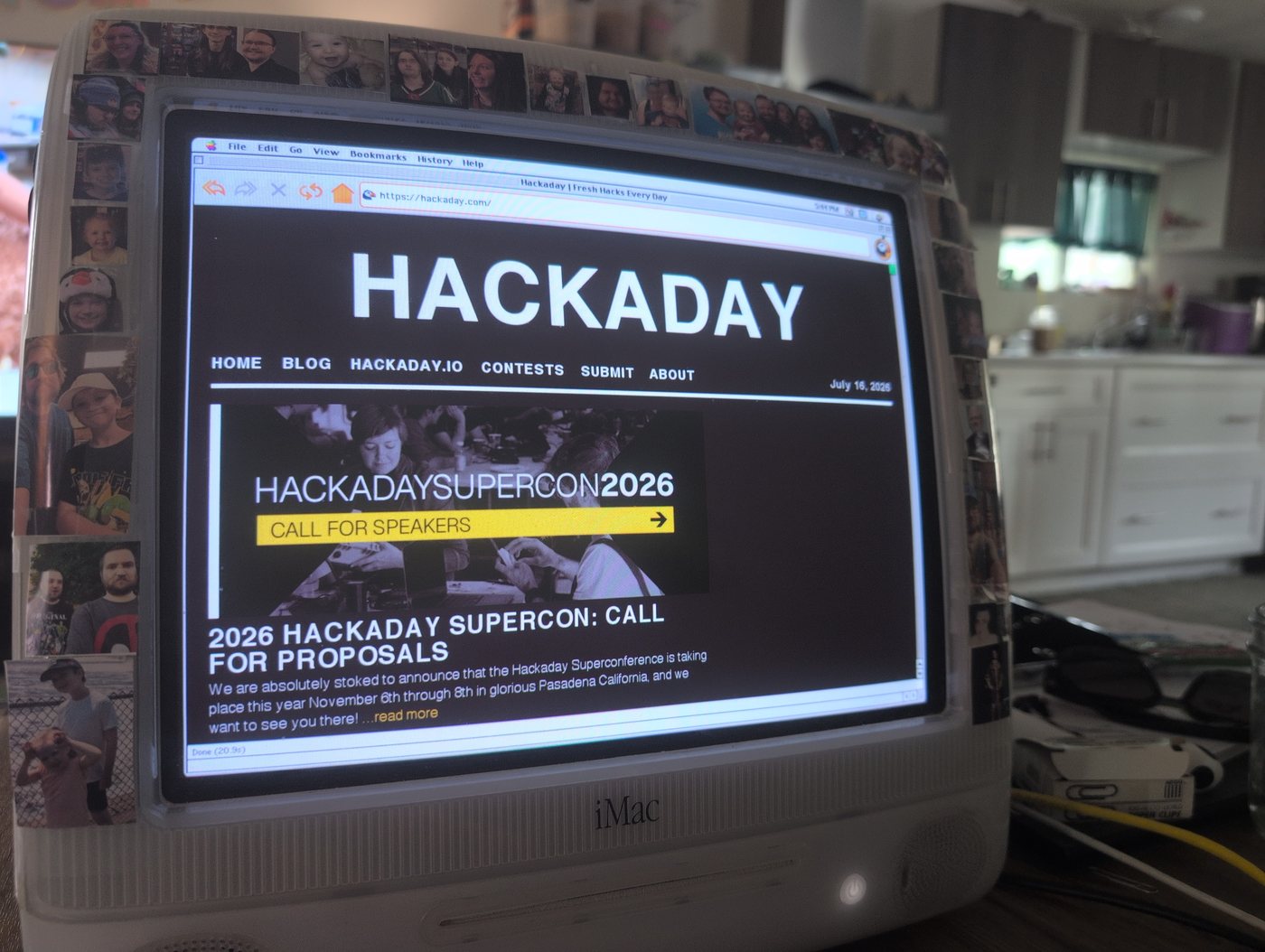
MacSurf 2.0.5 "HACKADAY"
A polish release. 2.0 got MacSurf onto real Macs and rendering the modern web — 2.0.5 is the batch of fixes and CSS work that makes those pages actually look right. No new setup, nothing to configure. Drop it in over 2.0.
The headline: Hackaday renders
Point MacSurf at hackaday.com and the article front page comes up — at real desktop width, with the correct fonts, the article cards laid out, the images in place. A big, modern, JavaScript-heavy news site, rendering on a G3. That is what this release is named for, and a stack of work sits under it: a browser-wide text-size fix, a large modern-CSS pass, a much more capable on-device JavaScript engine, and blocking the tracker/ad junk that used to eat the page before the content ever loaded.
(Honest about it: this is about pages rendering — coming up correct and readable. Deep in-page interactivity on the heaviest sites is still being built. But blank, squished, and unstyled are largely behind us.)
First, the ask
MacSurf is what I do full-time, and it only keeps moving at this pace if it pays its own way. So if it put your old Mac back online, I'd be grateful for a few dollars. Supporters get the dev logs and a real say in what I build next. And if I never ask, I can't expect any, so here goes:
- Ko-Fi: https://ko-fi.com/macsurf
- Patreon: https://www.patreon.com/cw/MacSurf
- Discord: https://discord.gg/mrwZK8zHr2
Huge thank you to Shlooom, Kestral, and Mothra on Patreon, and kilgeist and Turuun on Ko-Fi. You keep the lights on.


Ko-Fi · Patreon
The big wins
Text is the right size again — everywhere. The quiet fix that mattered most. Every author font-size in the browser was drawing about 25% too small, and CSS em/rem units and @media width queries were all computing against the wrong number — which is why so many sites came up cramped into a narrow column instead of laying out at full desktop width. Fixed at the root: MacSurf now measures type in real device pixels, like every other browser.
 |  |
| Before — text 25% too small, no masthead logo | After 2.0.5 — correct type, the logo and images render |
Trackers and ad networks are blocked. Known analytics and ad hosts (Usercentrics, Supplyframe, WP stats, Cloudflare beacons and the like) are refused before they load. On a heavy page that's a real chunk of fetching and script-running the Mac used to grind through for nothing.
Hacker News works. You can log in, and the front page renders close to a desktop browser — the orange logo, the vote arrows, no phantom boxes around every story.
Pages read the way they should. Plain-text and status pages show in the window instead of trying to download themselves. Squished-into-a-strip images come in at the right shape. More JPEGs decode instead of drawing black boxes, and a photo too big for memory shrinks to fit instead of vanishing. See-through (rgba) backgrounds blend against what's behind them instead of always assuming white. And white text on a dark background stays white, instead of being forced to black and disappearing.
Typing is fast again. Typing into a comment box or login form on a big page used to stutter — every keystroke redrew the whole page. Now it repaints only the bit that changed, which also makes the cursor, hover effects, and small scrolls snappier.
A large jump in CSS. MacSurf now handles a cluster of modern layout and text features it didn't before — several that no other classic-Mac browser has done, and a few the upstream NetSurf engine doesn't ship either:
- Justified text that spreads words to both margins
- Soft hyphens — long words break with a "-" at the line end
tab-size, so code and pre-formatted text line up- Flexbox cross-axis alignment, and the box-alignment shorthands (
place-items,place-content,place-self) - CSS Logical Properties (
margin-inline,padding-block,inset-*) - Grid columns that auto-size to their content
- Smaller touches:
caret-color,text-decorationcolor/style/thickness,text-align-last, and a realbackground: nonereset
A more capable JavaScript engine. Under the Hackaday headline is a long run of engine work: real fetch() and XMLHttpRequest backed by the network, Promise chains that resolve past their first step, document.cookie wired to the real cookie jar, real DOM traversal and querySelector, and the document load lifecycle (readyState, DOMContentLoaded, load) behaving the way pages expect.
Closed issues
Closes #62, #201, #212, #227, #230, #232, #234, #235, #239, #244, #247, #249, #251, #252, #253, #268, #270, #271, #272, #273, #275, #276, #277, #278, #282, #283, #284, #285, #286, #287, #288, #289, #291, #292, #293, #294, #295, #296, #297, #298, #300, #301, #302, #304.
Partial (the headline sub-feature shipped, remainder still tracked): #255 (background-clip box values; background-clip:text deferred), #256 (image-rendering; box-decoration-break deferred), #279 (justify-items; Grid Round 2 placement/minmax open), #280 (<img src=*.svg>; CSS background:url(*.svg) open).
Seen on real hardware
XenForo forums like 68kMLA render, log in, and stay logged in — the correct text size and the modern-CSS work land the whole layout:
 |  |
| Before | After 2.0.5 — logged in, correct type |
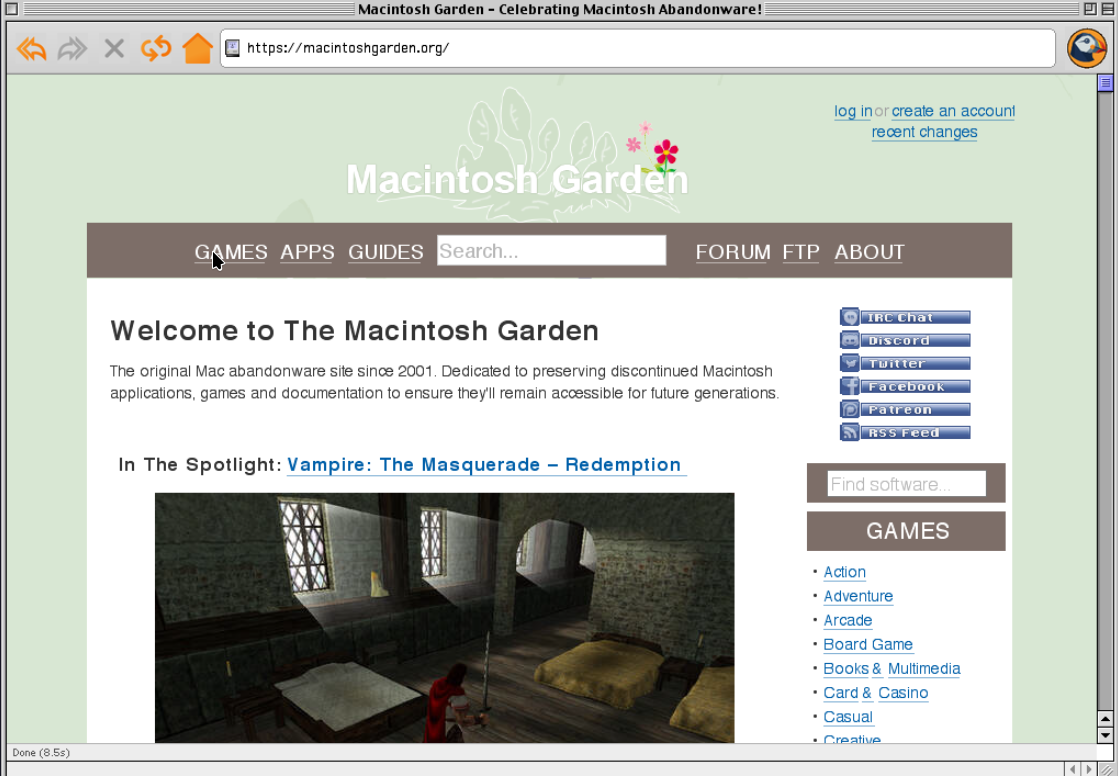
And macintoshgarden.org — image-heavy and fully styled — over a secure connection handled on the Mac itself:
To run
Expand the archive with StuffIt Expander and double-click MacSurf. No installer, no configuration. Requires a Power Macintosh (G3 or G4), Mac OS 9.1–9.2.2 with CarbonLib 1.5+, and about 64 MB of RAM (more helps on heavy pages).
Thanks to everyone testing on real hardware and filing issues — every fix above came from a report on an actual G3/G4.