Repository navigation
Releases
Releases · reviver134/spriteforge
SpriteForge v0.1.1

SpriteForge is now packaged for pip install. The features are the same as v0.1.0; this release makes the installed package work outside a source checkout.
Install
pip install spriteforge
python -m playwright install chromium
python -m spriteforge start --agents --mock --workspace workspace
Requires Python 3.11+. A Meta Model API key (META_API_KEY) is needed for live builds; --mock runs everything offline.
Changes
- Package metadata: description, the README as the project page, MIT licence expression, classifiers, keywords and project links.
- Bundled licences: the wheel now includes the Apache-2.0 licence, NOTICE and third-party list for the seven bundled game-development skills.
- Art library location: installed with pip, the library defaults to
~/spriteforge-workspace/library(orSPRITEFORGE_LIBRARY) instead of a folder inside the Python installation. A source checkout still usesassets/library/. - README: leads with
pip install, and uses full image URLs so it renders outside GitHub. - The G4 stage test now confirms the Director's plan before expecting the next build.
Checked
In a fresh virtual environment, from a folder outside the repo: the wheel installs, builds and playtests an offline game end to end, and serves the studio.
SpriteForge v0.1.0
The first public release of SpriteForge: describe a game in a sentence, and a team of Muse-powered agents builds a playable 2D pixel-art browser game while you approve every step.
What's in it
- Eleven role-based agents (Director, Game Designer, Level/Tile Designer, Art Director, Pixel Artist, Menu Designer, Sound Director, Programmer, QA Playtester, Art Reviewer, Librarian), each a Markdown file you can edit.
- Five human gates: brief, design, menus, playtest, final. Feedback at G4 and G5 is turned into a plan by the Director and nothing is rebuilt until you approve it.
- Muse Spark plans, designs, writes and repairs the code; Muse Image draws and revises the art.
- Deterministic checks on what models write: palettes, tile seams, level reachability, jump physics, menu flow, a bot playtest, QA tests with real key presses, and per-game code checks.
- A local knowledge base (OKF, plain Markdown in git) that each finished game teaches, with human promotion before later builds use a lesson.
- Costs you can see: every call in a durable ledger, a $10 allowance per agent.
- Runs offline with mock providers: the full pipeline and 525 tests need no key.
New since the hackathon submission
- HUD check: the playtest fails a build whose HUD texts cover each other or run off the screen, and tells the Programmer the sizing rule.
- Tile check: a ground tile drawn as an object on a plain background is rejected and redrawn fresh.
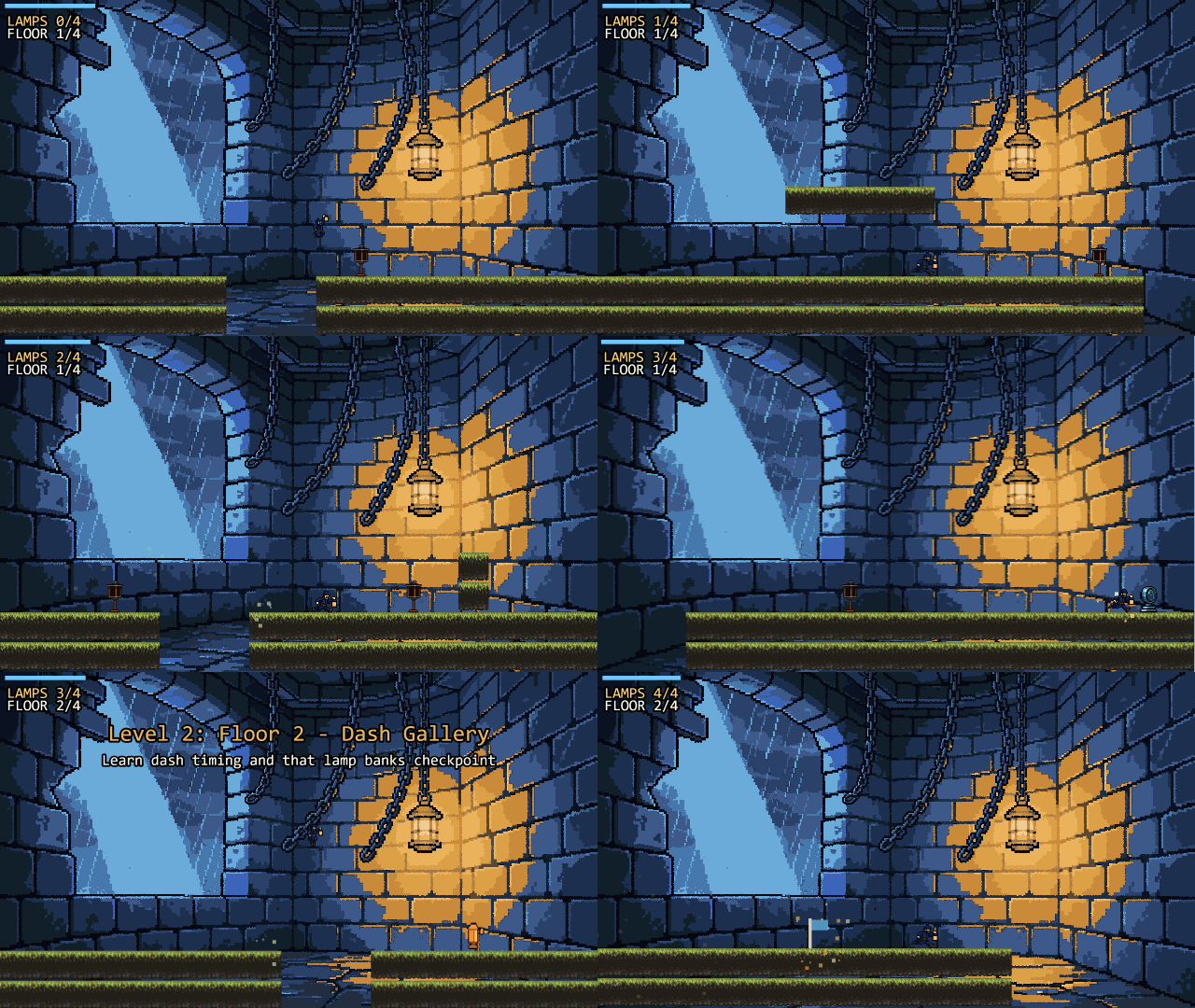
- Three showcase games made and approved end to end, in the README with clips.
Games made with it
| Game | Genre | Builds | Muse cost |
|---|---|---|---|
| Stormlight Keeper | Side-scrolling platformer | 3 | $1.77 |
| Pale Shores: Three-Isle Hold | Real-time island defence | 10 | $4.89 |
| Tiny Kingdom Defense | Tower defense | 3 | $1.66 |
Install
git clone https://github.com/reviver134/spriteforge.git && cd spriteforge
pip install -e ".[dev]"
python -m playwright install chromium
python -m spriteforge start --agents --mock --workspace workspace
Requires Python 3.11+. A Meta Model API key (META_API_KEY) is needed for live builds.
Known limits
- The bot playtest runs in god mode, so it cannot tell that a game is unwinnable; a human playtest at G4 is still needed for balance.
- Long Programmer repair calls can time out against the Muse API; the build keeps its best attempt.