Repository navigation
Releases
MusubiCAD CLI v0.3.1

MusubiCAD CLI v0.3.1
Official v0.3.1 release, published 2026-10-13T13:10:07Z.
All four native release builds and packaged tutorial gates passed. Official Linux
checksum/downloaded execution is recorded in the
release evidence. Older v0.2.0 archives
do not contain the flexible-assembly APIs below.
Release recovery
The v0.3.0 tag failed because Windows checkout rewrote an immutable ASCII STL
attachment from LF to CRLF, changing its required SHA-256. v0.3.1 marks STL files
as Git binary assets and regression-tests real core.autocrlf=true checkout;
original asset bytes, hash guards and physical assertions remain unchanged.
It also exposes actual tutorial failures as check annotations and requires
Windows packaged tutorials on release-input PRs before artifact upload. The older tag remains unchanged.
No failed native gate may be skipped and no local binary is manually published.
Flexible assemblies
set_instance_articulationstores independent, parent-owned joint coordinates
for copies of a child assembly without changing that child's document.inspect_articulation_sourcereports the exact child source/revision, admitted
drivers and connector identities. MCP now exposes 36 tools.- Parent-context signed distance and signed angle constraints solve bounded
child coordinates analytically. Angle constraints carry an explicit branch;
fully bound systems reportcontext_dof:0. - Regeneration uses scoped physical leaves for transformed geometry, BOM and
native interference checks. Source snapshots, mandatory patch verification,
refused edits and Agent Undo/Redo protect child files and parent history.
The supported system has fixed outer instances and immediate child mechanisms.
Free outer motion, nonlinear/deeper constraints, hierarchical motion/reach and
hierarchical URDF/HTML exports remain explicitly refused. Mock imported-mesh
mass/bounds/placement checks are supported; exact mesh intersection and inertia
are not claimed. See ADR-059,
ADR-060 and
ADR-061 for the
implementation boundaries.
Reproducible distribution
Every intended native archive contains both the ellipse editing tutorial and
ASSEMBLY-TUTORIAL.md, runners, scenarios and complete slider/hinge mechanisms.
Release CI executes both tutorials with the extracted native executable before
upload. Python 3.10+ is required; these exercises require no model or GPU.
Independent dimensions, volume, centre, bounds, exported STL, source preservation,
refusals and Undo/Redo are checked through real MCP and Agent processes.
Windows native Tauri/WebView2 form editing is now exercised in CI. Desktop
artifacts remain separate from CLI releases and do not imply trusted signatures.
Actual Codex dispatch and Gemini extension startup are recorded, but Cursor and
authenticated Gemini editing remain unverified. Tutorial execution is not evidence
of those client sessions.
Compatibility and upgrade
All workspace crates, desktop configuration and agent plugin manifests use the
same 0.3.1 version. Third-party dependency versions remain unchanged.
New articulated_assembly and flexible_assembly component-source guards make
older readers refuse documents whose physical semantics they cannot honor.
Do not remove those guards to open a new assembly with v0.2.0. Existing documents
without the new assembly data retain their existing format behavior.
For an official archive, verify its entry in SHA256SUMS before extraction and
execution, then follow QUICKSTART.md and both included tutorials. Checksums
provide artifact integrity, not a publisher signature. See the
release contract for publication and verification.
This release does not change the fixed maturity rubric or award
additional points: general CAD remains approximately 50%, agent operation 90%.
MusubiCAD CLI v0.2.0
MusubiCAD v0.2.0 brings the accumulated parametric modelling, drawing, sketch and backend-owned desktop editing work into the official CLI distribution. The CLI is now named musubicad; archives retain the opencad forwarding alias.
Changes include semantic drawing dimensions and manufacturing outputs; datum, draft, rib, hole/thread-standard, fillet and body-boolean operations; construction geometry, bounded trim/offset/ellipse/projection and scoped closed cubic curves; assembly BOM, exploded/coupled-joint workflows; and shared feature/selection/sketch editing commands for Tauri, Agent JSON-RPC and MCP. Each operation retains its documented admission limits. General NURBS editing and unrestricted direct modelling are not introduced.
All CAD changes use backend DesignPatch validation, regeneration and history. Missing/ambiguous/stale semantic bindings, unsupported operations, unit errors and failed required verification refuse instead of publishing guessed geometry.
Each CLI archive includes a reproducible editing tutorial, its ellipse fixture and scenario. It reviews and edits through real MCP/Agent processes, verifies source/refusal/Undo/Redo and checks exact dimensions 80×30×10 mm and volume 18849.555922 mm³. To run it (Python 3.10+):
python tools/run_editing_tutorial.py --binary ./musubicad --fixture examples/ellipse_plate.ocad.d
Windows uses --binary ./musubicad.exe. Add --output my_ellipse.ocad.d to retain a verified final copy at a new path. Read EDITING-TUTORIAL.md in the archive.
The release workflow builds and smoke-tests all four native platforms and executes the tutorial from each extracted archive before publication. Verify the archive against the attached SHA256SUMS before running it. CLI archives are unsigned; checksums are not publisher signatures. Tauri desktop installers remain separately distributed workflow artifacts under the existing desktop trust policy.
Actual client/platform evidence is recorded separately. A protocol/native smoke test does not establish Cursor/Gemini integration or Windows desktop interaction. Physical nonempty BodyCount, arbitrary/custom-plane sketch editing and the other documented bounded geometry limits remain explicit.
MusubiCAD CLI v0.1.1
What's Changed
- Task-007: Make first contributions straightforward by @rsasaki0109 in #9
Full Changelog: v0.1.0...v0.1.1
Contributors

Assets 7
MusubiCAD CLI v0.1.0
CAD changes you can review like code
MusubiCAD v0.1.0 is the first downloadable CLI release of an AI-native, open-source parametric CAD
system where the Design Graph is the source of truth. Agents propose typed DesignPatch files;
MusubiCAD dry-runs them, regenerates OCCT geometry, checks expected engineering effects, and gives
humans a semantic and visual review before mutation.
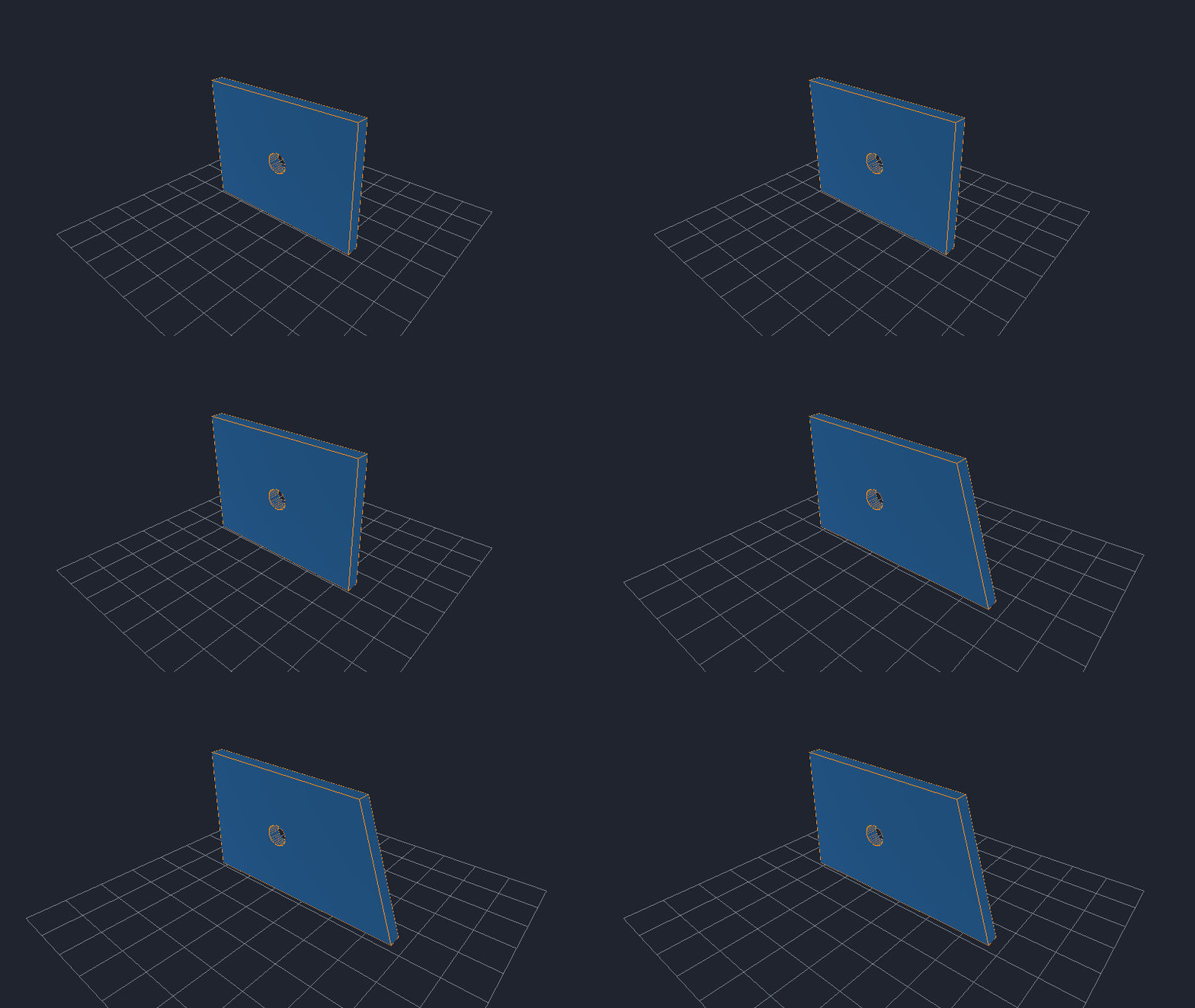
Try it in 60 seconds
Not ready to execute an unsigned binary? The repository includes a zero-build tour that opens the
same generated review without running MusubiCAD:
git clone --depth 1 --branch v0.1.0 https://github.com/rsasaki0109/MusubiCAD.git
cd MusubiCAD
./quickstart.sh
Windows users can run ./quickstart.ps1 instead.
Download and run the real review
Choose the archive for Linux x86-64, Windows x86-64, macOS Apple Silicon, or macOS Intel below.
Each one includes the executable, bracket Design Graph, review patch, license, and QUICKSTART.md.
The executable retains its historical opencad name in this release.
./opencad review \
  examples/bracket.ocad.d \
  examples/agent/review_width_patch.json \
  --output review
The checked example proves:
- width: 80 mm → 100 mm
- mass: 76.50 g → 84.10 g
- both declared expected effects pass
- the source
.ocad.ddocument remains unchanged
Release verification
Every platform binary was built from tag v0.1.0 and smoke-tested for its exact version, static
OCCT 8.0 regeneration, semantic diff, and regenerated mass evidence. Linux additionally generated
the complete review through Mesa Vulkan. All four archive layouts were checked before publication.
Verify your download against the attached SHA256SUMS file.
Early-stage limitations
MusubiCAD is not yet a production CAD replacement. These archives are unsigned and not notarized,
so Windows SmartScreen or macOS Gatekeeper may show a warning. Inspect the checksum and source before
running them. Desktop installers and signed builds are planned separately.
If reviewable, agent-safe CAD sounds useful, please star the repository and tell us which design
workflow should come next.