
| Approach | Setup cost | Flexibility | Privacy |
|---|---|---|---|
| Traditional workstation installs | Device imaging, updates, and local support | Limited by hardware and location | Data may land on endpoints |
| Remote desktop farms | Server capacity, profiles, and network tuning | Strong for full desktops | Centralized but heavier to manage |
| Amazon AppStream application streaming | Managed AWS configuration and published apps | Browser or client access for many teams | Applications and data stay in AWS sessions |
Download Amazon AppStream to stream secure desktop apps from AWS to any compatible device, simplify access for teams, reduce local setup, and support remote work with managed delivery, fast onboarding, scalable sessions, and reliable performance. Learn how appstream 2.0 helps deploy software in minutes.
Amazon AppStream is a secure AWS service for streaming desktop applications to users on demand, with scalable access and simple remote delivery.
Amazon AppStream gives organizations a way to deliver Windows and Linux applications without installing those tools directly on every laptop. With amazon appstream 2.0, administrators publish approved software through AWS, users connect through a browser or the Amazon AppStream client, and teams get consistent access whether they are in an office, at home, or working from a temporary device.
The service is useful when application control, centralized administration, and predictable access matter more than full desktop ownership. Amazon AppStream documentation helps teams plan images, fleets, stacks, identity settings, storage integrations, and security controls. For many organizations, Amazon AppStream setup becomes a practical alternative to repeated endpoint builds, especially when software requires strict versioning or sensitive files should remain in the cloud.
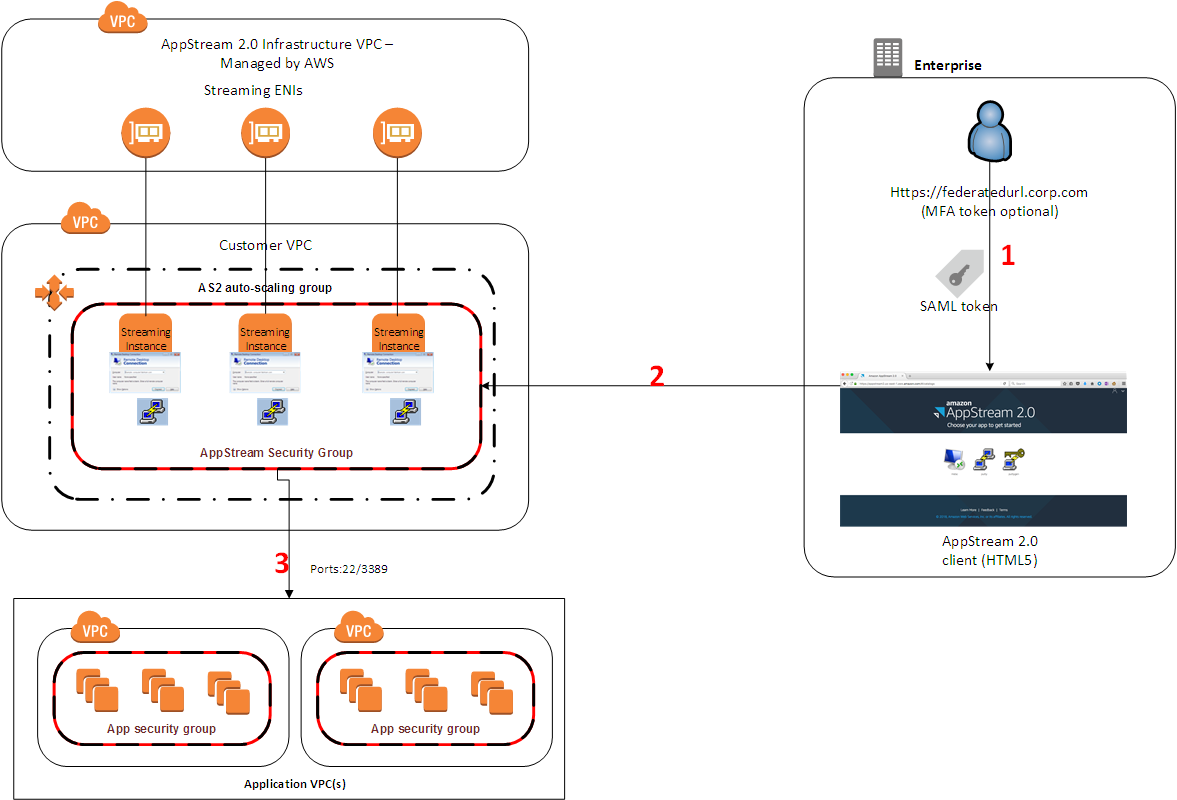
| Host type | Typical use |
|---|---|
| Browser access | Launch business apps without installing local software |
| Native client | Use Amazon AppStream client features for richer desktop interaction |
| Managed fleets | Scale sessions for classes, contractors, call centers, and analysts |
| Image builder | Package and update applications for controlled streaming delivery |
The Amazon AppStream download path depends on the user workflow. Some teams rely on browser-based access for simplicity, while others use the Amazon AppStream client for features such as multiple monitors, local device redirection, or improved session integration. Amazon AppStream login can connect with managed identity providers, allowing administrators to align access with existing user groups.
Amazon AppStream pricing is shaped by fleet type, instance size, usage duration, storage choices, and region. Teams comparing Amazon AppStream 2.0 pricing should map user concurrency, application resource needs, and session schedules before selecting always-on, on-demand, or elastic fleet models. aws appstream can reduce endpoint maintenance, but successful planning still requires attention to network latency, image size, authentication, and application licensing.
Engineering teams use Amazon AppStream to provide CAD viewers, simulation utilities, internal tools, or licensed software without distributing installers. The same Amazon AppStream setup can give temporary staff access to approved applications while keeping project data in controlled AWS storage. For departments with strict security rules, Amazon AppStream requirements can be easier to standardize than many unmanaged laptops.
Software vendors and SaaS teams also use amazon appstream 2.0 for demos, trials, and training labs. Instead of asking prospects to configure local dependencies, vendors can publish a ready-to-use application environment. Amazon AppStream tutorial content often focuses on building images, assigning users, and testing launch behavior so the first session feels smooth.
IT departments often evaluate Amazon AppStream vs WorkSpaces when deciding between application streaming and full desktop delivery. Amazon AppStream is strongest when users need specific applications, controlled images, and fast session availability. Amazon WorkSpaces may fit full virtual desktop needs, but Amazon AppStream application streaming keeps the focus on delivering apps rather than managing complete personal desktops.
Support groups, finance teams, healthcare units, and education programs can all benefit from centralized app delivery. Amazon AppStream AWS environments can be configured with network access to private resources, S3 storage, and identity controls. When paired with clear Amazon AppStream documentation, teams can define who gets access, what applications appear, and how session data is handled.
Instructors use Amazon AppStream to give students identical software environments for workshops, labs, and certification practice. This reduces setup time and avoids problems caused by mismatched operating systems or unsupported local devices. Amazon AppStream tutorial workflows can guide learners from Amazon AppStream login through launching the assigned application and saving files correctly.
Training teams also value consistent cleanup after sessions. With amazon appstream 2.0, every learner can start from a known image while administrators update the base package when course materials change. Amazon AppStream requirements should be reviewed before large events so bandwidth, instance capacity, and account limits support the expected class size.
- Review Amazon AppStream documentation for regions, fleet models, and image builder steps
- Estimate Amazon AppStream pricing using session length, concurrency, and instance needs
- Confirm Amazon AppStream requirements for browser access, network routes, and identity integration
- Build and test an application image for amazon appstream 2.0
- Configure Amazon AppStream setup with stacks, fleets, storage, and user permissions
- Validate Amazon AppStream login with the chosen identity provider
- Test the Amazon AppStream client and browser launch experience
- Run a pilot session before publishing Amazon AppStream download instructions

| Component | Minimum | Recommended |
|---|---|---|
| Access device | Modern browser on a supported desktop or laptop | Current browser plus Amazon AppStream client where advanced features are needed |
| Network | Stable internet connection | Low-latency route to selected AWS region |
| Identity | User assignment through supported authentication | SAML or managed directory integration for Amazon AppStream login |
| Application image | Tested package with required dependencies | Versioned image lifecycle with rollback plan |
| Fleet capacity | Instance family sized for app launch | Capacity plan based on real concurrency and Amazon AppStream 2.0 pricing |
| Administration | Basic AWS permissions | Dedicated roles, monitoring, logging, and Amazon AppStream documentation review |
Launch delays: review fleet capacity, image size, application startup tasks, and Amazon AppStream setup choices before expanding access.
Login problems: confirm identity mappings, stack assignments, relay state settings, and Amazon AppStream login permissions.
Performance complaints: test instance families, region placement, graphics needs, and network latency for aws appstream sessions.
Cost surprises: revisit Amazon AppStream pricing, stop unused fleets, compare usage patterns, and document Amazon AppStream 2.0 pricing assumptions.
Amazon AppStream, amazon appstream 2.0, Amazon AppStream pricing, Amazon AppStream login, Amazon AppStream documentation, appstream 2.0, aws appstream, Amazon AppStream download, Amazon AppStream setup, Amazon AppStream tutorial, Amazon AppStream client, Amazon AppStream 2.0 pricing, Amazon AppStream 2.0 login, Amazon AppStream application streaming, Amazon AppStream requirements, Amazon AppStream vs WorkSpaces, Amazon AppStream AWS