Design Overview
The main purpose of the BearLibTerminal library is (or at least, it was) to provide user with a window impersonating the system console, but much more customizable and geared more toward the game development. Here is what the BearLibTerminal window may look like. Spot the differences with the original ones =)
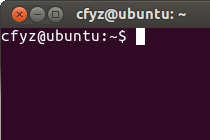
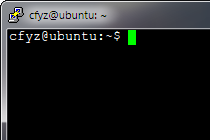
That is how it looks. However, the way it works is different from a console. You don't get a continuous in/out streams to write to and to read from. Instead, you get a grid of cells which can be addressed independently, a scene.

To be precise, a scene is not a single grid, but a number of them, called layers. For a simple game you might not need more than one layer, but sometimes they can be indispensable.
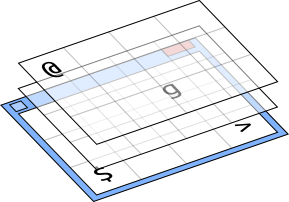
Each cell, in turn, can store a number of tiles. Because the library takes full advantage of alpha (transparency) channel of tile images, this effectively allows to combine several images into one, constructing them on the fly instead of preparing tiles for every combination beforehand. Note that each tile in a stack can have its own color.

Whats more, each tile in a stack can have its own offset from the default position in a cell.

Now, where are those tiles come from?