Repository navigation
Frontline v2.0.2: Rooms and narrow spaces take their skylight from the world round them
Latest
New
Rooms and narrow spaces take their skylight from the world round them
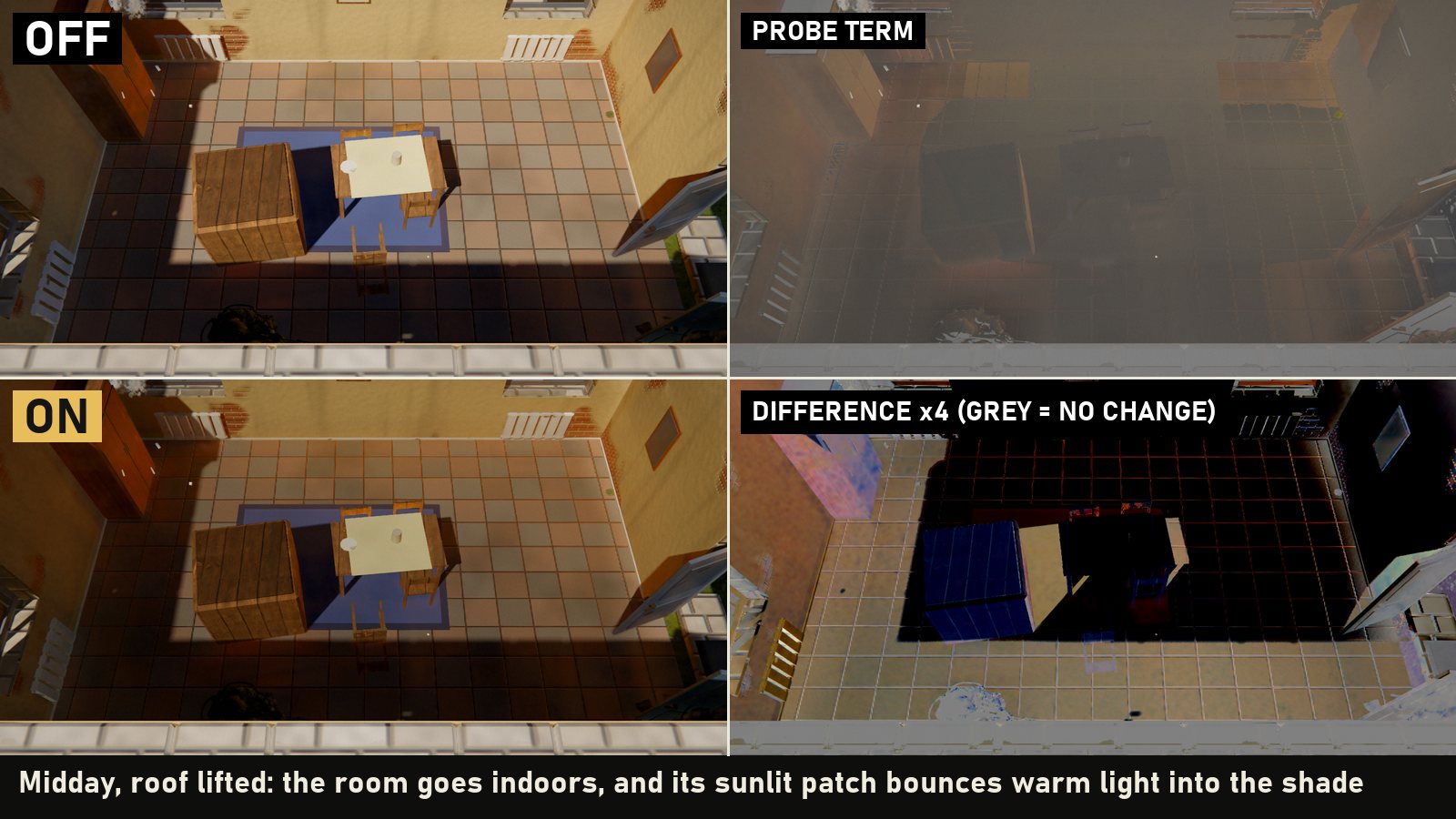
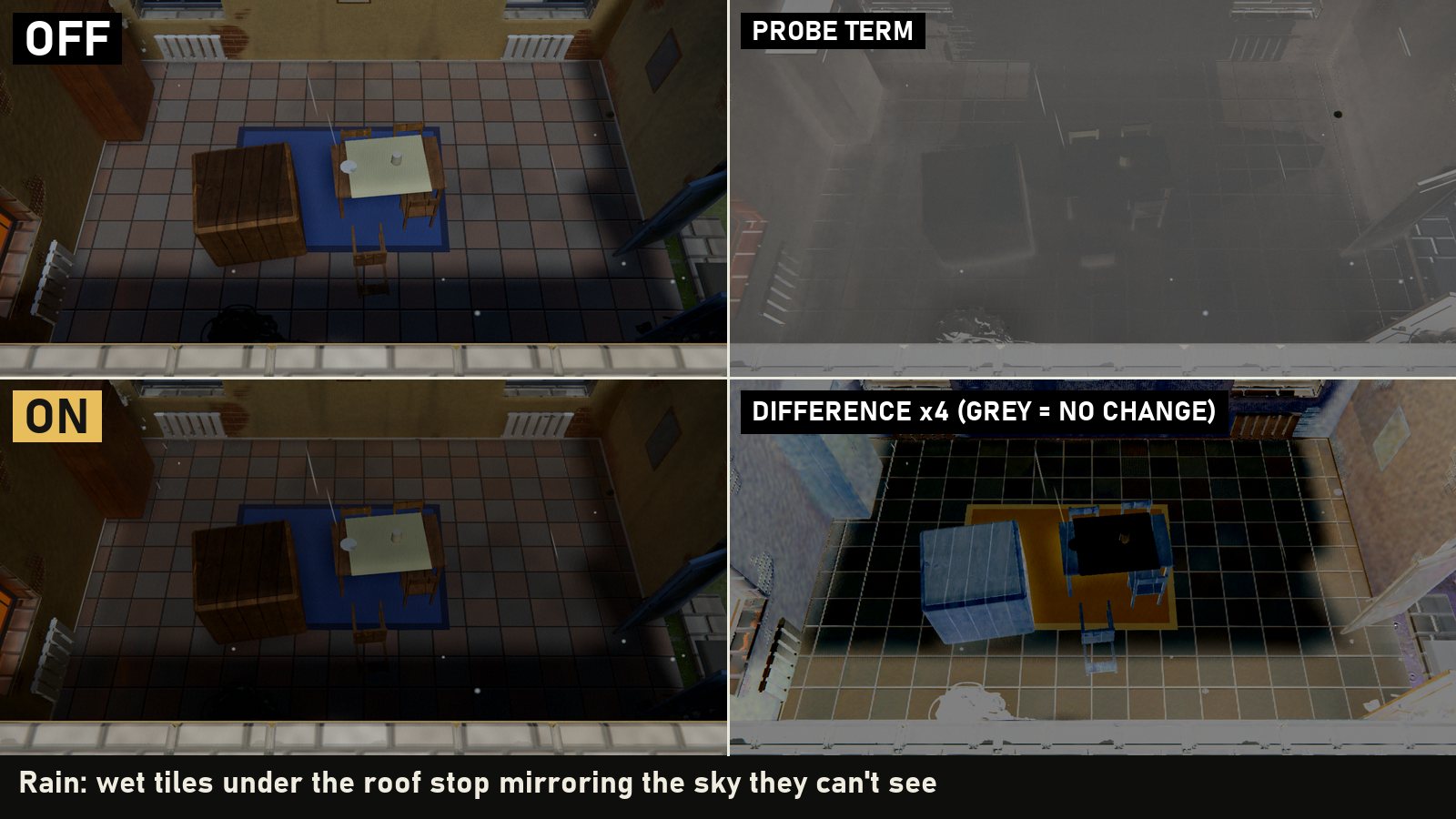
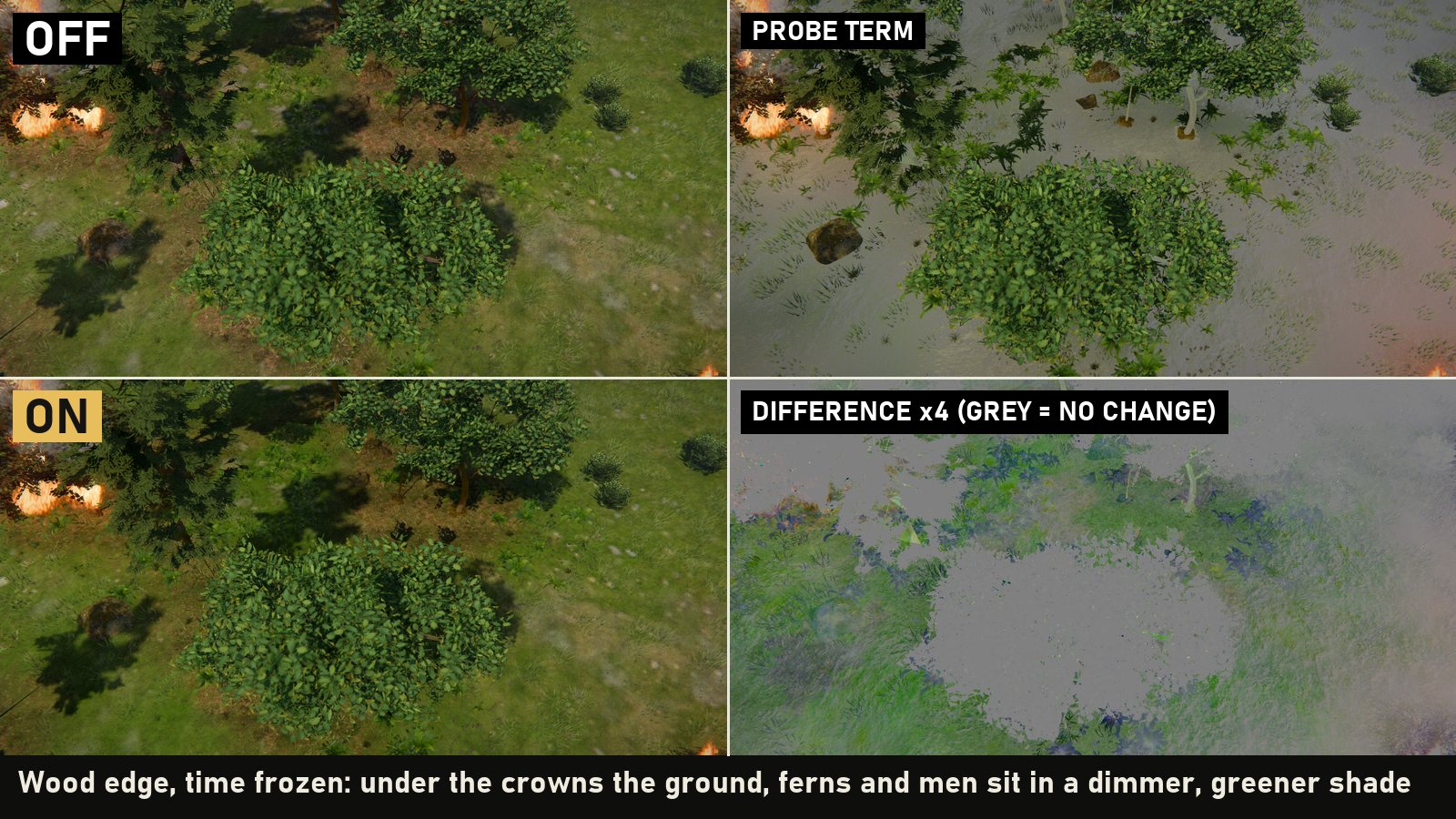
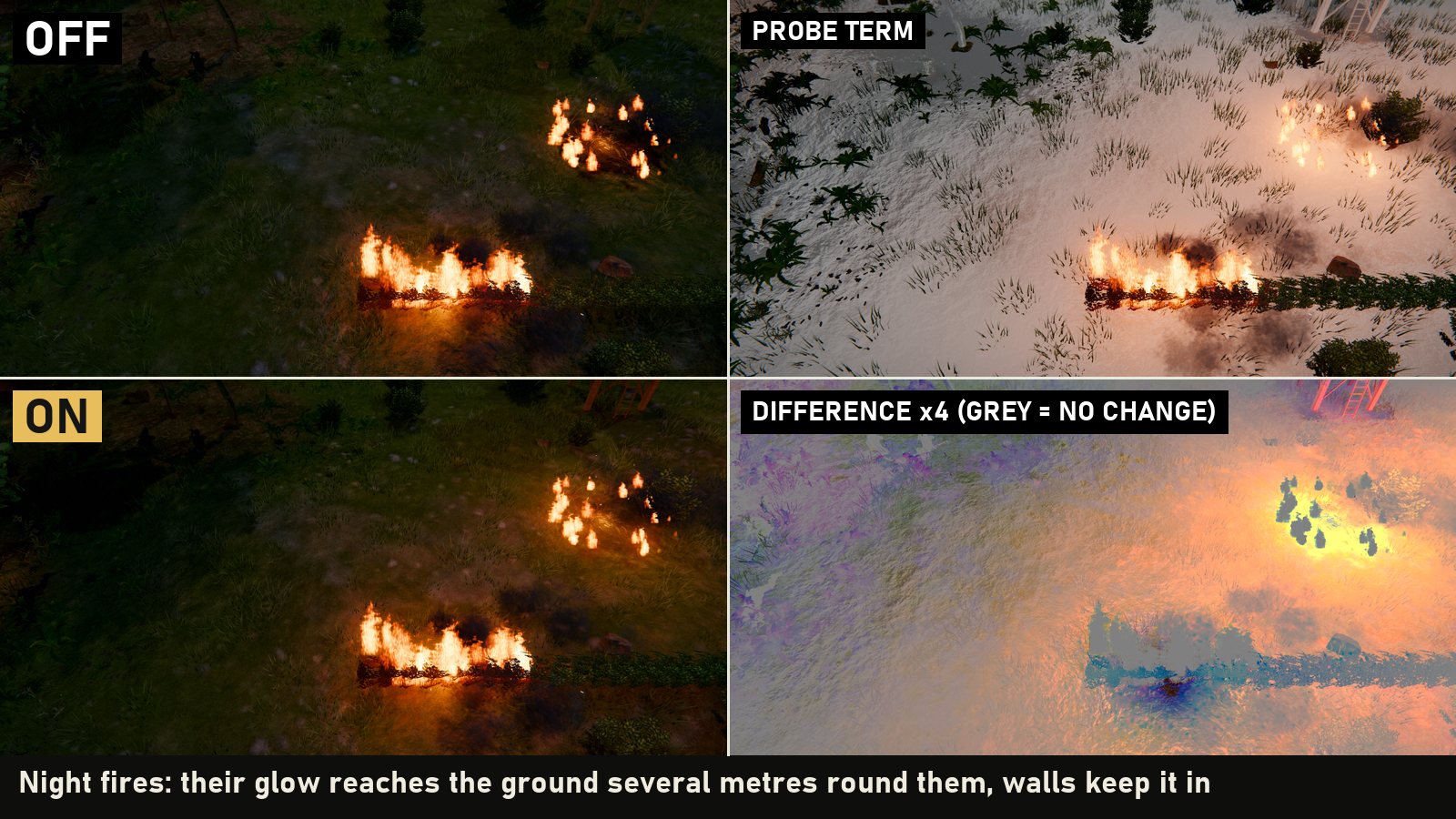
Light probes work out how much sky every room, wall foot, wood and street can see. Rooms stay dim indoors with their roof lifted, wet floors under a roof stop mirroring the sky, woods sit in a green shade, fires glow on the ground round them, and open ground looks as before.
Watch: The same frame with the probes switched off and on every second: the room goes indoors, its shade lifted by warm bounce. (Direct WEBM)
Explore this change
- Shade from the sky: the foot of walls and the ground between houses see less of the sky than open ground,
so they take less skylight and less of the cool fill light. Open fields and roof tops look as before. - Bounced light: a sunlit patch on a floor or wall throws warm light into the shade round it, so a room's
dark corners are dim, not black. - Reflections know what's overhead: wet floors indoors, under eaves and in trenches no longer mirror the bright
sky they can't see; they reflect the room round them instead. - Woods: under the trees the ground, the grass and ferns on it and the soldiers sit in a dimmer, green-tinted shade.
- Fires and street lamps throw a little warm light on the walls and ground round them, past where their own
light reaches, but not through walls. In the browser, which has no fire lights, this is the glow fires give. - No light through walls: the floor along a wall indoors and the top of a wall no longer pick up light from
the other side. - It keeps up with the battle: houses blown down, trees felled or burnt, doors flung open, trenches dug and
new craters change the probes round them within a moment. A fresh crater's bowl sits in a little shade of its own. - Follows the time of day: with Time passes on, the light bounced round rooms and streets dims and reddens with
the evening and follows the sun across the sky, smoothly, with no visible steps. Rooms at dusk stay dim, not black. - Vehicles and soldiers shade the ground: a parked tank or truck sits in a soft dark pool of its own, and a
standing soldier in a faint one. - Rooms read as indoors: when soldiers go in and the roof lifts away, the room no longer stands in full
sunlight. The probes know it's a room and keep it dim, lit by its windows, door and the light bouncing in. - Light probes in Settings › Graphics: High (from the High preset up), Low (only the shade from the
sky; the Medium preset and the browser) or Off (the Low preset).
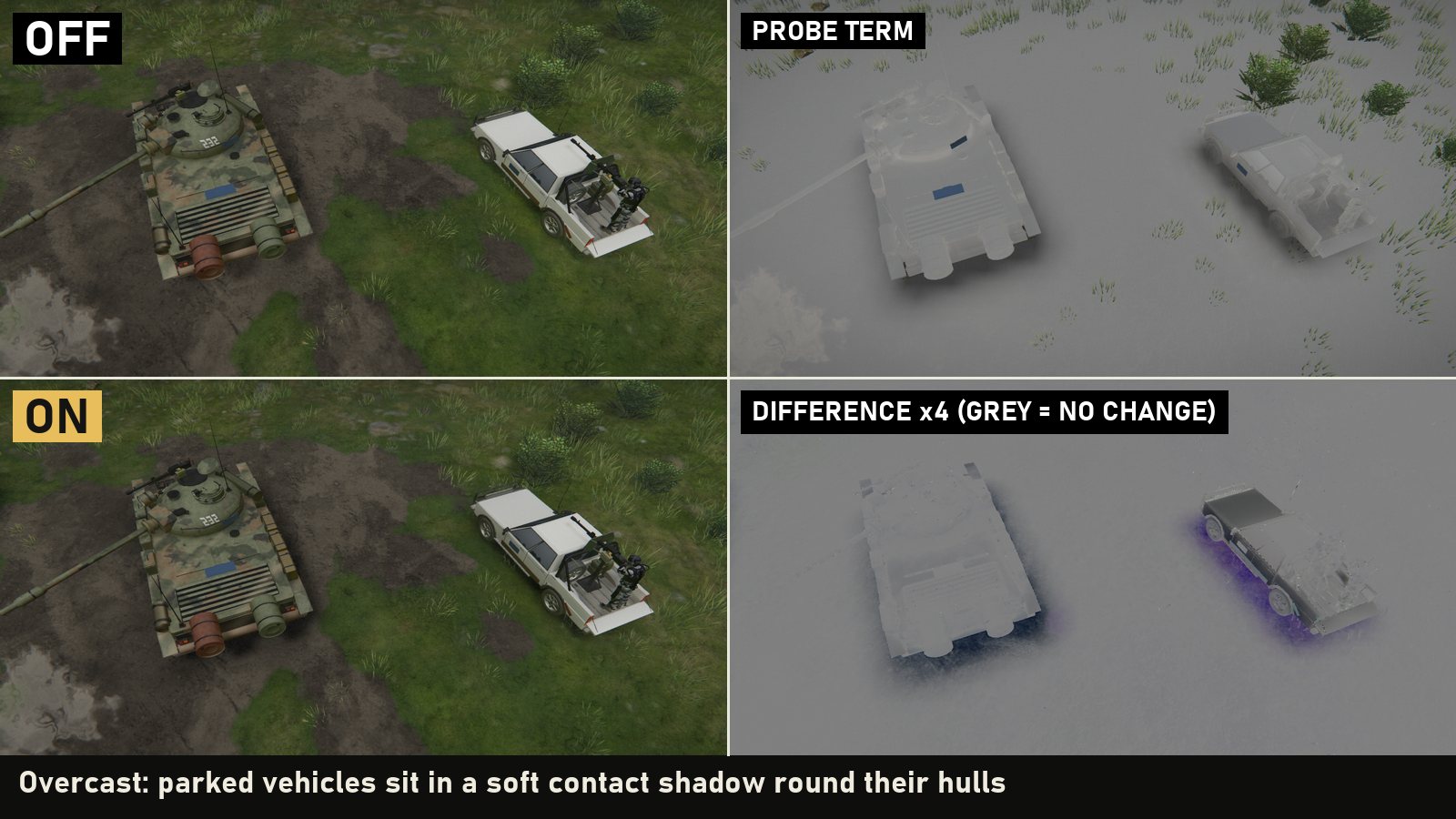
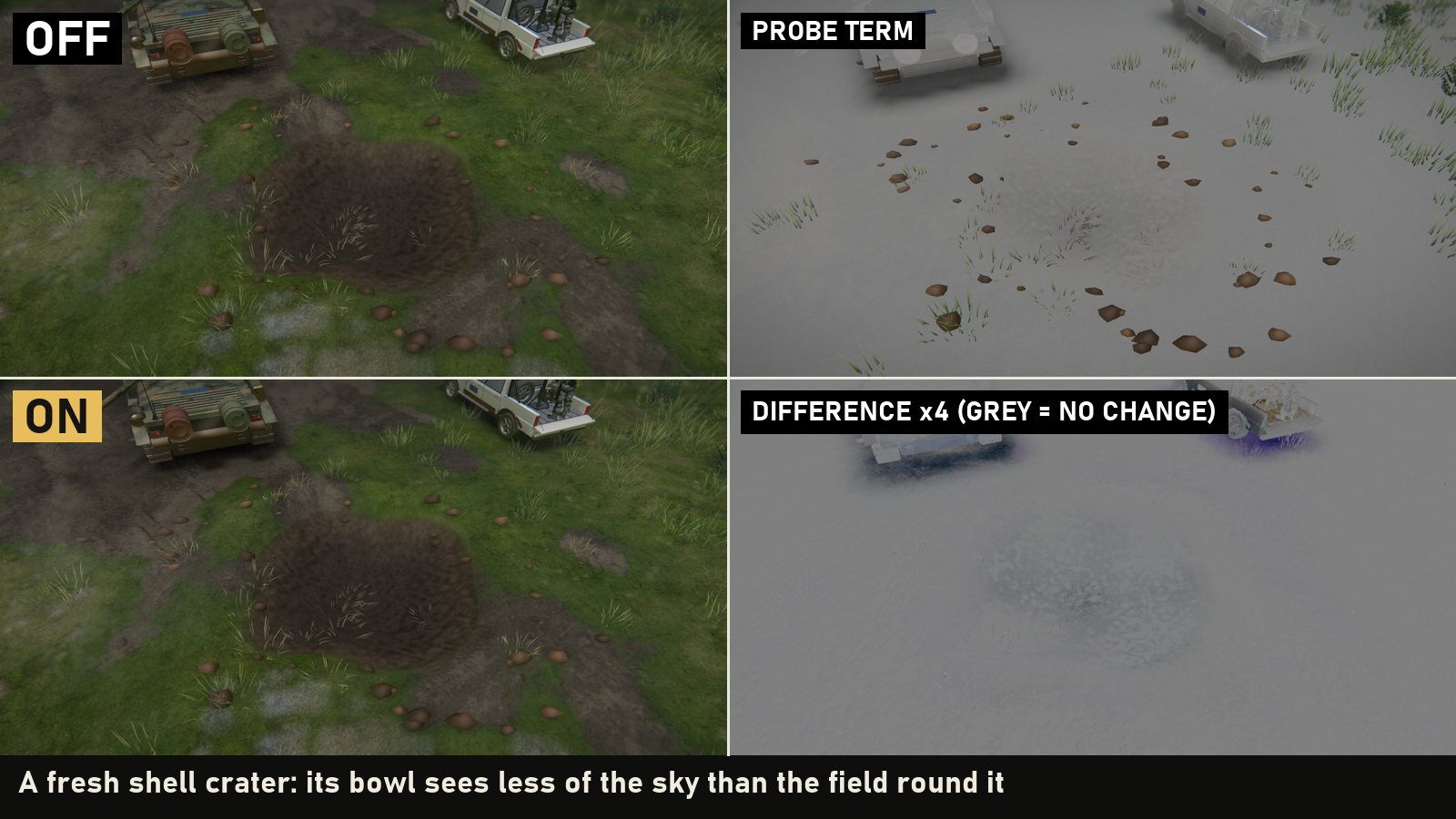
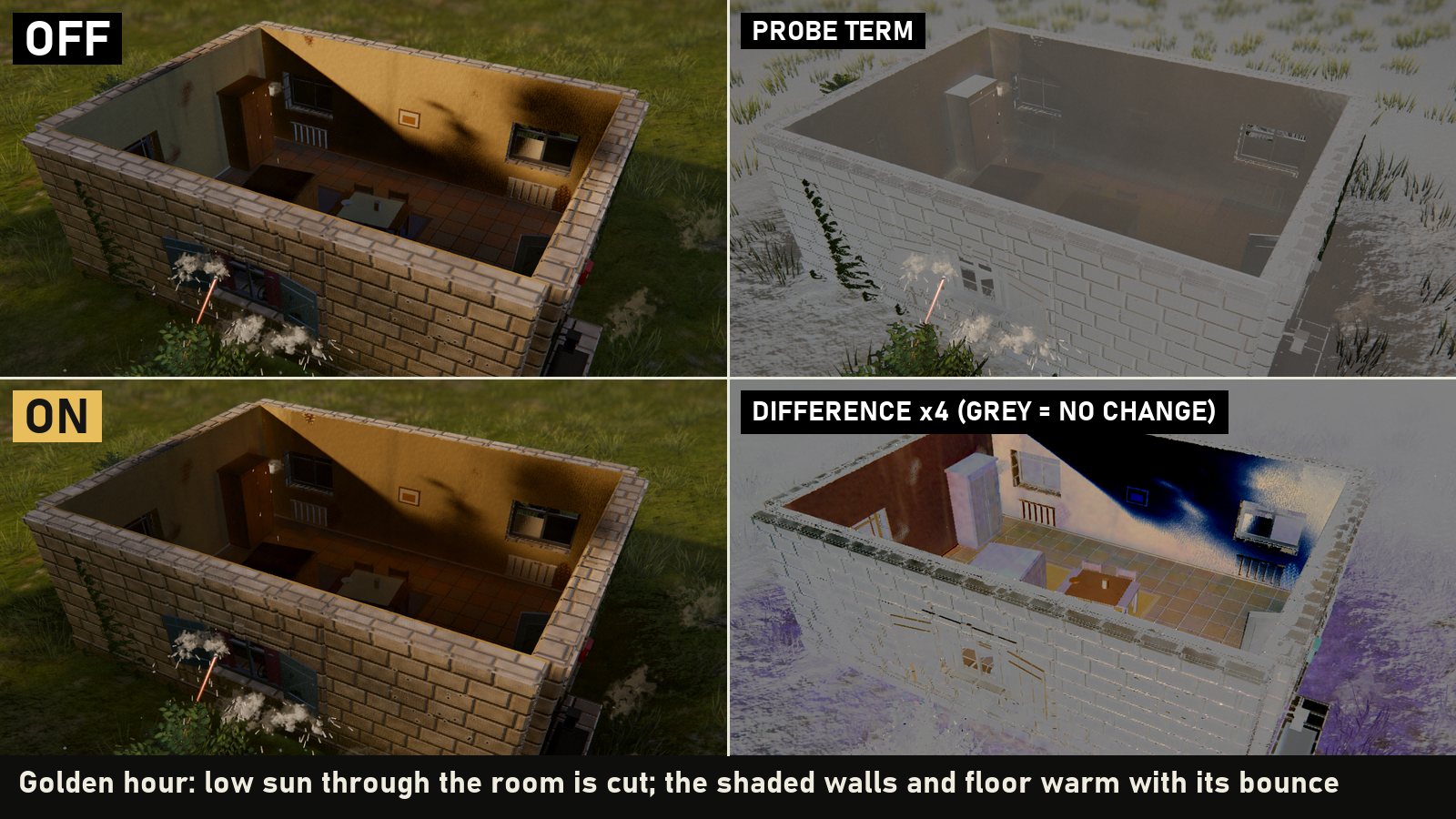
Watch: With Time passes on, a room and a street from late afternoon into dusk, the clock run sixty times over: the light bounced into the room dims and reddens with the evening, smoothly, with no steps as the probes follow the sun. (Direct WEBM)
Watch: A house blown down, the game beside the probe term: within a second the probes are traced again, and the open floor gets its sky and sun back. (Direct WEBM)
Improved
Machine guns fed from open cans
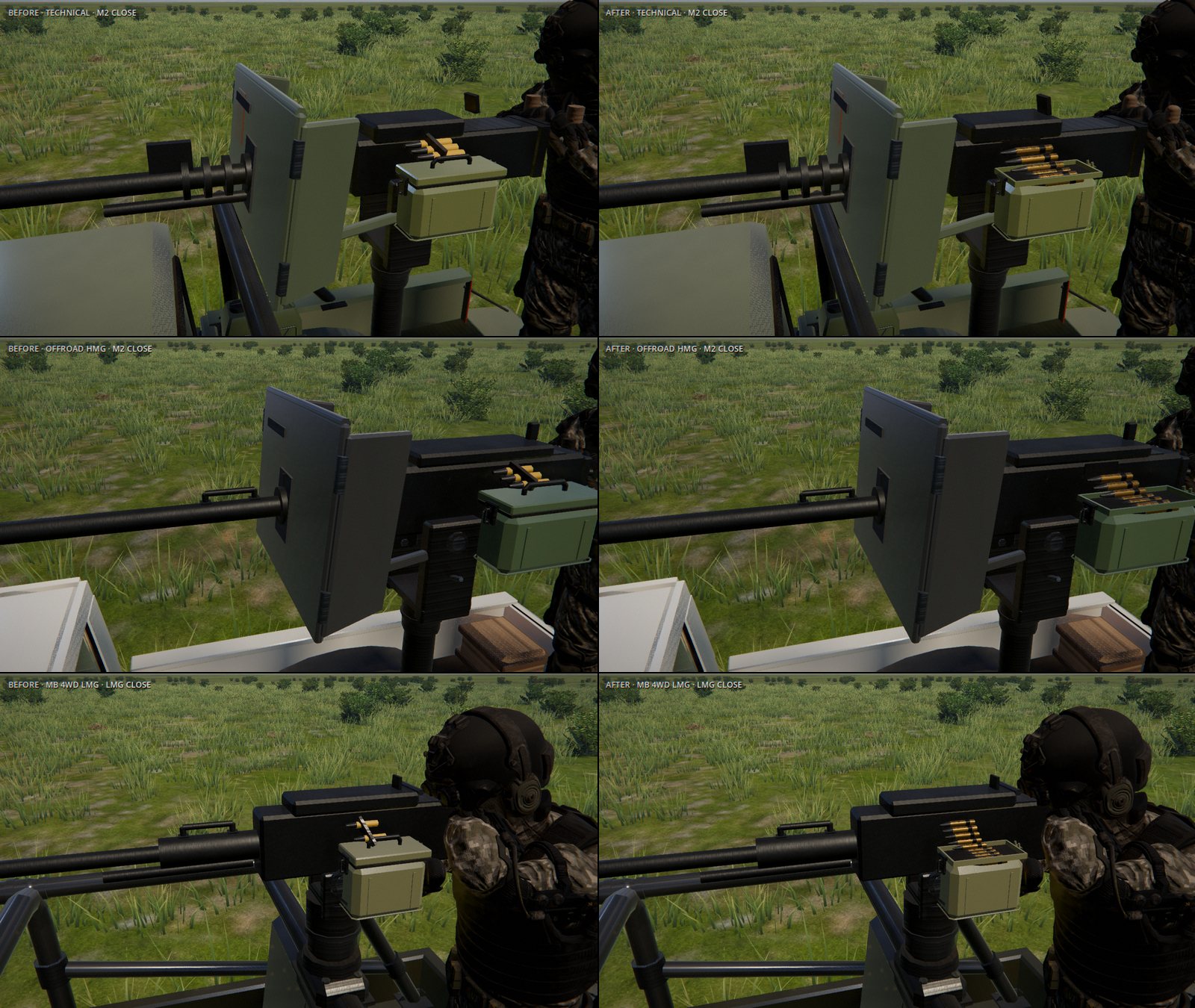
A mounted machine gun's ammunition can is open now, and its belt of brass rounds runs out of it and into the gun, instead of three rounds floating over a shut lid.
Explore this change
- Belts: every machine gun with a can beside it, from the .50s and DShKs to the 7.62s, is fed by a belt of brass rounds in blackened links. The belt lies folded in the can's mouth, then rises over the lip into the feedway in the gun's side.
- Cans: the can on a gun has its lid off, as gunners leave it so the belt runs freely. Cans stowed in a truck bed stay shut.
- DShK: its rear sight stands on the feed cover instead of floating above the gun, and its wooden spade grips are shaped to the hand rather than ending flat like pegs.
Gravel roads, dirt tracks and weathered bridge decks
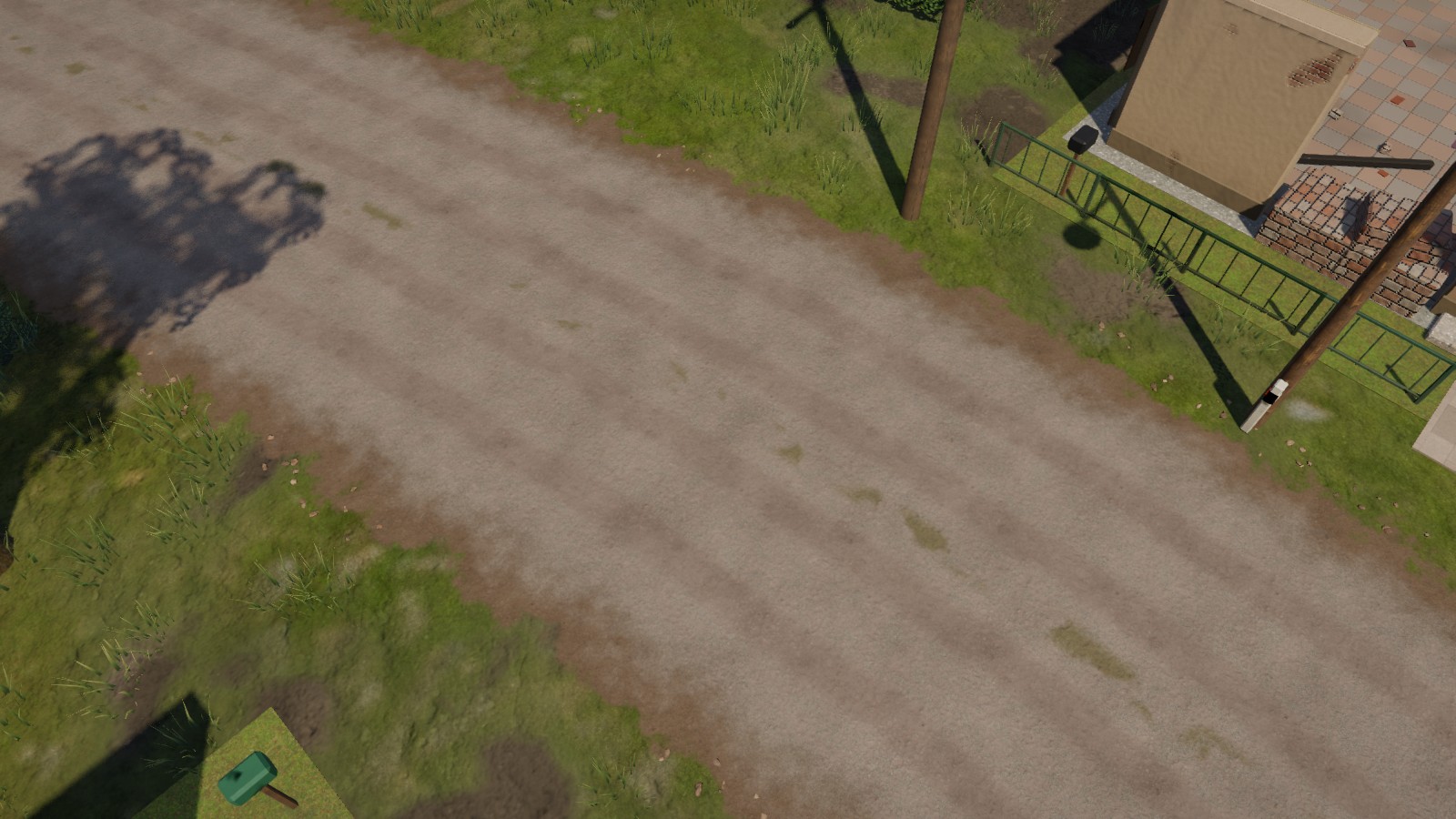
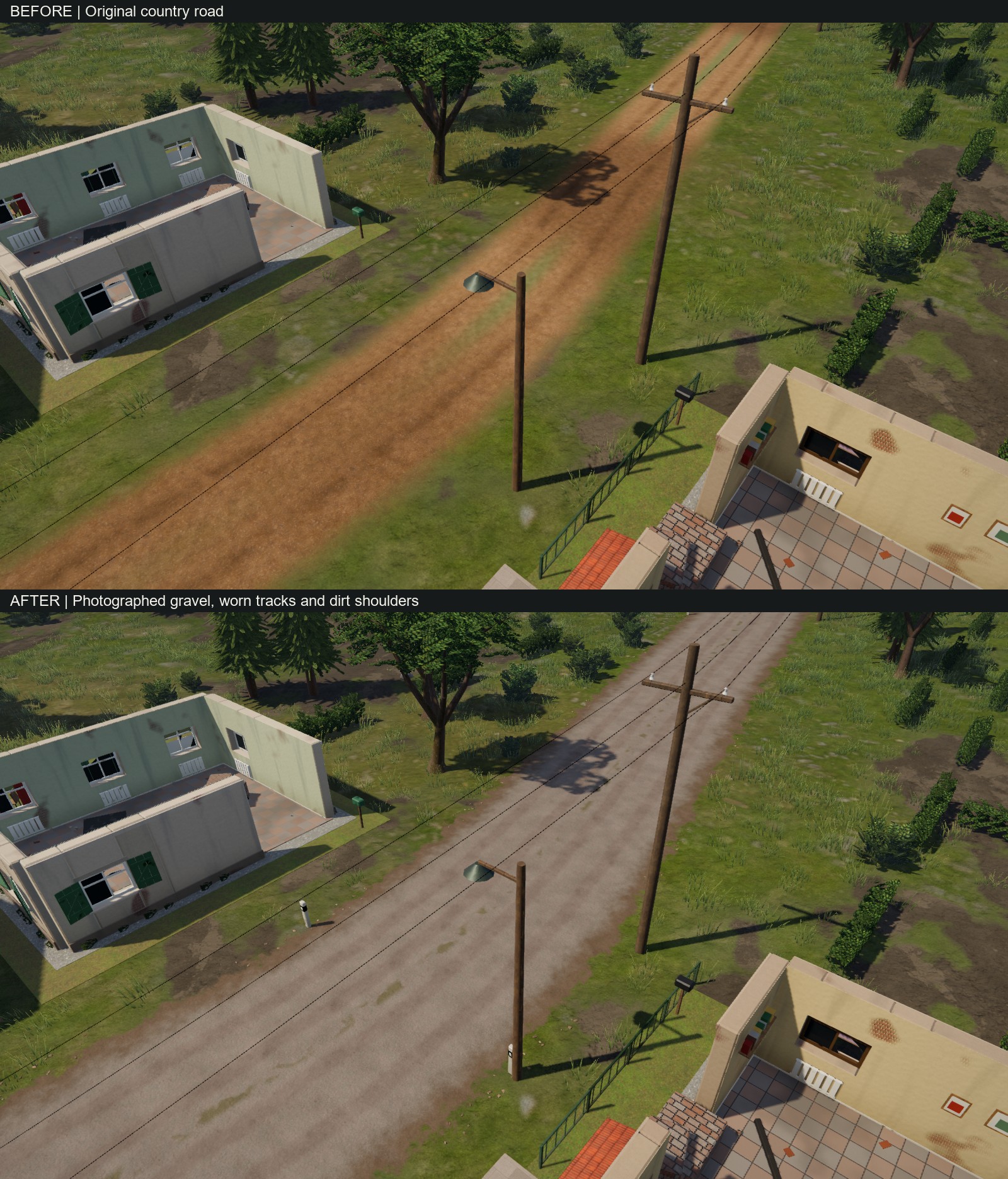
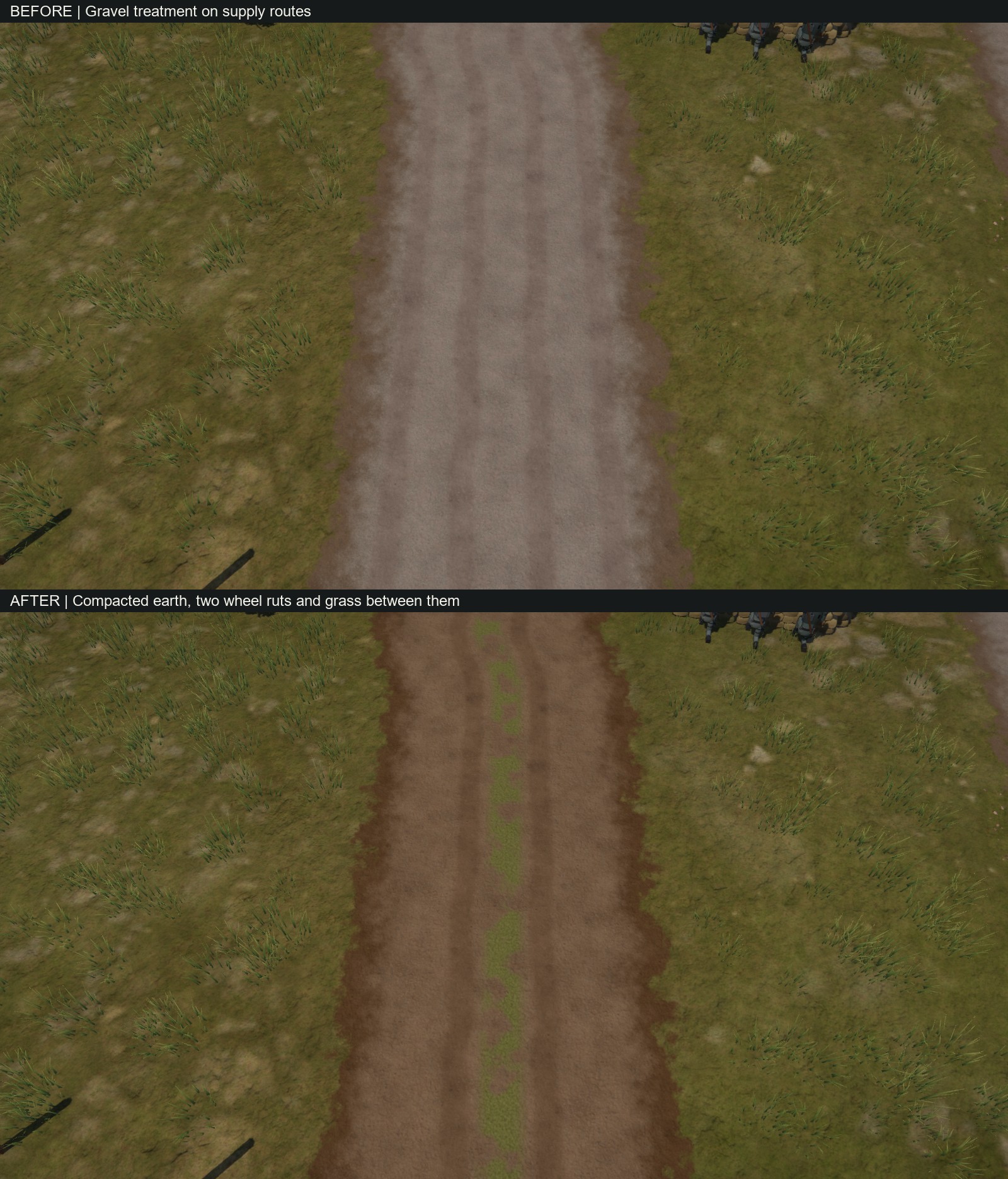
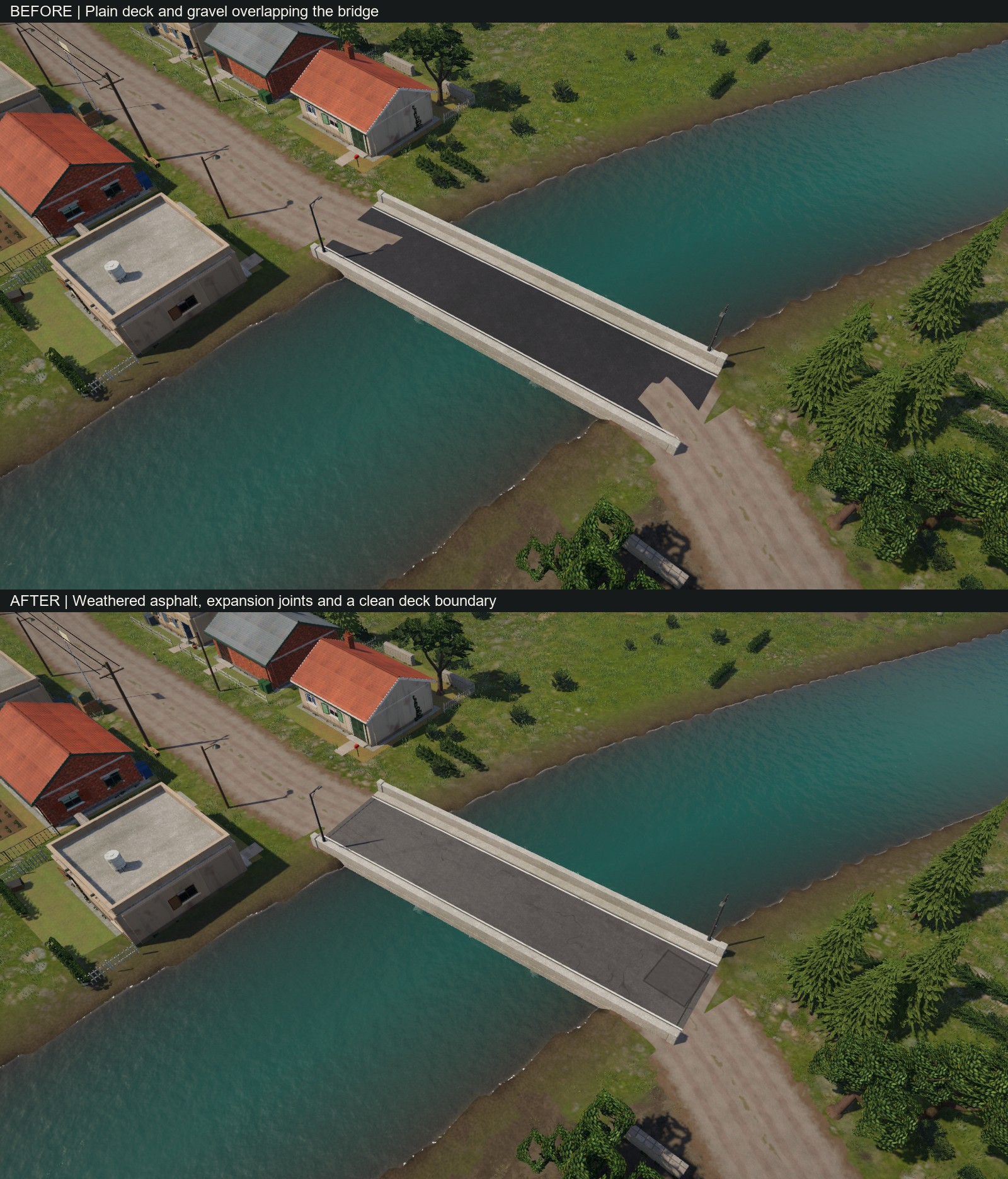
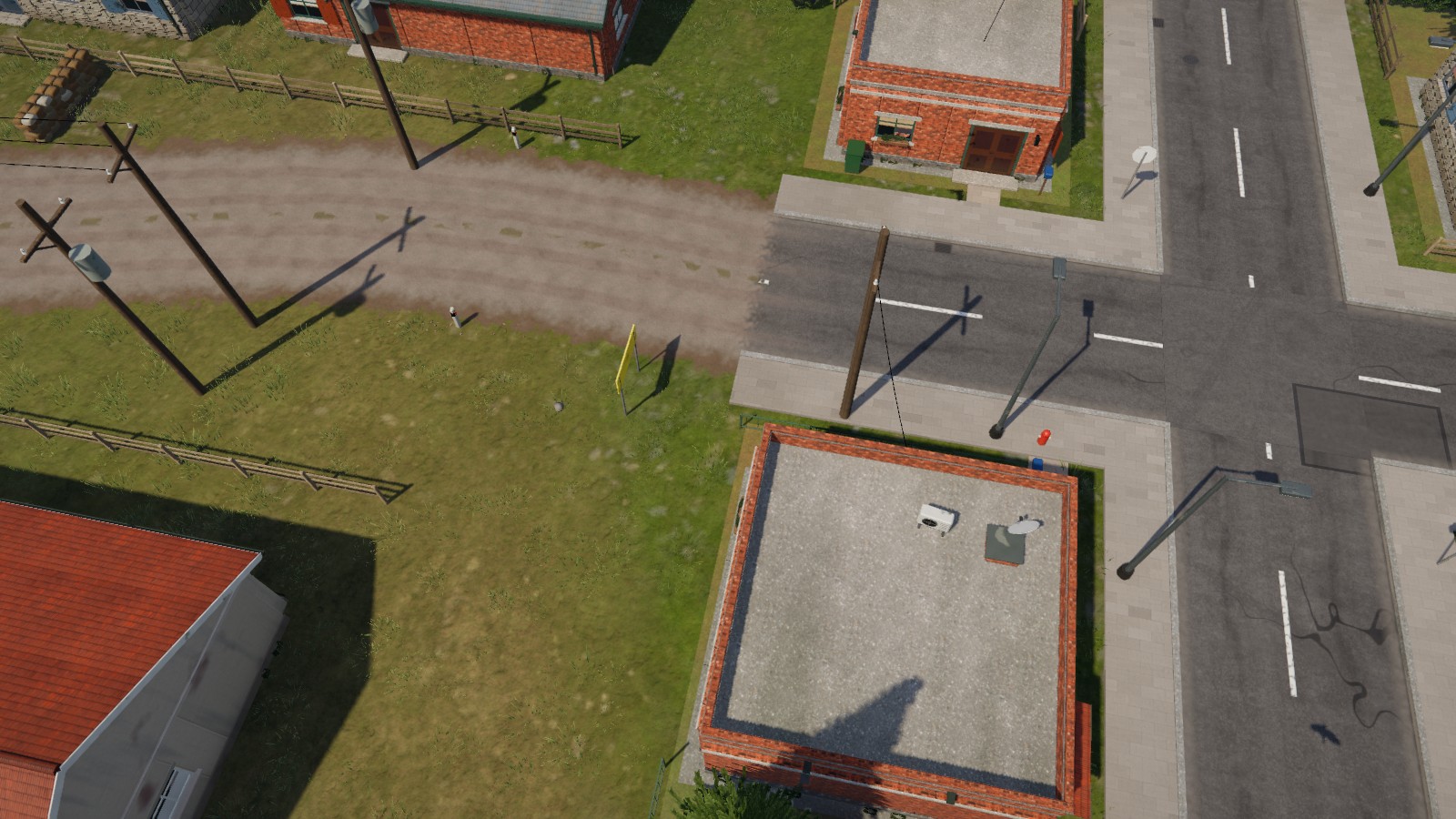
Country gravel, earth supply tracks and paved bridge decks have distinct surfaces, with worn wheel paths, natural shoulders and cleaner joins.
Explore this change
- Photographed worn road and coarse gravel surfaces replace the smooth sand strip. Compacted wheel tracks contrast with loose aggregate, while narrow patches of grass survive between them.
- Irregular road edges expose darker soil before meeting the grass. Rain darkens the fines and collects in the wheel tracks.
- Sparse reflector posts and small loose stone deposits frame country routes while keeping junctions, buildings and water clear.
- Road surfaces follow the ground in shorter panels, with a shallow crown on unpaved routes. Town kerbs and the driving width stay the same.
- Supply tracks have darker earth and two compacted wheel ruts, with a wider, broken strip of grass between them.
- Bridge decks use weathered asphalt and worn road paint, with expansion joints. Gravel no longer overlaps the deck in jagged wedges, and the bridge surface responds to rain.
- Dust trails onto town paving at gravel entrances; concrete driveways are divided by fine slab joints.
Trenches fitted out, with dugouts to shelter in
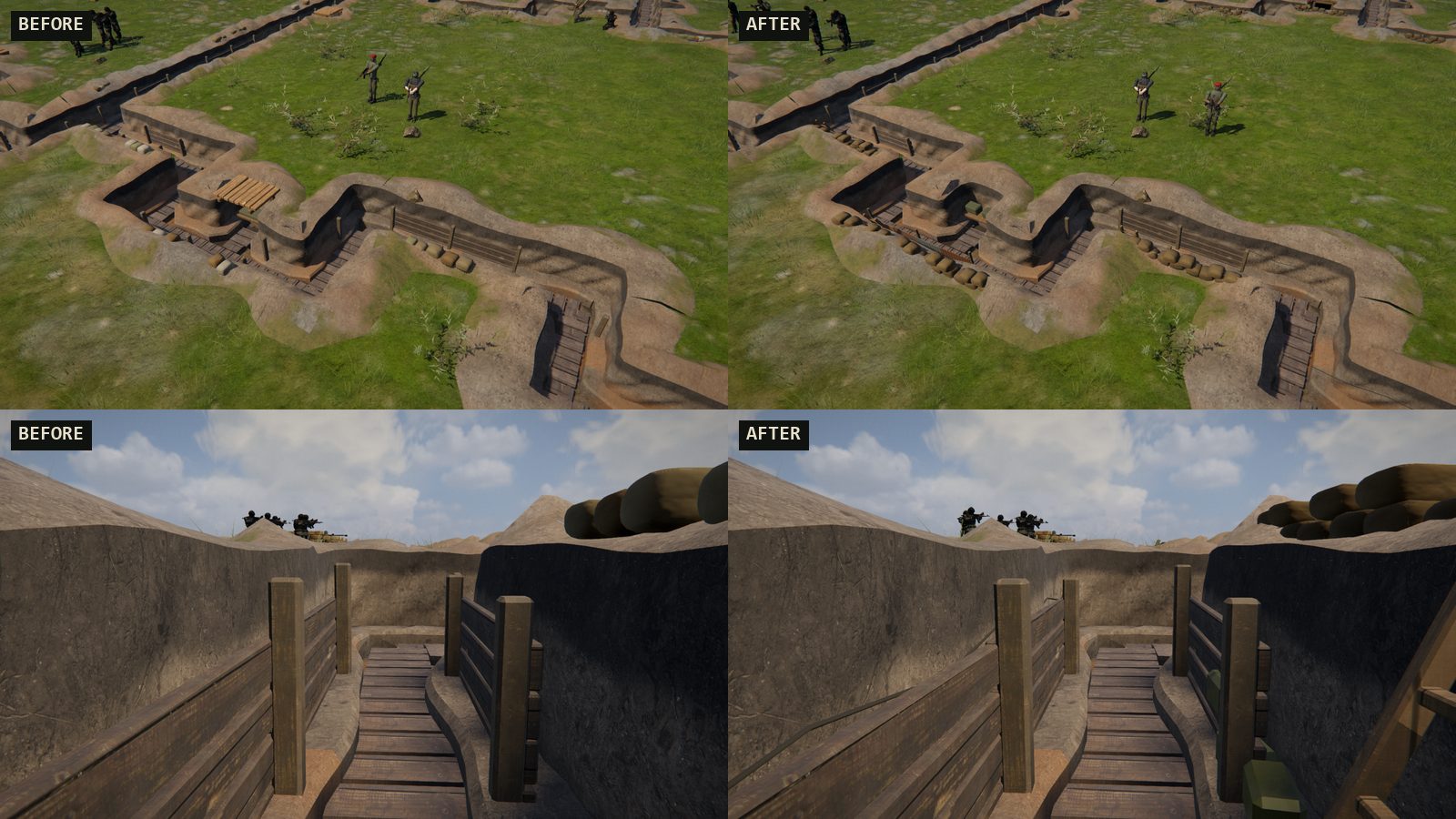
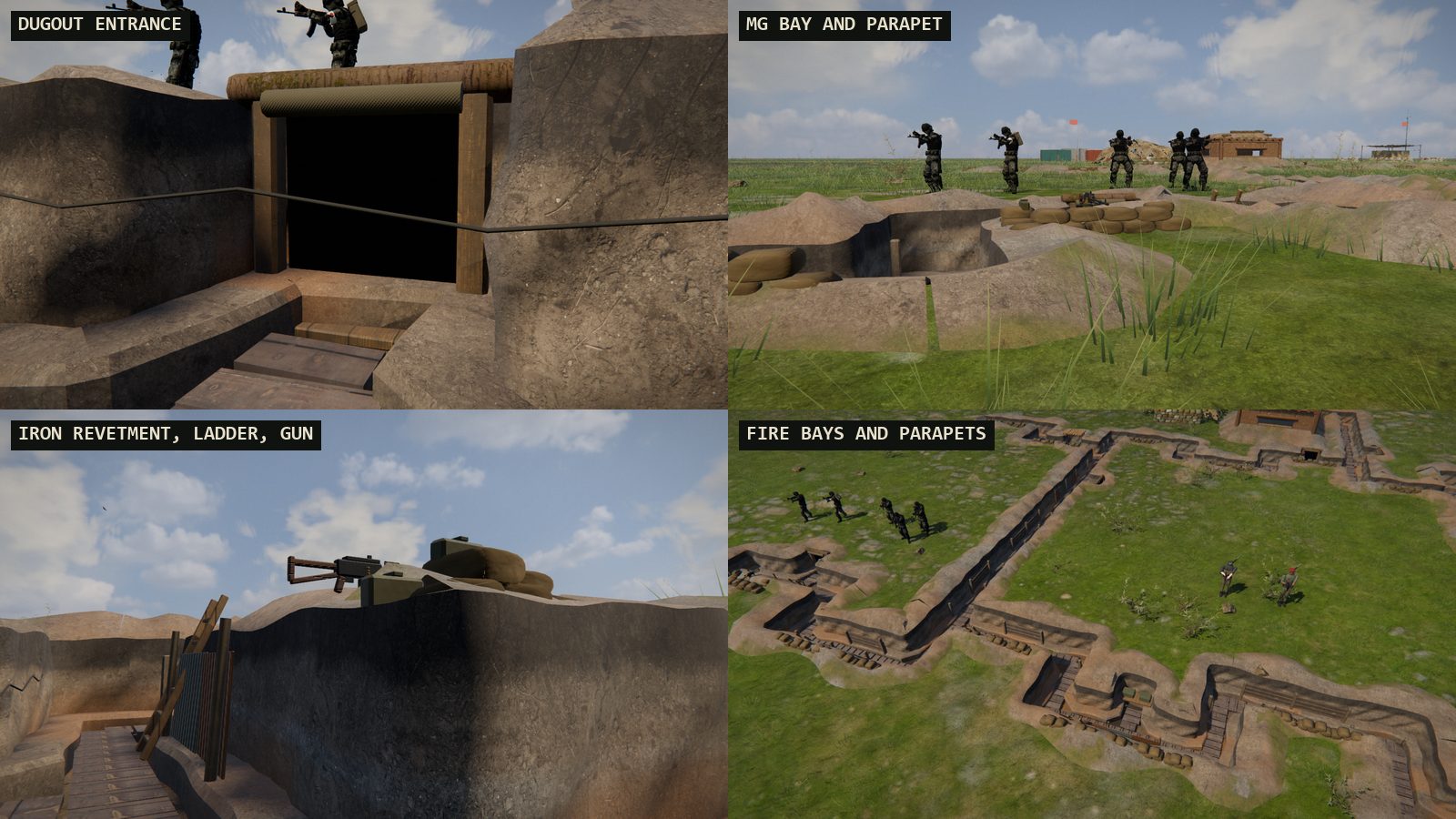
Finished trenches are sandbagged and revetted, with ladders and dugout entrances. Squads shelter in their dugouts under shellfire and stand to when it lifts.
Watch: Rebel fighters on the fire step come under mortar fire, run along the trench to their dugout leaving a sentry, then stand to when the barrage lifts. Played at 1.5x speed; the mortar barrage is a controlled demonstration. (Direct WEBM)
Explore this change
- Parapets: the front of every fire bay is faced with a low wall of sandbags, two bags high, in the same earth-caked hessian as the ground around them.
- Revetment: walls are held up with planks behind posts, or on some sections corrugated iron on pickets.
- Along the bays: scaling ladders against the front wall, ammunition boxes on the fire step and the field telephone line along the back wall.
- Dugouts: some rear bays lead down to a dugout through a timber door frame in the back wall, with a gas blanket rolled over the door. Shelled squads go below, leaving a sentry on the parapet, and are back on the fire step when the barrage lifts, the enemy comes within 90 m, or you give them an order. A shell that brings the section down buries the entrance, and the men dig themselves out hurt. Right-click a dugout's doorway to send a squad below yourself; it stays there until you order it out or the enemy comes on.
- Manning the line: a squad told to defend a trench line spreads along the fire steps of the bays facing the enemy, and moving along a trench no longer cuts corners over the parapet.
Camouflage nets, bolted armour and weather you can see
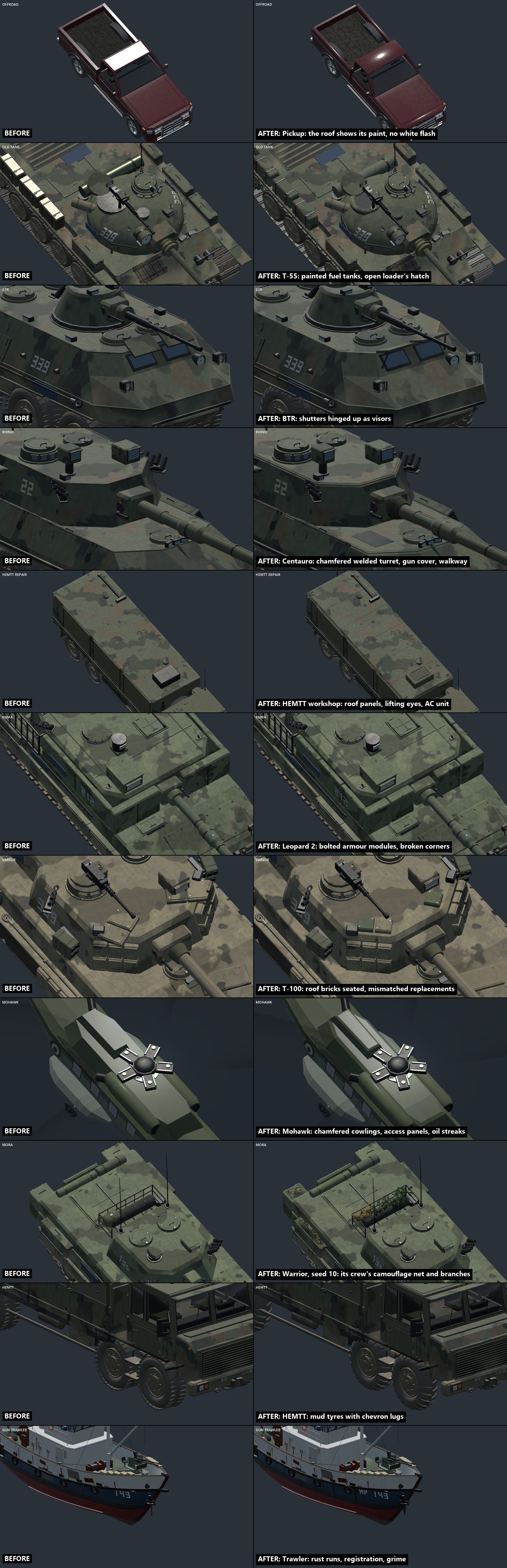
Crews carry camouflage nets and branches; armour gets welded edges, bolted modules, stowage baskets and gun covers; paint varies plate to plate and gathers dust and grime you can see from the battle camera; car roofs stop flashing white; helicopters get shaped tails; boats get wet waterlines and rust.
Explore this change
- About half the tanks, carriers and trucks carry their crew's camouflage: a net bundled into a basket or
thrown over a bin, and cut branches laid along the loads, in green or sand to match the paint. Which
vehicles, and how heavily, changes from vehicle to vehicle. - Armour edges are chamfered and welded on NATO, CSAT and independent tanks and carriers, so their roofs
catch a line of light instead of ending in a knife edge. The Leopard 2's add-on armour is separate bolted
modules, and the T-100's roof bricks sit on the turret instead of hanging off its edge. Here and there a
brick is a mismatched replacement. - Turrets carry open stowage baskets with kit inside, decks have dark non-slip walkways, and main guns wear
a canvas cover where they leave the turret. The T-55's fuel tanks are painted and its loader's hatch is
open. BTR window shutters are hinged visors, and some crews drive with them closed. The Bradley's exhaust
is a grille. - Paint varies from plate to plate. Dust gathers on decks and roofs, and grime streaks the sides, at a size
you can see from the battle camera. Rounded edges show worn highlights. - Car and pickup roofs show their paint instead of a white flash. HEMTT workshop and ambulance roofs show
panels, lifting eyes and air-conditioning units. - Military trucks roll on mud tyres with chunky lugs. Spare track links hang in short runs. Mudflaps hang
their own way, and some are torn. Crates carry stencils. Canvas tilts sag between their bows. - Helicopter tails and stub wings are shaped like wings instead of planks. Cowlings have chamfered edges and
access panels, with a patchwork of refitted panels that differs from airframe to airframe. Oil and exhaust
streak the fuselages, and serial numbers vary. - Boats are dark and wet at the waterline. Rust runs from the trawler's scuppers and portholes, its funnel is
sooty, and boats carry registration numbers.
Get it
Download the Windows installer or Mac disk image. On Mac, drag Frontline into a writable Applications folder before opening it; don't run it from the disk image.
Installed copies keep themselves up to date. The game downloads and verifies the update, then offers a restart; you don't need to run the installer again.
On Linux, download Frontline-linux.zip and unzip it. Windows and Mac ZIPs remain available below for portable installs. All downloads.
The whole history, with pictures: Changelog.