Mohsen MD
#Team Members
- Sahar Harati, Second Year PhD Student, Computer Science Department, Emory University
- Mohsen Salari, First Year PhD Student, Biomedical Informatics Department, Emory University
- Pooya Mobadersany, First Year PhD Student, Biomedical Informatics Department, Emory University
#Introduction Machine learning is an iterative experimental process. The common methodology in solving a problem involves a preliminary idea, upon which the first solution is developed. After building the proposed solution and performing experiments on the solution, more often than not one finds himself redesigning the architecture in an effort to overcome the shortcomings of the original solution. To illustrate the point, imagine that we want to build a speech recognition system capable of deciphering uttered letters in a wave file. One of the first solutions that may come to mind would be a multilayer neural network similar to the one depicted in figure 1.
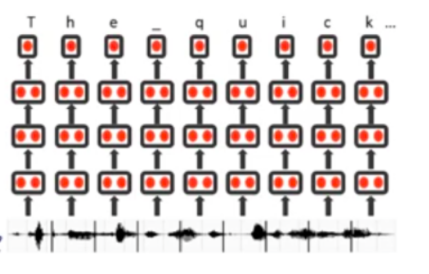
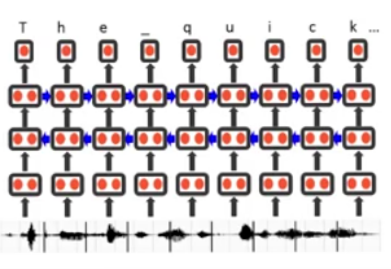
After implementing one such architecture and evaluating the results, one may notice that refining the network to a recurrent neural network instead of a simple network may be better able to capture the temporal dependency of the uttered letters and hence improve the performance of the system. So the architecture is transformed into a network similar to figure 2.
This process of constantly implementing solutions, experimenting with them and then coming up with a redesign is very time consuming. A good portion of the time invested in this process goes towards running experiments with typically large data.