
What is Synology Active Backup? Synology Active Backup helps centralize data protection, recovery, and backup management for devices, servers, and cloud workloads.
Why use a NAS-centered backup platform? active backup for business synology workflows keep storage, scheduling, and restore points under one administrative console.
Who needs it? IT teams managing endpoints, virtual machines, physical servers, Microsoft 365 tenants, and Google Workspace accounts.
Does it simplify recovery? Yes, synology active backup restore options help recover files, full systems, and application data without juggling separate tools.
Download Synology Active Backup to protect PCs, servers, virtual machines, and cloud workloads from one trusted NAS platform. Streamline scheduling, recovery, monitoring, and storage efficiency with synology backup software built for reliable business continuity and simple data protection.
Synology Active Backup is built around the idea that a Synology NAS can become the backup hub for a mixed environment. Instead of treating endpoint images, server backups, SaaS mailboxes, and virtualization data as isolated projects, administrators can coordinate retention, deduplication, reporting, and recovery through one storage platform.
The product family is closely associated with active backup for business, active backup for microsoft 365, and active backup for google workspace. That matters because many organizations need more than simple file copies. They need bare-metal restore for workstations, VM rollback for infrastructure, and searchable recovery for cloud collaboration data.
For smaller teams, synology active backup for business can reduce the number of paid backup tools required to protect everyday systems. For larger teams, synology active backup setup supports consistent policies, clear device visibility, and storage planning that matches the NAS capacity already deployed in the office or data room.
| Function | Role in workflow |
|---|---|
| Endpoint backup | synology active backup agent protects Windows PCs and selected physical machines |
| Server protection | active backup for business captures system states and business-critical volumes |
| Virtualization recovery | restore VMware and Hyper-V workloads from NAS-hosted backup versions |
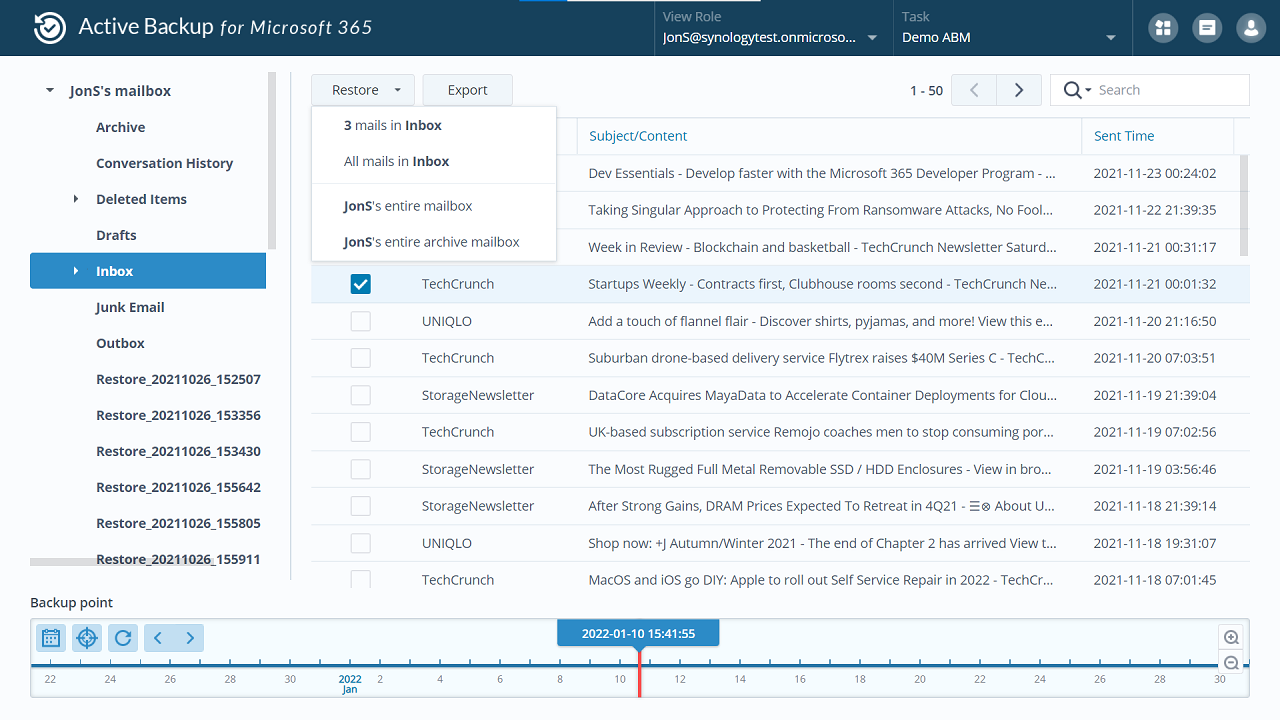
| SaaS backup | active backup for microsoft 365 preserves mail, files, contacts, and collaboration data |
| Workspace backup | active backup for google workspace protects Drive, Gmail, and shared resources |
| Central scheduling | synology active backup setup aligns policies, windows, and retention rules |
| Download management | active backup for business download prepares agents and platform components |
| Recovery operations | synology active backup restore handles file-level, folder-level, and full-device recovery |
A Synology Active Backup deployment typically begins with storage sizing, shared folder planning, and package installation through the NAS interface. Once the package is ready, administrators can distribute the active backup for business agent to protected machines, connect Microsoft 365 or Google Workspace accounts, and confirm that retention policies match compliance needs.
The real advantage comes from consistent visibility. active backup for business synology dashboards show task status, failed jobs, backup size, and recovery points in one place. That makes synology backup for business easier to audit than scattered scripts, unmanaged USB drives, or one-off workstation backup jobs.
Start by defining what Synology Active Backup must protect: laptops, desktops, physical servers, virtual machines, Microsoft 365 data, Google Workspace data, or all of the above. Capacity planning should include full backup size, daily change rates, retention periods, deduplication expectations, and room for temporary restore activity.
Install the appropriate package on a supported Synology NAS, then confirm network access, user permissions, and storage volumes. For endpoint rollouts, use synology active backup agent deployment methods that fit the organization, such as manual installation, remote software management, or scripted onboarding after active backup for business download.
For cloud backup, connect active backup for microsoft 365 and active backup for google workspace with service accounts or authorized tenant access. Test mailbox, Drive, OneDrive, SharePoint, and shared resource recovery before relying on production policies. A documented synology active backup tutorial can help helpdesk staff repeat the same recovery steps during an incident.
Keep backup tasks grouped by risk and recovery expectation. Executive laptops, domain servers, accounting workstations, and virtual infrastructure may require different retention rules. synology active backup pricing is often attractive because the license model can be NAS-based, but storage, redundancy, snapshots, and offsite replication still need real budget planning.
A small office can use Synology Active Backup as a practical safety net for employee PCs, shared workloads, and cloud accounts. The team installs the NAS package, configures backup destinations, and uses the active backup for business agent to enroll important machines. Once policies are assigned, users can continue working while scheduled backups run in the background.
When a file is deleted or a workstation fails, synology active backup restore gives administrators a controlled way to retrieve the needed version. Instead of rebuilding from memory, the team can recover a document, restore a folder, or bring back a full machine image depending on the incident.
For Microsoft 365 and Google Workspace users, active backup for microsoft 365 and active backup for google workspace reduce dependence on recycle bin windows and user-managed exports. The NAS becomes a local recovery point for cloud data, which can be valuable when accounts are removed, files are overwritten, or a retention setting was not enough.
Scenario A - Helpdesk recovery: use Synology Active Backup to restore a deleted project folder from a protected workstation backup.
Scenario B - Server rebuild: recover a failed physical server through active backup for business after replacing damaged hardware.
Scenario C - Cloud mailbox request: search active backup for microsoft 365 data when a user needs an older message or attachment.
Scenario D - Workspace continuity: restore Drive content through active backup for google workspace after accidental deletion or sync mistakes.

| Item | Minimum | Recommended |
|---|---|---|
| Platform | Supported Synology NAS model | Business NAS with enough CPU, memory, and drive bays |
| Storage | Capacity for first full backup | Capacity for retention, deduplication overhead, and restore testing |
| Network | Reliable LAN access | Gigabit or faster links for image backups and VM recovery |
| Agents | Compatible endpoint systems | Standardized synology active backup agent deployment |
| Cloud access | Authorized tenant connection | Dedicated admin process for Microsoft 365 and Google Workspace |
| Rights | Backup operator access | Role-based administration with documented recovery permissions |
Agent will not connect? Confirm DNS, firewall rules, NAS certificates, and whether the synology active backup agent matches the server package version.
Backup jobs fail? Review storage space, permissions, network stability, and active backup for business task logs before changing retention rules.
Cloud backup is incomplete? Recheck tenant authorization for active backup for microsoft 365 or active backup for google workspace and verify included users.
Restore is slow? Use faster network paths, avoid overloaded NAS volumes, and test synology active backup restore procedures before emergencies.
Setup feels confusing? Build a small synology active backup setup pilot first, then expand the same policy structure to the wider organization.
Synology Active Backup, active backup for business synology, synology backup for business, synology active backup for business agent, synology active backup for business, active backup for business, active backup for business agent, active backup for microsoft 365, active backup for business download, synology backup software, active backup for google workspace, synology active backup download, synology active backup agent, synology active backup restore, synology active backup setup, synology active backup microsoft 365, synology active backup google workspace, synology active backup tutorial, synology active backup pricing