Repository navigation
Releases
WebCaller v0.20.0 — Guided Linux server edition

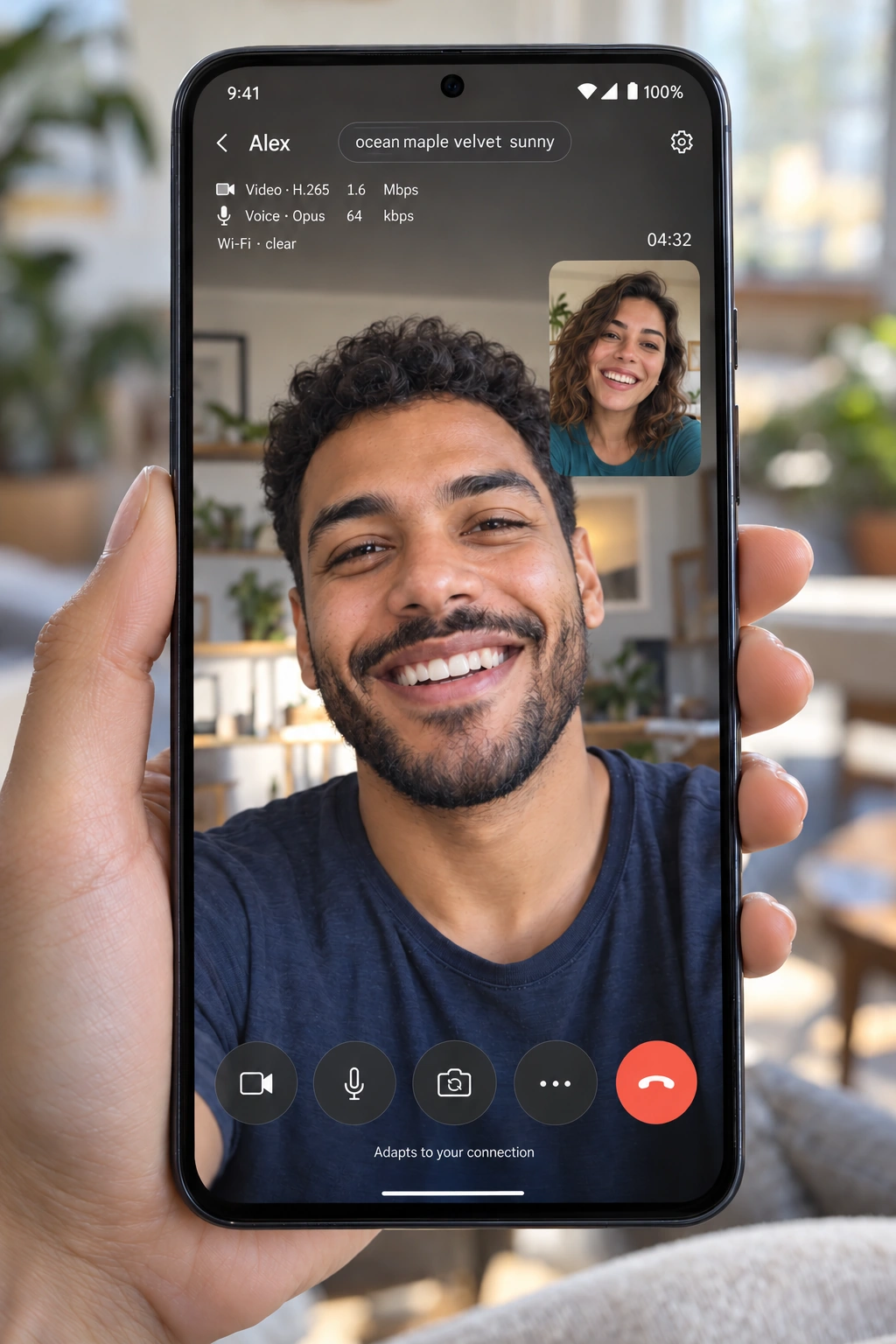
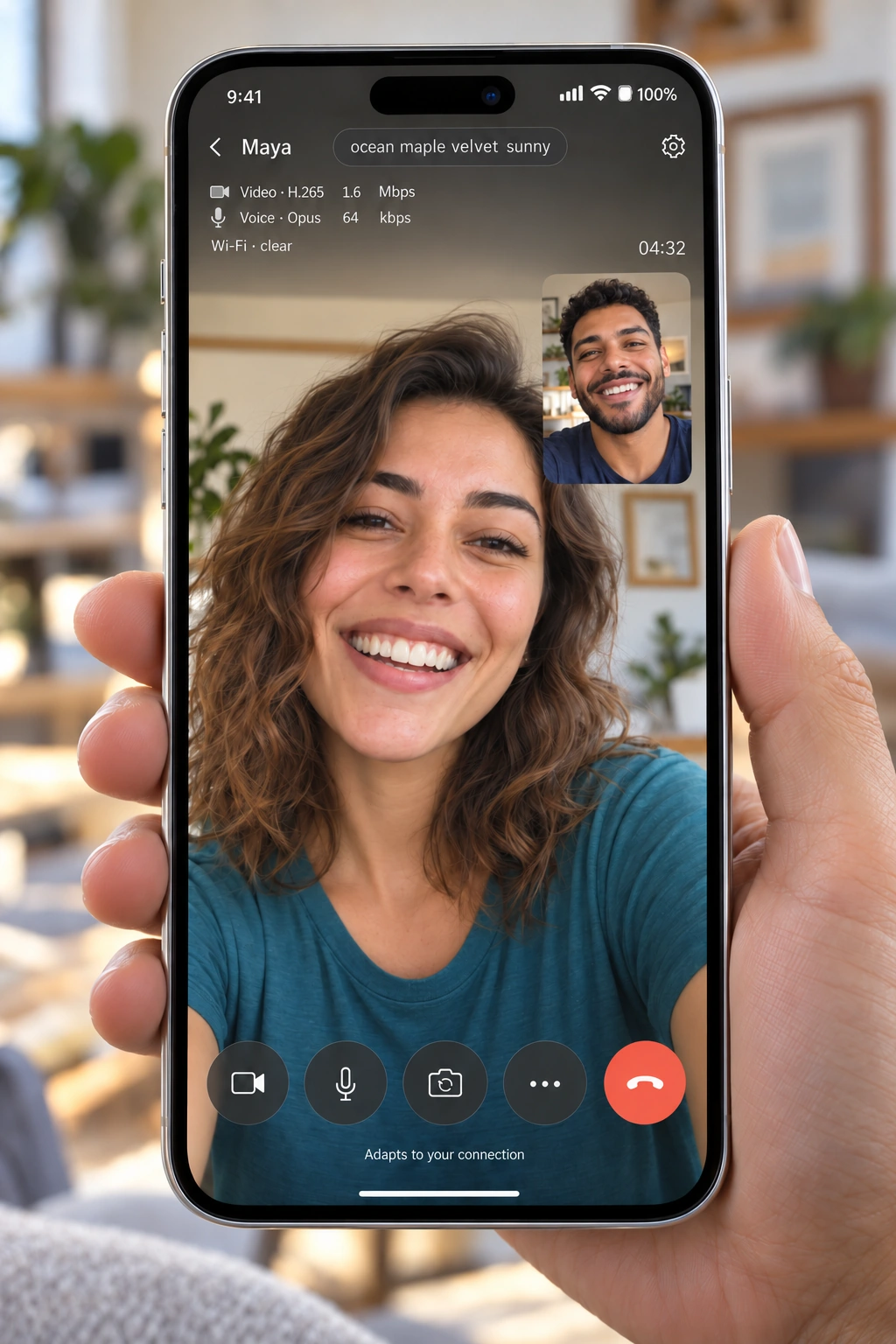
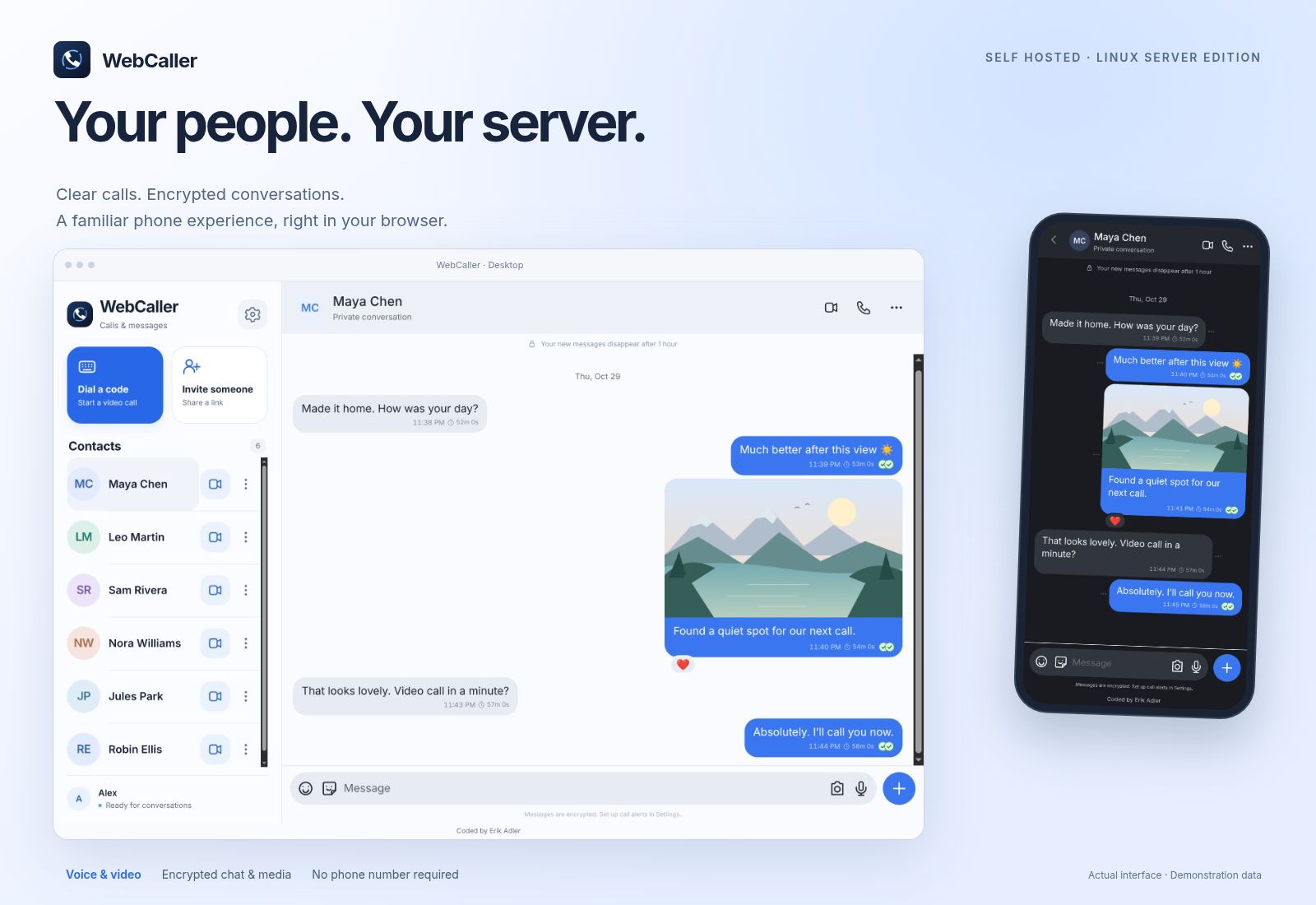
Your people. Your server.
A familiar browser phone for Android, iPhone and desktop, now with a guided Linux server edition. Download the small Docker bundle, run ./webcaller setup, and follow four plain-language steps. No Node, npm or Rust installation is needed for this option.
A server package you can look after
- Linux x86-64 and ARM64: prebuilt, release-matched app, setup and TURN images, pinned by digest.
- Guided setup: choose automatic HTTPS, an existing proxy/Tunnel or a containerized Cloudflare connector; add a reachable TURN call relay and optional self-hosted ntfy ringing.
- Your connection checklist: exact DNS/routes/ports for the choices you made, local/public HTTPS checks and a private first-phone QR.
- Everyday maintenance: numbered menu, status, diagnostics, guided settings changes and stable-release discovery.
- Backup and recovery: consistent private snapshots, matching-version restore, replacement-server recovery and recovery of the previous state when an update fails its startup check.
- A clearer guide: beginner download/checksum instructions, phone onboarding, updates and troubleshooting, with mobile and desktop examples in the README.
- Mobile keyboard stability: keep the app aligned when the phone keyboard opens and closes.
The existing native installation remains supported. This Docker edition is an alternative for new installations, not a command to migrate an existing native server.
The phone features are still here
Adaptive Opus voice and hardware-aware AV1/HEVC/VP9/H.264/VP8 video; audio-first quality control and Wi-Fi/cellular recovery; encrypted chat, reactions, replies, sender-only edits, stickers, voice notes, location cards and media/files up to 200 MiB; one-hour default disappearing messages with Off/custom choices; invitations/calling codes; optional call SAS and full identity fingerprint; browser alerts and optional ntfy.
The pinned official libsignal PQXDH/Triple Ratchet core, application Ed25519 signatures and AES-256-GCM attachments are unchanged. Live media remains browser DTLS-SRTP; it is not made post-quantum by chat encryption. The custom integration is unaudited. Read the security model.
Which download?
| Download | Use it for |
|---|---|
| WebCaller-Docker-v0.20.0.tar.gz | Recommended guided Linux setup. Requires Python 3.10+, Docker Engine, Compose 2.20+ and internet access. |
| WebCaller-Docker-v0.20.0.zip | The same installer files in ZIP format. |
| WebCaller-v0.20.0.tar.gz / .zip | Complete source/native installation or your own build, including pinned upstream source and corresponding-source offer. |
| SHA256SUMS.txt | Verify the uploaded archives before extracting them. |
Start here: Linux walkthrough · All installation choices · Features.
A server, hostname and reachable relay are still required. The wizard does not buy a domain, bypass CGNAT, configure a router remotely or guarantee locked-phone ringing. Backups contain credentials and are not password-encrypted; keep them on protected storage. Phone private keys remain on the phones. Existing v0.18.0 Docker users should read the first-upgrade backup instructions; older Olm installations require the separate migration guide.
Validation includes 336 passed application tests (three explicit historical Olm cases skipped), three passed official-native libsignal interoperability tests, source/privacy checks and disposable Docker stacks on native x86-64 and ARM64, including ntfy access controls/priority, TURN allocation, WebSocket authentication, restart persistence and actual backup/restore. Evidence and limits.
WebCaller v0.19.0 — Stickers and reliable sending
WebCaller v0.19.0 adds a WhatsApp-style sticker experience to the Signal-like browser phone, alongside fixes for sticker sending, emoji reactions and disappearing-message countdowns. This is a normal source/native release.
Stickers
WebCaller supports stickers with one-tap sending, transparent cutouts, encrypted local Recent/Favorites and borderless chat images.
Fixes
- Stickers advance the existing encrypted chat ratchet instead of starting a new session for each image. An established chat can keep sending stickers when an offline recipient's unused starter-key supply is empty.
- Sticker-connection and transfer-progress controls reuse separate per-contact ratchets. Key publication retries automatically after reconnect/resume. A genuinely new conversation still fails closed if authenticated starter material is unavailable, with a plain reconnect message.
- Emoji reactions on timed messages use the original signed lifetime without resetting or extending either device's countdown.
- Changing the disappearing-message setting affects future messages. Older bubbles retain their original duration across refresh/reopen, with separate sender/recipient countdowns and Off preserved.
- Replace the old experimental-encryption footer with Coded by Erik Adler, linked to this repository.
Encryption and compatibility
Each sticker has a fresh AES-256-GCM attachment key protected by the existing official libsignal PQXDH/Triple Ratchet chat session. Signed/encrypted SDP/ICE establishes a bounded low-priority WebRTC data channel when possible. The normal encrypted attachment store remains available for offline delivery and fallback. Audio-first transfer pacing, adaptive codecs, call recovery, TURN/ICE, ntfy and optional SAS are preserved.
The protocol core, binding and cryptographic algorithms are unchanged. WebCaller's custom browser integration remains unaudited. Live voice/video still uses WebRTC DTLS-SRTP; its media keys are not derived from the post-quantum Signal session. The four call words and full safety fingerprint remain available. Security and encryption inventory.
Existing v0.18.0 libsignal installations use a normal backed-up source update. Reload WebCaller once on both phones to load the new sticker context. Accounts, identities, contacts, existing stickers and Favorites can be retained. Older per-file sticker envelopes remain readable. Olm installations need the separate documented migration.
Download and install
Download WebCaller-v0.19.0.tar.gz or WebCaller-v0.19.0.zip, plus SHA256SUMS.txt below. These uploaded assets include the pinned upstream source and matching corresponding-source download; GitHub's automatic Source code archives omit submodules.
Beginner installation · Native Debian setup · Sticker guide · All features · Update/recovery
No new prebuilt Docker image or Docker bundle is published for v0.19.0. The existing v0.18.0 Docker release remains unchanged. Operators may still build this source locally into a container.
Validation
318 application tests passed, zero failed; three documented old-Olm migration cases skipped. Three official-native libsignal interoperability tests passed separately. Added tests cover zero-unused-prekey sticker bursts, encrypted store fallback, legacy contexts, publication retries, tampering, asset integrity and saved picker choices. Disposable-browser checks cover real encrypted WebRTC sticker delivery, cache acknowledgement and timed emoji reactions. Source/WASM provenance, syntax, native installer checks and private-data scans passed. Tests are not an independent audit or a guarantee for every physical phone.
Public downloads contain no deployment configuration, private server addresses, personal URL paths, credentials, phone identities, conversations or notification registrations.
WebCaller v0.18.0 — libsignal, adaptive calls and encrypted chat
WebCaller v0.18.0 brings the libsignal-based phone to the main release: a Signal-like, self-hosted WebRTC phone for Android, iPhone and desktop, with adaptive voice/video, encrypted chat/media and optional human call verification. No SIM or mandatory phone number.
Encryption and identity verification
- Pinned, unmodified official libsignal 0.105.1 core through the browser WASM adapter: PQXDH v4 (X25519 + Kyber-1024) and Double Ratchet + SPQR/Triple Ratchet (ML-KEM-768). Ratcheted v4 payloads use upstream AES-256-CBC/HKDF-SHA-256/HMAC-SHA-256 with its 8-byte message MAC.
- Separate Ed25519 application signatures, persistent application/libsignal identity pins, certified continuity for earlier P-256 application identities and AES-256-GCM attachments/local records.
- Fresh committed, media-bound four-word SAS stays visible during calls. Read all four words in order. In a chat, tap the contact name/header to compare the full 256-bit pairwise safety fingerprint through a trusted channel.
- Deliberate choice not to depend on a third-party key-transparency service/auditor. Manual comparisons and local pins do not provide automatic directory-wide transparency guarantees.
- Completely rewritten security explanation covers classical/post-quantum forward secrecy, compromise recovery, retained history, metadata, browser-delivered code and a side-by-side Signal comparison.
Security scope: the custom browser/storage/SAS integration is unaudited and is not an official Signal client. Live media remains DTLS-SRTP, not post-quantum media encryption. A compromised phone/origin can expose plaintext; no anonymity or Signal-equivalent assurance is claimed.
Calls that adapt
- Up to 500 kbps video each direction on cellular/unknown connections; confirmed Wi-Fi can use 900 kbps each direction. Voice remains first; audio/headers/files add data.
- Mutually efficient encode/decode preference for AV1, H.265/HEVC, VP9, H.264 and VP8, with compatible fallbacks and browser-controlled hardware use. Opus plus requested echo/noise/gain processing, FEC and DTX.
- Tiny video, pause/backoff and bounded healthy-audio recovery probes. Hardened dead signaling socket detection, answered-page ownership, fresh ICE restart generations and delayed-answer/candidate rejection improve Wi-Fi/cellular recovery.
- Immersive upright/square landscape views, fading controls and codec rows, aligned measured rates, persistent SAS/quality/timer and draggable self preview.
Chat and everyday use
- Text, typing, overlapping delivery/read marks, reactions, reply, sender-only edit, forwarding, pin, copy/select/info and deletion for both people.
- 200 MiB per file, inline/full-screen media, camera/voice notes, current-location cards, encrypted local media caching, adaptive sharing during calls and percentage placeholders.
- One-hour default for new disappearing conversations, Off/presets/custom wheels through four weeks, independent sender-send/recipient-view countdowns.
- Invitations, optional 4–12 digit calling codes, remembered contacts/local names, automatic/light/dark themes and local page title.
- Web Push call actions and optional confirmed self-hosted ntfy priority-5 call alerts without duplicate browser call pushes. OS/profile/sound restrictions remain.
- Configurable paths, retired-route 404 without replacement redirects and authenticated owned Web Push subscription migration.
Install and upgrade
Choose the small WebCaller-Docker-v0.18.0 setup bundle (matching digest-pinned amd64/arm64 images), complete source tar/ZIP, or native Debian guide. Uploaded source archives expand the pinned upstream submodule; GitHub's automatic Source code archives do not. The Docker bundle is a launcher that downloads images, not an offline appliance. SHA256SUMS.txt covers the uploaded archives.
Breaking protocol boundary: v0.17.1 and earlier use Olm. Do not overwrite their database/volumes with this release or bypass the updater's migration refusal. Stage and back up first; follow the explicit migration/rollback guide and refresh both clients without clearing browser site data. Normal libsignal updates preserve private configuration.
Documentation: Start here · Install · Docker · Security · Features · Migration.
Verification and licensing
299 application tests passed, zero failures, three explicit old-Olm migration skips; three official-native/WASM interoperability tests passed. Release checks include provenance, secret/deployment-data scanning, fresh standalone source installation, browser-crypto rebuild and disposable amd64/arm64 container smoke tests. These are not an independent audit or a guarantee on every physical phone.
The combined distribution is AGPL-3.0-only; original MIT and dependency notices are retained. No personal deployment URL, credentials, database, logs, first-phone QR or notification capabilities are included.
WebCaller v0.17.1 — Faster sharing, 200 MB files and guided Docker
WebCaller is a Signal-like WebRTC phone for Android, iPhone and desktop browsers, with end-to-end encrypted conversations, adaptive calls and simple invitations. No SIM or phone number is required.
This release makes sharing during calls much faster on healthy links, supports files up to 200 MiB (shown as 200 MB in the interface), and provides source downloads and a small, guided prebuilt Docker bundle.
Faster sharing, with voice first
- Replace the old sequential 4 KiB in-call bottleneck with up to four adaptive encrypted-chunk workers. Probe the actual file connection rather than treating every unknown network as a slow cellular link.
- Allow file payload rates up to 24 Mbps on healthy links, with a 2 Mbps limit when the browser explicitly reports cellular or Save-Data. These are ceilings, not guaranteed speeds; browsers do not always report their connection type.
- Pause and abort file requests when call statistics are weak, stale or reconnecting; resume cautiously when fresh healthy samples return. Video temporarily yields bandwidth during sharing. Voice remains the priority, but no application can guarantee intelligible audio on an unusable connection.
- Show transfer progress and preserve complete encrypted media caches when reopening chats. Incremental caching avoids an extra full ciphertext copy; browser storage limits and memory needed to display very large media still apply.
- Support 200 MiB files without changing the existing AES-256-GCM chunk format. Fresh reservation defaults are 1 GiB per sender and 4 GiB overall; existing explicit lower quotas are preserved.
Also included
- Updated Vodozemac 0.11.1 browser binding, stricter invalid-Curve25519 rejection and compatibility checks for previous identities, sessions, unread messages, history and call verification.
- Reproducible browser-crypto packaging: remove optional compiler-description metadata while keeping all executable/data sections identical and retaining exact loader integrity checks.
- Prefer confirmed ntfy call alerts to avoid duplicate browser notifications, with a browser-push fallback. Existing normal Web Push and optional self-hosted ntfy remain available. A website cannot force a locked phone to override OS restrictions, Silent mode or Focus.
- Calling codes, easier invitations, modern home and Settings screens, contact renaming, light/dark themes, and a professional handset icon.
- Off and custom disappearing-message timers through four weeks. New timed messages expire independently: the sender timer begins on sending, the recipient timer on first viewing. Unread encrypted copies may therefore outlive the sender's copy.
- Preserve the full camera frame across portrait, landscape and desktop calls.
- Signal-like text/media bubbles, replies, reactions, own-message editing, synchronized deletion, voice notes, camera/files/location sharing and inline/full-screen playback. Adaptive Opus voice and negotiated hardware-aware video preferences remain available.
Security, explained plainly
New messages, file-key manifests and call signaling use Olm Double Ratchet, X25519, AES-256-CBC, HMAC-SHA-256 and HKDF-SHA-256. Signed identities/envelopes use ECDSA P-256. Attachments and local wrapped records use AES-256-GCM. Live media uses the browser's DTLS-SRTP; it is not individually Double-Ratcheted. Optional four-word per-call SAS binds the accepted media connection: read all four words to each other. Skipping the comparison does not interrupt the call, but provides no human SAS verification.
The README and security guides explain forward secrecy, retained-history limits, identity pins, legacy traffic, metadata and the comparison with Signal. This remains classical cryptography, not a post-quantum protocol. Trusted browser code and authenticated contact keys are essential. The website operator controls delivered JavaScript, compromised phones expose plaintext, and this project has not had an independent security audit.
Choose your installation
Simplest for a new Linux server: download WebCaller-Docker-v0.17.1.tar.gz (or ZIP), check SHA256SUMS.txt, extract it, then follow its README. Install Docker Engine and Compose, run ./webcaller setup, ./webcaller start, then ./webcaller qr. The wizard creates fresh private secrets and the first-phone QR. Public amd64/arm64 images are pulled automatically and pinned by digest. The bundle offers optional TURN, ntfy, and HTTPS or a Cloudflare connector. You still need your own domain and reachable HTTPS/TURN configuration; Docker cannot bypass CGNAT or phone notification rules.
Source/native users: download WebCaller-v0.17.1.tar.gz or ZIP. Native Node.js/systemd and source-built Docker are both documented. Existing native installations do not need to migrate to Docker.
- Prebuilt Docker walkthrough
- Native installation
- Source-built installation
- Everyday use
- Security and encryption
- Verification and limits
- Full changelog
Upgrading and verification
Read the installation-specific update instructions first. Preserve private configuration, data volumes, browser storage, identities and keys. Refresh both phones after updating. Do not run first-time setup again, clear site storage or delete a Home Screen app to perform an upgrade. Existing lower file quotas remain in force until the operator deliberately changes them. New timers require current clients. A service restart may interrupt an active call.
Verification includes 248 passing public-source tests, complete encrypted 200 MiB upload/download with every plaintext byte verified, deletion cleanup, aborted-request recovery, legacy crypto/history compatibility, and two-peer browser sharing/cache/pause-resume checks during generated-media calls. Local-loopback timing is not an internet-speed benchmark. CI builds and exercises disposable Docker stacks on native amd64 and arm64 runners. Physical-phone memory, audible quality and difficult real mobile networks still need device testing.
Only audited public source and generic deployment templates are distributed. No live server configuration, credentials, account databases, browser profiles or private deployment backups are included. Checksums cover all four release archives; Docker bundle project images are additionally pinned to their tested release manifest digests.
WebCaller v0.16.1 — Prebuilt Docker installation
WebCaller now offers a ready-made Docker distribution alongside native Node.js and source-built Docker installations. The same Signal-like browser phone, encrypted disappearing chat/media, adaptive voice/video and optional call-verification words remain available.
New prebuilt installation
Download WebCaller-Docker-v0.16.1.tar.gz or .zip below. This small bundle downloads the selected ready-to-run images automatically; it does not contain the operating-system images itself. Verify the archive against SHA256SUMS.txt.
On a fresh supported Linux server with Docker Engine and Compose installed:
./webcaller setup
./webcaller start
./webcaller qr
The wizard asks for your own domain, HTTPS/Tunnel choice, TURN relay and optional ntfy alerts. It generates fresh private credentials; the first-phone QR avoids typing a long owner code. Invitees simply open their invitation and follow the phone guide.
Plain-language Docker guide · Source-built Docker · Native Node.js
Included services and updates
- Native Linux amd64 and arm64 project images hosted publicly at
ghcr.io/adlererik/webcaller, with versioned app,-setupand-turnvariants. No GitHub login is required. Release bundles pin every project/upstream image by digest. - Containerized setup/QR tools and optional isolated ntfy, coturn, Caddy HTTPS or Cloudflare connector. No host Node/npm/Python installation is required for this package.
- Separate persistent app, ntfy-state and publisher-secret volumes. Runtime ntfy cannot read the phone database or app environment; the app never receives the Docker socket.
./webcaller update vX.Y.Zchecks an explicit newer release, verifies the bundle/checksums and image references, downloads images before replacing public files, preserves private configuration/volumes, rejects downgrades and checks startup. It does not install unattended updates, automatically archive conversation history or roll back database migrations.- Existing source/native installation methods and the README's personal security philosophy remain available.
Verification
144 automated source tests pass. Both native architecture builds run a disposable complete stack: first setup, health/no-store, WebSocket rejection, first identity registration, ntfy access controls and priority-5 delivery, authenticated TURN allocation, private QR generation and persistence after container recreation. Caddy configuration and Cloudflare token-file support are checked. Each test uses a random project name so cleanup cannot affect an installed stack.
Source/history, release archives and publishing output are checked for known private deployment identifiers and credential patterns. The Docker bundle contains only six public installation files; no live environment, database, certificates, private QR, server logs or runtime directory is published. Archive ownership metadata is normalized. Checksums are integrity checks, not an independent signature or security audit.
Before installing or upgrading
This is a preview for a fresh Linux amd64/arm64 installation. Existing deployments are not automatically migrated into new volumes; preserve your current update method and identity database. Updates can interrupt calls. Keep private configuration and any matching backups required by your recovery policy; backups may retain ciphertext past disappearing timers.
DNS, public relay reachability, router/firewall ports and real phone permissions still require configuration/testing. Cloudflare Tunnel alone is not TURN. TURN-TLS certificates/renewal need an explicit operator plan. Physical locked-phone sound, native audio routing and radio handover remain device/network checks.
Olm Double Ratchet, identity pins, SAS and media encryption are unchanged. The Docker alert publisher uses a secret file and an explicitly permitted exact HTTP destination on a private same-host network; external access is HTTPS. iPhone ntfy wake-up still uses the documented upstream metadata relay. This remains an unaudited browser-delivered application, without post-quantum or zero-forensic-trace guarantees. Security model · Verification.
WebCaller v0.15.1 — Public setup and ntfy guide
A Signal-like WebRTC phone for Android, iPhone and desktop: adaptive Opus voice, hardware-aware video preferences, encrypted disappearing chat/media, per-call security words and simple invitations. This preview includes the optional self-hosted ntfy incoming-call alert path introduced in v0.15.0.
Easier public setup
- Updated, checksum-verified download commands and plain-language Debian installation steps.
- A separate native systemd guide for the optional ntfy server installer, with an explicit distinction from the guided Docker deployment.
- Exact Android/iPhone subscription instructions, priority-5 sound settings, WebSocket guidance, DNS/login troubleshooting and the usual-phone-icon fallback.
- Expanded environment reference, first-phone QR/iPhone guidance, update instructions and verification notes.
- Generic domain/path examples throughout the guides. The README's personal voice, security choices, codec explanations and Signal comparison are preserved.
- Publishing safeguards now reject embedded ntfy read-capability addresses and publisher tokens. The private setup card uses WebCaller branding.
Install and use
Start with the beginner Docker guide, or choose the native Debian guide for a fresh setup using the optional ntfy server helper. Do not install both over the same data. Download the ZIP or tar.gz below and verify it against SHA256SUMS.txt.
The operator installs the server once. Other people open a single-use invitation, allow the required permissions and follow the phone's call-alert guide. iPhone background browser alerts require the Home Screen icon. See Using WebCaller and Extra ringing.
Updating an existing installation
Follow Operations. Preserve your private .env, database, certificates, runtime configuration and browser site data. From v0.15.0, this patch requires no encryption or database migration. Do not regenerate identities/secrets or rerun the ntfy first-install helper. Restarting the phone service interrupts active calls; schedule it accordingly.
Checks and limits
139 automated tests pass, along with JavaScript/Python/shell checks, the publishing guard and documentation link/shell-example checks. GitHub CI also builds both app and TURN images. A fresh source archive was installed with Node 24.22.0 and checked for startup, health, no-store responses and rejection of unauthenticated WebSockets.
Public source, Git history, previous release notes/downloads and these archives were scanned for known deployment identifiers and credential patterns. The downloads contain reviewed tracked source only: no private server environment, database, certificates, logs, personal screenshots or runtime directories. SHA-256 checksums detect changed downloads; they are not an independent signature or a guarantee that every possible secret format is detectable.
Application encryption, identities, SAS, codecs, call signaling and notification delivery are unchanged. This remains an unaudited preview. Browser-delivered code and device security remain trust requirements. OS settings determine background sound; stock iPhone ntfy still uses an upstream wake-up metadata relay. No guaranteed ringing, post-quantum security or zero-forensic-trace claim is made. See the security model and verification history.
WebCaller v0.15.0 — Optional self-hosted ntfy call alerts
Optional self-hosted ntfy adds another incoming-call sound alongside Web Push. Android has one-tap subscription; iPhone has guided copy buttons and an explicit phone-icon fallback if a notification opens a different browser. Extra ringing starts after a heard-sound test.
The integration sends generic alerts and opaque call references only. Olm, existing identity pins, per-call SAS and media encryption are unchanged. A separate restricted ntfy service uses per-device 256-bit read addresses, a server-only write-only publisher credential, bounded reminders and short in-memory retention. External links never auto-answer.
See extra ringing installation, phone setup and security. The Debian installer verifies a pinned ntfy binary and creates an isolated systemd service. iPhone wake-up uses ntfy.sh and platform push infrastructure. OS delivery, late alerts, native app history and browser routing limits remain; physical-phone ringing needs a real-device test.
Validation: 134 application tests, publishing checks, actual Chromium onboarding/reload/fallback tests, and real ntfy 2.31.1 ACL/payload checks. This preview has not had an independent integration audit or physical Android/iPhone notification certification.
WebCaller v0.14.1 — Security review and call verification layout
The video-call name now aligns with the codec icons at the upper left, while the four call words stay centered in the same row. Quality remains beneath the aligned codec/rate stack.
This release fixes call-word cleanup on page exit and publishes a scoped source security review. The README now explains the actual cipher inventory, forward secrecy and retained-history limits, MITM/identity verification, optional SAS use, and a dated comparison with Signal's modern design. Status-retention and contact-pin deletion descriptions have been corrected. No cryptographic format, library, stored identity or message-history migration is introduced.
Validation: 124 local / 128 public-project tests pass, including a new hostile-key-directory signature/Olm-pin regression. Synthetic real-browser WebRTC checks confirm matching words, layout at 390/320 px, and page-exit cleanup. GitHub CI passes syntax, tests, publishing guard and application/TURN container builds.
This remains an unaudited preview. The review is not an independent audit or proof that all attacks are prevented. Website-delivered code, retained browser history, metadata, classical-only agreement and missing key transparency remain significant limits. Physical-phone behavior is not certified by synthetic browser checks.
See Security review, Signal comparison, and Call words.
Reopen the page on both phones after updating. Preserve browser site storage: clearing it loses local identities, ratchet history and verification records. Fresh installers should use the beginner guide. Archives contain reviewed tracked source only; production configuration, credentials, databases, keys and runtime diagnostics are excluded.
WebCaller v0.14.0 — Optional four-word call comparison
Four optional call words now appear beside the other person's name, in the same font as the codec information. Call quality sits neatly below the aligned voice/video codec and data-rate rows. Voice and video calls work without reading or confirming the words.
Read all four words to each other, in order, to compare this call's connection. Different words mean you should end the call before sharing sensitive information. The display never claims that people have performed the comparison.
The check uses a separate fresh, committed X25519 exchange and the already bundled Vodozemac SAS primitive, bound to the active call, public identities and accepted DTLS fingerprints. Four 2048-word indices encode 44 bits. There are no new npm dependencies, no export of Olm root/chain secrets, and no change to existing encryption or identity pins. ICE/codec changes retain the words when media identity stays the same. Interrupted or unsupported checks show “Call words unavailable” while the call continues.
SAS state stays in memory; its plaintext frames are excluded from readable history, and the display, accessibility labels, timers and ephemeral objects are cleared at hang-up. This applies to the call check, not to the application's existing encrypted history and identity storage. Browser/OS forensic erasure cannot be guaranteed. This application-specific protocol integration remains unaudited.
Validation: 127 public-project automated tests; 123 isolated tests on the Debian deployment; real two-browser synthetic voice/video calls with matching words, ICE restart and video upgrade continuity, optional-check timeout with continuing Opus audio, hang-up cleanup, and a 390-pixel layout check. Public HTTPS source hashes, no-store responses and authenticated WebSocket upgrade behavior also pass. Physical phone checks remain useful after upgrading.
Upgrade using the existing operations guide. Keep .env, data and browser site storage intact. Reopen or reload the page on both phones once; older clients can still call but cannot display the new comparison.
See Call verification for the complete protocol and limitations. Source archives and SHA256SUMS are attached; they contain generic configuration examples and third-party licenses, with no live server configuration or account data.
WebCaller v0.13.0 — Ratcheted messaging and identity verification
New messages, media manifests and call signaling use Vodozemac’s Olm Double Ratchet, bound to existing signed device identities. A server-controlled contact removal can no longer erase the saved verification fingerprint and silently authorize replacement keys.
Reopen or refresh WebCaller on both phones once after upgrading. Accounts, invitations and authorized pre-upgrade history are preserved. Keep browser site storage intact: readable history is separately encrypted on each device, and the server cannot reconstruct discarded transport keys. Newly created messages never silently fall back to the old protocol. Historical v1 messages retain their old security limitations.
Files use independent one-use sessions, each call has its own signaling stream, and key-server requests do not hold the shared crypto lock. Atomic, fenced IndexedDB commits cover multiple tabs, reloads, expiry and deletion. Pinned WASM and dependency licenses ship with the source; no external runtime CDN or new server package is needed.
Validation: 110 deployed-source and 114 public-release tests pass; both exact-commit GitHub CI runs passed, including installers and container builds. Disposable browser checks verified invitations, text/replies, receipts, edits and inline images after reloading both participants. Authenticated WebSocket offer/answer/ICE and delayed file-key requests were tested separately. Physical-phone background ringing, audio routing and battery consumption were not certified by these checks.
This integration remains unaudited and is not Signal wire-compatible or post-quantum. Retained readable local history and malicious same-origin website code remain separate risks. See Security and migration and the beginner installation guide.
Archives contain only the audited source tag. SHA256SUMS.txt verifies the attached downloads.