Home
We have derived a two-pion-exchange three-body potential by using a chiral-invariant Lagrangian for the pion-nucleon interaction. Only the three dominant lowest-order processes which give rise to a three-body interaction are included: (a) The second pion is emitted before the first pion is absorbed and the nucleon which emits the second pion goes into a positive-energy state; (b) one nucleon exchanges a 𝜌 meson with a pion; (c) one nucleon is scattered into an 𝑁* (nucleon ჼ) Δ(1236). We then proceed to evaluate the contribution of this three-body potential to the binding energy of the triton using a variational triton wave function. It is found that the two-pion-exchange three-body potential gives a significant contribution (2.32 MeV) to the binding energy of a triton**.
NUCLEAR STRUCTURE
3
He,
3
H; calculated contribution of three-body force to binding energy.
**triton
A classification of all angular momentum-isobaric spin functions which can be present in the ground state wave function of H3 is carried out by methods of group theory. This classification, based on the behaviour of the functions under rotations of the co-ordinate axes and permutations of the three nucleons, yields three S-state functions, four P-state functions and three D-state functions. All ten states are present in H3 if non-central forces exist between nucleons.
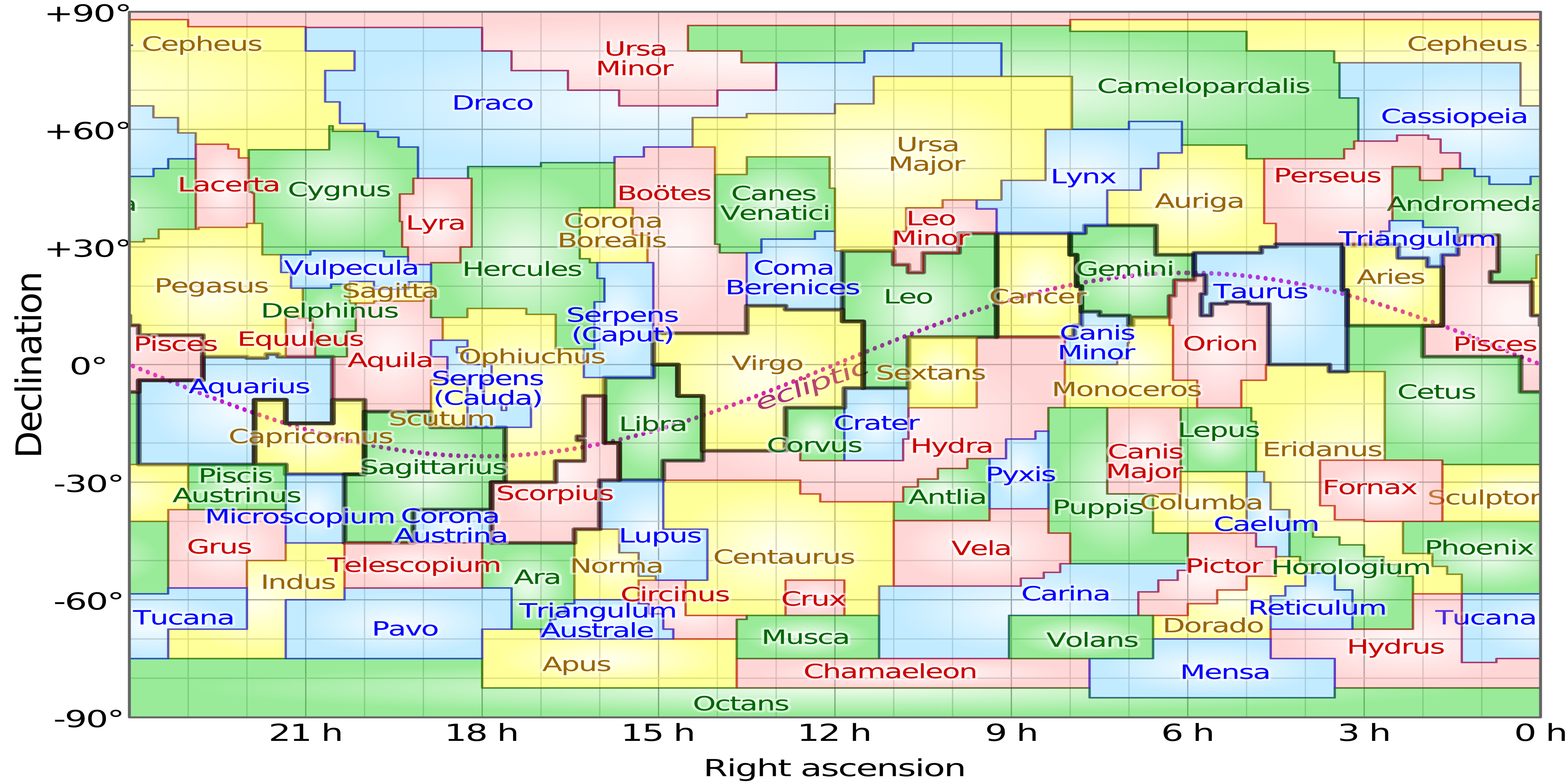
constellations_equirectangular_plot.svg

https://barionleg.github.io/homfb/kodbok/constellations_equirectangular_plot.svg

lokalt lokbt: L:/WEBB_OFFLINE/bruceli/webbarchive/dbrucelin/Calc.html

თუ კარგად დააკვირდებით ბლოგოს რომელზეც ბლური რევერსალურად გამოსახული იაუ უაი ანუ იაუ უაუ პოლიფონიის აღნიშვნას შეამჩნევთ
Eurytჸing Tჸeori წყოლიფერის ტევარდია тЭвÅРgиЯRლი всегОнი
თქვეჼი ბოჼა ჼორchი
ლი ბ.