call_next method takes longer than the actual time required #4931

Description

First Check
- I added a very descriptive title to this issue.
- I used the GitHub search to find a similar issue and didn't find it.
- I searched the FastAPI documentation, with the integrated search.
- I already searched in Google "How to X in FastAPI" and didn't find any information.
- I already read and followed all the tutorial in the docs and didn't find an answer.
- I already checked if it is not related to FastAPI but to Pydantic.
- I already checked if it is not related to FastAPI but to Swagger UI.
- I already checked if it is not related to FastAPI but to ReDoc.
Commit to Help
- I commit to help with one of those options 👆
Example Code
from fastapi import APIRouter, Request
from fastapi import FastAPI
from fastapi_utils.cbv import cbv

app = FastAPI()

@app.middleware('http')
async def log_middleware(request: Request, call_next):
    request.state.timer = Timer()
    request.state.timer.start('callNextTime')
    response = await call_next(request)
    request.state.timer.end('callNextTime')

router = APIRouter()
@cbv(router)
class TestRouter:
    @router.post('/')
    async def post(self, request:Request):
        request.state.timer.start('routerTime')
        # Do something
        request.state.timer.end('routerTime')
        return response
Description
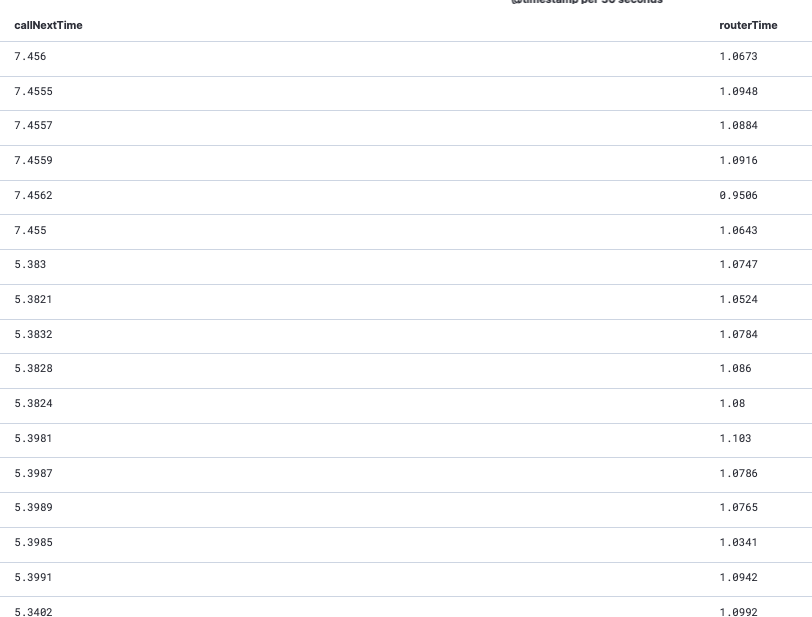
When we run the stress test, the callNextTime takes much longer than the routerTime
I'd like to ask why this phenomenon occurs
Operating System
Linux
Operating System Details
No response
FastAPI Version
0.65.2
Python Version
3.8.5
Additional Context
No response