


A custom template for scalable PyTorch projects with flexible configuration management. Designed to be ready in minimal time while remaining maintainable and scalable. ♻️
PytorchTemplate/
├── readme.md  👈 You are here
├── requirements.txt
├── run.py
├── configs/
│   ├── config.py
│   ├── default.yaml
│   └── ...
├── dataloaders/
│   └── ...
├── experiments/
│   ├── exp_base.py
│   └── ...
├── models/
│   ├── base.py
│   └── ...
└── utils/
    ├── logger.py
    ├── binary_metrics.py
    ├── reproducibility.py
└── ... run.py: Main entry point that handles configuration loading and experiment execution.configs/: The certainly_not_over_engineered configuration system (read below for more details).experiments/: Modular experiment classes that define training/inference logic. For larger projects, you may want a file for each experiment, such as forecasting, classification, etc.models/: PyTorch model implementations with a common base class that inherits all methods fromtorch.nn.Module.dataloaders/: Data loading and preprocessing modules.utils/: Shared utilities for logging, metrics, plotting, and reproducibility. Wandb comes pre-integrated in the logger.
- Clone the repository or create it from this template:
git clone <your-repo-url>
cd <your-repo-name>
- Install dependencies:
python3 -m venv .venv
pip3 install -r requirements.txt
🚯 To remove all files regarding the toy problem below and start with a freshly minted template run the following command!
bash cleanup.shThe template comes with a simple experiment inspired by the MinGPT Demo. From a sequence of 6 numbers, the transformer model should learn to sort them in ascending order. Input: 0 0 2 1 0 1 -> Output: 0 0 0 1 1 2
To train the model, run:
python run.py --config default.yaml toySorter.yaml --task trainingThe models will be trained in a minute or two, and the accuracy should reach 100%. To infer from the model, run:
python run.py --config default.yaml toySorter.yaml --task inferenceConfiguration is handled by the configs/config.py file, which provides:
- Default values for all parameters.
- YAML configuration file loading.
- Command-line argument overrides.
This means that the configuration priority is (from highest to lowest): (1) command-line arguments, (2) YAML configuration file values, and (3) default values in the Config class.
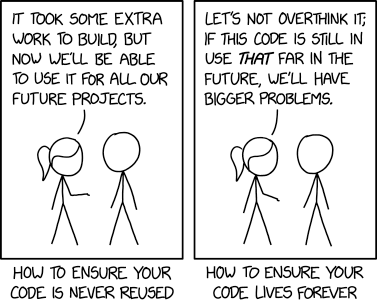
There is a trade-off when developing this type of template: the goal is to write the maximum amount of reusable code to save time in the future while avoiding to add complexity and knowledge overhead. Contributors hope this strikes the right balance. It should be easy to understand and extend, while also providing a solid foundation for scalable projects. Yet, there is still a subjective element to this, so others may find it too simple or too complex.
For any suggestions or issues, feel free to open an issue on the repository.