G5: Baby Monitoring System
| Name | GitHub |
|---|---|
| Aly Elaswad | alyelaswad |
| Mazin Bersy | mazinbersy |
| Omar Ganna | omarganna |
Github Repo: https://github.com/mazinbersy/Baby-Monitoring-System
Caregivers cannot maintain constant presence near a baby, and existing monitors are either too simple or too expensive. They tell you nothing is wrong, but they cannot tell you why or what triggered a concern.
Smart Baby Monitoring System is a self-contained embedded device that monitors a baby across three dimensions simultaneously: sound, motion, and environment. It detects infant crying using FFT-based audio analysis, monitors ambient temperature, and detects prolonged inactivity. When distress is detected, the system first attempts to soothe the baby by playing a lullaby automatically. If crying persists, it escalates to a caregiver push notification with a live video stream.
All of this runs on a single ESP32-CAM, streaming wirelessly over WiFi using HTTP POST requests, with no physical connection required from the caregiver.
- Detect infant crying using FFT-based audio analysis on the MAX9814 microphone
- Play lullaby automatically via DFPlayer Mini within 1 second of cry detection
- Escalate to caregiver alert if crying persists > 30 seconds despite playback
- Monitor ambient temperature via LM35 and alert if outside safe range (< 18°C or > 30°C)
- Detect prolonged inactivity via HC-SR501 PIR and alert if no motion > 2 minutes combined with silence
- Deliver mobile push notifications via WiFi using HTTP POST on any alert
- Activate event-triggered live video stream on any alert
- Remote camera toggle - turn camera on/off from web app
- Two-way audio - speak through web app, baby hears through speaker
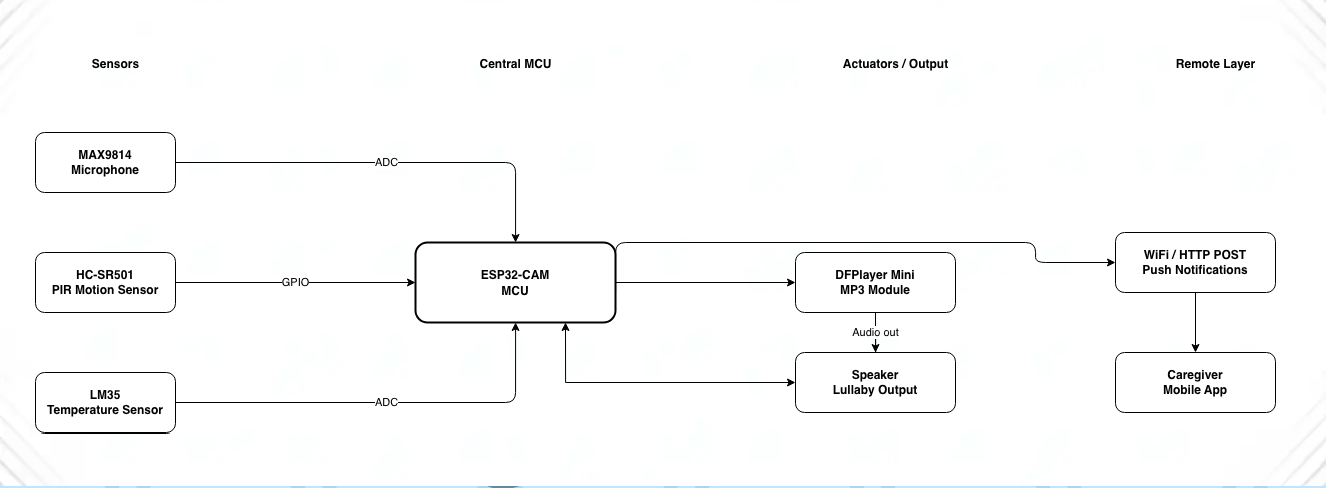
The system is built around a single ESP32-CAM which serves as the central embedded controller, handling all sensing, processing, communication, and actuation.
On the input side, the ESP32-CAM interfaces with three sensors. The MAX9814 microphone outputs an analog signal to the ADC, sampled continuously at 8 kHz for FFT-based cry detection. The HC-SR501 PIR sensor connects to a GPIO pin and raises a flag on any detected body movement. The LM35 temperature sensor outputs an analog voltage read by the ADC every 5 seconds.
The processing subsystem runs entirely on the ESP32-CAM using FreeRTOS tasks. A sensor fusion event manager combines the outputs of all three sensor pipelines and classifies events. The cry detection pipeline runs FFT on a sliding 512-sample audio window, checks for sustained energy in the 300 Hz to 3 kHz band, and triggers a cry event if the threshold is exceeded for more than 10 seconds. The motion pipeline monitors the PIR GPIO flag and raises an inactivity alert if no trigger is registered for more than 2 minutes combined with silence. The temperature pipeline compares the LM35 reading against safe thresholds and raises an alert on violation.
On the output side, the ESP32-CAM drives the DFPlayer Mini over UART to initiate lullaby playback on cry detection. A buzzer connected via GPIO activates immediately on any alert. The ESP32-CAM hosts an MJPEG HTTP video stream activated on any alert, accessible from a caregiver's phone browser on the same WiFi network. Push notifications are delivered via HTTP POST over WiFi.
| Component | Photo | Role | Interface |
|---|---|---|---|
| ESP32-CAM (AI-Thinker) | 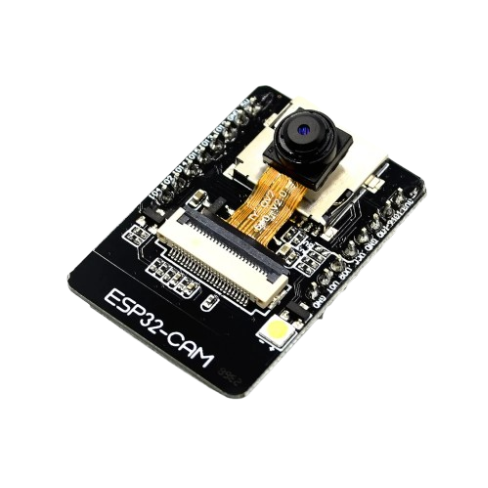 |
Central MCU, video streaming, WiFi | ADC, GPIO, UART, WiFi |
| MAX9814 | 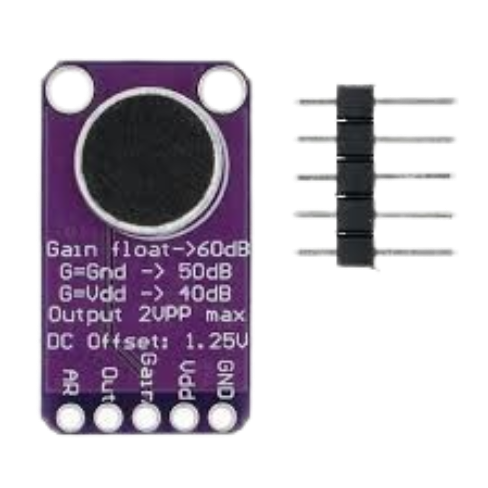 |
Microphone with auto gain control | Analog out to ADC |
| LM35 | 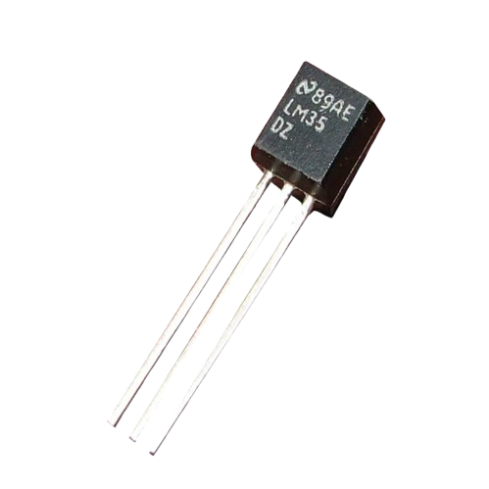 |
Temperature sensing | Analog out to ADC |
| HC-SR501 | 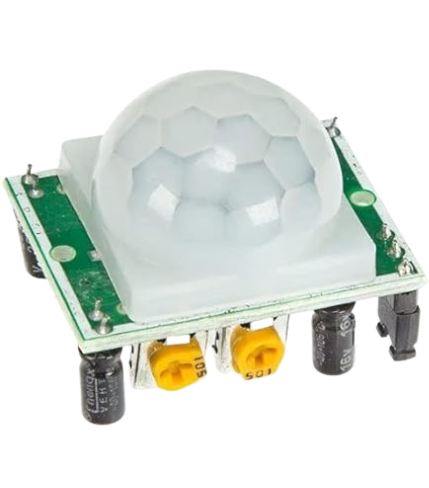 |
PIR motion detection | Digital GPIO |
| DFPlayer Mini (MP3-TF-16P) | 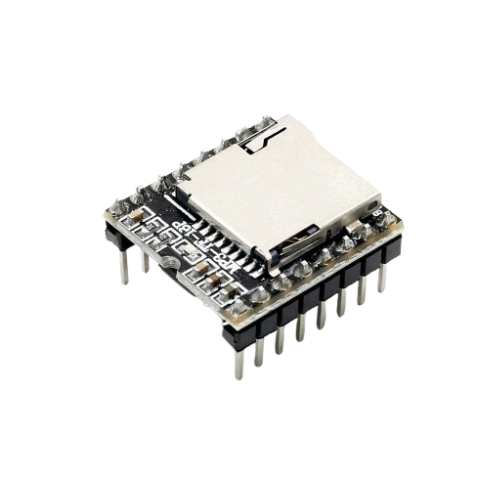 |
MP3 lullaby playback | UART |
| 4Ω 3W Speaker | 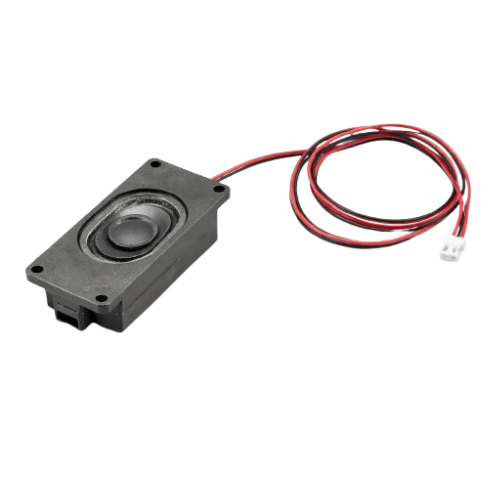 |
Audio output for lullabies | Direct to DFPlayer Mini |
(To be updated with wiring diagram)
(To be updated with costs and datasheet links)
(To be updated)
- Cry detection via FFT sampling at 8 kHz; alert triggered if cry-band energy (300 Hz – 3 kHz) sustained > 10 seconds
- Lullaby playback initiated automatically via DFPlayer Mini within 1 second of cry detection
- Caregiver alert sent if crying persists > 30 seconds despite active playback
- Temperature sampled every 5 seconds via LM35 ADC; alert triggered if temp > 30°C or < 18°C
- PIR motion sampled continuously; alert triggered if no motion detected for > 2 minutes combined with no cry signal
- Event-triggered video stream activated within 5 seconds of any alert
- Mobile push notification delivered via WiFi using HTTP POST within 5 seconds of any alert
The firmware runs on the ESP32-CAM using the Arduino framework via PlatformIO. The architecture uses FreeRTOS tasks to separate time-critical audio sampling from sensor fusion logic and network communication.
- Task 1 (Core 1): Audio sampling at 8 kHz and FFT processing. Runs on a dedicated core to prevent gaps in the audio buffer caused by WiFi or UART activity.
- Task 2 (Core 0): Sensor fusion event manager. Polls PIR flag, reads LM35 every 5 seconds, evaluates alert conditions, and dispatches actions to DFPlayer Mini, buzzer, camera, and WiFi.
- Camera: MJPEG stream started on alert trigger, runs as part of the ESP32-CAM camera server task.
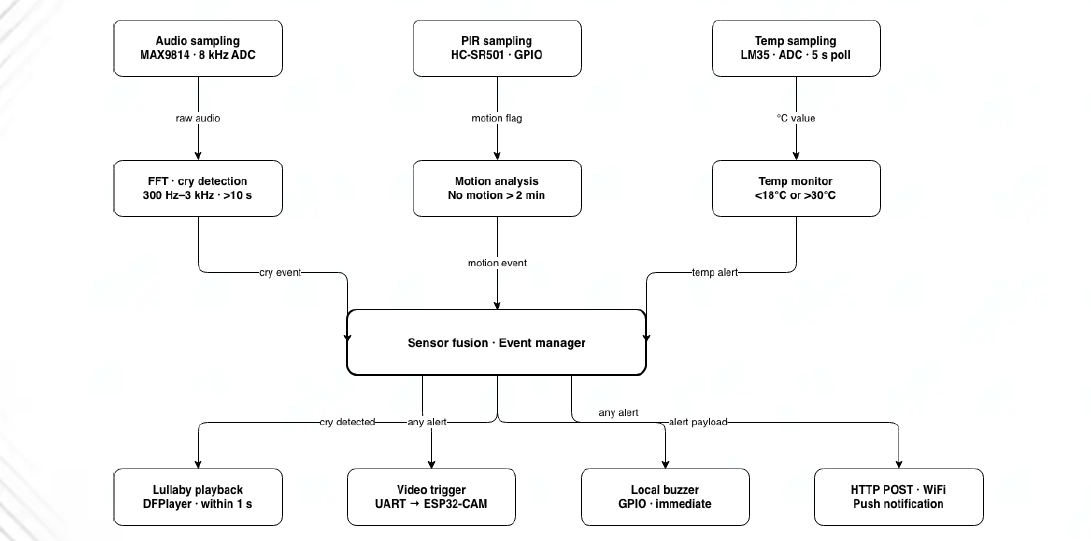
Sensor fusion logic:
| Condition | Action |
|---|---|
| Cry detected (FFT > 10s) | Play lullaby via DFPlayer Mini |
| Crying persists > 30s despite playback | Send mobile alert + start video stream + buzzer |
| No PIR motion > 2 min + no cry | Send mobile alert + start video stream + buzzer |
| Temperature out of range | Send mobile alert + buzzer |
FFT Cry Detection
The MAX9814 analog output is sampled at 8 kHz. Every 512 samples (~64ms), a Fast Fourier Transform is applied to convert the time-domain signal into the frequency domain. The firmware sums energy across bins corresponding to the 300 Hz to 3 kHz range. If the summed energy exceeds a tuned threshold and remains above it for more than 10 seconds continuously, a cry event is raised. Duration gating filters out transient sounds. Frequency specificity filters out broadband background noise that does not match the infant cry profile.
(To be updated)
(To be updated)
(To be updated)
| Challenge | Detail | Mitigation |
|---|---|---|
| FFT tuning | Thresholds require empirical calibration in a real environment | Start with documented values and tune during testing |
| Cry detection false positives | Sustained background sounds in 300 Hz – 3 kHz may trigger alerts | Duration threshold and amplitude floor filter most noise |
| PIR sensitivity | May trigger on ambient heat sources like sunlight or heaters | Tune onboard sensitivity potentiometer |
| ESP32-CAM wake latency | Camera initialization after trigger may exceed 5 second target | Optimize boot sequence or use partial sleep mode |
| WiFi reliability | Network congestion may delay push notifications | Keep HTTP POST payload minimal |
| Dual UART contention | ESP32-CAM communicates with DFPlayer Mini over UART alongside camera | Use hardware UART for DFPlayer, manage timing carefully |
(To be updated with photos)
(To be updated with link)
(To be updated)
(To be updated)
| Date | Milestone | Status | Date of Completion |
|---|---|---|---|
| Apr 14, 2026 | Team formation finalized and submitted | ✅ Completed | Apr 14, 2026 |
| Apr 15, 2026 | Proposal presentation | ✅ Completed | Apr 15, 2026 |
| Apr 20, 2026 | Wiki deployment with proposal and architecture | 🔄 In progress | — |
| Apr 22–25, 2026 | Phase 1: Sensor validation - MAX9814 ADC, LM35 ADC, PIR GPIO | ⏳ Pending | — |
| Apr 26–29, 2026 | Phase 2: Core processing - FFT pipeline, DFPlayer playback, ESP32-CAM stream | ⏳ Pending | — |
| Apr 29, 2026 | Milestone 3: Progress demo - at least one working subsystem | ⏳ Pending | — |
| May 1–5, 2026 | Phase 3: Full integration - sensor fusion, WiFi alerts, local buzzer | ⏳ Pending | — |
| May 6, 2026 | Checkpoint B: Integration update on wiki | ⏳ Pending | — |
| May 8–12, 2026 | Phase 4: Stretch goals - remote camera toggle, two-way audio | ⏳ Pending | — |
| May 13, 2026 | Final demo and presentation | ⏳ Pending | — |
(Link to be added)
- ESP32-CAM AI-Thinker datasheet
- MAX9814 datasheet - Maxim Integrated
- DFRobotDFPlayerMini Arduino library
- HC-SR501 PIR sensor datasheet
- LM35 datasheet - Texas Instruments