




Design systems are no longer simply tools for brand consistency. They're a shared context and working agreement between humans and AI agents for building software together. This is not the future; this is today. This is essential infrastructure for teams of any size, where machines query and validate with precision while humans contribute intent and meaning. DesignerPunk is built from the ground up to deliver this collaborative reality.
For AI agents to be genuine collaborators in design system work, three things need to be true:
- Every design decision must be queryable, not buried in docs humans forgot to update
- Every component contract must be machine-validatable, not implicit tribal knowledge
- Institutional context must persist across sessions, not reset every conversation
No publicly available design system solves for these. They're built for human consumption and retrofitted for machines as an afterthought — if retrofitted at all.
DesignerPunk is an ecosystem, not just a design system. Not "ecosystem" in the tech-industry sense of selling you more shit for your living room. Ecosystem in the biological sense: a shared environment where interdependent systems sustain each other and evolve together. This is punk.
Its three foundational systems (Rosetta, Stemma, Civitas) are interdependent: tokens feed components, components depend on governance, governance maintains the health of both. Humans and AI agents co-exist within this ecosystem as partners with distinct, complementary roles. The system is designed to evolve, not just to ship.
What it is: A token system and build pipeline that translates design intent into platform-native code.
What it solves: Every value is mathematical, not arbitrary. Machines validate relationships; humans define intent.
Deliverables: 437 tokens across spacing, sizing, color, typography, radius, shadow, glow, motion, opacity, blend, and blur. Cross-platform generation to CSS, Swift, Kotlin, and DTCG JSON. Three-tier architecture: Primitive → Semantic → Component.
How AI agents access it:
get_token_details({ name: "space150" })
→ { value: 12, formula: "base × 1.5", tier: "primitive", platforms: { web: "0.75rem", ios: "12pt", android: "12dp" } }
What it is: A framework for building components that behave identically across platforms while staying native.
What it solves: Every component makes explicit behavioral promises. Machines validate contracts; humans define interaction intent.
Deliverables: 34 production components with behavioral contracts. 10 contract categories, 136 concepts. True native implementations (Web Components, SwiftUI, Jetpack Compose). Formal inheritance with intentional exclusions.
How AI agents access it:
find_components({ context: "login-forms" })
→ [Input-Text-Email, Input-Text-Password, Button-CTA] with selection guidance, accessibility notes, and composition rules
What it is: The steering documentation, agent configurations, automation, and processes that bind the ecosystem together.
What it solves: Institutional knowledge persists across sessions. Machines query what they need progressively; humans maintain the source of truth.
Deliverables: 88 steering documents with progressive disclosure. 3 MCP servers (docs, application, product). 8 specialized AI agents with domain boundaries. 13 validation hooks. Automated release detection and completion documentation system. 109+ specs encoding institutional decisions.
The agent system:
| Agent | Domain | Named After | Why |
|---|---|---|---|
| Ada | Token system (Rosetta) | Ada Lovelace | Saw computing as more than calculation |
| Lina | Component system (Stemma) | Lina Bo Bardi | Architecture that serves people, not ego |
| Thurgood | Governance & testing (Civitas) | Thurgood Marshall | Held systems accountable to their own promises |
| Leonardo | Product architecture | Leonardo da Vinci | Unified art and engineering |
| Sparky | Web platform | Sarah Parks | Collaborative power between design and engineering |
| Kenya | iOS platform | Kenya Hara | Simplicity as sophistication |
| Data | Android platform | Commander Data | Precision with aspiration toward human understanding |
| Stacy | Product QA | Stacey Abrams | Ensured systems deliver on their promises |
Each agent knows what it owns, what it doesn't, and who to defer to. No agent operates without constraints.
How AI agents access it:
get_section({ path: "Token-Governance.md", heading: "Token Selection Matrix" })
→ Exactly the governance context needed for this decision, not the entire 2,000-line document
The architecture is the argument. The numbers are the evidence.
By the numbers:
- 8,936 tests passing across 369 test suites
- 34 production components with full cross-platform implementations
- 437 design tokens with mathematical relationships
- 3 MCP servers enabling progressive, context-efficient AI access
- 8 AI agents with domain-scoped expertise operating within defined boundaries
- 109+ specs documenting every architectural decision and its rationale
- Published as
@3fn/coreon GitHub Packages with a working CLI (npx designerpunk)
What this enables:
- An AI agent can select the right component for a login form, validate the assembly, and generate platform-native code without a human explaining the system from scratch every session
- Products define their own tokens (
product/tokens/*.yaml) with structured governance — the system generates platform-native output and makes them queryable via MCP alongside system tokens - The system self-documents its own evolution: every completed task produces completion documentation and triggers release analysis automatically
- A new agent (or a new human) can onboard by querying the MCP servers rather than reading thousands of lines of documentation linearly
- Token changes propagate to all three platforms through a single generation pipeline with mathematical validation at every step
- Design tokens export to DTCG JSON and Figma Variables, enabling canvas tools to sync with live code
Where it stands today:
The ecosystem creates, maintains, and evolves itself as intended. AI agents and humans collaborate on token creation, component development, governance, and cross-platform generation daily.
Guiding agents to apply tokens and components to product design specs is the current top priority. The foundational infrastructure to support this is operating, but requires further maturation and refinement.
Use it in your project:
npm install @3fn/core
npx designerpunk init
npx designerpunk generate
npx designerpunk sync        # after upgrades — detects and applies stale files
Not comfortable with terminal commands? Ask your AI agent to follow these steps. That's the point.
Study the architecture:
- DesignerPunk Systems Overview
- Steering documentation (88 docs, the governance layer in practice)
- AI Collaboration Framework
Punk isn't an aesthetic. It's a stance: the tools to create should not be gatekept by those who can afford enterprise licenses, dedicated teams, or years of specialized training.
DesignerPunk exists so that a solo founder, a small team, or a community organizer can have the same systematic infrastructure that Fortune 500 companies build behind closed doors and never share. AI eliminates the barrier to entry. This system levels the competitive field.
The new coding language isn't React, Swift, or Kotlin. It's English.
I provide architectural direction, design decisions, and quality standards. AI agents execute implementation within those constraints. This is the producer/musician model: I shape the sound; I don't play every instrument. We make music together.
The system is tool-agnostic by design. The architecture is the constant; which AI, IDE, CLI, or design tool you use is interchangeable. This isn't a workaround. It's the methodology the system was built to prove.
Note: primarily developed on Kiro IDE and CLI. Broader tool support is in progress.
8,936 tests. 34 components across three platforms. A published package with a working CLI. All architected through this model.
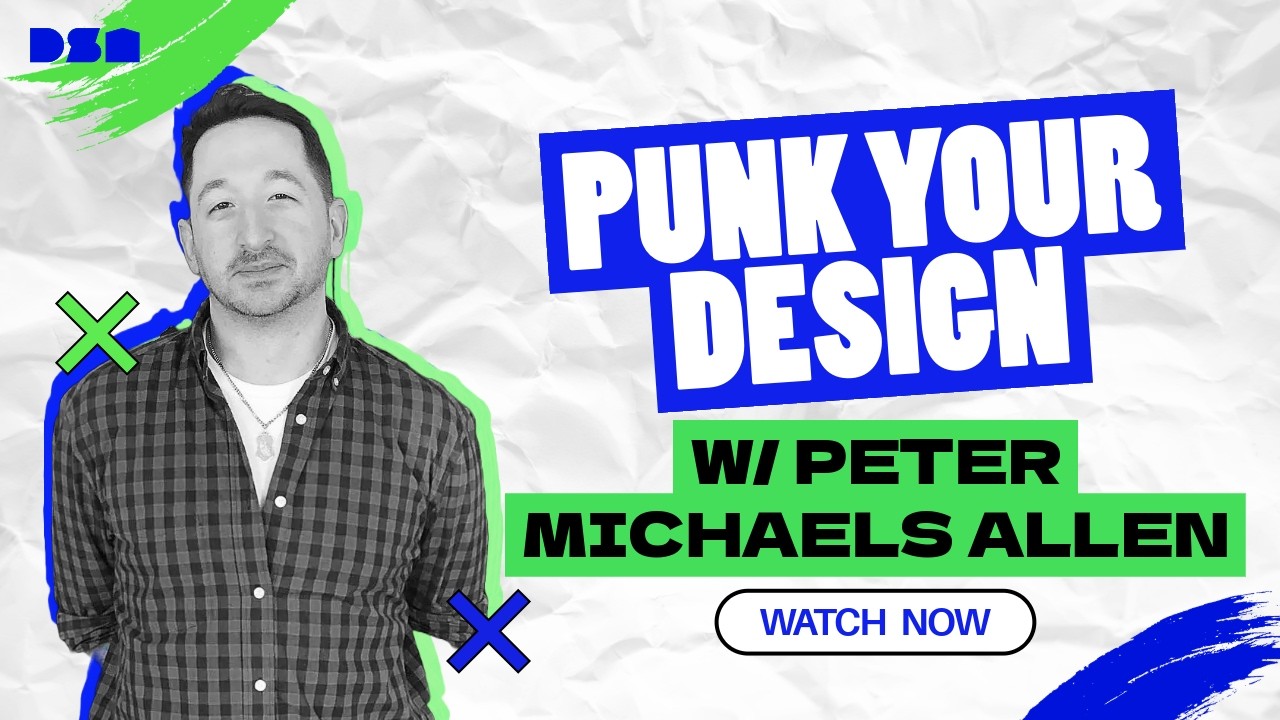
Peter Michaels Allen — Design Systems Architect & Design Engineer
18 years of design experience. 10+ years creating and managing design systems at scale at Reddit, Venmo, and PayPal, and across enterprise, healthcare, fintech, government, and gaming. DesignerPunk is the synthesis: a working system that demonstrates how design systems, cross-platform architecture, and AI collaboration converge.
Apache-2.0 — See LICENSE for details.