
English | 简体中文 | 繁體中文 | Français | 日本語 | 한국어 | Español
PyPI distribution: masarch
Python import package: agentorch
Version: 0.1.1
Python: 3.10+
License: MIT
agentorch is a code-first, async-first framework for programmable multi-agent orchestration in Python.
It is built for teams that need explicit runtime control, not hidden prompt pipelines.
If your system needs tools, retrieval, memory, workflow, and delegation to work together as software components, agentorch gives you that runtime model.
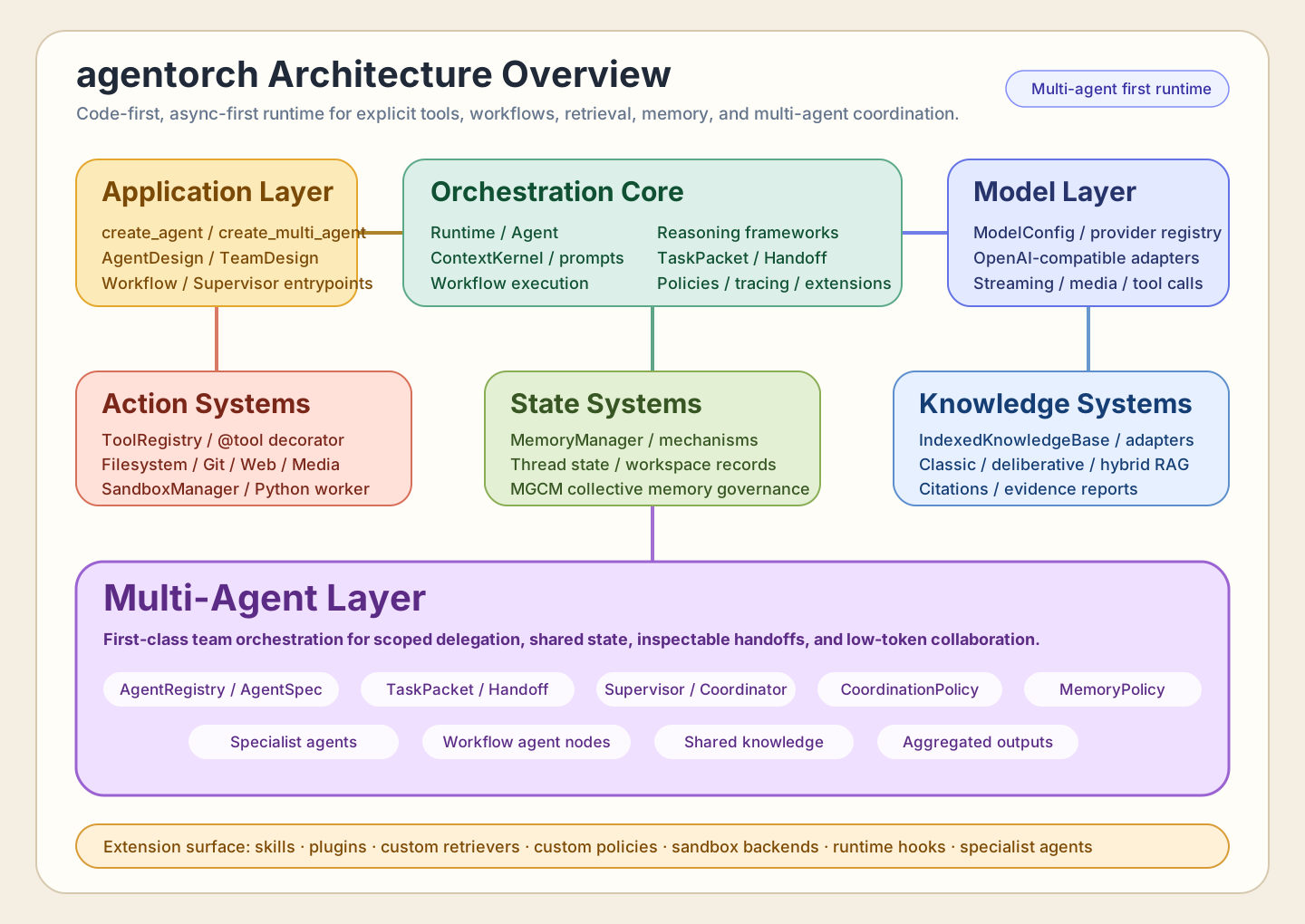
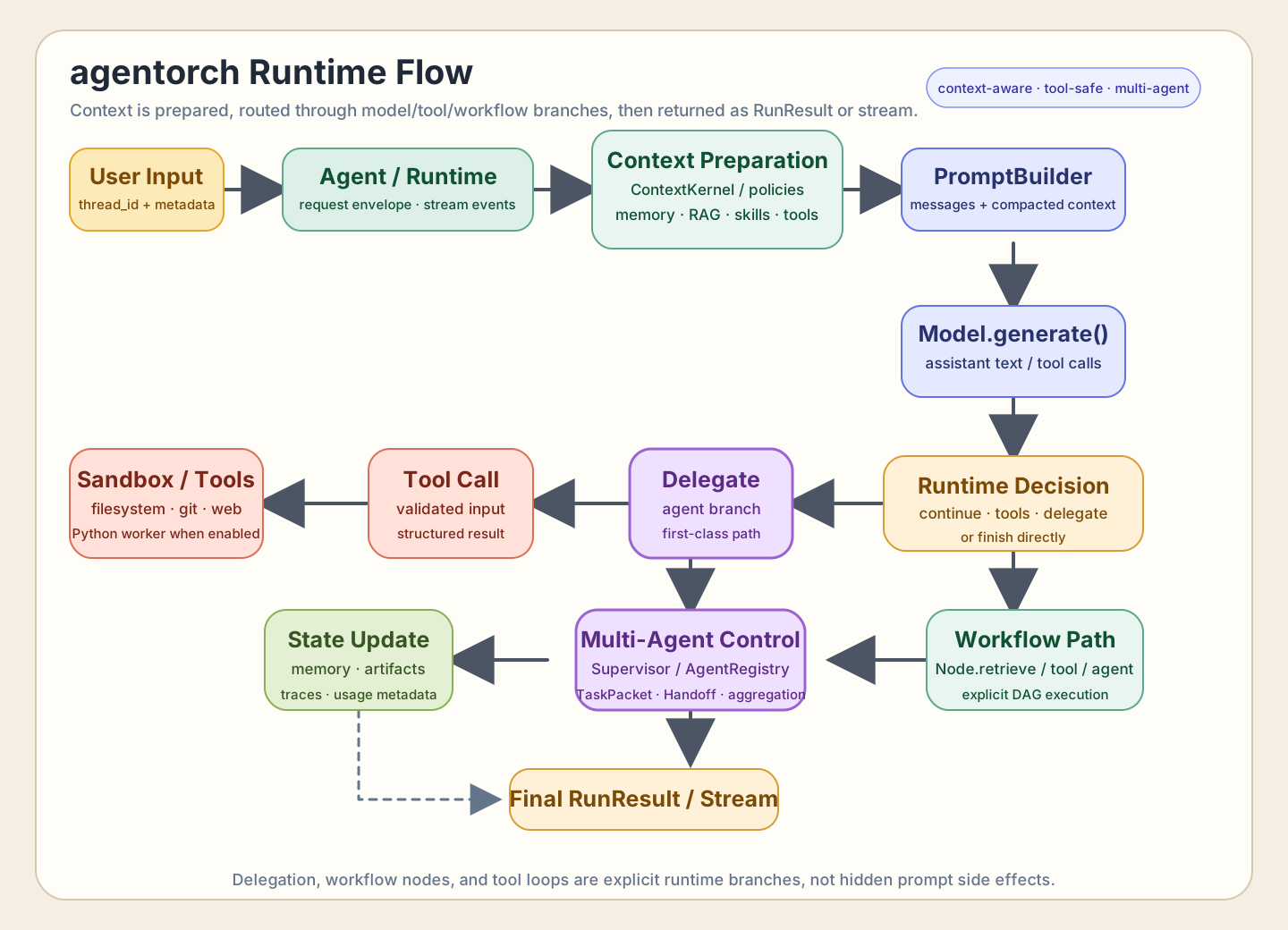
Source repository: https://github.com/Akun-python/agentorch
Many projects hit a wall after the "single assistant + one prompt" phase.
The moment you need specialist roles, constrained tools, repeatable state, and observable handoffs, ad-hoc prompt glue becomes difficult to reason about.
agentorch is designed to keep these concerns explicit:
- model adapter choices
- tool exposure and safety boundaries
- retrieval strategy and evidence mounting
- memory retention and promotion
- workflow execution order
- multi-agent coordination and delegation
- You can inspect system assembly with exported blueprint/config.
- You can enforce policy boundaries with typed configs.
- You can evolve behavior (reasoning/RAG/workflow) without rewriting everything.
- You can test behavior through code-level contracts.
- Swappable reasoning modes (
react,plan_execute, etc.) - Search/evolution support for strategy comparison
- Source-aware RAG flow and evidence-oriented outputs
- Long-horizon memory patterns for iterative tasks
- multi-agent coding assistants with bounded filesystem/shell access
- research copilots that must cite retrieved sources
- workflow-driven automation that needs deterministic node execution
- long-running assistants with thread/workspace memory
create_agent(...)create_multi_agent(...)
These are the recommended entrypoints for most users.
- model adapters (
OpenAIModel, compatible HTTP adapters) - tool registry and bundles
- sandbox manager and policy
- knowledge base and RAG strategy
- memory manager and memory policy
- workflow DAG builder and runner
- observability hooks and SQLite event store
- structured tool calling via Pydantic I/O
- filesystem / execution / git / web / media bundles
- multi-format ingestion (
md,txt,pdf,docx, code artifacts) - reasoning strategy selection
- human feedback and resumable flows
- extension hooks for lifecycle interception
In agentorch, orchestration is not a marketing word.
It means each runtime concern has a concrete type and place in assembly:
- coordinator policies decide routing behavior
- supervisor plans are inspectable objects
- handoffs and task packets are explicit records
- memory scopes and shared state are controlled by policy
- Python
3.10+ - minimal core dependencies
- stable high-level facade surface for day-to-day use
- compatibility exports for older integrations
Install from PyPI:
pip install masarchIf your package mirror has not synchronized the latest release yet, use the official PyPI index:
pip install -i https://pypi.org/simple --no-cache-dir masarchVerify the installed distribution and import package:
python -c "import importlib.metadata as m; import agentorch; print(m.version('masarch')); print(agentorch.__file__)"Query release versions:
pip index versions masarch -i https://pypi.org/simpleLocal editable install:
pip install -e .Direct install from GitHub:
pip install "git+https://github.com/Akun-python/agentorch.git"Optional extras example:
pip install "masarch[neo4j]"Local editable install with optional extras:
pip install -e ".[neo4j]"Set provider credentials through environment variables:
OPENAI_API_KEY=sk-xxxx
OPENAI_BASE_URL=https://api.openai.com/v1
OPENAI_EMBEDDING_MODEL=text-embedding-3-small
Local .env loading is opt-in.
- Start with
create_agent(...)and one minimal tool. - Add RAG only after baseline behavior is stable.
- Add workflow DAG only when execution order matters.
- Move to
create_multi_agent(...)when role separation is clear.
Run package tests:
py -3.10 -m pytest -qRun README contract tests:
py -3.10 -m pytest -q agentorch/tests/test_readme_contracts.py- keep tool allowlists narrow
- avoid enabling shell where not required
- keep thread IDs explicit for traceability
- close agents/runtimes after use
from agentorch import create_agent

agent = create_agent(
    model="gpt-4.1-mini",
    system_prompt="You are concise and accurate.",
    reasoning="react",
)

result = agent.run_sync(
    "Explain what agent orchestration is in three bullet points.",
    thread_id="quickstart-en-001",
)

print(result.output_text)
agent.close()from pydantic import BaseModel
from agentorch import ToolRegistry, create_agent, tool
class AddInput(BaseModel):
a: int
b: int
@tool(description="Add two integers.")
async def add_numbers(input: AddInput):
return {"sum": input.a + input.b}
agent = create_agent(
model="gpt-4.1-mini",
tools=ToolRegistry.from_tools(add_numbers),
reasoning="react",
)
result = agent.run_sync("Use add_numbers to compute 12 + 30.", thread_id="quickstart-tools-001")
print(result.output_text)
agent.close()from agentorch import create_agent, create_multi_agent
planner = create_agent(model="gpt-4.1-mini", reasoning="plan_execute", name="planner")
reviewer = create_agent(model="gpt-4.1-mini", reasoning="react", name="reviewer")
team = create_multi_agent(
model="gpt-4.1-mini",
agents=[
{"agent": planner, "name": "planner", "role": "planner"},
{"agent": reviewer, "name": "reviewer", "role": "reviewer"},
],
system_prompt="Coordinate specialists and return one final answer.",
)
result = team.run_sync("Draft and review a migration plan.", thread_id="quickstart-team-001")
print(result.output_text)
team.close()- Add RAG with
knowledge_pathsandenable_rag=True - Add workflow DAG when task steps need explicit control
- Add observability storage for trace and usage analysis
- Move policy objects into code for predictable behavior
Q: Should I start with multi-agent first?
A: Usually no. Start with one strong agent, then split roles when boundaries are clear.
Q: When should I enable workflow DAG?
A: When task order matters and you want deterministic step execution.
Q: When should I enable long-term memory?
A: When tasks span multiple threads/sessions and prior outputs must be reused.
Q: How do I keep tool execution safe?
A: Use sandbox policy, strict allowlists, and narrow workspace scopes.
TypeErroraround modern typing syntax usually means Python version is too low.- If
pythonpoints to an older interpreter, use explicit launcher command (py -3.10). - If output feels unstable, pin model version and keep thread IDs consistent.
- If delegation is noisy, reduce agent count and tighten role descriptions first.
- Main docs:
README.md(this file) - Simplified Chinese:
README.zh-CN.md - Examples folder:
examples/ - Package tests:
agentorch/tests/
For production usage, treat this README as a launch map and move critical settings into versioned config files.
MIT License.