You can follow the How to Run & Manual Testing sections to best test its functionality, or if you'd like to get a good understanding of the different trade offs and design choices I made, feel free to read on!
- Overview
- How to Run
- Demo
- Unit Tests
- Manual Testing
- State Machine
- Replication Model
- AI & Tools
- Known Limitations
- Resources
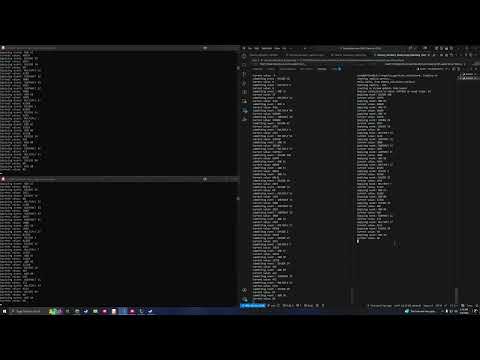
Leader calculator will generate random operations maintaing an in memory data set of Events. Multiple replicas consume a gRPC event stream and apply the same operations to stay in sync, like a shared document, but with math and eventual consistency.
# Assuming you are at the top level of project
docker compose up -dV --force-recreate --build

# Terminal 1
docker compose exec shared_calculator_leader bash
cd start_calculator
./leader.sh

# Terminal 2 (can add more terminals and create more replicas if you want!)
docker compose exec shared_calculator_replica bash
cd start_calculator
./replica.sh
Watch logs. All replicas should show the same Current value: X eventually.
I did write some unit tests for my public interfaces. After building, run:
cd build && ctest --output-on-failureAfter following instructions in How to Run, you can do any of the following to see how the shared calculator works.
Multi-replica convergence: Add replicas in separate terminals. They all converge within seconds.
Kill & restart a replica: It re-syncs from the leader and catches up.
Kill the leader: Replicas backoff and keep retrying. Restart the leader; on reconnection they detect the restart via index regression and sync to the new baseline.
Calculator with one int64_t value. Operations become immutable events with an index:
struct Event {
  string operation;  // "ADD", "SUBTRACT", "MULTIPLY", "DIVIDE", etc.
  int64_t argument;  // 1-100 (random)
  size_t eventIndex; // Index of event within leaders dataset
};
Leader will generate a random event every few milliseconds while the replicas subscribe to those events and correctly apply them, synchronizing with the leader.
Leader               gRPC Stream               Replicas
(owns state)                             (read-only copy)
    |                                             |
    +---------Event 1--------------------->     Replica 1
    |
    +---------Event 2--------------------->     Replica 2
    |
    +---------Event N---------------------->    Replica N
Leader: Owns state, generates events, pushes via gRPC.
Replica: Consumes stream, applies events, re-syncs if leader restarts or out of order detected.
gRPC Streaming: Originally I considered polling the leader repeatedly (replicas asking "do you have updates?"), but that creates a gap: if the leader dies right after a replica checks and then restarts, the replica sleeps waiting for its next polling interval and misses the new events. With streaming, the connection is always open and the leader pushes events the moment it generates them, so nothing gets missed. The continuous push is also more efficient than repeatedly asking "do you have anything for me?"
Separate Transport Layer: Keep business logic away from gRPC. Makes the leader easy to test independently and transport swappable.
Replica checks if (event.eventindex != d_lastIndexGotten) before applying. Mismatch triggers break and re-sync.
I used Copilot generally for gRPC (specifically protobuf build issues), boilerplate code for the Dockerfile and docker-compose.yaml, and the initial skeleton for this README.
I also use Copilot for making sweeping changes with the filesystem if it can hold enough context. For example I asked it to change application names all at once to match, and help me get the correct clang-format for my format.sh script.
Lastly Copilot also helped with considering good timeouts (like exponential backoff min/maxes) and what to test and not test in my unit tests.
- No persistence (leader crash = data loss)
- No overflow/underflow protection (int64_t wraps silently)
- No metrics/observability (stdout logs only)
- Single leader (no failover)