



Claude Desktop for Mac is Anthropic's official native macOS application for interacting with Claude — the AI assistant developed by Anthropic to be helpful, harmless, and honest. Where browser-based access to Claude requires maintaining a tab and working within a web interface, Claude Desktop runs as a first-class macOS application with a dedicated Dock presence, global keyboard shortcut access, native window management, and integration with macOS system features that the web version cannot provide.
The Model Context Protocol integration is Claude Desktop's most significant capability advantage over browser access. MCP allows Claude Desktop to connect to local and remote tool servers that extend Claude's capabilities beyond conversation into action — reading files from the Mac's file system, querying databases, interacting with local applications, fetching web content, executing code, and connecting to external services. MCP server configuration in Claude Desktop's settings panel defines which tool servers are available and active, enabling users to build custom capability stacks tailored to their specific workflows — a developer might connect file system, GitHub, and terminal execution servers while a researcher connects web search, citation management, and document processing servers.
Local file access through MCP file system integration allows Claude to read documents, code files, and data stored on the Mac directly — analyzing a PDF contract, reviewing a codebase, summarizing research papers, or processing CSV data — without requiring the user to copy and paste content into the conversation window. Claude can traverse directory structures, read multiple related files in sequence, and work with file contents in the context of understanding how they relate to each other. Project conversations organize related chats with persistent context — a project for a software development engagement keeps all related conversations, file references, and established context together rather than starting from scratch in each new chat session.
Global keyboard shortcut brings the Claude Desktop window to the foreground from any application with a configurable key combination, enabling instant access to Claude while working in other tools — asking a quick question while in a code editor, requesting a text rewrite while drafting an email, or getting a calculation verified while in a spreadsheet — without breaking flow by switching applications manually. Conversation history persists across sessions with full search capability, making it straightforward to locate and resume past conversations or reference answers provided in previous sessions.
- Model Context Protocol support connects Claude to local file systems databases code execution and external services through MCP servers
- Local file system access reads and analyzes documents code and data stored on the Mac without manual copy-paste
- MCP server configuration panel enables custom tool stacks tailored to individual developer researcher or professional workflows
- Global keyboard shortcut summons Claude Desktop from any application for instant access without manual app switching
- Project-based conversation organization groups related chats with persistent context for ongoing engagements and work streams
- Persistent conversation history with full-text search across all past sessions for locating previous answers and context
- Native macOS window management with Dock presence menu bar integration and support for Spaces and Mission Control
- Multiple Claude model access switches between Claude Opus Sonnet and Haiku depending on task complexity and speed requirements
- File and image attachment support analyzes documents images and data files dragged directly into the conversation window
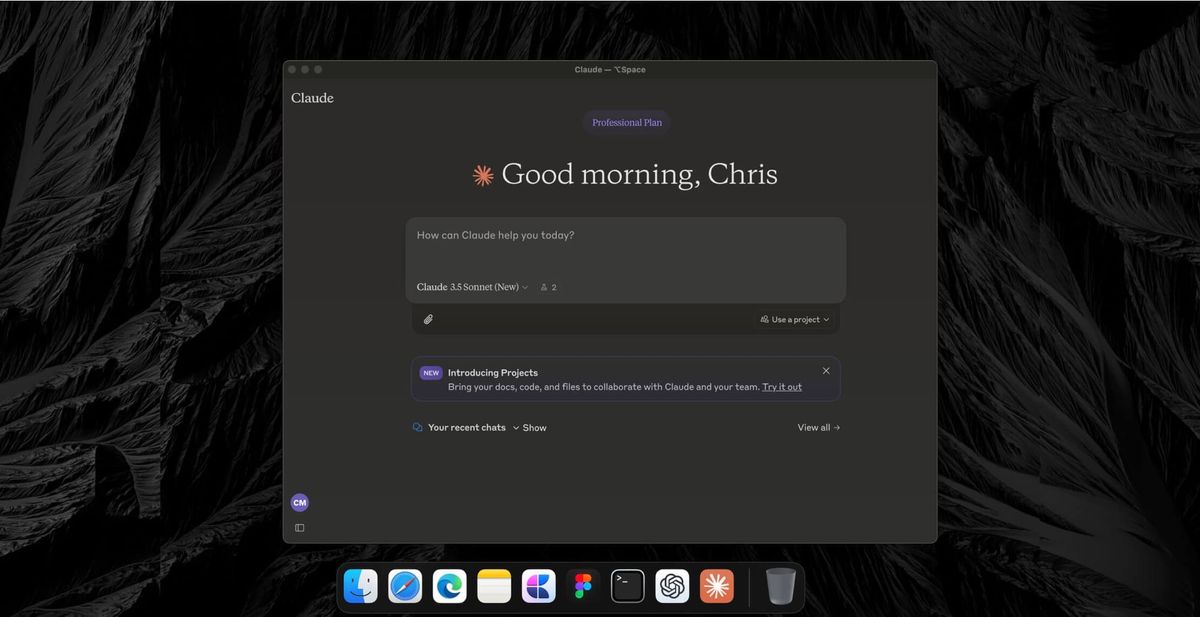
Claude Desktop receives updates from Anthropic that track new model releases and capability additions, ensuring Mac users have access to the latest Claude improvements without manual update management. The application uses Anthropic's standard API infrastructure, meaning conversations benefit from the same safety training, capability improvements, and model updates that all Claude users receive.
The native application experience provides stability and performance advantages over browser-based access — Claude Desktop loads instantly from the Dock, maintains its window state across macOS sessions, and does not compete with browser tab memory management or require an active browser window to function. For users who interact with Claude many times throughout a workday, the reduced friction of a dedicated desktop application compounds into meaningful time savings across hundreds of interactions.