Skip to content
Merged
Show file tree
Hide file tree
Changes from all commits
Commits
File filter

Filter by extension

Filter by extension

Conversations
Failed to load comments.
Loading
Jump to
Jump to file
Failed to load files.
Loading
Diff view
Diff view
8 changes: 5 additions & 3 deletions content/general/concepts/aaron-swartz/aaron-swartz.md
Original file line number Diff line number Diff line change
@@ -1,6 +1,6 @@
---
Title: 'Aaron Swartz'
Description: 'Aaron Swartz was an American programmer, writer, entrepreneur, and internet activist. He was involved in the development of the RSS web feed format, Markdown language, Creative Commons organization, and Python web framework web.py. Aaron Swartz was a co-founder of a startup called Infogami, which later became the social news site Reddit. He was given the title of a co-founder of Reddit by Paul Graham of Y Combinator. In 2008, Swartz published an essay called Guerilla Open Access Manifesto. In 2010, he co-founded an activist organization, Demand Progress, and led the charge fighting the Stop Online Piracy Act (SOPA). In 2011, Swartz was arrested by Massachusetts Institute of Technology (MIT) police on state breaking-and-entering charges.'
Description: 'Aaron Swartz was an American programmer, writer, entrepreneur, and internet activist involved in the development of the RSS web feed format, Markdown language, Creative Commons organization, and Python web framework web.py.'
Subjects:
- 'Computer Science'
- 'Code Foundations'
Expand All @@ -12,7 +12,9 @@ CatalogContent:
- 'paths/code-foundations'
---

Aaron Swartz (1986-2013) was an American programmer, writer, entrepreneur, and internet activist. He was involved in the development of the RSS web feed format, Markdown language, Creative Commons organization, and Python web framework web.py.
![Aaron Swartz](https://raw.githubusercontent.com/Codecademy/docs/main/media/aaron_swartz.png)

**Aaron Swartz** (1986-2013) was an American programmer, writer, entrepreneur, and internet activist. He was involved in the development of the RSS web feed format, [Markdown](https://www.codecademy.com/resources/docs/markdown) language, [Creative Commons licenses](https://creativecommons.org/), and Python web framework [web.py](https://webpy.org/).

He was a co-founder of a startup called Infogami, which later became the social news site Reddit. In his later years, he co-founded an activist organization, Demand Progress, and led the charge fighting the Stop Online Piracy Act (SOPA).

Copy link
Contributor

Choose a reason for hiding this comment

The reason will be displayed to describe this comment to others. Learn more.

while we're here can we fix line 29 (or 27 in the original)? I think it's supposed to say "mass download" not "massive download".

Expand All @@ -24,7 +26,7 @@ In 2008, Swartz published an essay called _Guerilla Open Access Manifesto_, whic

## United States v. Aaron Swartz

In 2011, Swartz was arrested by Massachusetts Institute of Technology (MIT) police on state breaking-and-entering charges, after connecting to the campus network in an unlocked closet, to massive download academic journal articles.
In 2011, Swartz was arrested by Massachusetts Institute of Technology (MIT) police on state breaking-and-entering charges, after connecting to the campus network in an unlocked closet, to mass download academic journal articles.

Federal prosecutors later charged him with wire fraud and violations of the Computer Fraud and Abuse Act, carrying a maximum penalty of $1 million in fines, 35 years in prison, asset forfeiture, and supervised release.

Expand Down
11 changes: 7 additions & 4 deletions content/general/concepts/ada-lovelace/ada-lovelace.md
Original file line number Diff line number Diff line change
@@ -1,20 +1,23 @@
---
Title: 'Ada Lovelace'
Description: 'Ada Lovelace was an English writer and mathematician and is often considered to be the first computer programmer. Lovelace is known for her work on Charles Babbages Analytical Engine, the first programmable general-purpose computer.'
Description: 'Ada Lovelace was an English writer and mathematician and is often considered to be the first computer programmer. Lovelace is known for her work on the first programmable general-purpose computer.'
Subjects:
- 'Computer Science'
- 'Code Foundations'
Copy link
Contributor

Choose a reason for hiding this comment

The reason will be displayed to describe this comment to others. Learn more.

While we're in here, I would fix the punctuation in the description on line 3. "Charles Babbages" should be "Charles Babbage's".

Copy link
Contributor Author

Choose a reason for hiding this comment

The reason will be displayed to describe this comment to others. Learn more.

Gotcha. I think I might have left that out to prevent a check fail but I think I can probably remove his name entirely from the Description 😄

Tags:
- 'Arithmetic'
- 'Numbers'
CatalogContent:
- 'paths/computer-science'
- 'paths/code-foundations'
---

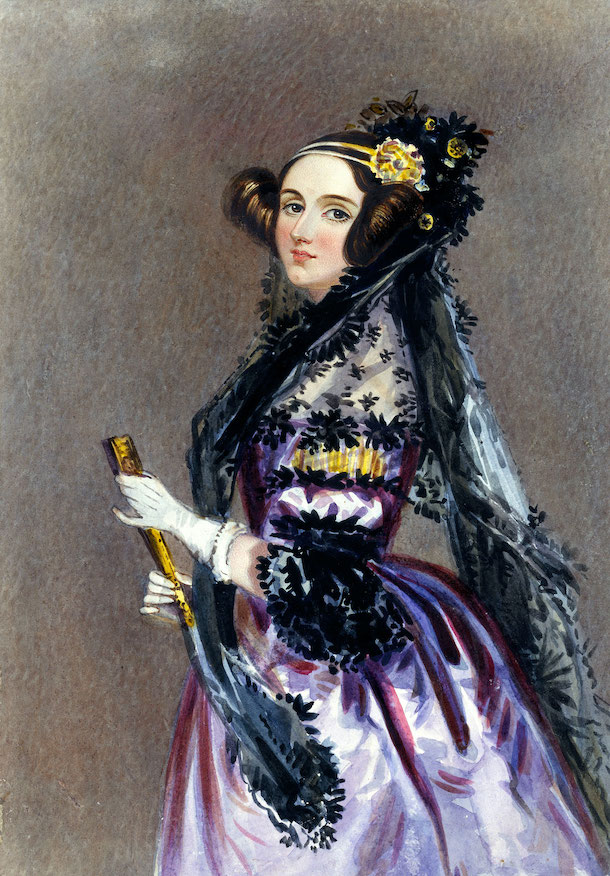
Ada Lovelace (1815-1852) was an English writer and mathematician and is often considered to be the first computer programmer.
![Ada Lovelace](https://raw.githubusercontent.com/Codecademy/docs/main/media/ada_lovelace.png)

Lovelace is known for her work on Charles Babbage's Analytical Engine, the first programmable general-purpose computer. This machine included many features that are still cornerstones of today's computers such as an arithmetic logic unit, control flows, and integrated memory.
**Ada Lovelace** (1815-1852) was an English writer and mathematician and is often considered to be the first computer programmer.

While this machine was revolutionary, the Analytical Engine's capabilities were misunderstood at the time. However, Ada Lovelace's excellent implementation for calculating Bernoulli numbers on the conceptual machine became the first published algorithm and aided in legitimizing the practically of such a device.
Lovelace is known for her work on Charles Babbage's [Analytical Engine](https://en.wikipedia.org/wiki/Analytical_Engine), the first programmable general-purpose computer. This machine included many features that are still cornerstones of today's computers such as an arithmetic logic unit, control flows, and integrated memory.

While this machine was revolutionary, the Analytical Engine's capabilities were misunderstood at the time. However, Ada Lovelace's excellent implementation for calculating Bernoulli numbers on the conceptual machine became the first published algorithm and aided in legitimizing the practicality of such a device.

**Fun fact:** One of the main conference rooms at Codecademy's old office was named after Ada Lovelace.
6 changes: 4 additions & 2 deletions content/general/concepts/alan-turing/alan-turing.md
Original file line number Diff line number Diff line change
@@ -1,6 +1,6 @@
---
Title: 'Alan Turing'
Description: 'Alan Turing (1912-1954) was an English mathematician and computer scientist best known for his work on algorithms, computation, and creating the foundations of theoretical computer science through the development of the Turing machine. Shortly after becoming a Fellow at Kings College in Cambridge, Turing published a paper describing the Turing machine, an abstract machine that can simulate any algorithms logic. Turing used this to prove that it is not possible to create an algorithm to determine if a program will ever stop running. During the Second World War, Alan Turing was a key component in breaking the Enigma cipher encrypting all of Nazi Germanys secret communication. Turings work is considered fundamental to deciding the outcome of the war with the information the code-breaking provided. In 1950, Turing published a paper in Mind called "Computing Machinery and Intelligence". It is a seminal paper on the topic of artificial intelligence (AI). The paper was the first to introduce his concept of what is now known as the Turing test (originally called imitation game) to the general public. > I propose to consider the question, "Can machines think?" - Alan Turing, 1950 The paper questioned whether or not a computer is capable of thinking like a human being. Turing proposed that a computer can be said to possess artificial intelligence if it can mimic human responses under specific conditions. Fun fact: Our main conference room was named after Alan Turing at Codecademys old office.'
Description: 'Alan Turing was an English mathematician and computer scientist best known for his work on algorithms, computation, and creating the foundations of theoretical computer science through the development of the Turing machine.'
Subjects:
- 'Computer Science'
- 'Code Foundations'
Expand All @@ -11,7 +11,9 @@ CatalogContent:
- 'paths/code-foundations'
---

Alan Turing (1912-1954) was an English mathematician and computer scientist best known for his work on algorithms, computation, and creating the foundations of theoretical computer science through the development of the Turing machine.
![Alan Turing](https://raw.githubusercontent.com/Codecademy/docs/main/media/alan_turing.png)

**Alan Turing** (1912-1954) was an English mathematician and computer scientist best known for his work on algorithms, computation, and creating the foundations of theoretical computer science through the development of the Turing machine.

Shortly after becoming a Fellow at King's College in Cambridge, Turing published a paper describing the Turing machine, an abstract machine that can simulate any algorithm's logic. Turing used this to prove that it is not possible to create an algorithm to determine if a program will ever stop running.

Expand Down
Original file line number Diff line number Diff line change
@@ -1,6 +1,6 @@
---
Title: 'Bjarne Stroustrup'
Description: 'Bjarne Stroustrup is a Danish computer scientist and principle designer of C++, an extension of the C programming language. Stroustrup has authored several computer programming books focused on C++, including The C++ Programming Language, and is currently a Visiting Professor in Computer Science at Columbia University. As the principle designer of C++, Bjarne Stroustrups goal was to add object-oriented programming into C, a language well-respected for its portability and low-level functionality, and to do so efficiently. Stroustrups continued work in maintaining C++ is associated with improvements in performance and efficiency for a great number of applications including AI/ML, RDBMS, video games, financial systems, and graphics. Dr. Stroustrup played a key role in the development of Codecademys Learn C++ course. Heres an insightful interview called Talking C++ that took part in the last segment of the production.'
Description: 'Bjarne Stroustrup is a Danish computer scientist and principle designer of C++, an extension of the C programming language.'
Subjects:
- 'Computer Science'
- 'Code Foundations'
Expand All @@ -12,7 +12,9 @@ CatalogContent:
- 'paths/computer-science'
---

[Bjarne Stroustrup](https://www.stroustrup.com) is a Danish computer scientist and principle designer of C++, an extension of the C programming language.
![Bjarne Stroustrup](https://raw.githubusercontent.com/Codecademy/docs/main/media/bjarne_stroustrup.png)

[**Bjarne Stroustrup**](https://www.stroustrup.com) (1950 - ) is a Danish computer scientist and principle designer of [C++](https://www.codecademy.com/resources/docs/cpp), an extension of the [C](https://www.codecademy.com/resources/docs/c) programming language.

Stroustrup has authored several computer programming books focused on C++, including _The C++ Programming Language_, and is currently a Visiting Professor in Computer Science at Columbia University.

Expand Down
12 changes: 8 additions & 4 deletions content/general/concepts/dennis-ritchie/dennis-ritchie.md
Original file line number Diff line number Diff line change
@@ -1,6 +1,6 @@
---
Title: 'Dennis Ritchie'
Description: 'Dennis Ritchie was an American computer scientist, the creator of the computer programming language C, and co-creator of the Unix operating system. Ritchie, along with Ken Thompson and others at Bell Laboratories, began working on Unix in 1967 as a replacement operating system for the Digital Equipment Corporations PDP-7 mini computer. Within this same time, Ken Thompson also developed the B computer programming language with Ritchies contribution, and in 1971, Ritchie began developing C as an extension of B. Today, C is one of the most commonly used languages for embedded and operating system development, such as macOS and Android. There have been several languages developed as extensions of C including C#, C++, and Java.'
Description: 'Dennis Ritchie was an American computer scientist, the creator of the computer programming language C, and co-creator of the Unix operating system.'
Subjects:
- 'Computer Science'
- 'Code Foundations'
Expand All @@ -11,10 +11,14 @@ CatalogContent:
- 'paths/code-foundations'
---

Dennis Ritchie was an American computer scientist, the creator of the computer programming language C, and co-creator of the Unix operating system.
![Dennis Ritchie, image: Wikimedia Commons](https://raw.githubusercontent.com/Codecademy/docs/main/media/dennis_ritchie.png)

Ritchie, along with Ken Thompson and others at Bell Laboratories, began working on Unix in 1967 as a replacement operating system for the Digital Equipment Corporation's PDP-7 mini computer.
Image by Wikimedia Commons

**Dennis Ritchie** (1941 - 2011) was an American computer scientist, the creator of the computer programming language [C](https://www.codecademy.com/resources/docs/c), and co-creator of the Unix operating system.

Ritchie, along with [Ken Thompson](https://www.codecademy.com/resources/docs/general/ken-thompson) and others at Bell Laboratories, began working on Unix in 1967 as a replacement operating system for the Digital Equipment Corporation's PDP-7 mini computer.

Within this same time, Ken Thompson also developed the B computer programming language with Ritchie's contribution, and in 1971, Ritchie began developing C as an extension of B.

Today, C is one of the most commonly used languages for embedded and operating system development, such as macOS and Android. There have been several languages developed as extensions of C including C#, C++, and Java.
Today, C is one of the most commonly used languages for embedded and operating system development, such as macOS and Android. There have been several languages developed as extensions of C including C#, [C++](https://www.codecademy.com/resources/docs/cpp), and [Java](https://www.codecademy.com/resources/docs/java).
16 changes: 13 additions & 3 deletions content/general/concepts/grace-hopper/grace-hopper.md
Original file line number Diff line number Diff line change
@@ -1,6 +1,6 @@
---
Title: 'Grace Hopper'
Description: 'Grace Hopper was an American computer scientist who led a decorated career in the United States Navy, becoming one of the first female rear admirals in U.S. history. Grace Hopper began her career in service in the United States Navy Reserve, and was assigned to work on the Bureau of Ships Computation Project at Harvard in 1944. There she served on the computer programming staff that developed the Automatic Sequence Controlled Calculator (ASCC) also known as Mark I used in the war effort during the last part of World War II. Hopper went on to contribute to the development of the UNIVAC I (UNIVersal Automatic Computer I), the first computer designed for general business application in the U.S. at Eckert-Mauchly Computer Corporation. Hopper is also recognized as the originator of the theory of machine-independent programming languages with her first paper on compilers, in 1952. With the notion that code should be able to be written in English, Hopper as the director of automatic programming and her team developed FLOW-MATIC & MATH-MATIC. Hopper then served as the technical consultant to the Conference on Data Systems Languages (CODASYL) committee that developed COmmon Business-Oriented Language (COBOL) in 1959. The Grace Hopper Celebration of Women in Computing Conference was designed in honor of Hoppers legacy in the field of computer science to facilitate more opportunities for women in the field. Fun fact: The cafeteria room was named after Grace Hopper in Codecademys old office.'
Description: 'Grace Hopper was an American computer scientist who led a decorated career in the United States Navy, becoming one of the first female rear admirals in U.S. history.'
Subjects:
- 'Computer Science'
- 'Developer Tools'
Expand All @@ -11,15 +11,25 @@ CatalogContent:
- 'paths/code-foundations'
---

Grace Hopper was an American computer scientist who led a decorated career in the United States Navy, becoming one of the first female rear admirals in U.S. history.
![Grace Hopper](https://raw.githubusercontent.com/Codecademy/docs/main/media/grace_hopper.png)

**Grace Hopper** (1906 - 1992) was an American computer scientist who led a decorated career in the United States Navy, becoming one of the first female rear admirals in U.S. history.

## Military Service

Grace Hopper began her career in service in the United States Navy Reserve, and was assigned to work on the Bureau of Ships Computation Project at Harvard in 1944. There she served on the computer programming staff that developed the Automatic Sequence Controlled Calculator (ASCC) also known as Mark I used in the war effort during the last part of World War II.

## Contributions

While the actual phrase wasn't coined by her, Grace Hopper and her team notably discovered an actual bug, a moth, stuck inside the computer and impacting its performance. They later documented this to be the "[f]irst actual case of a bug being found":

![Bug found by Grace Hopper and her team.](https://raw.githubusercontent.com/Codecademy/docs/main/media/grace_hopper_bug.png)

Hopper went on to contribute to the development of the UNIVAC I (UNIVersal Automatic Computer I), the first computer designed for general business application in the U.S. at Eckert-Mauchly Computer Corporation.

Hopper is also recognized as the originator of the theory of machine-independent programming languages with her first paper on compilers, in 1952. With the notion that code should be able to be written in English, Hopper as the director of automatic programming and her team developed FLOW-MATIC & MATH-MATIC.

Hopper then served as the technical consultant to the Conference on Data Systems Languages (CODASYL) committee that developed COmmon Business-Oriented Language (COBOL) in 1959.
Hopper then served as the technical consultant to the Conference on Data Systems Languages (CODASYL) committee that developed Common Business-Oriented Language (COBOL) in 1959.

The Grace Hopper Celebration of Women in Computing Conference was designed in honor of Hopper's legacy in the field of computer science to facilitate more opportunities for women in the field.

Expand Down
Loading