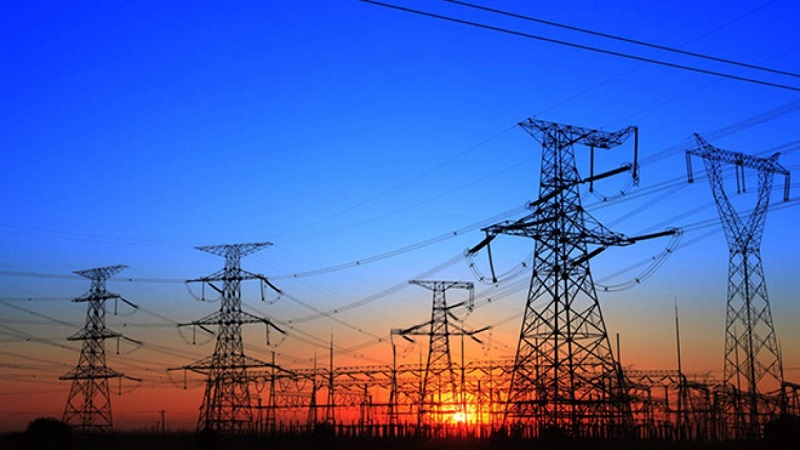
Electrical grids require a balance between electricity supply and demand in order to be stable. Conventional systems achieve this balance through demand-driven electricity production. For future grids with a high share of inflexible (i.e., renewable) energy sources, the concept of demand response is a promising solution. This implies changes in electricity consumption in relation to electricity price changes. In this work, we’ll build a binary classification model to predict if a grid is stable or unstable using the UCI Electrical Grid Stability Simulated dataset.
Dataset source: https://archive.ics.uci.edu/ml/datasets/Electrical+Grid+Stability+Simulated+Data+
It has 12 primary predictive features and two dependent variables.
- 'tau1' to 'tau4': the reaction time of each network participant, a real value within the range 0.5 to 10 ('tau1' corresponds to the supplier node, 'tau2' to 'tau4' to the consumer nodes);
- 'p1' to 'p4': nominal power produced (positive) or consumed (negative) by each network participant, a real value within the range -2.0 to -0.5 for consumers ('p2' to 'p4'). As the total power consumed equals the total power generated, p1 (supplier node) = - (p2 + p3 + p4);
- 'g1' to 'g4': price elasticity coefficient for each network participant, a real value within the range 0.05 to 1.00 ('g1' corresponds to the supplier node, 'g2' to 'g4' to the consumer nodes; 'g' stands for 'gamma');
- 'stab': the maximum real part of the characteristic differential equation root (if positive, the system is linearly unstable; if negative, linearly stable);
- 'stabf': a categorical (binary) label ('stable' or 'unstable').# Grid-Stability-Classification