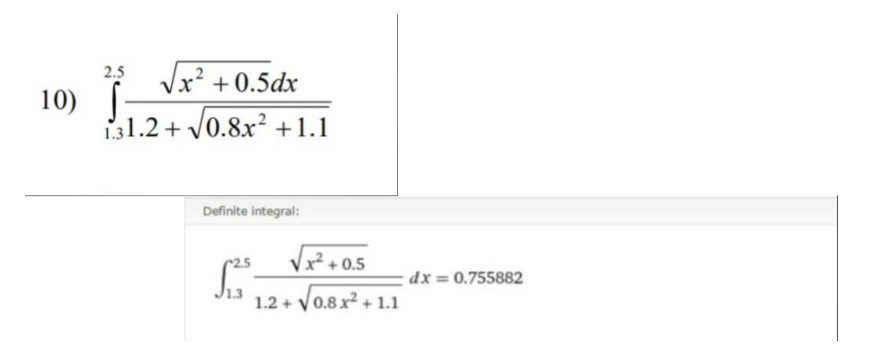
PD_11_10 - the first program for NUMERICAL INTEGRATION (methods Simpson, rectangle method, trapezoidal method)
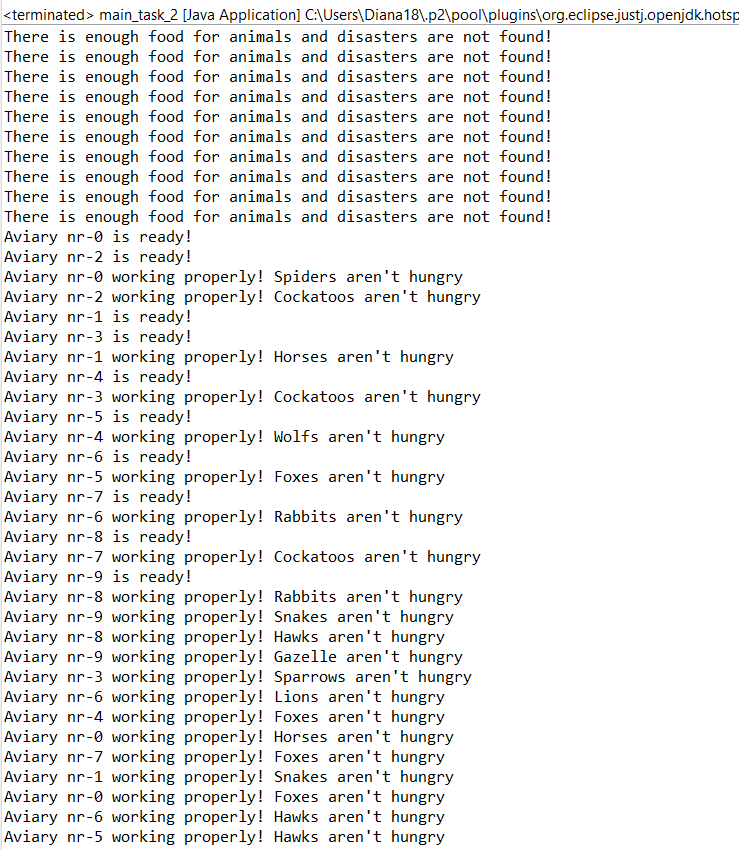
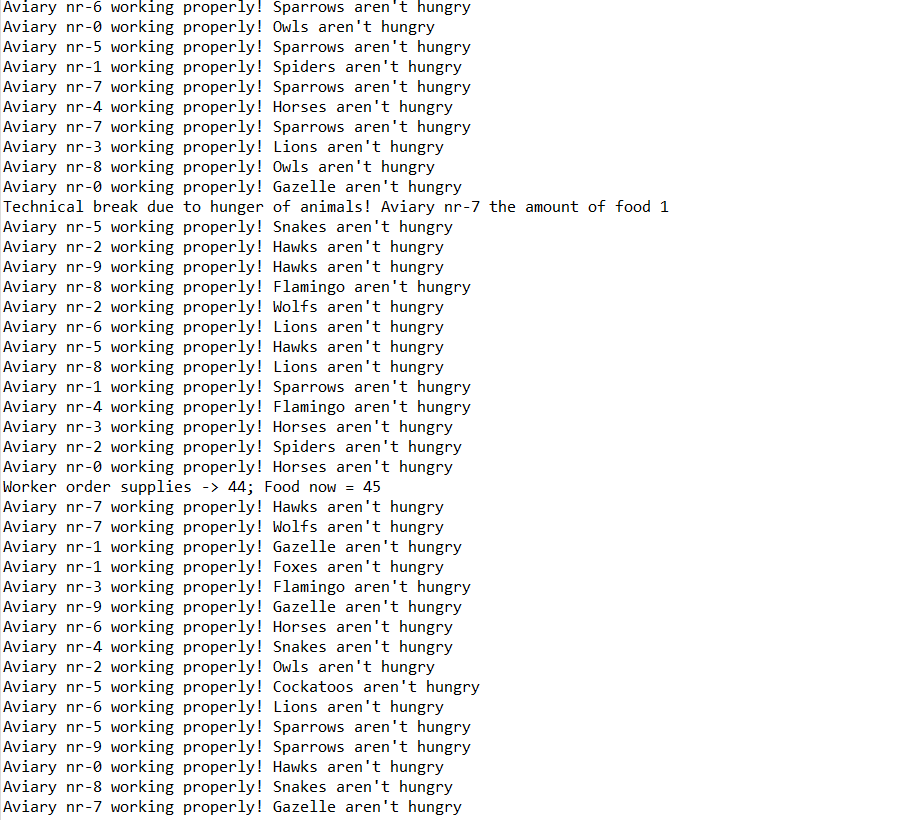
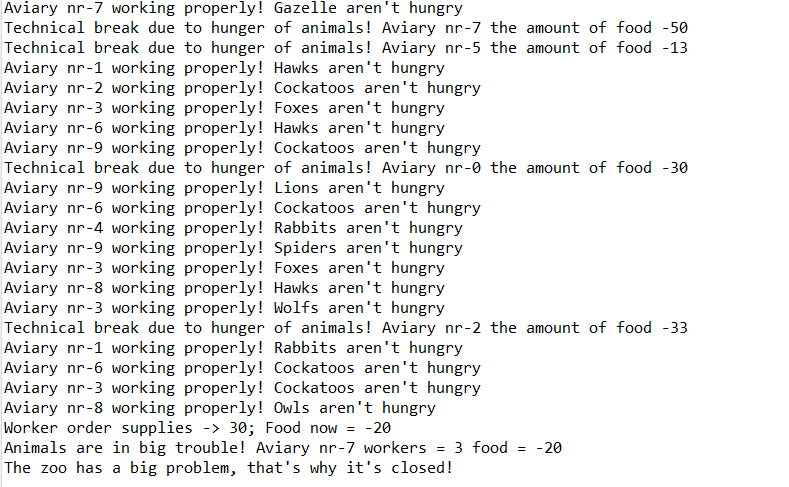
PD_22_10 - the second program about Zoo ( real world simulation system )
I made three classes for each method to represent the area of one figure as a thread.
First one: M_prostokatow - consists in dividing the integration interval into rectangles and calculating the area of these rectangles.
The accuracy of calculations in all methods depends on the number of these divisions, i.e. rectangles.\
  	private float a; // beginning of the integration interval
	private float dx; // the length of one interval, i.e. the rectangle after the division

	private double w_calka; // integral value
private int i; // the iteration number, i.e. the thread or rectangleMethod start() = run()
If you add join() here, threads in the result will not go in random order.
public M_prostokatow(double w_calka, int i, float a, float dx){
	this.a = a;
	this.dx = dx;
	this.w_calka = w_calka;
	this.i = i;
	start();
}Count the areas of successive rectangles.
mojPrzyklad.funkcja1() - a static function with an example integral.
Writing to the console the value of the next thread = rectangle.
In a static variable -> wynik_prostokaty from the main class we sum the result.
public void run() {
	w_calka = mojPrzyklad.exampleTen(a+i*dx);
	System.out.println("M_Prostakat nr-" + i + " ma wartosc calki = " + w_calka);
	main_task_1.wynik_prostokaty += w_calka;
}// parametrs
float xp = (float) 1.3;
float xk = (float) 2.5;
int n = 4;
float dx = (xk - xp)/n;
// main loop - creating threads
for(int i = 1; i <= n; i++) {
new M_prostokatow(wynik_prostokaty, i, xp, dx);
}
// write the result to the console
wynik_prostokaty *= dx;
System.out.println("---------------Wyniki---------------");
System.out.println("Metoda prostokatow: Pole --> " + wynik_prostokaty);By analogy with rectangle method, but with a some difference.
- Another formula for calculating the trapezoidal area = thread
public void run() {
	if(i == 0 || i == n) {
		w_calka = mojPrzyklad.exampleTen(a+i*dx)/2;
	} else {
		w_calka = mojPrzyklad.exampleTen(a+i*dx);
	}
...- Main loop starts with 0
for(int i = 0; i <= n; i++) {
	new M_trapezow(wynik_trapezy, i, xp, dx, n);
}

wynik_trapezy *= dx;
System.out.println("Metoda trapezow: Pole --> " + wynik_trapezy);By analogy with previous methods, but with some difference.\
- Difference in the field calculation - depending on the parity of the iteration number
public void run() {
	if(i == 0 || i == n) {
		w_calka = mojPrzyklad.exampleTen(a+i*dx);
	} else if(i%2 == 0) {
		w_calka = 2*mojPrzyklad.exampleTen(a+i*dx);
	} else {
		w_calka = 4*mojPrzyklad.exampleTen(a+i*dx);
	}
... wynik_simpsona *= (dx_simpson/3);
System.out.println("Metoda Simpsona: Pole --> " + wynik_simpsona);- Without join()

- With join()
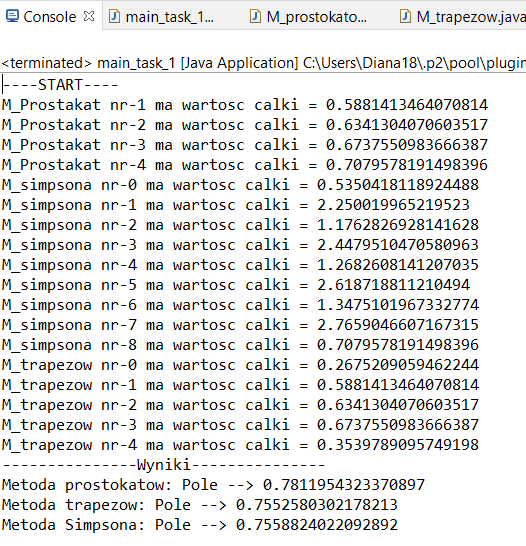
The best method of calculating the integral - method Simpsona.
Method analysis :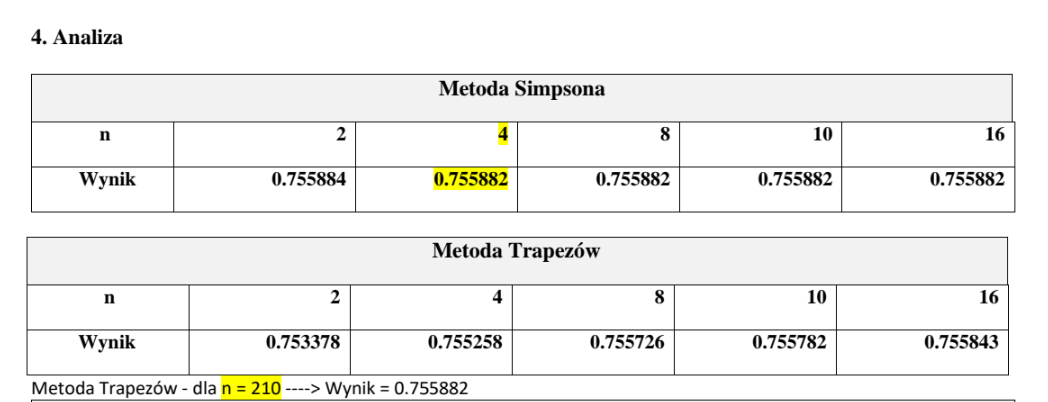
Zoo with aviaries with various animals.
They may or may not be hungry.
People work in these aviaries, that is, they watch the animals.
If there is not enough food, the worker can order supplies.
If the animals are very hungry and there are not enough supplies ordered, it could be a disaster, so the zoo is closed.