[Publish] Can We Trust AI to Grow Our Food? From Labs to Leaves #28

Description

Post title
Can We Trust AI to Grow Our Food? From Labs to Leaves
Category
AgTech
Summary
AI is already reshaping agriculture, but it must be trustworthy—built on FAIR data, validated workflows, and transparent models regulators can review. It highlights real uses from herbicide discovery to residue and soil-carbon prediction, supporting safe human–AI decisions.
Body HTML
Can We Trust AI to Grow Our Food? From Labs to Leaves
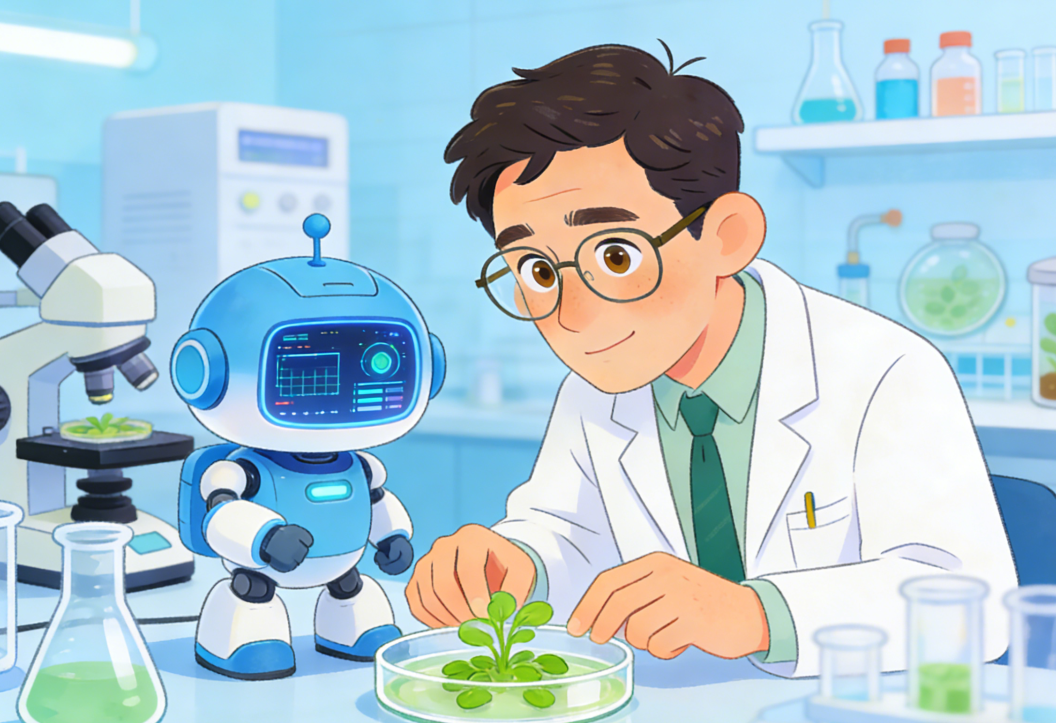
Artificial Intelligence (AI) and Machine Learning (ML) are no longer just for tech companies—they’re already being used in fields and labs to help farmers predict crop outcomes, manage pesticide residues, map soil health, and discover safer crop-protection solutions. In simple terms, AI is the broader “smart decision system” that can combine rules, expert knowledge, sensors, and automation to recommend or take actions, while ML is a core subset of AI that learns patterns from data—like satellite images, weather history, soil tests, or residue datasets—to make predictions. In agriculture, ML often powers the prediction piece, and AI is the full workflow around it: data collection, model selection, explanation, and decision support for farmers and regulators. But speed isn’t the real finish line. The bigger question is: how do we know we can trust these tools, especially when results may influence public safety and regulatory decisions?
A paper in the Journal of Agricultural and Food Chemistry argues that agricultural AI must be built on a foundation of trust and validation to be truly useful—and accepted by regulators. In practice, that trust comes from three connected pillars.
Better data, not just more data
Reliable AI starts with a smart data strategy. It isn’t enough to collect information; it must be cleaned, organized, and shared using “FAIR” principles—Findable, Accessible, Interoperable, and Reusable. In agriculture, this can include satellite imagery, soil measurements, and lab results. When the data is high-quality and standardized, AI predictions become more accurate and easier to verify. This is also what makes large-area modeling possible, such as using satellite signals combined with ground measurements to map soil carbon capacity and understand how much carbon land can hold.
Speeding up discovery
AI is helping researchers explore solutions faster when experiments are expensive or data is limited. For example, deep learning is being used to propose new herbicide candidates for broadleaf weeds in corn and soy, even when researchers start with relatively small datasets. AI is also supporting the design of “cell-penetrating peptides,” which work like tiny delivery vehicles that can move nutrients or treatments into plant cells. Other AI-assisted design approaches are being explored for targeted pest-control concepts, aiming to steer biological systems toward very specific outcomes rather than relying on broad, less selective chemicals.
Playing by the rules
For AI to be used in official decisions, it must align with expectations from regulators like the U.S. EPA and EFSA. That means models can’t be black boxes; they need to be transparent, explainable, and reproducible so reviewers can see how conclusions were reached. This is especially important in pesticide safety work, where AI models are being developed to estimate residue levels in crops (supporting safer label instructions) and to predict residues on leaves—insights that can help determine when it’s safe for workers to re-enter a treated field. In lab settings, AI can also review analytical methods used to measure pesticides and produce conclusions close to human expert panels, helping speed up safety checks when the workflow is auditable.
Why this matters
The future of agriculture will likely be a partnership between human expertise and AI tools. If we want AI that is not only fast but also safe and regulator-ready, it must be built with strong data practices, validated methods, and clear explanations.
Reference:
ACS Publications — Journal of Agricultural and Food Chemistry article (DOI: 10.1021/acs.jafc.5c16871). https://pubs.acs.org/doi/10.1021/acs.jafc.5c16871