Related Projects LoginFix
LoginFix is a community plugin that fixes the Canva sign-in flow crashing under Wine. It is a plugin for AffinityPluginLoader (APL), but it is not an official APL or WineFix plugin, it is community-made. It was tested on Wine 11.15, on both a stock distro build and a custom-patched local build. Both worked the same way, no custom Wine build is required.
Source: Guides/Wine/LoginFix in this repository.
Before this fix, clicking "Log in or sign up" and completing the Canva OAuth flow in your browser would crash Affinity. Sometimes the crash happened the moment you clicked "Open Affinity" in the browser, sometimes it happened right when clicking "Log in or sign up" itself.
A full managed stack trace and WINEDEBUG tracing traced the crash to this chain:
-
Serif.Affinity.Application.ProcessCommandLineArgumentshas one branch, only reached for an unrelatedaffinity-open-file:argument, that callsWindows.ApplicationModel.DataTransfer.SharedStorageAccessManager.RedeemTokenForFileAsync. - Wine has no WinRT implementation of that type.
- The .NET CLR resolves every type referenced anywhere in a method's body when it JITs that method, not just the branch that actually runs. So simply calling
ProcessCommandLineArgumentsthrows aSystem.TypeLoadException, regardless of which arguments were passed.
This matters because the Canva sign-in callback goes through this exact method: the second Affinity.exe instance the OS launches for the callback URL forwards its arguments to the already-running instance over a named pipe, and that named-pipe handler lands in ProcessCommandLineArguments. So login always crashed.
Harmony (the patching library APL plugins use) cannot patch ProcessCommandLineArguments directly either. Patching a method, even with a plain prefix, requires Harmony to decompile its IL, which means resolving every operand in the method body, including the poisoned SharedStorageAccessManager call. A patch on that method throws the same TypeLoadException, which Harmony's own retry-and-defer logic keeps swallowing forever.
LoginFix instead patches ProcessCommandLineArguments's two callers:
-
ProcessArguments(), used for the app's own startup command line -
SingleInstanceThread(), the named-pipe listener that receives the sign-in callback from the second launched instance
Neither caller references the poisoned type directly, only by method signature, which Harmony can resolve without a problem. Both are fully replaced with a safe reimplementation that never calls the real ProcessCommandLineArguments. The only thing dropped is the unrelated affinity-open-file: handling, which needs SharedStorageAccessManager and cannot work under Wine regardless.
Requires the .NET SDK (targets net48).
- Install AffinityPluginLoader and WineFix first, if you have not already.
- Copy
AffinityPluginLoader.dllfrom your Affinity install directory into theLoginFixproject folder (next toLoginFix.csproj). - Run
dotnet build -c Release. - Copy the built
bin/Release/net48/win-x64/LoginFix.dllintoapl/plugins/, alongsideWineFix.dll. - Relaunch Affinity through
Affinity.exe(which is theAffinityHooklauncher once APL is installed).
No Wine-side changes are needed. LoginFix works entirely inside Affinity's own process, so it works on your distro's stock Wine package.
-
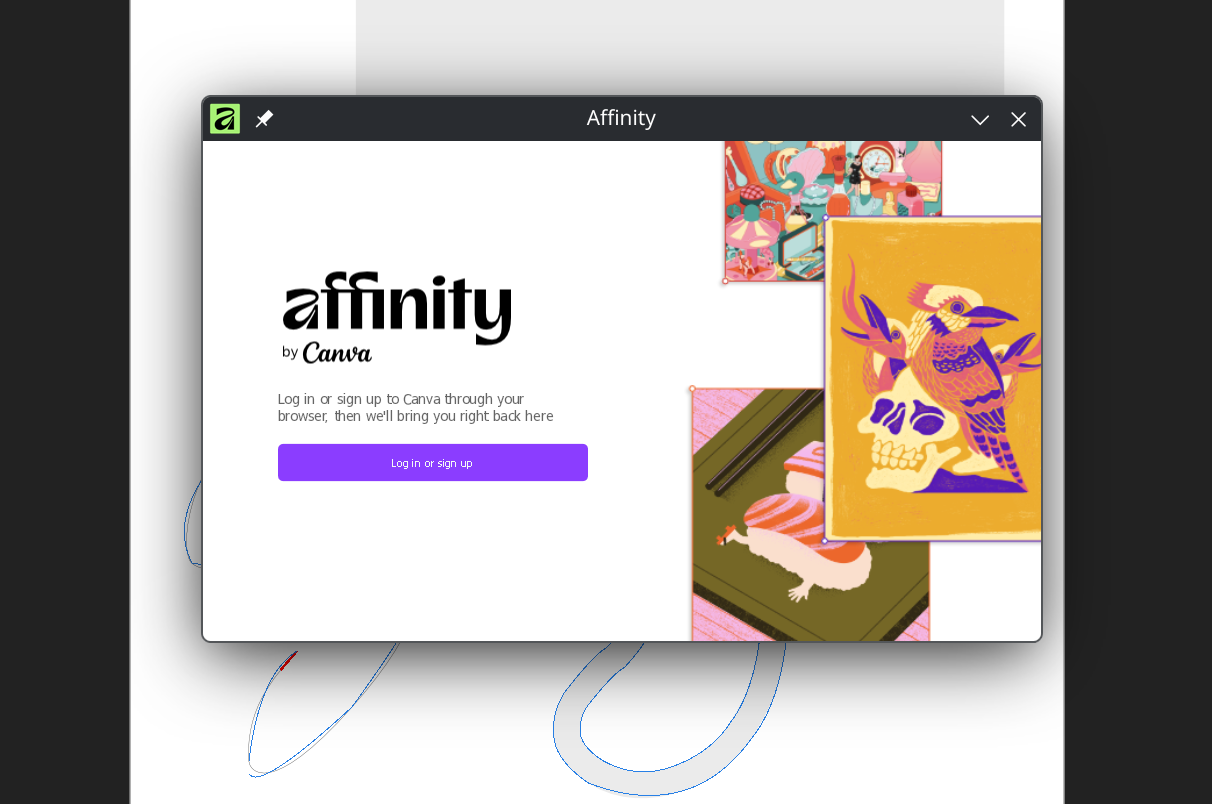
Click Log in or sign up in Affinity. Your browser opens to complete the Canva sign-in.
-
After signing in, the browser hands the callback back to Affinity through the
affinity://protocol. Your desktop may ask to confirm opening the app.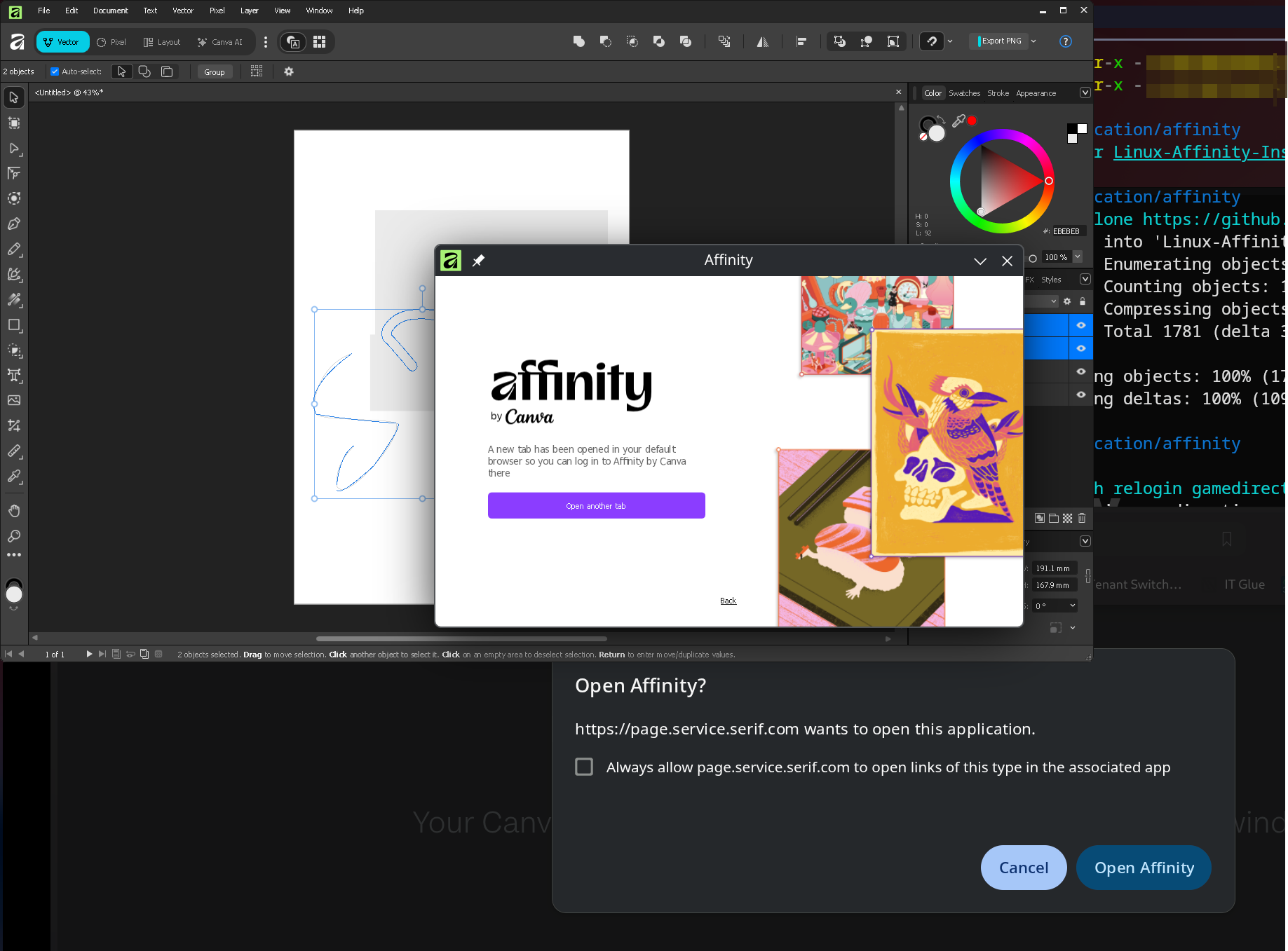
-
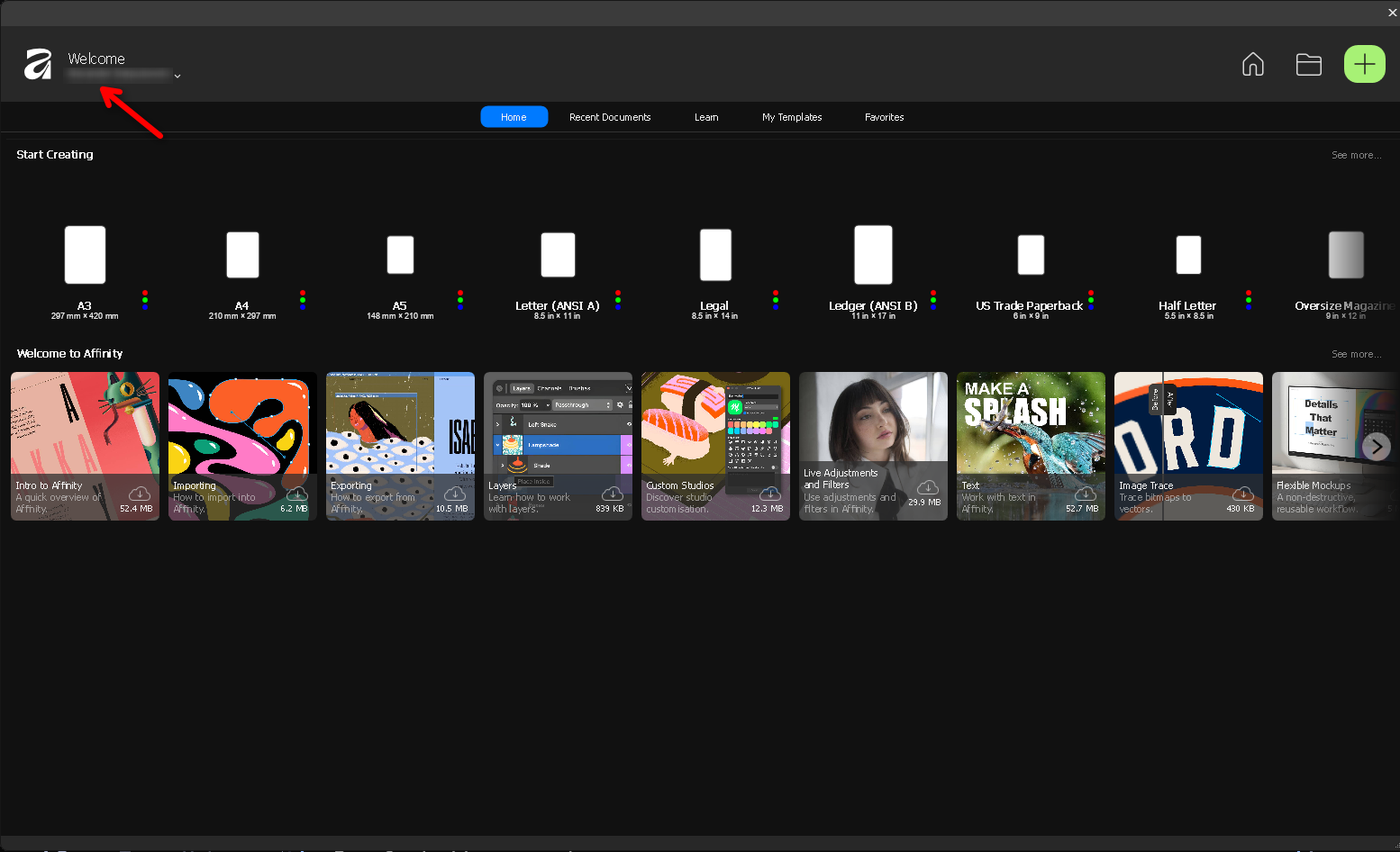
With LoginFix installed, this completes instead of crashing, and you land back in Affinity signed in.
Confirm the plugin actually loaded: check apl/logs/apl.latest.log (set file_logging = true in apl/config/apl.toml first if the log file doesn't exist yet) for LoginFix entries. If it's not there, re-check the build and install steps, especially that LoginFix.dll landed in apl/plugins/ alongside WineFix.dll.
If the browser-to-Affinity handoff itself isn't completing (not a LoginFix problem, but the OS-level affinity:// protocol handoff never reaching Wine at all, for example on a fresh prefix without a protocol handler registered yet), you can hand the callback to Wine directly instead of relying on that handoff.
inject-login.sh does this safely: it reads the callback URL with read -s so it's never echoed to the terminal, written to disk, or left in shell history.
-
Sign in through the browser as normal, up to the point where it's about to open Affinity.
-
Copy the
affinity://callback URL from the browser's address bar (or via "copy link" on the "Open Affinity?" confirmation page), instead of letting the OS open it automatically. -
Run the script, pointing it at the same Wine prefix and Wine binary your install uses:
WINEPREFIX="$HOME/.affinity" WINE_BIN="wine" bash Guides/Wine/LoginFix/inject-login.sh
-
Paste the URL when prompted, and press Enter. The script hands it to Wine with
wine start <url>, the same mechanism the OS-level protocol handler would normally use.
This is a diagnostic fallback, not a replacement for LoginFix. With LoginFix installed and a working protocol handler, sign-in completes on its own and you should not need this script.
Built and verified during this project's own troubleshooting sessions, confirmed working end to end on both a manual Wine install and a Lutris install. See Related-Projects-AffinityPluginLoader-WineFix for the loader LoginFix depends on, and full credit to noahc3 for APL itself.