
At a glance:
- Managed validation workspace for data teams using Great Expectations Cloud
- Collaborative checks, alerts, and documentation for trusted pipelines
- Cloud-native workflow for monitoring tables, batches, and expectations
- Practical path from great expectations data quality practices to production governance
Download Great Expectations Cloud to explore a managed data validation platform for teams that need trusted pipelines, clear checks, collaboration, and scalable reporting. Learn how great expectations data quality workflows help detect issues earlier and keep analytics reliable.
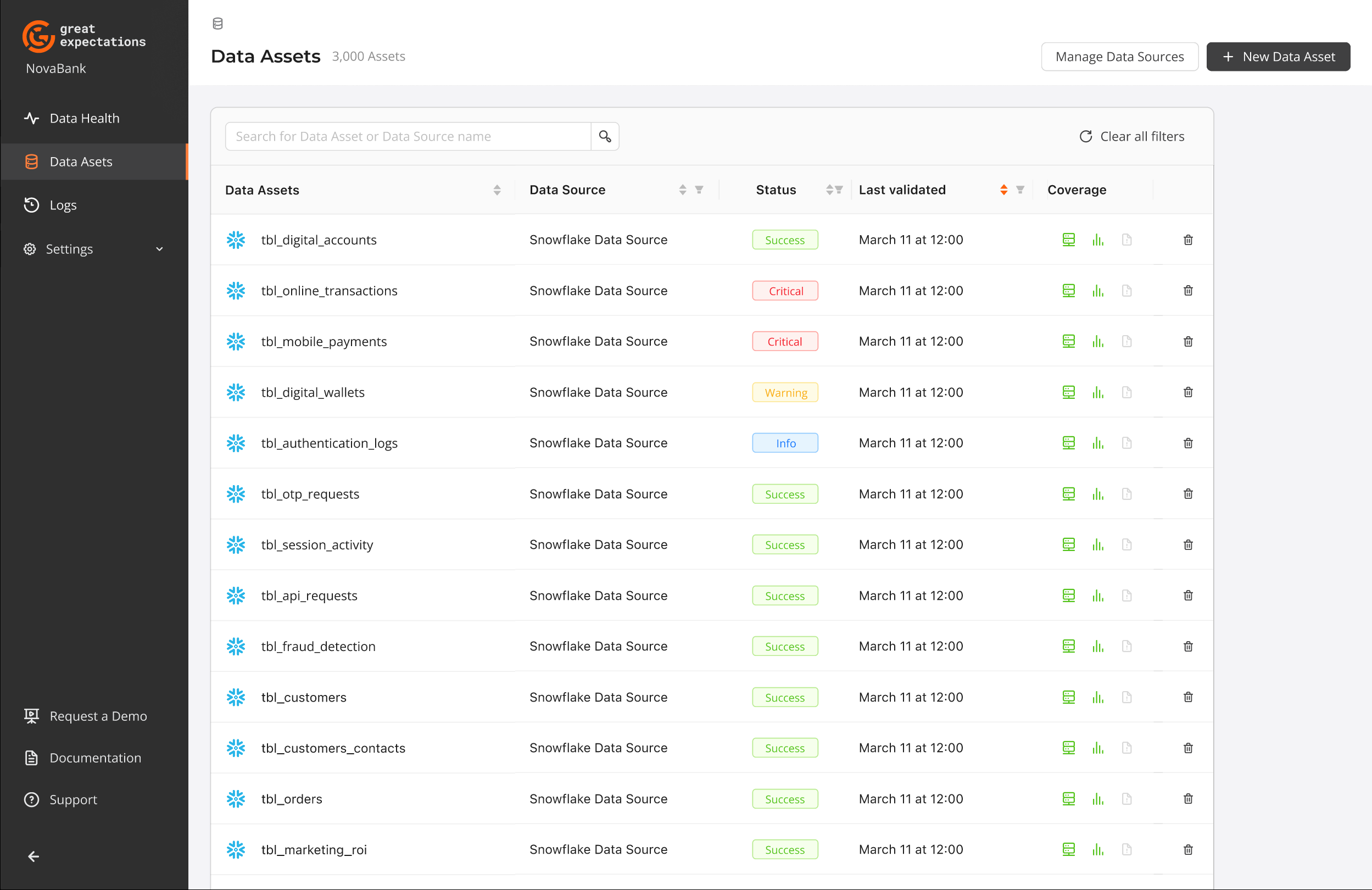
Great Expectations Cloud is built for teams that want managed validation without assembling every service themselves. It brings Great Expectations Cloud data quality into a shared interface where engineers, analytics teams, and platform owners can inspect expectations, review failures, and understand which data assets are safe to use. Instead of treating checks as hidden scripts, Great Expectations Cloud makes validation visible across a wider organization.
Great Expectations Cloud is a managed data quality platform that helps teams validate pipelines, monitor assets, and collaborate on reliable analytics.
The value of Great Expectations Cloud comes from connecting expectation suites, validation results, and operational context. A data team can use Great Expectations Cloud documentation to standardize setup, then apply Great Expectations Cloud monitoring to tables that support dashboards, machine learning features, or regulatory reporting. For organizations already searching for great expectations data quality, the cloud platform gives those practices a more collaborative home.
Great Expectations Cloud validation starts with expectations that describe what good data should look like. Teams can define rules for null values, accepted ranges, schema shape, row counts, freshness, and other signals that affect trust. Great Expectations Cloud data quality workflows help make those expectations repeatable, so pipeline owners can detect regressions before consumers find broken dashboards.
The platform also supports collaboration around validation outcomes. Great Expectations Cloud login access lets authorized users inspect runs, review failing checks, and connect technical issues to business impact. When a data contract changes or a source system behaves differently, Great Expectations Cloud helps teams document what changed and decide whether the issue is acceptable, temporary, or urgent.
For newer teams, a Great Expectations Cloud tutorial can shorten the path from local experimentation to managed operations. For mature teams, Great Expectations Cloud integrations help connect validation into orchestrators, warehouses, notebooks, and alerting systems. The result is a shared Great Expectations Cloud platform where great expectations data quality habits become operational routines.
Great Expectations Cloud monitoring is most useful when it is treated as part of normal data operations. A validation failure should not be a mystery hidden in logs; it should be a readable signal that points to the affected asset, the failed expectation, and the next owner who needs to respond. Great Expectations Cloud data observability supports that workflow by making quality results easier to review over time.
Great Expectations Cloud API access can help teams automate validation, retrieve results, and connect quality status to existing systems. In a production environment, Great Expectations Cloud deployment decisions often include which data sources to validate, which alerts should be routed to on-call teams, and how validation reports should be shared with stakeholders. These choices turn Great Expectations Cloud SaaS from a dashboard into a dependable part of the data platform.
Great Expectations Cloud GX Cloud references are often used by teams comparing product naming, documentation, and managed features. Whether the team calls it GX Cloud or Great Expectations Cloud, the core goal remains the same: make data quality understandable, repeatable, and visible before unreliable data spreads into analytics workflows.
A Great Expectations Cloud demo is helpful for seeing how the interface handles assets, validations, and documentation views. During evaluation, teams often compare Great Expectations Cloud pricing with the cost of maintaining internal validation services, custom dashboards, and alerting logic. The practical question is not only subscription cost; it is whether Great Expectations Cloud reduces the time spent tracing recurring data quality incidents.
A Great Expectations Cloud trial can also reveal how quickly teams can connect sources and model expectations. Smaller analytics teams may start with a few critical tables, while platform teams may design a broader Great Expectations Cloud deployment for warehouse-wide governance. In both cases, Great Expectations Cloud documentation is important because consistent setup keeps validation behavior clear across environments.
Adoption works best when expectations are owned by the teams closest to the data. Great Expectations Cloud integrations can connect validation into the existing release process, while Great Expectations Cloud monitoring can keep checks visible after pipelines move to production. This makes Great Expectations Cloud data quality part of everyday delivery instead of a one-time audit.
| Step | Action |
|---|---|
| 1 | Review Great Expectations Cloud documentation and confirm which data sources, warehouses, or orchestration tools will be connected |
| 2 | Start a Great Expectations Cloud trial or request a Great Expectations Cloud demo to evaluate workspace fit and team workflows |
| 3 | Configure Great Expectations Cloud login access, project roles, and source credentials according to internal security practices |
| 4 | Build initial Great Expectations Cloud validation suites for critical assets, then run checks against representative data batches |
| 5 | Connect Great Expectations Cloud monitoring, alerts, and review routines before expanding Great Expectations Cloud deployment |

| Area | Team-facing value |
|---|---|
| Validation design | Great Expectations Cloud data quality rules define what reliable data should satisfy before downstream use |
| Collaboration | Shared Great Expectations Cloud platform views help engineers, analysts, and stewards discuss failures with context |
| Operations | Great Expectations Cloud monitoring surfaces recurring issues, changed schemas, and failed checks in a managed workspace |
| Automation | Great Expectations Cloud API options support integration with pipelines, release gates, and reporting workflows |
| Learning curve | Great Expectations Cloud tutorial content and Great Expectations Cloud documentation help teams adopt repeatable practices |
| Component | Minimum | Recommended |
|---|---|---|
| Account access | Great Expectations Cloud login with authorized workspace permissions | Role-based access for engineers, analysts, and platform owners |
| Data sources | One supported warehouse or data system for initial validation | Multiple governed assets connected through Great Expectations Cloud integrations |
| Validation scope | A small set of expectation suites for priority datasets | Production coverage for critical tables, freshness checks, and schema controls |
| Operations | Manual review of Great Expectations Cloud validation results | Automated Great Expectations Cloud monitoring with alerts and ownership routing |
| Evaluation | Great Expectations Cloud trial or Great Expectations Cloud demo | Full Great Expectations Cloud SaaS rollout aligned with platform governance |
Great Expectations Cloud is a strong fit for organizations that already understand the cost of unreliable data. Analytics teams can use Great Expectations Cloud data observability to improve confidence in dashboards, while engineering teams can use Great Expectations Cloud validation to catch pipeline regressions. The platform is especially helpful when great expectations data quality work needs to be shared beyond a single developer laptop.
Teams evaluating Great Expectations Cloud pricing should consider incident reduction, faster review cycles, and fewer custom maintenance tasks. Great Expectations Cloud integrations can reduce friction when validation needs to live inside existing orchestration and warehouse workflows. For teams with formal governance requirements, Great Expectations Cloud documentation helps establish repeatable practices that new contributors can follow.
Why are validations not appearing in Great Expectations Cloud? Confirm the connected data source, workspace permissions, and Great Expectations Cloud deployment configuration before rerunning the suite.
Can Great Expectations Cloud support team collaboration? Yes, Great Expectations Cloud platform workflows are designed for shared review of validation results, failures, and documentation.
Where should a new team begin? Start with a Great Expectations Cloud tutorial, validate one important asset, then expand Great Expectations Cloud monitoring after the first checks are stable.
How does Great Expectations Cloud API usage help? Great Expectations Cloud API workflows can connect validation status to pipelines, alerts, internal tools, or release checks.
What should be reviewed during a Great Expectations Cloud demo? Focus on Great Expectations Cloud data quality setup, integrations, pricing fit, login controls, and data observability views.
Great Expectations Cloud works best when teams treat quality checks as product infrastructure, not after-the-fact cleanup. A team reviewing Great Expectations Cloud documentation should identify priority assets, define ownership, and decide which validation failures should block downstream use. Great Expectations Cloud data quality becomes more valuable when every expectation has a reason and every alert has a response path.
Evaluation should include a realistic Great Expectations Cloud trial rather than a purely abstract feature review. Connect a source that already causes reporting risk, build Great Expectations Cloud validation around known failure modes, and inspect how Great Expectations Cloud monitoring presents those results. If the Great Expectations Cloud demo shows that analysts and engineers can discuss failures in the same workspace, adoption is more likely to stick.
Long-term success depends on keeping Great Expectations Cloud integrations aligned with daily platform operations. Great Expectations Cloud API automation can support release checks, while Great Expectations Cloud data observability can highlight trends across repeated validation runs. Whether teams search for Great Expectations Cloud GX Cloud, Great Expectations Cloud SaaS, or great expectations data quality, the operational goal is consistent: reliable data that teams can trust before decisions are made.
Great Expectations Cloud, great expectations data quality, Great Expectations Cloud data quality, Great Expectations Cloud pricing, Great Expectations Cloud documentation, Great Expectations Cloud demo, Great Expectations Cloud trial, Great Expectations Cloud login, Great Expectations Cloud API, Great Expectations Cloud integrations, Great Expectations Cloud deployment, Great Expectations Cloud tutorial, Great Expectations Cloud platform, Great Expectations Cloud SaaS, Great Expectations Cloud monitoring, Great Expectations Cloud validation, Great Expectations Cloud GX Cloud, Great Expectations Cloud data observability