
Replies: 4 comments 1 reply

|
Thanks for the detailed request! This definitely seems like it has the ability to save a lot of time for OpenID users. We currently don't have the bandwidth to work on this, but if you (or someone else) wants to make an attempt, we'd be happy to offer high-level guidance. |

|
@gschier Hey, can i take up this issue ? |

|
Hey @imrishabh18 sorry for the (very) long wait on a reply here. Feel free to take a stab at it if you'd like and we can iterate on it 👍 |

|
@imrishabh18 I'm happy to provide assistance with high-level design decisions and technical details around how the spec works, but unfortunately my JavaScript skills won't be up to scratch to provide any help with the code itself, sorry! |

|
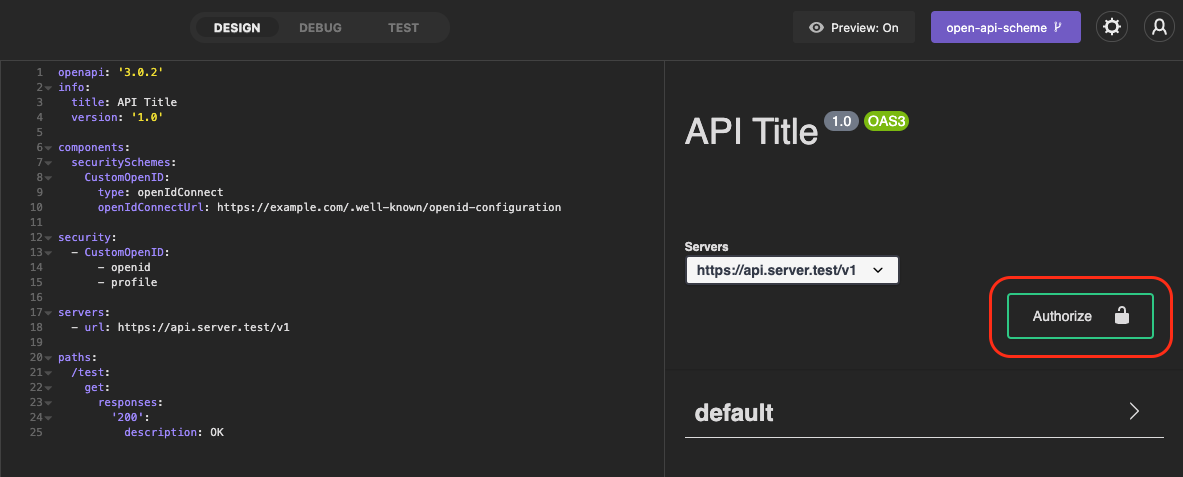
For what it's worth OpenAPI spec includes this type of security scheme.
Blank popup:
This popup works fine in SwaggerUI editor tool and VS Code extension. |



Uh oh!
There was an error while loading. Please reload this page.
Uh oh!
There was an error while loading. Please reload this page.
Is your feature request related to a problem? Please describe.
One thing that I find I spend a lot of time doing is adding fiddly authentication details to the Authentication tab, particularly when a request needs to auth using OAuth 2.0 flows. I often find myself manually copying these details out of the standardised document exposed at
https://identityprovider.domain.tld/.well-known/openid-configuration.Examples:
Technical Spec:
Describe the solution you'd like
I would love to see either:
...where the URL to
https://identityprovider.domain.tldis supplied, which prompts Insomnia to query the/.well-known/openid-configurationdocument for details.This gives us the following enhancements:
scopes_supported)token_method_auth_endpoints_supported)grant_types_supported)Describe alternatives you've considered
While it's possible to enter all of these details manually into the "OAuth 2.0" auth fields, this would be a significant time saver, and may avoid accidental human error which may be difficult to debug.
Also, it may be useful to still enter incorrect details, for example while testing your auth flows for bugs or during security testing. I'll leave it to you to determine if it's better to:
openid-configurationdocument (easiest to use UI, least flexible)openid-configurationdocumentAll reactions