Setup and Characterisation
Materials are characterised according to the ASTM D412 testing standard which dictates dumbbell-shaped specimen. CAD files of the moulds used to create said specimen are provided here.
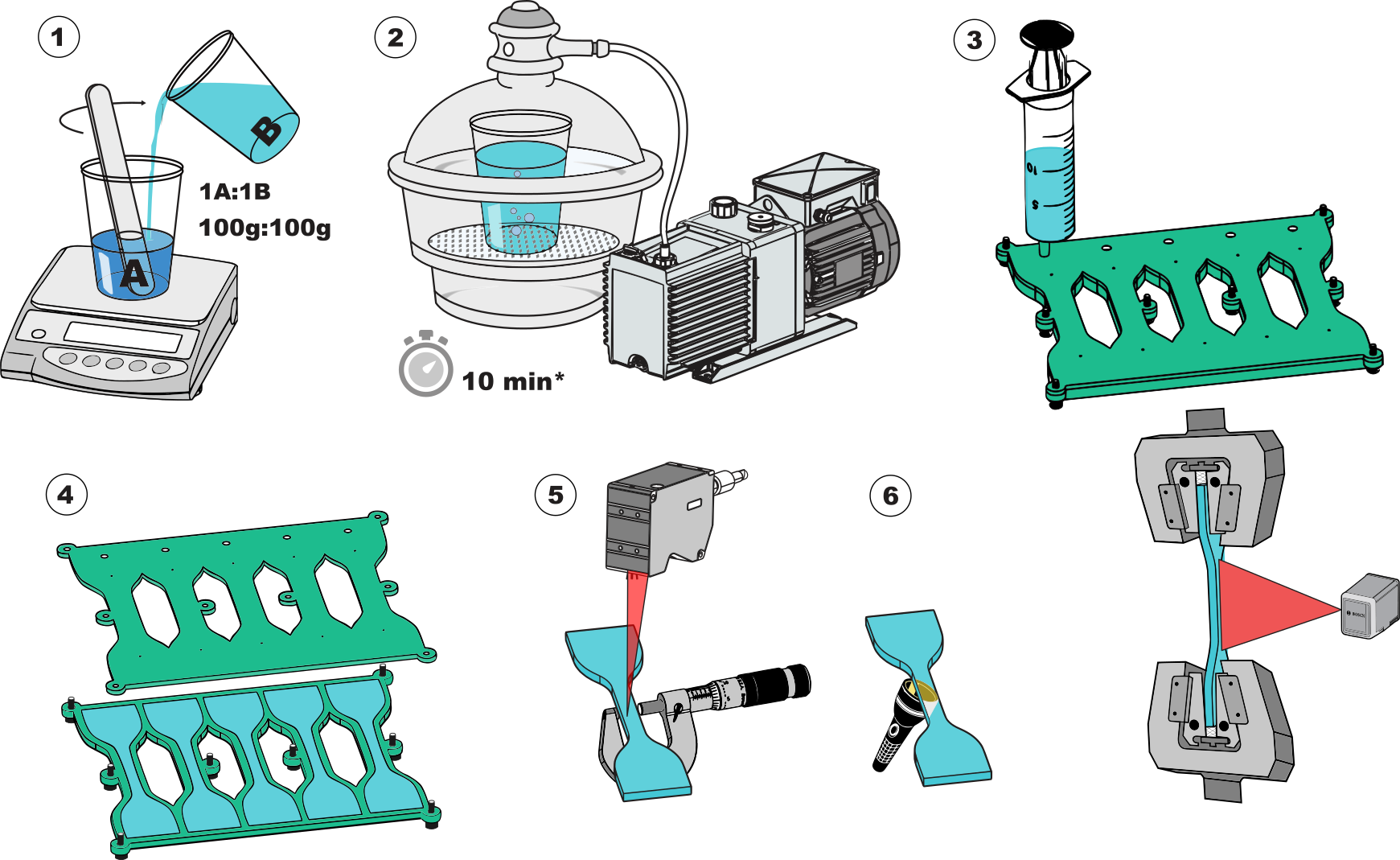
Specimen are fabricated according to the following protocol.
- Mixing of the two components given the correct ratio specified by the manufacturer
- De-airing mixture using a vacuum chamber
- Pouring or injecting the mixture into 3d printed moulds
- Curing for at least 24h
- Verifying the correct dimensions
- Inspecting the specimen for imperfections such as trapped air bubbles
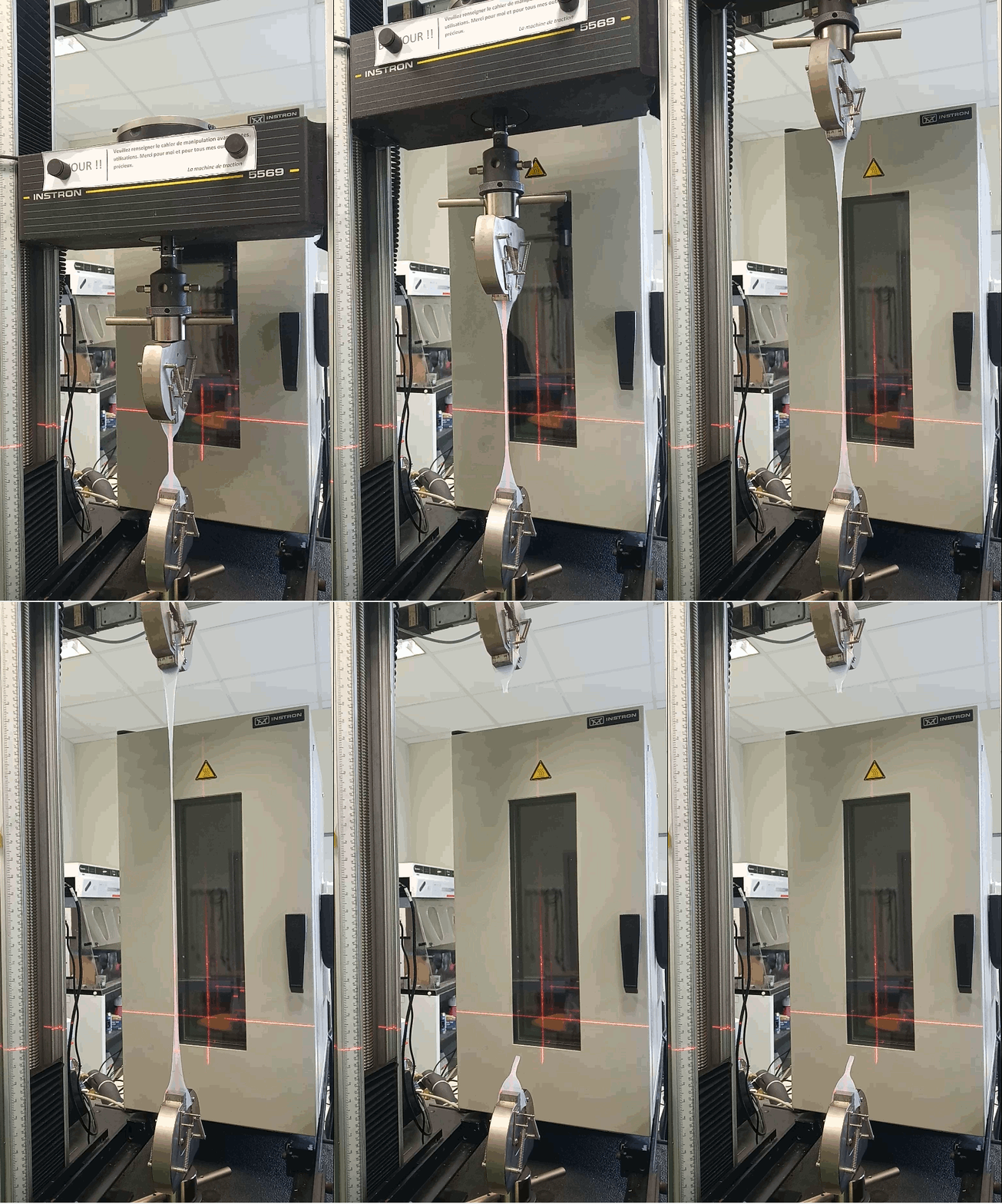
Experimental tensile stress-strain data are available in the repository under the folder:
https://github.com/LucMarechal/Soft-Robotics-Materials-Database/tree/master/Tensile-Tests-Data
An open source online app is available to fit experimental tensile stress-strain data :
Written in Python, the code is availlable in the repository under the folder: https://github.com/LucMarechal/Soft-Robotics-Materials/tree/master/Python%20script%20fitting%20of%20hyperelastic%20constitutive%20models