

A Time Table Scheduler in Python for FAST University Islamabad using Genetic Algorithm.
In the modern academic landscape, efficient timetable scheduling is pivotal for universities to ensure smooth operations and optimal utilization of resources. This project delves into the classical problem of timetable scheduling, aiming to create schedules for each semester with minimal clashes between sections, professors, and rooms. The primary goal is to design a robust algorithmic solution that automates the timetable creation process while adhering to a set of hard and soft constraints.
- Ensuring classes are scheduled in available classrooms.
- Accommodating section sizes with appropriate room capacities.
- Avoiding scheduling conflicts for professors and sections.
- Optimizing the allocation of courses to professors and sections.
- Minimizing the number of clashes and interruptions in the timetable.
To tackle these challenges, a genetic algorithm approach is employed, leveraging binary encoding for chromosomes and a fitness function that penalizes clashes and conflicts. The algorithm iteratively refines schedules to achieve optimal solutions that meet the specified constraints.
The project starts by importing necessary libraries such as Counter from collections, pandas for data manipulation, numpy for numerical operations, openpyxl for Excel file handling, and random for generating random numbers. These libraries are essential for data preparation, representation, and algorithm implementation.
For the scheduling of both theory and lab sessions, essential resources such as rooms, labs, lab courses, and lab instructors were initialized. This ensures that the algorithm has access to crucial information for optimizing schedules effectively.
- Population Size: 32 chromosomes, representing potential timetable schedules.
- Number of Generations: 10,000 generations to refine the schedules.
- Mutation Probability: 0.085, determining the likelihood of introducing changes in the chromosomes during evolution.
The create_and_clean_dataframe function converts Excel data into a structured Pandas DataFrame, adhering to specific constraints based on the sheet name provided. It performs data cleaning operations to ensure the DataFrame is ready for further processing.
The map_timetable_to_dataframe function maps the generated timetable (represented as a list) to an empty timetable DataFrame. This mapping ensures that the timetable data is structured and organized for easy analysis and manipulation.
The binary_encode_chromosome function converts the given chromosome information into binary format, facilitating efficient manipulation and optimization during the timetable scheduling process.
The fitness function evaluates the fitness score of a given timetable chromosome based on a set of hard and soft constraints, such as avoiding overlapping classes and meeting room capacity constraints.
- Selection: Identifies top-performing chromosomes based on their fitness scores.
- Crossover: Combines genetic material from two parents to create offspring.
- Mutation: Introduces random changes in the offspring chromosomes to maintain diversity in the population.
The genetic_algorithm function orchestrates the entire genetic algorithm process for timetable scheduling optimization. It iteratively refines the population to improve fitness scores and generate optimal timetable schedules.
- Data Preparation: Convert and clean Excel data into a structured DataFrame.
- Resource Initialization: Initialize essential resources for scheduling.
- Initial Population Generation: Create an initial population of timetable chromosomes.
- Genetic Algorithm Execution: Evolve the population over multiple generations to optimize schedules.
- Fitness Evaluation: Assess the fitness of the final timetable schedule.
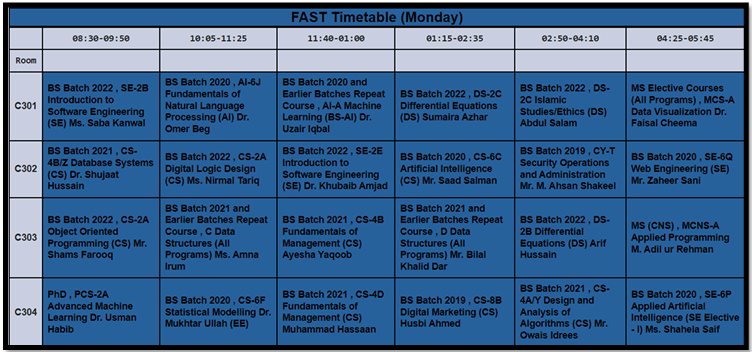
The genetic algorithm was executed with the specified parameters and successfully found a chromosome with the maximum possible fitness score, indicating an optimized timetable schedule.
The final timetable achieved a fitness score of 100 out of a maximum possible score of 100, demonstrating excellent adherence to the defined constraints and optimization criteria.
This project successfully implemented a genetic algorithm to automate the timetable scheduling process, addressing key challenges and achieving optimized schedules for academic institutions. For result and otput, please refer to the attached PDF.

Ahmed Kamal :)