

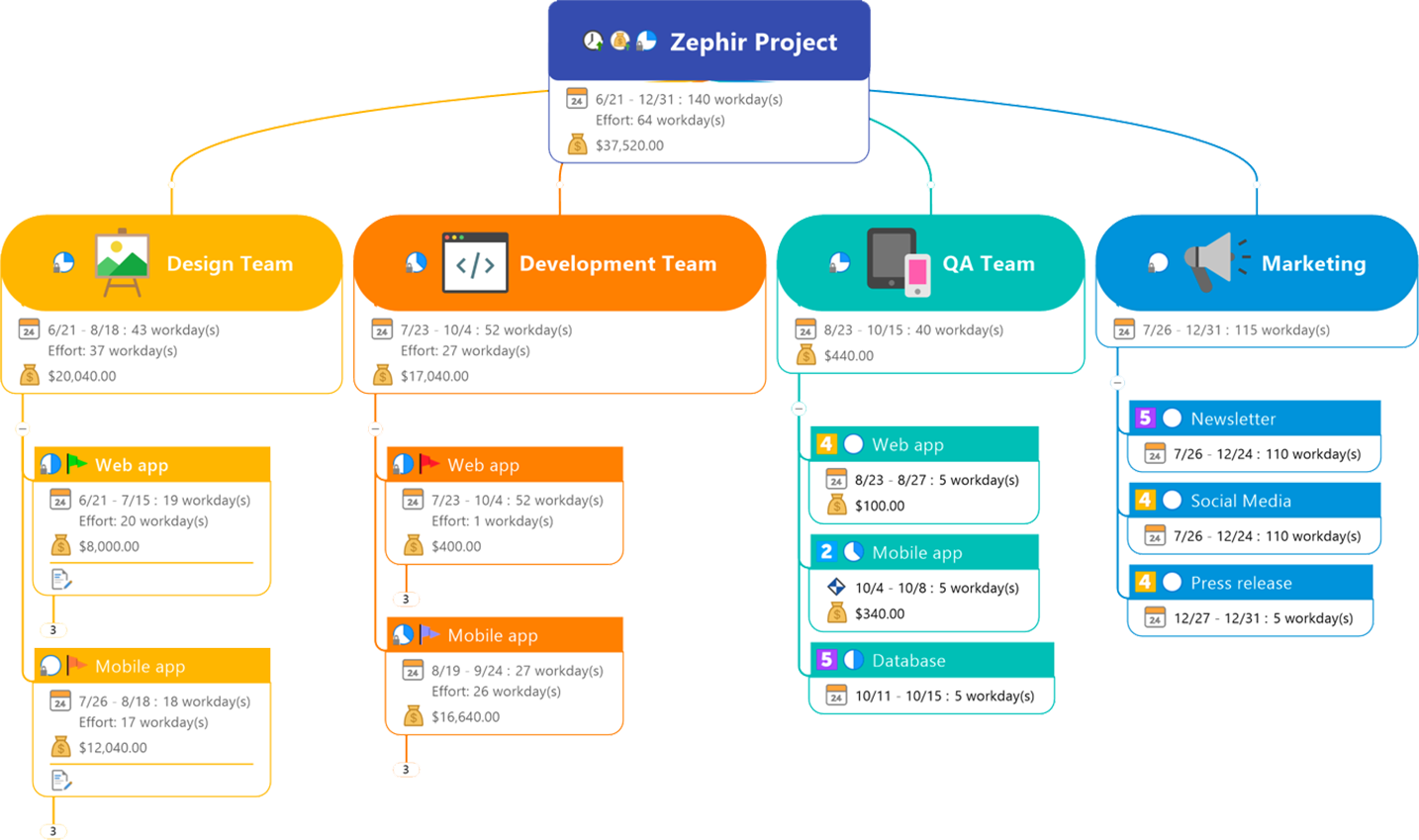
MindManager delivers professional-grade mind mapping and project planning through an interface designed for both simplicity and depth. The application serves users needing reliable visual thinking tool capabilities on Windows, combining powerful functionality with intuitive design principles that make complex operations accessible to users at all skill levels.
The core functionality provides essential tools through intuitive controls. Access primary features without navigating complex menus or searching hidden options. Every interface element has been carefully positioned based on user research and workflow analysis, ensuring that common tasks remain within easy reach while advanced features stay organized and discoverable when needed.
Performance optimization ensures smooth operation even with demanding workloads. Background processing handles intensive tasks without blocking interface responsiveness. The application employs sophisticated threading models and asynchronous processing techniques that keep the user interface fluid and responsive regardless of ongoing background operations, whether processing large datasets, rendering complex visualizations, or managing network communications.
The native integration leverages Windows frameworks for seamless system compatibility. Works naturally with File Explorer, Windows Search, and standard services. Deep system integration means MindManager participates fully in the Windows ecosystem, supporting drag-and-drop operations, system-wide sharing extensions, and native file format associations that create a cohesive user experience across all applications.
Customization options adapt the workflow to individual preferences. Configure shortcuts, layouts, and behaviors while maintaining simplicity. The preference system balances accessibility with depth, presenting common settings in organized panels while providing advanced configuration options for power users who need fine-grained control over application behavior, appearance, and operational parameters.
Resource management balances system load appropriately. Efficient memory use and intelligent caching support extended work sessions. Careful attention to resource consumption means MindManager operates efficiently even on systems with limited RAM or processing power, employing smart caching strategies that balance performance gains against memory footprint while maintaining responsive operation during extended usage periods.
Multi-display support handles various monitor configurations intelligently. Remembers window positions and adapts layouts for each display. Professional workflows often span multiple screens, and MindManager respects these configurations by remembering window positions, adapting interface density to different display resolutions, and providing consistent behavior whether working on a single laptop screen or a multi-monitor desktop setup.
Automation capabilities enable workflow integration through standard protocols. Connect with other tools without custom scripting requirements. Support for scripting interfaces and command-line tools means MindManager integrates seamlessly into automated workflows, allowing users to chain operations together, trigger actions from external events, and build sophisticated automation pipelines without writing code.
Data protection implements secure handling of sensitive information. Encrypted storage and safe processing protect user privacy. Modern applications handle sensitive data, and MindManager employs industry-standard encryption for data at rest, secure transmission protocols for network operations, and careful validation of all inputs to prevent security vulnerabilities while maintaining user privacy through minimal data collection and transparent handling policies.
Update system delivers improvements without disrupting established workflows. Regular enhancements maintain compatibility as Windows evolves. The update mechanism respects user control, providing clear information about changes, supporting incremental updates that minimize bandwidth usage, and maintaining backward compatibility with existing documents and workflows so that updates enhance rather than disrupt ongoing work.
- Native Windows application built for the Windows platform
- 64-bit optimized for modern processors and systems
- Dark mode compatibility with automatic theme switching
- File Explorer integration for seamless file management
- Windows Search indexing enabling system-wide content search
- Context menu support for system-wide functionality
- Multi-display optimization with independent window management
- Keyboard shortcuts fully customizable for efficient navigation
- Automation friendly with scripting and task scheduler support
- Taskbar integration with jump lists and pinning support
- Batch processing capabilities for handling multiple items
- Export options supporting industry-standard formats
- Version control integration with Git and other systems
- Cloud sync compatible with OneDrive and third-party services
- Collaboration features for team-based workflows
- Incremental saves preventing data loss during work sessions
- Crash recovery automatically restoring unsaved work
- Background operations maintaining interface responsiveness
- Memory efficiency optimized for extended usage sessions
- Fast launch times through optimized startup routines
- Windows 10 or later recommended for full feature support
- 64-bit processor required for optimal performance
- 4GB RAM minimum, 8GB recommended for optimal performance
- SSD storage recommended for best responsiveness
- DirectX 11 compatible graphics for visual features
- Native document formats with forward and backward compatibility
- Industry-standard file imports and exports
- Lossless conversion between supported formats
- Metadata preservation across format conversions
- Batch import and export capabilities
- Secure HTTPS communication for all network operations
- Support for proxy configurations in enterprise environments
- Offline operation with automatic sync when connected
- Bandwidth-efficient synchronization protocols
- Certificate pinning for enhanced security
MindManager serves individual professionals who require reliable mind mapping and project planning tools that integrate naturally into daily workflows. Whether managing personal projects, handling freelance assignments, or maintaining professional portfolios, the application provides the stability and features needed for consistent, high-quality output without unnecessary complexity or learning overhead.
Small teams benefit from MindManager's collaboration features and straightforward setup process. No complex server infrastructure or extensive training required—teams can begin productive work immediately while leveraging shared resources, coordinated workflows, and consistent standards across all team members without the overhead of enterprise-scale solutions.
Large organizations appreciate MindManager's enterprise-ready features including centralized configuration management, network deployment capabilities, license management tools, and integration with existing IT infrastructure. Standardized deployments ensure consistency across departments while administrative controls maintain security and compliance requirements.
Educational environments benefit from MindManager's intuitive interface and comprehensive feature set. Students learn professional workflows using the same tools they'll encounter in their careers, while educators appreciate the application's stability, reasonable system requirements, and support for various teaching methodologies from individual instruction to large classroom deployments.
MindManager becomes an integral part of daily operations through its seamless integration with system services and third-party applications. Quick access through Windows Search, natural drag-and-drop operations, and support for standard keyboard shortcuts mean the application feels like a natural extension of Windows rather than a separate tool requiring mental context switching.
Professional workflows often involve multiple applications and processing stages. MindManager supports these complex pipelines through automation interfaces, standard file format support, and reliable batch processing capabilities. Whether operating as a standalone tool or integrated into larger workflows, the application maintains consistent behavior and predictable output quality.
While optimized for Windows, MindManager recognizes that professional work often crosses platform boundaries. Industry-standard file format support, careful metadata handling, and extensive export options ensure that work created in MindManager remains accessible and editable across different platforms and applications without data loss or formatting issues.
MindManager distinguishes itself through unwavering commitment to quality and user experience excellence. Rather than compromising system integration for cross-compatibility, development focuses on delivering authentic native operation that leverages Windows capabilities fully. This platform-specific approach enables optimizations and integrations impossible in generic cross-platform applications while maintaining the responsive feel and visual consistency users expect from professional Windows software.
Users appreciate the application's predictable behavior and minimal maintenance requirements, characteristics that prove invaluable in professional settings where downtime creates costly disruptions and learning curves delay productivity. Consistent interface conventions, comprehensive documentation, and thoughtful error handling mean users spend time accomplishing tasks rather than troubleshooting problems or searching for features.
Enterprise deployments benefit from flexible configuration and centralized management capabilities. Technical teams can standardize setups while preserving individual customization options, achieving organizational consistency without sacrificing personal productivity. Configuration profiles, scripted deployments, and silent update mechanisms integrate with existing IT infrastructure while volume licensing options and dedicated support channels address organizational needs beyond individual user requirements.
Sustained development ensures the application evolves with platform capabilities while maintaining backward compatibility. Feature additions prioritize user requests and workflow optimization, keeping the tool relevant as professional requirements advance and technology landscapes shift. Regular updates address security concerns, add requested features, and optimize performance for new hardware while maintaining stable operation for users who prefer consistent environments.
The development philosophy emphasizes quality over quantity, focusing on doing fewer things excellently rather than many things adequately. Each feature receives careful consideration for its impact on overall application coherence, ensuring that additions enhance rather than complicate the core experience. This disciplined approach creates an application that feels focused and purposeful rather than bloated with rarely-used functionality.
Comprehensive documentation covers all aspects of MindManager from basic operations to advanced techniques. Searchable help files, video tutorials, and quick reference guides provide information in formats suited to different learning styles and experience levels. Regular documentation updates ensure information remains current with each application release.
Active user communities provide peer support, share workflows, and exchange tips for getting the most from MindManager. Forums, social media groups, and user-generated content create knowledge bases that complement official documentation while fostering connections between users facing similar challenges or working in related fields.
Direct support channels provide assistance for complex issues or specialized requirements. Response times, support levels, and escalation procedures ensure that problems receive appropriate attention whether affecting individual users or large organizational deployments. Dedicated account management for enterprise customers provides single points of contact for ongoing relationships.
Official training materials, certification programs, and workshop offerings help users and organizations maximize their investment in MindManager. From self-paced online courses to instructor-led sessions, training options accommodate different learning preferences and organizational requirements while ensuring users develop proficiency with both basic and advanced features.