
Download Neon Database to build scalable apps with branching, autoscaling, and instant provisioning for modern teams. Explore a fast serverless postgres platform designed for development workflows, reliable production workloads, simple cloud deployment, and less database administration.
Neon Database is a serverless Postgres platform for scalable apps, instant branching, autoscaling, and simple cloud development workflows.
At a glance:
- Serverless postgres with branching, autoscaling, and instant provisioning
- Neon postgres workflows for previews, tests, staging, and production
- Neon pricing options for teams that need predictable cloud database growth
- PostgreSQL database compatibility with modern developer tools and frameworks
Neon Database is a managed cloud PostgreSQL database service focused on speed, scalability, and developer workflow. It separates storage and compute so teams can scale resources more flexibly than a traditional postgres database setup. For teams evaluating neon postgres, neon postgresql, or neon db, the main appeal is a serverless model that keeps Postgres familiar while reducing operational overhead.
The platform is especially useful when applications need reliable branching. A developer can create an isolated database branch for a feature, preview deployment, migration test, or pull request without manually copying production data. This makes Neon Database practical for teams that already depend on a postgresql database but want faster review cycles and safer change management.
Neon Database also fits teams comparing free postgres database options and free postgresql database plans. The neon free tier can support experiments, prototypes, documentation demos, and early-stage apps before workloads require higher capacity. When projects grow, neon pricing becomes relevant because compute, storage, and usage patterns can change over time.
The serverless postgres model in Neon Database lets applications connect to Postgres without requiring teams to manage fixed servers for every environment. Compute can scale, suspend, and resume depending on workload needs, while storage remains durable. This design makes neon postgres attractive for SaaS products, AI tools, internal dashboards, and web applications that see variable traffic.
A common workflow starts with a primary production branch, then uses branches for development and testing. Instead of sharing one fragile staging postgres database, teams can create separate Neon Database branches for schema changes, review apps, and migration checks. This keeps experiments isolated while preserving a familiar SQL experience through neon sql and standard PostgreSQL tooling.
For developers using Prisma, Drizzle, Next.js, Vercel, or GitHub Actions, neon db can become part of the normal deployment pipeline. The database branch can match a preview deployment, then be removed when the work is merged. This is one reason searches such as neon database github, neon database docs, and neon vs supabase often appear when teams are choosing a modern postgresql database provider.
Database branching is one of the most distinctive Neon Database capabilities. A branch works like an isolated copy-on-write environment, which means teams can test changes against realistic data without creating full manual clones. This helps with schema migrations, query tuning, regression testing, and onboarding new contributors who need a safe database workspace.
Neon postgres branching can reduce the risk of rushed changes. Before applying a migration to production, a team can run it against a Neon Database branch, inspect results with neon sql, and confirm application behavior in a preview deployment. This is valuable for teams that treat their postgres database as a critical part of the application, not just background infrastructure.
The same workflow supports documentation and demos. A project can point readers to neon database docs, explain how to create a neon free account, and provide SQL setup steps for a sample application. Because Neon Database stays compatible with PostgreSQL database clients, many existing tools can connect without special adapters.
Neon Database uses PostgreSQL, so developers can rely on standard SQL, familiar connection strings, migrations, indexes, extensions, and transaction behavior. Applications that already use a postgresql database usually need fewer conceptual changes when moving to neon postgresql. The service is designed to feel like Postgres while adding cloud-native workflow improvements.
The neon sql experience is useful for quick inspection, setup scripts, and troubleshooting. Teams can run queries, validate schema changes, and check data states without leaving the platform. For larger applications, neon postgres can connect through common ORMs, backend frameworks, serverless functions, and CI pipelines.
Developers searching for serverless postgresql often care about connection behavior, cold starts, pooling, and predictable performance. Neon Database addresses those needs through architecture and platform features, while documentation explains how to configure application clients. This makes neon db suitable for production apps as well as free postgres database experiments.
| Step | Action |
|---|---|
| 1 | Create a Neon Database account and review whether neon free or a paid neon pricing plan fits the project |
| 2 | Start a new neon postgres project and choose the closest region for application traffic |
| 3 | Copy the connection string into the application, ORM, or deployment platform using secure environment variables |
| 4 | Run migrations against a Neon Database branch before promoting schema changes to production |
| 5 | Use neon sql, logs, metrics, and neon database docs to validate queries and tune the postgresql database |

| Area | Developer-facing value |
|---|---|
| Serverless postgres | Compute can scale with workload needs while storage remains durable |
| Branching | Neon Database branches support previews, migration tests, and isolated development |
| Compatibility | Neon postgresql works with common PostgreSQL database clients, ORMs, and frameworks |
| Access | Neon sql and connection strings make querying and integration straightforward |
| Planning | Neon pricing and neon free options help teams match capacity to stage and budget |
| Component | Minimum | Recommended |
|---|---|---|
| Database client | PostgreSQL-compatible driver | Current PostgreSQL driver with pooling guidance from neon database docs |
| Application stack | Any backend that supports postgres database connections | Frameworks using secure environment variables and migration automation |
| Workflow | Manual SQL setup through neon sql | Branch-based CI checks with preview deployments |
| Project stage | Prototype using neon free | Production workload reviewed against neon pricing |
| Operations | Basic query monitoring | Regular review of indexes, connection limits, and branch lifecycle |
Neon Database is a strong fit for developers who want PostgreSQL without managing fixed database servers. A small team can begin with neon free, build a prototype, connect an application, and then review neon pricing as usage grows. This path is useful for startups, agencies, open-source maintainers, and product teams that want a reliable postgres database with fewer manual operations.
Teams that deploy often get particular value from branching. A pull request can have a matching neon postgres branch, giving reviewers a real database state instead of mock-only behavior. For projects where schema changes are frequent, Neon Database helps protect production by making migration testing part of the workflow.
The platform also appeals to teams comparing neon vs supabase. Supabase includes a broader backend platform, while Neon Database focuses deeply on serverless postgresql and database workflow. The best choice depends on whether a team wants an all-in-one app backend or a specialized PostgreSQL database service built around branching and scalable compute.
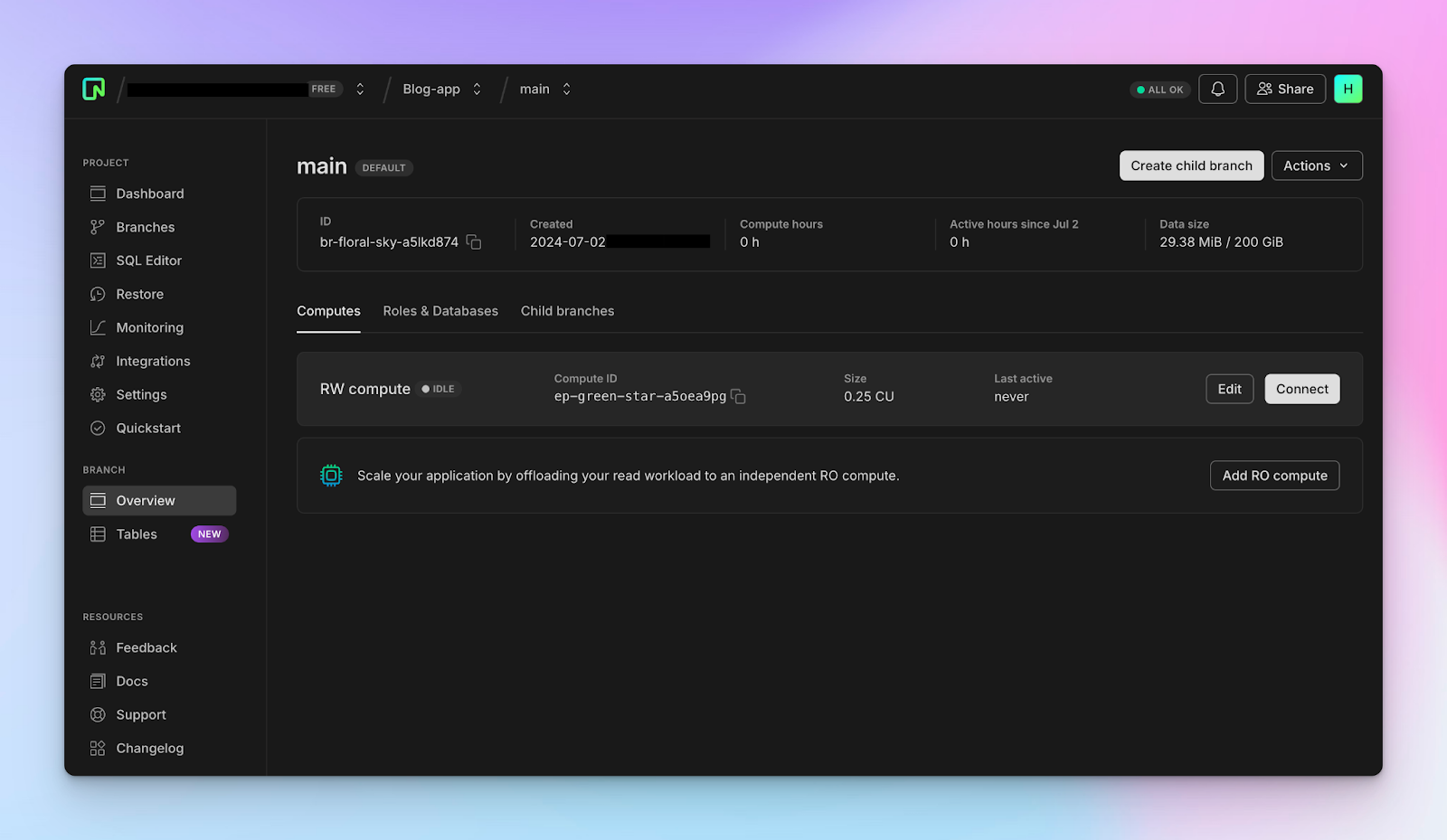
Why does my application fail to connect to Neon Database? Check the connection string, SSL settings, environment variable name, and whether the selected branch is active.
Can I use Neon Database as a free postgres database? Yes, neon free can support learning, demos, and smaller projects, but production teams should review neon pricing.
Is neon postgres different from normal PostgreSQL? Neon postgres is PostgreSQL-compatible, but Neon Database adds serverless compute, branching, and managed cloud operations.
How should I test migrations? Create a Neon Database branch, run migrations there first, inspect results with neon sql, then promote changes after validation.
Where do I find setup details? Use neon database docs for connection examples, pooling guidance, framework guides, and deployment recommendations.
Developers evaluating Neon Database usually want to know whether the service can replace a traditional postgres database without forcing application rewrites. Because neon postgresql keeps standard PostgreSQL behavior, most migration work involves connection configuration, environment variables, and deployment practices. The bigger shift is operational: branches, previews, and serverless postgres scaling become normal parts of the development process.
Searches such as neon database pricing, neon database free, and neon pricing often happen when a project moves from prototype to production planning. A small application may begin on neon free, then later need more compute, storage, or operational guarantees. Teams should map expected traffic, query volume, retention needs, and branch usage before choosing a plan.
For documentation-driven projects, neon database github and neon database docs are useful entry points. A repository can include setup instructions that explain how to create a Neon Database project, run SQL with neon sql, configure a connection string, and launch a local app. This makes onboarding easier for contributors who need a working postgresql database quickly.
When comparing neon vs supabase, the distinction should stay practical. Neon Database is often chosen when the main requirement is managed serverless postgresql with strong branching. Supabase may be preferred when a project needs integrated auth, storage, and backend features in one platform. Teams that already have separate application services may prefer the focused neon db approach.
A mature workflow treats Neon Database as part of release engineering. Feature branches get database branches, migrations run before deployment, and cleanup jobs remove unused branches. This keeps the postgres database lifecycle aligned with code review, reducing drift between development, staging, and production.
Neon Database, neon postgres, neon pricing, neon postgresql, neon sql, neon free, neon db, postgres database, postgresql database, free postgres database, free postgresql database, neon vs supabase, serverless postgres, serverless postgresql, neon database pricing, neon database free, neon database docs, neon database github