
Rufus Portable is the USB-on-the-go version of the Rufus flasher everyone already trusts for Windows ISOs. Run it, pick ISO + USB, flash, done—often faster than heavier GUI imagers.
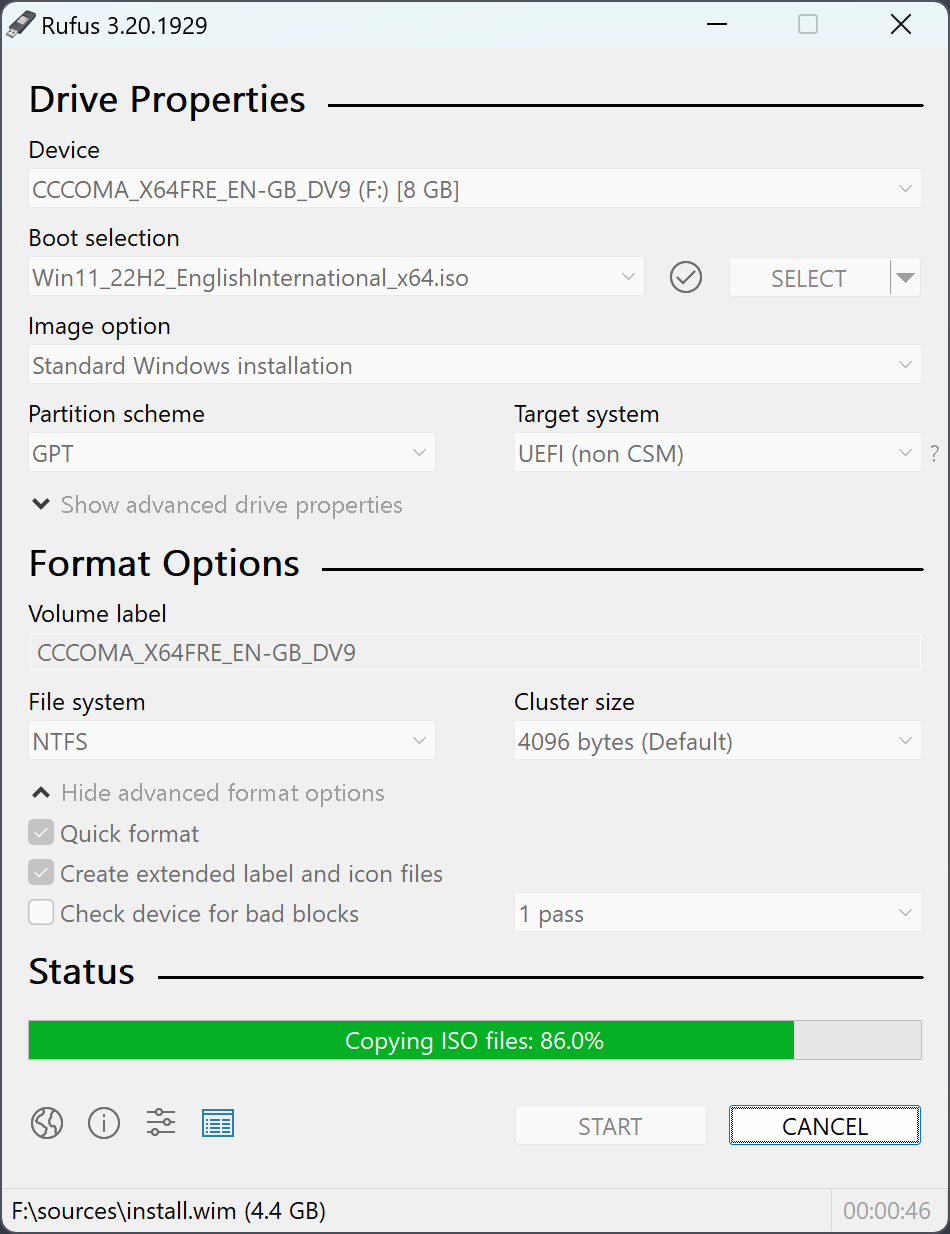
Rufus Portable keeps settings and speed habits of Rufus in a folder you can carry. Choose GPT/MBR, UEFI/BIOS-oriented layouts, and DD vs ISO mode when needed. It is a technician staple for clean install media.
Because it is portable, verify the binary hash when possible and keep it on trusted media. Rufus Portable will erase the selected USB—triple-check the drive letter. Advanced options exist for persistent Linux, bad-block checks, and Windows To Go style paths depending on version capabilities—only enable what you understand.
People use Rufus Portable for Windows 11 setup USBs, Linux live sticks, and firmware utility ISOs. When an ISO refuses to boot from a store-bought “installer,” reflashing with Rufus Portable often fixes broken hybrid images. Keep a few spare USB sticks: flashing wears and occasionally fails mid-write on cheap media.
If Secure Boot rejects a stick, revisit partition scheme and file system choices. Rufus documentation explains common UEFI cases better than guesswork. For shops, standardize on one known-good Rufus Portable build so every bench produces the same media.

- Copy Rufus Portable to a toolkit folder.
- Insert the USB you are willing to erase.
- Select the ISO and confirm device name/capacity.
- Pick partition scheme suitable for the target PC.
- Start flash and wait for the green success state.
- Portable Flashing – No install required for Rufus Portable.
- ISO → Bootable USB – Create install/live media fast.
- UEFI / BIOS Options – Match target firmware style.
- Speed Focus – Known for quick writes.
- Advanced Toggles – Use carefully when defaults are not enough.
- Windows ISO Friendly – Common path for clean installs.
- Linux ISO Support – Flash live and installer images too.
- Device Safety Habit – Always re-read the target USB name.
- Technician Carry – Lives on a maintenance stick beside Ventoy/Etcher.
| Component | Minimum | Recommended |
|---|---|---|
| OS | Windows 10 | Windows 11 |
| Processor | Dual-core CPU | Modern CPU for large ISOs |
| RAM | 2 GB | 4 GB+ |
| USB | Flash drive large enough for the ISO | Quality USB 3 media |
| Rights | Permission to write removable disks | Admin if Windows prompts |
- Prefer USB 3 ports closest to the chipset
- Delete leftover partitions only via Rufus’s wipe during flash—don’t half-prep in Disk Management unless needed
- Keep a checksummed ISO library so bad downloads are not blamed on Rufus Portable
- Label sticks after flashing (“Win11 23H2”, “GParted”, etc.)
- If write fails, retry another stick before another tool
For fleets: flash once, verify boot on a spare machine, then clone known-good sticks when policy allows. Rufus Portable remains the sharp tool; process makes it safe.
Rufus Portable is small software with large consequences: one wrong device wipes a backup HDD that looked like a big “USB.” Slow down at the device dropdown. Used correctly, it produces reliable installers year after year. Combine with official ISOs only. When Windows Setup needs specific options (dynamic updates, etc.), prepare the ISO first, then flash. That workflow—honest image in, clean USB out—is why Rufus Portable stays in every serious Windows toolkit.
• Rufus Portable • rufus portable download • Rufus Portable app • bootable usb creator • Rufus Portable Windows • Rufus Portable ISO • Rufus Portable UEFI • Rufus Portable GPT • Rufus Portable review • Rufus Portable Windows 11 • Rufus Portable Linux • Rufus Portable technician • Rufus Portable no install • Rufus Portable flash drive • Rufus Portable bios • Rufus Portable toolkit • Rufus Portable clean install • Rufus Portable speed