
At a glance:
- SeaTable app workspace for structured projects, tables, forms, and team records
- SeaTable database tools for no-code workflows, automation, and shared views
- SeaTable cloud access with collaboration, permissions, and secure organization
- SeaTable API options for integrations, custom services, and advanced reporting
Download SeaTable app to organize projects, data, and workflows in one flexible no-code workspace. Build custom tables, collaborate with teams, automate routine tasks, manage forms, and turn ideas into structured solutions faster with secure access, clear views, and ready-to-use SeaTable templates.
SeaTable helps teams build flexible no-code databases, manage workflows, collect forms, and collaborate securely in one organized workspace.
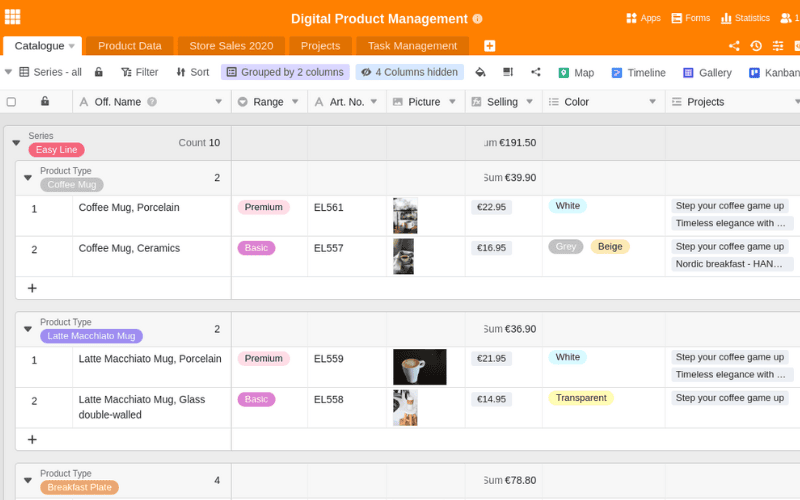
SeaTable software is built for people who need more structure than a spreadsheet but less overhead than a traditional database platform. A SeaTable database can track clients, inventory, editorial calendars, product feedback, operations checklists, or internal requests while still feeling approachable for non-technical teams. The SeaTable app keeps rows, columns, files, comments, statuses, and views in one place so daily work stays visible.
A SeaTable alternative often matters when teams compare spreadsheet-like tools, self-managed platforms, and cloud collaboration systems. SeaTable cloud gives quick access for distributed teams, while SeaTable self hosted deployments support organizations that need tighter control over infrastructure, storage, and compliance requirements.
SeaTable database design starts with tables, fields, views, and relationships. Teams can create filtered grids for operations, calendar views for schedules, gallery views for visual assets, and forms for intake. SeaTable forms are useful when outside contributors need to submit requests without seeing the whole workspace.
SeaTable automation helps reduce repetitive updates. Status changes can trigger notifications, reminders can support approvals, and routine assignments can move through a process without manual copying. With SeaTable integrations and the SeaTable API, teams can connect records to reporting tools, internal portals, scripts, dashboards, and external business systems.
The SeaTable app is also helpful for documentation because each record can hold context, attachments, comments, and history. Instead of scattering updates across chat threads, a SeaTable database becomes the shared reference for the work itself.
A strong SeaTable cloud setup gives each team the right balance of openness and control. Managers can prepare templates, administrators can set permissions, and contributors can work inside views built for their role. SeaTable login access keeps the workspace tied to user accounts, making ownership and accountability clearer.
SeaTable templates speed up the first build. A team can begin with project tracking, applicant pipelines, campaign planning, asset libraries, bug reports, or CRM-style tables, then adjust fields as the process changes. SeaTable tutorial resources help new users understand views, linked records, formulas, and automation logic without needing a developer for every update.
For teams evaluating SeaTable pricing, the key question is usually scale: number of users, storage needs, automation depth, API usage, and whether SeaTable self hosted control is required. SeaTable download options can also matter for organizations that prefer desktop access or controlled deployment paths.
| Step | Action |
|---|---|
| 1 | Review SeaTable pricing, user count, storage needs, and whether SeaTable cloud or SeaTable self hosted fits the organization |
| 2 | Complete SeaTable login setup, create a base, and choose SeaTable templates that match the first workflow |
| 3 | Build the SeaTable database with fields, linked records, filtered views, forms, and permission groups |
| 4 | Add SeaTable automation for reminders, approvals, recurring updates, and structured handoffs |
| 5 | Connect SeaTable integrations or the SeaTable API after the core workspace is stable |

| Area | Team-facing value |
|---|---|
| SeaTable app | Central workspace for records, files, views, forms, comments, and project data |
| SeaTable database | Flexible no-code structure for CRM, operations, planning, assets, and internal tracking |
| SeaTable cloud | Browser-based collaboration with secure access, shared updates, and permission control |
| SeaTable automation | Rule-based actions that reduce manual follow-ups and repetitive status work |
| SeaTable integrations | Connections through built-in services, scripting, webhooks, and the SeaTable API |
| Component | Minimum | Recommended |
|---|---|---|
| Access model | Modern browser with SeaTable login | SeaTable cloud workspace plus managed team permissions |
| Data structure | Basic tables and fields | Linked records, formulas, forms, filtered views, and SeaTable templates |
| Administration | Workspace owner account | Admin roles, backups, access policies, and SeaTable self hosted planning |
| Extension path | Manual imports and exports | SeaTable integrations, scripts, webhooks, and SeaTable API usage |
| Learning path | Introductory SeaTable tutorial | Process-specific documentation and reusable SeaTable database patterns |
SeaTable software works well for operations teams that need custom databases without waiting on a full application build. A SeaTable database can represent orders, vendors, inspections, editorial tasks, hiring stages, equipment logs, support requests, or grant applications. Because the SeaTable app combines spreadsheet familiarity with database structure, teams can improve process quality without abandoning a familiar grid.
Product, marketing, HR, nonprofit, education, and administrative teams can all use SeaTable forms for intake and SeaTable automation for follow-up. Technical teams may prefer the SeaTable API for deeper workflows, while business teams may focus on SeaTable templates, dashboards, and role-specific views.
Why choose SeaTable app over a spreadsheet? SeaTable database structure adds relationships, permissions, forms, automations, and views that support repeatable team processes.
Can SeaTable cloud support remote teams? Yes, SeaTable cloud is designed for shared access, comments, role-based work, and synchronized updates.
When does SeaTable self hosted make sense? SeaTable self hosted is useful when an organization needs infrastructure control, internal policies, or custom deployment requirements.
What can the SeaTable API do? The SeaTable API can read, update, and connect data with scripts, portals, dashboards, and external services.
Are SeaTable templates necessary? SeaTable templates are not required, but they shorten setup time and help teams learn practical SeaTable tutorial patterns faster.
Teams comparing a SeaTable alternative should map actual workflows before choosing a platform. SeaTable software is strongest when the workspace reflects real process steps: intake through SeaTable forms, review in filtered views, assignment through fields, and follow-up through SeaTable automation. A clean SeaTable database avoids unnecessary columns and gives every team member a clear place to update work.
SeaTable download interest often comes from teams that want easier access to a reliable workspace, but the larger value comes from thoughtful structure. Start with one important process, use SeaTable templates only where they match the work, and refine fields after the team has used the SeaTable app for real tasks. SeaTable tutorial materials can help administrators introduce linked records, formulas, permissions, and views gradually.
For larger teams, SeaTable pricing should be evaluated alongside governance. SeaTable cloud may be the fastest route for collaboration, while SeaTable self hosted may suit organizations with stricter control needs. SeaTable integrations and the SeaTable API become more important as the workspace matures, especially when leadership wants reporting, automation, or connections to existing systems.
A well-maintained SeaTable database becomes a practical operating layer. SeaTable login access clarifies who changed records, SeaTable automation keeps processes moving, SeaTable forms gather clean input, and SeaTable templates help new departments adopt proven patterns. Whether the goal is a SeaTable alternative, a central operations hub, or a flexible no-code workspace, SeaTable software gives teams a structured path from scattered data to organized work.
SeaTable app, SeaTable database, SeaTable software, SeaTable cloud, SeaTable API, SeaTable alternative, SeaTable self hosted, SeaTable pricing, SeaTable download, SeaTable login, SeaTable templates, SeaTable tutorial, SeaTable automation, SeaTable forms, SeaTable integrations