Home
VariaMos is a tool that is continuously and incrementally built through research results into a single tool that allows engineering and simulation of systems and families of systems (Self-Adaptive).
VariaMos can be used in different roles:
Product line designer: The primary function is creating product lines and using the languages to create models. Language developer: The primary function is to create, modify or extend the capability of the languages. Core developer: The primary function is to create, modify or extend the core capabilities.
This wiki shows how to setup the developping environment to be able in particular to run the different tests for the application.
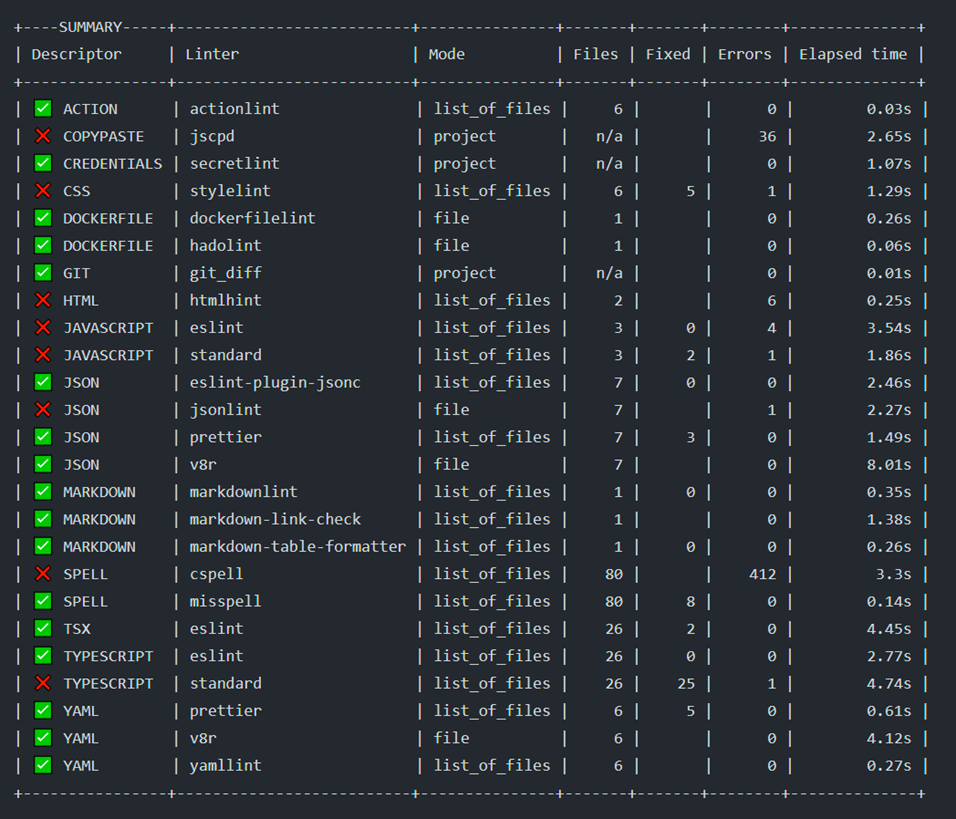
Github Actions is used to complete static analisis of the code. In this project, the jobs megalinter and sonarcloud will verify different elements like synthax errors, code standards, code smells, etc... As shown below, when the jobs is complete, the console will print a small report to give the status of the code.
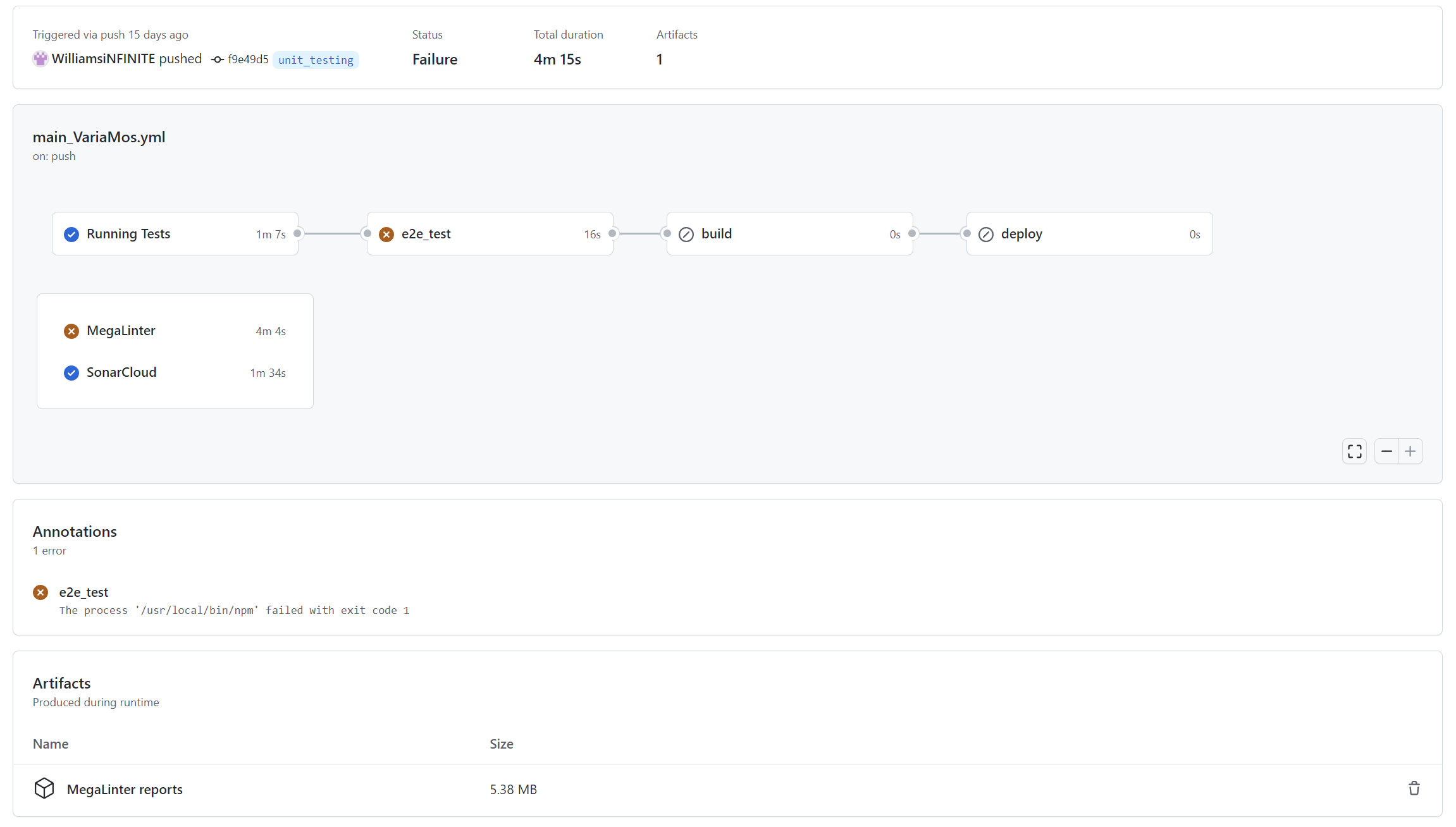
Moreover, megalinter will produce artifacts which consist in a zip file containing a report for each linter used during the job as depicted below. Finally, Github Actions can also run our tests suites before building and deploying VariaMos if required.
It is possible to choose when to run the workflows. For instance, in the file .github/workflows/main_VariaMos.yaml, the workflow will be executed on each push on the branch 'main' or will be executed manually.
on:
  push:
    branches:
      - main
  workflow_dispatch:
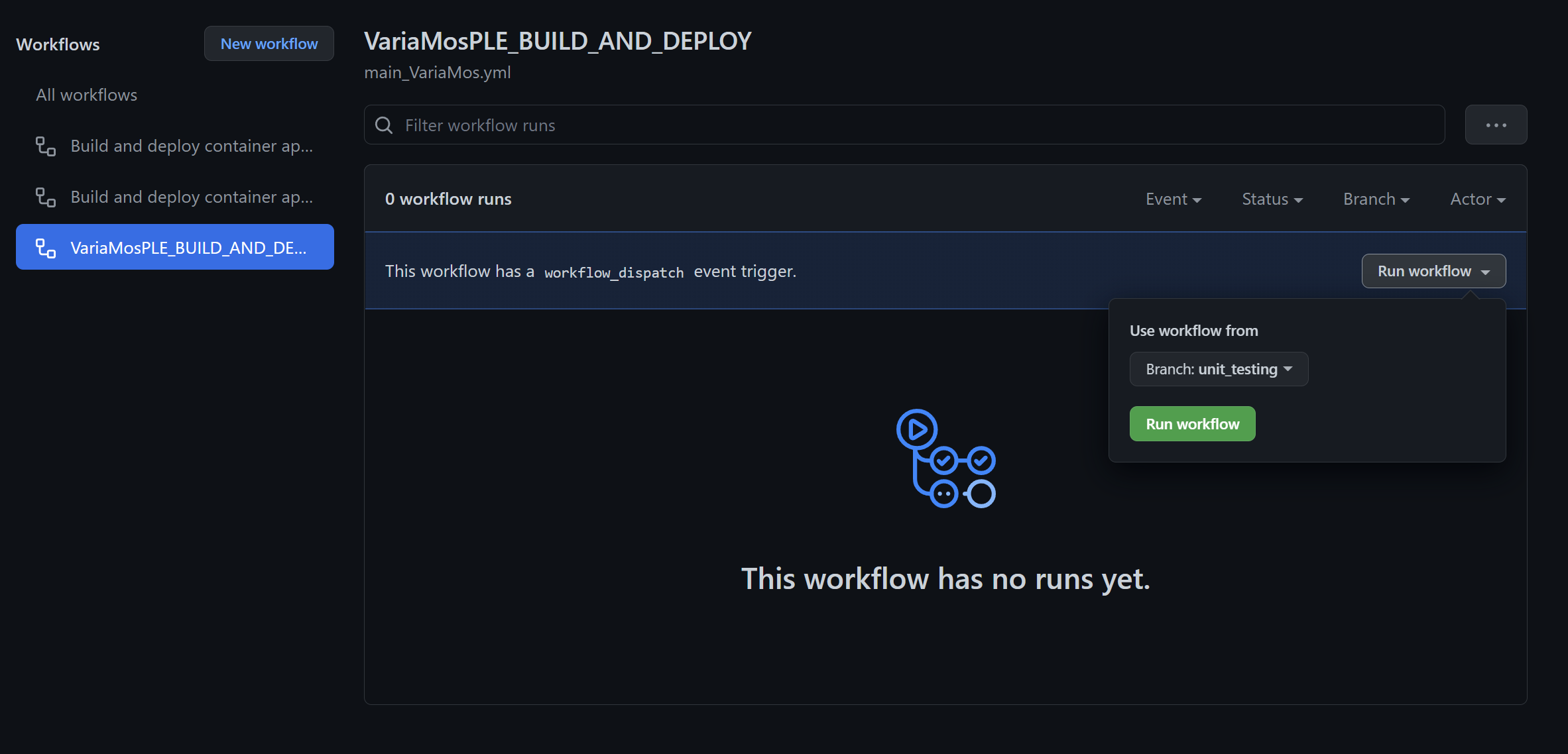
If you clone or fork this repository, you will have to manually activate Github Actions. Go to the dedicated tab 'Actions' then click on 'I understand my workflows, go ahead and enable them'.
Then you will be able to run the different workflows
You can clone this repository with this command :
git clone https://github.com/WilliamsiNFINITE/VariaMosPLE.gitTo install the dependencies, run the commands :
cd .\VariaMosPLE\git checkout origin/unit_testingnpm installLaunching Unit Tests with Jest
To run the tests related to modified files since the last commit use the command :
npm testTo run all the tests use the command :
npm test -- --watchAllTo run all the tests with coverage use the command :
npm test -- --watchAll --coverageTo specify a directory in which you want to execute the tests use the option --testMatch 'my_directory'. For example, to use the tests in /src/Addons/ use the command :
npm test -- --watchAll --testMatch '**/src/Addons/**/?(*.)+(test).[tj]s?(x)'To see more options, please visit the official documentation on the Jest website.
Once the tests with coverage are done, you can visit the report at /coverage/lcov-report/index.html
Launching Mutation Tests with Stryker
To run the mutation tests you can use the command :
stryker runMutation testing can take a while depending on the file your are testing, the number of tests and mutants. With my current configuration, 197 tests and 3384 mutants the running time was 9 hours 36 minutes 46 seconds.
To reduce the running time, try to run mutation tests on specific directory. For example, to use the mutants in /src/Addons/ use the command :
stryker run --mutate src/Addons/**/*.ts
To see more options, please visit the official documentation on the Stryker website.
Once the mutation tests are done you can consult the report at /reports/mutation/mutation.html
Launching E2E Tests with Cypress
To run the end-to-end tests you have to start the application with the command :
npm startThen open a new terminal in your project repository and use the command :
cypress runTo have a test with headed browser run the command :
cypress run --headedTo prevent the browser from quitting run the command :
cypress run --headed --no-exitTo see more options, please visit the official documentation on the Cypress website.
Jest covarage rules can be modified in the file package.json. It allows the unit test job () to fail and to prevent the built and deployment of the application if the requirements are not met.
  "jest": {
    "coverageThreshold": {
      "global": {
        "branches": 1,
        "functions": 1,
        "lines": 1,
        "statements": 1
      }
    }
},The cypress config file is cypress.json
The stryker config file is stryker.conf.json
Click to see the configuration used for the mutation tests
 - Windows 10 Famille 64 bits
 - AMD Ryzen 7 5800H (Octo-Core 3.2 GHz / 4.4 GHz Turbo - 16 Threads - Cache 16 Mo)
 - NVIDIA GeForce RTX 3050 Ti Studio 4Go GDDR6
 - 16 Go DDR4
Contact me for any question :