go Context详解 #4

Description

go 1.23.4
接口
Context
type Context interface {
    // 当 context 被取消或者到了 deadline,返回一个被关闭的 channel
    Done() <-chan struct{}

    // 在 channel Done 关闭后,返回 context 取消原因
    Err() error

    // 返回 context 是否会被取消以及自动取消时间(即 deadline)
    Deadline() (deadline time.Time, ok bool)

    // 获取 key 对应的 value
    Value(key interface{}) interface{}
}
cancelCtx
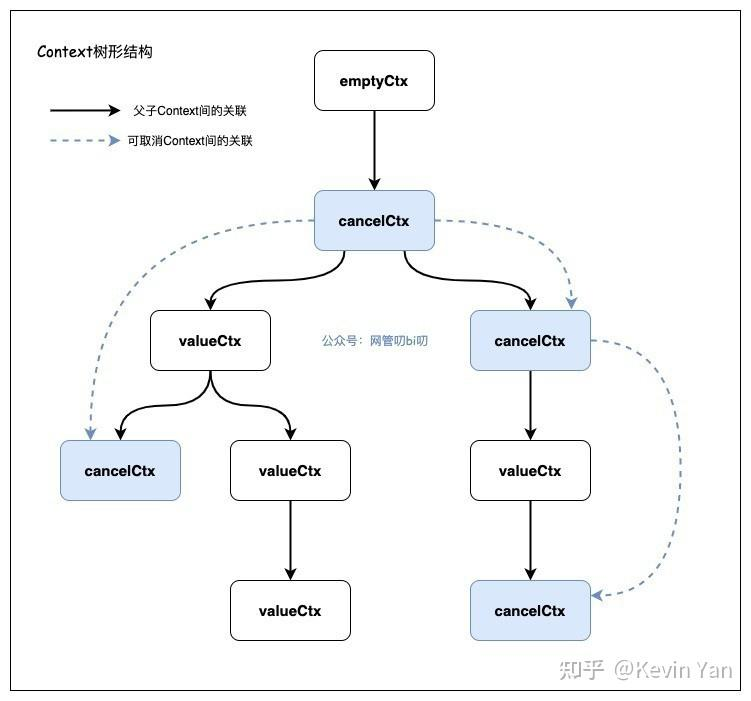
type cancelCtx struct {
    Context
    mu       sync.Mutex            // protects following fields
    done     atomic.Value          // of chan struct{}, created lazily, closed by first cancel call
    children map[canceler]struct{} // set to nil by the first cancel call
    err      error                 // set to non-nil by the first cancel call
    cause    error                 // set to non-nil by the first cancel call
}cancelCtx嵌入了一个Context,继承了Context的所有特性,所以cancelCtx可以被看成一个Context
done采用懒加载的方式创建
func (c *cancelCtx) Done() <-chan struct{} {
	d := c.done.Load()
	if d != nil {
		return d.(chan struct{})
	}
	c.mu.Lock()
	defer c.mu.Unlock()
	d = c.done.Load()
	if d == nil {
		d = make(chan struct{})
		c.done.Store(d)
	}
	return d.(chan struct{})
}
再是cancel
// closedchan is a reusable closed channel.
var closedchan = make(chan struct{})

// cancel closes c.done, cancels each of c's children, and, if
// removeFromParent is true, removes c from its parent's children.
// cancel sets c.cause to cause if this is the first time c is canceled.
func (c *cancelCtx) cancel(removeFromParent bool, err, cause error) {
	if err == nil {
		panic("context: internal error: missing cancel error")
	}
	if cause == nil {
		cause = err
	}
	c.mu.Lock()
	if c.err != nil {
		c.mu.Unlock()
		return // already canceled
	}
	c.err = err
	c.cause = cause
	d, _ := c.done.Load().(chan struct{})
	if d == nil {
		c.done.Store(closedchan)
	} else {
		close(d)
	}
	for child := range c.children {
		// NOTE: acquiring the child's lock while holding parent's lock.
		child.cancel(false, err, cause)
	}
	c.children = nil
	c.mu.Unlock()

	if removeFromParent {
		removeChild(c.Context, c)
	}
}用c.done.Store(closedchan)关闭chan,递归取消所有子节点。
可以看到在取消子节点child.cancel(false,err,cause)中传入了false,因为后面执行了c.child = nil,没必要在子节点取消时多做一步。
上面知道了cancelCtx可以作为Context使用,看看怎么创建可取消的Context
// WithCancel returns a copy of parent with a new Done channel. The returned
// context's Done channel is closed when the returned cancel function is called
// or when the parent context's Done channel is closed, whichever happens first.
//
// Canceling this context releases resources associated with it, so code should
// call cancel as soon as the operations running in this [Context] complete.
func WithCancel(parent Context) (ctx Context, cancel CancelFunc) {
	c := withCancel(parent)
	return c, func() { c.cancel(true, Canceled, nil) }
}

func withCancel(parent Context) *cancelCtx {
	if parent == nil {
		panic("cannot create context from nil parent")
	}
	c := &cancelCtx{}
	c.propagateCancel(parent, c)
	return c
}这里可以看到c.cancel(true,Canceled,nil)传入了true。