Repository navigation
General Analysis

Pac-Man, is one of the most iconic and popular video games of the maze genre, this genre of video games is characterised by getting players to move around in a maze-like environment in order to score points or complete objectives while avoiding obstacles or enemies.

As it is obvious pacman has not been the only video game of this maze genre, this genre encompasses a wide variety of video games as this type of video games started to be called this way by the 80's to describe any game that focuses on exploring and solving puzzles in maze environments. It is true that pacman is not exclusively a maze game but it was one of the games that popularised the genre by introducing mazes full of ghosts and dots that the player had to collect and helping the creation of more maze games.
To show that there is quite a variety of video games in this genre I would like to highlight some other famous video games of the genre such as:
Labyrinth (1972): One of the first maze games, created by Ed Thorp for the Magnavox Odyssey console. Players had to navigate through a maze using a joystick.

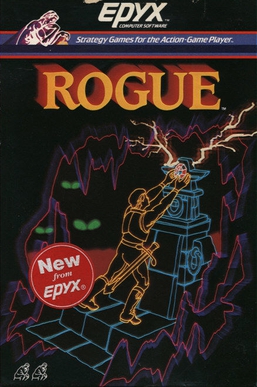
Rogue (1980): Considered one of the first dungeon RPGs, Rogue featured randomly generated mazes and elements of exploration and combat.
Also more contemporary games such as:
Portal (2007): Although best known for its innovative portal system, Portal also featured levels filled with puzzles and mazes that challenged the player's logic and perception.

The Witness (2016): An open-world puzzle game featuring an island full of mazes and puzzles that players must solve to unravel the mystery of their surroundings.

It is estimated that over 400,000 Pac-Man arcade machines were produced, generating huge coin-operated revenue. It should also be noted that as Pac-Man's popularity grew, the game was implemented on new consoles and handhelds such as the Atari 2600, Nintendo Entertainment System (NES), Game Boy, ... generating a significant amount of revenue. It is difficult to know the exact number of sales of Pacman as it has been re-released and remastered numerous times for more modern devices, without taking into account the sales of merchandising and licensing.
-
Video Game Hall of Fame Induction: In 1999, Pac-Man was inducted into the Video Game Hall of Fame, a prestigious recognition that celebrates the lasting achievements and cultural impact of the most influential video games in history.
-
Golden Joystick Awards: Pac-Man has won several awards at the Golden Joystick Awards, one of the oldest and most prestigious awards in the video game industry. While specific details may vary, Pac-Man has been recognised in several categories over the years.
-
Other awards and recognitions: In addition to these specific awards, Pac-Man has been honoured with numerous other awards and recognitions over the years. These can include video game industry awards, recognition for cultural impact, and mentions in lists of the greatest games of all time.


Pacman's hardware architecture is comprised of the following components:
-
CPU: Z80 running at 3.072 MHz
-
Video Processor:
-
Resolution: 224x288 pixels
-
Color Depth: 8-bit color
-
Hardware Sprites: Supported
-
-
Memory:
-
Game ROM: 16KB
-
Video RAM: 1KB (for characters)
-
Color RAM: 1KB (for color information)
-
General RAM: 2KB
-
-
Sound:
-
Sound Chip: Namco custom chip
-
Voices: 3 simultaneous voices using wavetable synthesis
-
-
Ports and I/O:
-
Interrupt Enable: 5000h
-
Sound Enable: 5001h
-
Auxiliary Board Enable: 5002h (unused in Pacman)
-
Flip Screen: 5003h
-
Player Start Lights: 5004h (Player 1), 5005h (Player 2)
-
Coin Lockout: 5006h
-
Coin Counter: 5007h
-
-
Inputs:
-
Joystick and Coin Slots: IN0 port (read-only at address 5000h)
-
Player 2 Joystick and Start Buttons (cocktail mode only): IN1 port (read-only at address 5040h)
-
DIP Switches: Read-only at address 5080h
-
Video:
-
Monitor Orientation: Vertical
-
Type: CRT
-
Resolution: 224x288 pixels
-
Color Depth: 8-bit color
-
Color Palette: 32 entries with RGB information
-
Sprites: 8 independent 16x16 color sprites
-
-
Audio:
- Sound Chip: Namco custom chip
Voices: 3 simultaneous voices using wavetable synthesis
-
Controls:
-
Number of Simultaneous Players: 2
-
Maximum Number of Players: 2
-
Gameplay: Joint
-
Control Panel Layout: Multiple Player
-
Joystick: 4-way
-
Buttons: 1 (Player 1 Start), 1 (Player 2 Start)
-
Cabinet Style: Upright/Standard
-
Pac-Man was first released in Japan on 22 May 1980 and the creators of Pac-Man are Toru Iwatani and his development team at Namco, a Japanese video game company that later merged with Bandai to form Namco Bandai Games. Toru Iwatani is widely credited as the main creator of the game, having devised the concept and designed the characters and gameplay of Pac-Man.


The hardware used in pacman arcade machines varied depending on the model but usually consisted of a circuit board designed specifically for the game including microprocessors and custom sound chips... Also included in the hardware were other components such as a cathode ray tube screen to display the game graphics, joystick controls and buttons for players to interact with the game, and a cabinet housing designed to house all of these hardware components in a safe and attractive manner. As time went on the hardware varied to suit different platforms and systems including home consoles, personal computers and mobile devices.
- Versions of Pac-Man:

-
Pac-Man (1980): The original version of the game released on arcade machines by Namco.
-
Ms. Pac-Man (1981): Unofficial sequel created by Midway, which introduced a new playable character, more complex mazes and improved gameplay.
-
Super Pac-Man (1982): A variant of the original game that introduced new gameplay mechanics, such as keys that unlock doors and different types of fruits that grant different bonuses.
-
Pac-Man Plus (1982): Another variant of the original game with some changes in gameplay and enemies.
-
Pac & Pal (1983): Introduced a new character named Miru, and gameplay elements such as moving fruits and a "pal" (little dog) that helps the player collect points.
-
Jr. Pac-Man (1983): A version that featured larger, scrolling mazes, making the game more challenging.
-
Pac-Land (1984): A version that took Pac-Man into a platform game in which he had to rescue his family while avoiding obstacles and enemies.
-
Pac-Mania (1987): A reboot that featured improved graphics and the ability to jump over ghosts, as well as 3D mazes.
-
Pac-Man Championship Edition (2007): A modern version that retains the essence of the original game but with improved graphics and sound, as well as new game modes and features.
-
Pac-Man 256 (2015): An endless maze game in which the player must avoid being caught by the "glitch" that chases the player from the edge of the screen.
-
...