[[TOC]]
- Clean Architecture (aka Onion, Hexagonal, Ports-and-Adapters)
- Onion architecture
- Microsoft eShopWeb sample
- The Onion Architecture Approach was chosen to implement all the required use cases and make components scalable, maintainable, and testable.
- Organizes your code in a way that limits its dependencies on infrastructure concerns.
- The component is built using .NET 6 using the C# programming language.
- The following coding guidelines are used.
- Abstractions folder should contain interfaces mirroring implementations classes hierarchy
- Group classes under the same folder when more than 2 classes with the same responsibility/group exist
- Try to avoid the suffix "Service" for all classes, use specific suffixes: client, provider, sender, publisher, uploader etc..
|- Controllers
|- IntegrationMessageHandlers
|- Models
|- ValidationAttributes
|- ApplicationCore #when small microservice service
|-- Abstractions
|-- Common
|-- Domain
|-- Exceptions
|- Infrastructure  #Contains Asp and Persistence layer infrastructure
|-- Configuration
|-- Filters
|-- Database
|--- Migrations
|--- Repositories
|-- Services
|- HostStartup #WebHost configuration abstraction
|- Program
|- Startup
|- Controllers
|- IntegrationMessageHandlers #Network depends command/events/ messages handlers
|- Grpc
|- Models
|- ValidationAttributes
|- Configuration
|-- Extensions
|--- ServiceCollectionExtensions.cs
|- Filters
|- HostStartup.cs #WebHost configuration abstraction
|- Program.cs
|- Startup.cs
|- Abstractions
|- Configuration
|-- Extensions
|--- ServiceCollectionExtensions.cs
|-- Options
|--- AppOptions.cs
|- Common  #Common classes not related to specific entity, helpers, utils
|-- Exceptions
|- Domain
|-- Customers
|--- Validators
|--- Events
|--- ValueObjects
|--- Enums
|--- EventHandlers #internal domain events
|--- Specs
|--- Customer.cs #Aggregate/Entity
|-- Orders
|- Services
|- Configuration
|-- Extensions
|--- ServiceCollectionExtensions.cs
|- Migrations
|- Repositories
|- Services
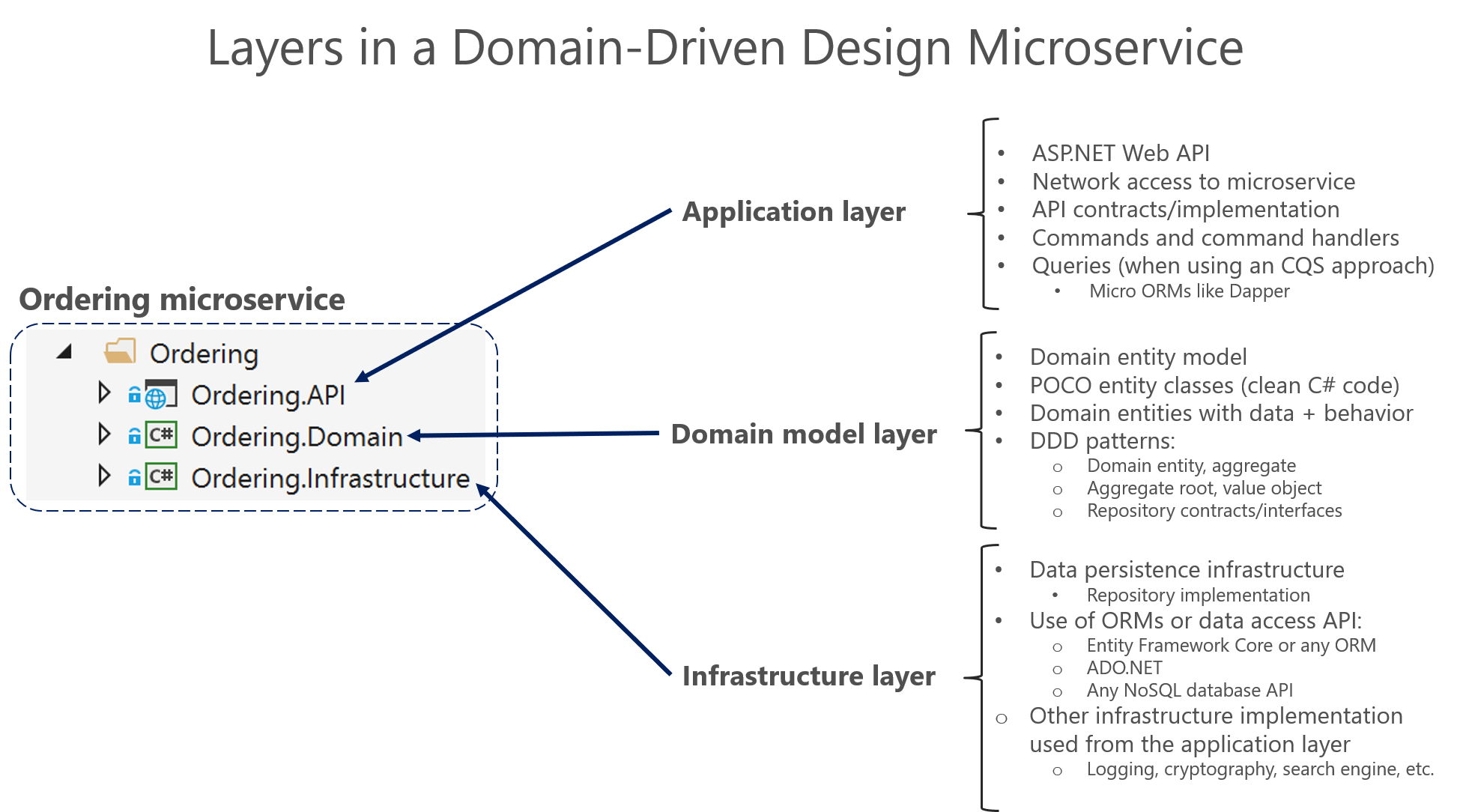
name convention ProjectName.Api
- ASP NET Web API
- Network access to microservices
- Api contract/implementations
- External message handlers
- Queries abstractions (When using a CQS approach)
- Micro ORMs like Dapper
name convention ProjectName.ApplicationCore NOTE: for small microservice can be part of API project, should be a move to independent project when growth
- DDD patterns
- Domain entity, aggregates, events
- Aggregate root, value object
- Domain services
- Repository contracts/interfaces
- Validators
- Domain Exceptions
- External Services abstractions
name convention ProjectName.Infrastructure
- Data persistence infrastructure
- Repository implementation
- Use of ORMs or data access
- EF Core or any other ORM
- ADO.NET
- Any NoSQL database API
- Other infrastructure
- Logging
- Search Engine
- Email, SMS providers
- External Services implementation
- ProjectName.UnitTests
- ProjectName.IntegrationTests
- ProjectName.ComponentTests
- ProjectName.ConsumerContractTests
- ProjectName.ProducerContractTests `
- ApplicationCore models can be used as API models if they one-to-one equals Fluentvalidation can be used for validations, it will make ApplicationCore models clear from Data annotations
- We can use the guards pattern to validate models GuardClauses
- To avoid primitive obsessions we can use StronglyTypedId for Entities Ids
Docs ddd-oriented-microservice