MINIFICPP-1273 - Drain connections on flow shutdown#827
Conversation


 szaszm
left a comment
szaszm
left a comment
szaszm
left a comment
There was a problem hiding this comment.
only minor issues, your changes look reasonable
| for (std::set<ProcessGroup *>::iterator it = child_process_groups_.begin(); it != child_process_groups_.end(); ++it) { | ||
| (*it)->drainConnections(); | ||
| } |
There was a problem hiding this comment.
This could become a range-based for loop.
| MATH(EXPR FLOW_TEST_COUNT "${FLOW_TEST_COUNT}+1") | ||
| add_test(NAME "${testfilename}" COMMAND "${testfilename}" WORKING_DIRECTORY ${TEST_DIR}) | ||
| ENDFOREACH() | ||
| message("-- Finished building ${FLOW_TEST_COUNT} flow related test file(s)...") No newline at end of file |
There was a problem hiding this comment.
The file should end with a newline character.
https://stackoverflow.com/questions/729692/why-should-text-files-end-with-a-newline
There was a problem hiding this comment.
(it seems like the Enter puts too much stress on my pinky)
There was a problem hiding this comment.
(some more bikeshedding questions about the POSIX "line")
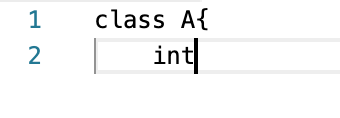
what does POSIX say about where the cursor would be? it cannot be on line 2 as there is no line 2
or take the error message:

what is the 2 in test.cpp:2:8?
we could have "the line n" mean the set of characters after the (n-1)th line up to the next \n, but that seems like a huge stretch
There was a problem hiding this comment.
The tools were written to behave decently with non-text files and consider the line number to be the encountered \ns + 1. Historical posix text processing utilities may ignore the contents after the last \n, but I haven't seen modern tools do so. [1]
Please note that I'm by no means a POSIX lawyer, and the part about handling is mostly speculation.
There was a problem hiding this comment.
I'm not sure about the above implication (\n before EOF -> is text file), but its contrary (no \n before EOF -> is not a text file) seems to be true to me.
There was a problem hiding this comment.
this is a response to a deleted comment:
text file is a file format that has the magic number \n at the end of the file 🤯
(I don't know how to resurrect the comment)
(although I didn't mean to imply that \n before EOF -> is text file, e.g. having a file with only the magic number won't make a file a zip file)

 arpadboda
left a comment
arpadboda
left a comment
arpadboda
left a comment
There was a problem hiding this comment.
Looks good to me, too, one minor comment and a question.
| } | ||
|
|
||
| for (auto &&connection : connections_) { | ||
| for (auto&& connection : connections_) { |
There was a problem hiding this comment.
That's a forwarding reference, because auto uses template deduction rules. In other words, "I don't care what it is, bind a reference to it" reference.
In this case it will be a const lvalue reference, because:
auto&&const std::shared_ptr<Connection>& &&after deducingauto(note:connections_is astd::set, which only has const iterators)const std::shared_ptr<Connection>&after reference-collapsing
Normally I point out that const auto& or auto& would be more explicit and readable, but since this is old code with just a space change, I didn't want to bother @adamdebreceni with this.
There was a problem hiding this comment.
I am torn between always use auto&& in range-based for loops and never, it is really only useful when the iteration yields a temporary proxy object like with std::vector<bool>, auto& could be used, I wouldn't use const auto& as it makes me think that the connection is const whereas only the std::shared_ptr<...> is
| #include "../TestBase.h" | ||
| #include "YamlConfiguration.h" | ||
|
|
||
| const char* yamlConfig = |
There was a problem hiding this comment.
We have a test/resources folder, where you could place it as a real yaml file and read it.
The location of the yaml file can be a cmd line argument as well as we do in our integration tests.
Edit: passing command line args to ctest won't work, please ignore this comment
There was a problem hiding this comment.
I saw that a number of tests store their config files there, but the fact that I have to search for the test by name then check the CMakeLists.txt to find out what the command line arguments are going to be, and then manually navigate to the file, makes me think that it is not the best approach

 adamdebreceni
force-pushed
the
MINIFICPP-1273
branch
from
adamdebreceni
force-pushed
the
MINIFICPP-1273
branch
from
ddbcd74 to
c21e10b
Compare

4 participants


Thank you for submitting a contribution to Apache NiFi - MiNiFi C++.
In order to streamline the review of the contribution we ask you
to ensure the following steps have been taken:
For all changes:
Is there a JIRA ticket associated with this PR? Is it referenced
in the commit message?
Does your PR title start with MINIFICPP-XXXX where XXXX is the JIRA number you are trying to resolve? Pay particular attention to the hyphen "-" character.
Has your PR been rebased against the latest commit within the target branch (typically master)?
Is your initial contribution a single, squashed commit?
For code changes:
For documentation related changes:
Note:
Please ensure that once the PR is submitted, you check travis-ci for build issues and submit an update to your PR as soon as possible.