

Drivers Ed Game helps users practise driving maneuvers — parking, lane discipline and traffic rules — in a virtual environment for easier learning before real driving.
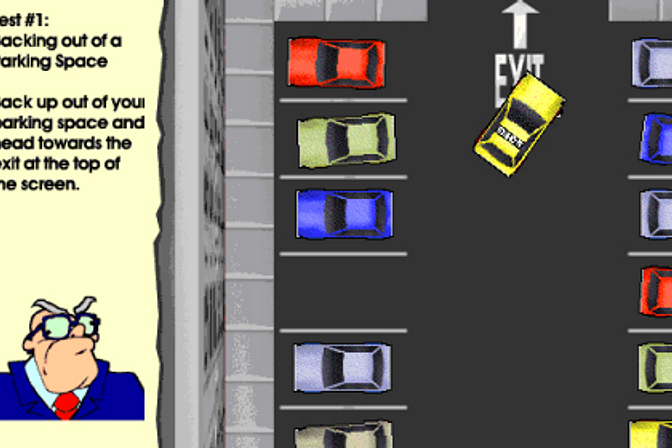
Drivers Ed Game is not a single software but a collection of educational driving simulations and mini‑games, designed to help novice drivers practise basic vehicle control, parking, and traffic rules in a safe virtual environment. These tools aim to ease beginners into driving by offering simple driving tests and parking challenges without the risks of real‑world driving. Some are browser‑based Flash/HTML5 games; others are legacy Windows applications from the late 1990s / early 2000s. The goal is learning and familiarization with driving maneuvers rather than entertainment.
- Parking simulators: Some variants - for example from Drivers Ed Direct - focus on realistic parking challenges: parallel parking, lot parking, timed parking tasks across multiple levels.
- Basic driving tests and maneuvers: Older versions like Driver's Education '99 simulate traffic rules, lane changes, intersections, freeway driving, signaling, and sometimes the dangers of drunk driving or reckless behavior - aiming for a "virtual driver's education."
- Browser‑based driving games: Some "Drivers Ed Game" titles on websites run in browser (HTML5 or legacy Flash), offering simple driving / parking / obstacle‑avoidance gameplay.
- Accessible on Windows and Web: Depending on version, the game may run on older Windows (for legacy software) or directly in modern browsers (online versions).
Unlike mainstream racing games, Drivers Ed Game variants emphasize teaching safe driving practices rather than speed or stunts. The educational content includes traffic law awareness, parking skills, lane discipline, and defensive driving. For example, Driver's Education '99 includes 70+ lessons covering traffic rules in all 50 US states, with a virtual instructor giving feedback on mistakes (speeding, signaling, seat‑belt, alcohol, etc.) - making it more of a driving‑school simulator than an arcade game.
These tools are primarily for driving learners - teens and adults preparing for a driving license, or anyone wanting to practise basic maneuvers before getting behind a real wheel. They may also appeal to younger users curious about driving, educators seeking simple driving simulators, or nostalgics of older educational software. Because many are free and browser‑based, they are accessible to a wide audience. Online parking simulators may also appeal to casual users who want to test spatial skills or enjoy light driving simulation without commitment.
- Makes learning driving basics safe and risk‑free - no real car, no accident risk while practising.
- Helps build familiarity with traffic rules, parking, lanes and controls before real lessons.
- Accessible - many versions run in browser, no installation required.
- Free or low‑cost - online versions are usually free; legacy Windows versions were sold at modest prices.
- Good for practice and reinforcement - especially parking skills, which many drivers find challenging.
- Parking Simulator Module - virtual parking practice (parallel, lot parking, timed challenges) offered by Drivers Ed Direct.
- Driving Education Simulator Module - full driving practice including city and freeway driving, traffic rules, signaling, defensive driving, alcohol/drug awareness (as in Driver's Education '99).
- Browser-based Mini-Games - simple HTML5/Flash driving games to practise basic driving reflexes and competence.
For older standalone software (like Driver's Education '98 / '99), the target platform was Windows (Windows 95/98 era). The game could run on PCs of that time using keyboard, joystick or steering wheel peripheral.
For modern browser-based versions, any device (desktop, laptop) with a web browser supporting HTML5 or a Flash emulator can run the game, so platform requirements are minimal. No special hardware is needed. Online parking simulators also work directly in browser.
- There is no single "official" or unified Drivers Ed Game - it is a generic term that refers to many different simulators, games and educational tools. This fragmentation can confuse users trying to find a "main" version.
- Many versions are outdated - legacy Windows games may not run properly on modern Windows without emulation (e.g. DOSBox or virtualization).
- Browser-based versions often relied on Flash, which is deprecated / unsupported - they may require special tools or may no longer work reliably.
- Because these tools are simplified simulators, they cannot fully replace real driving lessons - especially for real traffic conditions, real vehicle handling, and driving under variable conditions.
- For serious learners, depending solely on such games may give a false sense of ability - actual driving practice remains essential.
- Beginner drivers wanting to familiarise themselves with basic maneuvers (parking, signaling, lane changing) before real driving lessons.
- Younger people curious about driving mechanics and road rules - as a learning‑toy or educational tool.
- Driving instructors or educators using simple simulators to illustrate parking and basic traffic scenarios.
- Users practising spatial awareness and coordination via parking simulators or light driving games.
- Fans of retro educational software - preserving and trying older Windows driving‑education titles for nostalgia or interest in game history.
- Driver's Education '99 - a 1998/1999 Windows driving‑school simulator from Dynamix / Sierra On-Line. It featured 70+ lessons, a 3D virtual city, traffic laws for all 50 U.S. states, defensive driving, and scenarios including drunk driving and road rage awareness. It had keyboard, joystick, or steering‑wheel support.
- Browser-based parking / driving simulators - e.g. the online Parking Game by Drivers Ed Direct, which offers four levels of realistic parking challenges aiming to help new drivers understand vehicle turning radii and spatial judgement.
- Many free online "Driver's Ed"‑style Flash or HTML5 games listed on casual gaming sites; while not full simulators, they mimic some aspects of driving and parking.
For learners who are not yet ready for real‑world driving, or as a preliminary step before formal driving lessons, Drivers Ed Game variants offer a safe, low‑cost environment to practise and build confidence. They can also help familiarize users with vehicle control logic, road spatial awareness, and basic traffic rules. As many driving‑education simulators have been discontinued or abandoned, existing games like Driver's Education '99 represent a piece of interactive learning history and can be rediscovered via software archives. Browser‑based parking simulators remain a quick, accessible option for casual practice or fun.