Reviewing Items in the Editor
While the Queue (Flashcard) interface is the primary way to review Incremental Rems, there are times when you need the full power of the RemNote editor to process complex information.
This page covers the two main alternative workflows for reviewing items outside of the queue: the Execute Repetition command (for single items) and Sequential Review via the IncRem lists (for batch processing).
- 1. Execute Repetition Command
- 2. Sequential Review via IncRem Lists
- Read Points for Rem-type Incremental Rems
- 3. Incremental Reading: Extracts & Clozes
The Execute Repetition command (Ctrl+Shift+J) lets you register a review of an Incremental Rem directly from the editor, without entering the queue.
- Reading in the editor: You opened an Incremental Rem in the editor (via "-> Go to Rem" or navigation) and finished reviewing it there.
- Extended work sessions: You spent significant time on an item and want to log both the review and the time spent.
- Avoiding queue context switches: You want to continue working in the editor without returning to the queue.
-
Focus on an Incremental Rem in the editor.
-
Press
Ctrl+Shift+J(or use the slash command "Execute Incremental Rem Repetition"). -
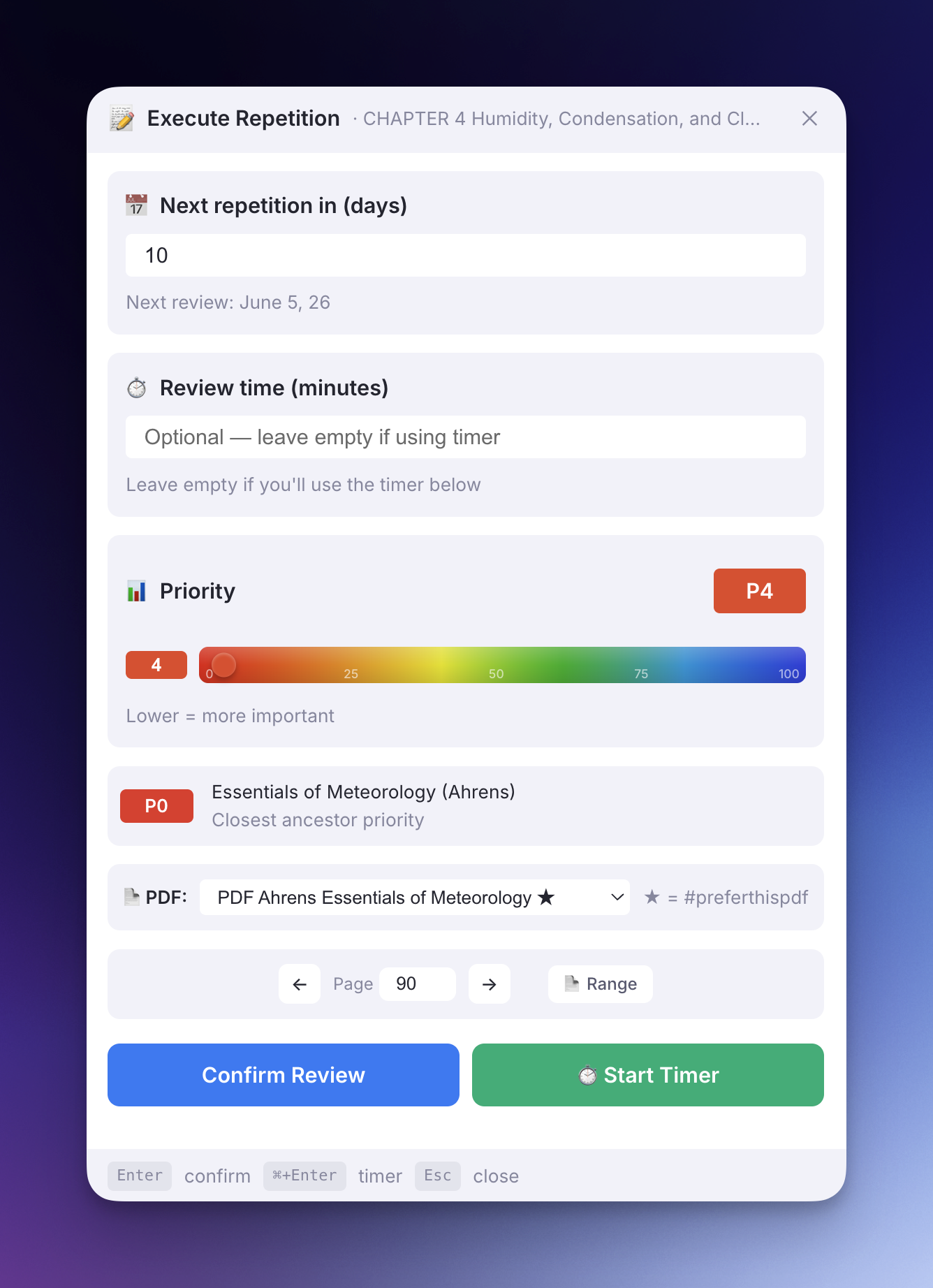
A modernized popup appears (matching the design language of the priority and page-range widgets, with card sections, custom styling, and a keyboard shortcut hint bar):
-
Choose from the available options:
- Manual time entry: Enter the time you spent (in seconds) and click Submit.
- Timer mode: Start a timer, review the content, then stop and submit.
-
Counts for interval calculation: Unlike editor reschedules (
Ctrl+Jin editor), the Execute Repetition command does count as a real review because you're confirming that you engaged with the content. -
PDF Reading History Sync: If the Incremental Rem is a PDF or has a PDF source, the modal will automatically render the tracking PDF Page Controls. You can manipulate your current reading page directly from the popup and any time tracked by the Timer mode will perfectly log into your PDF Reading Analytics!
-
Multi-PDF support: If the Inc Rem has more than one PDF source, a PDF dropdown appears just above the Page Controls. Selecting a different PDF pins it as active for this Inc Rem (★ marks the
#preferthispdfone) — Start Timer will then open and scroll to that PDF, and any subsequent reading-time writes target it. See the PDF Workflow → Multiple PDF Sources section for the resolution chain. -
Records review time: The time you enter is saved in the repetition history.
-
Schedules next review: Uses the same exponential algorithm as the queue's "Next" button.
-
Indicator in history: Shows with a ⌨️ indicator in the Repetition History widget.
-
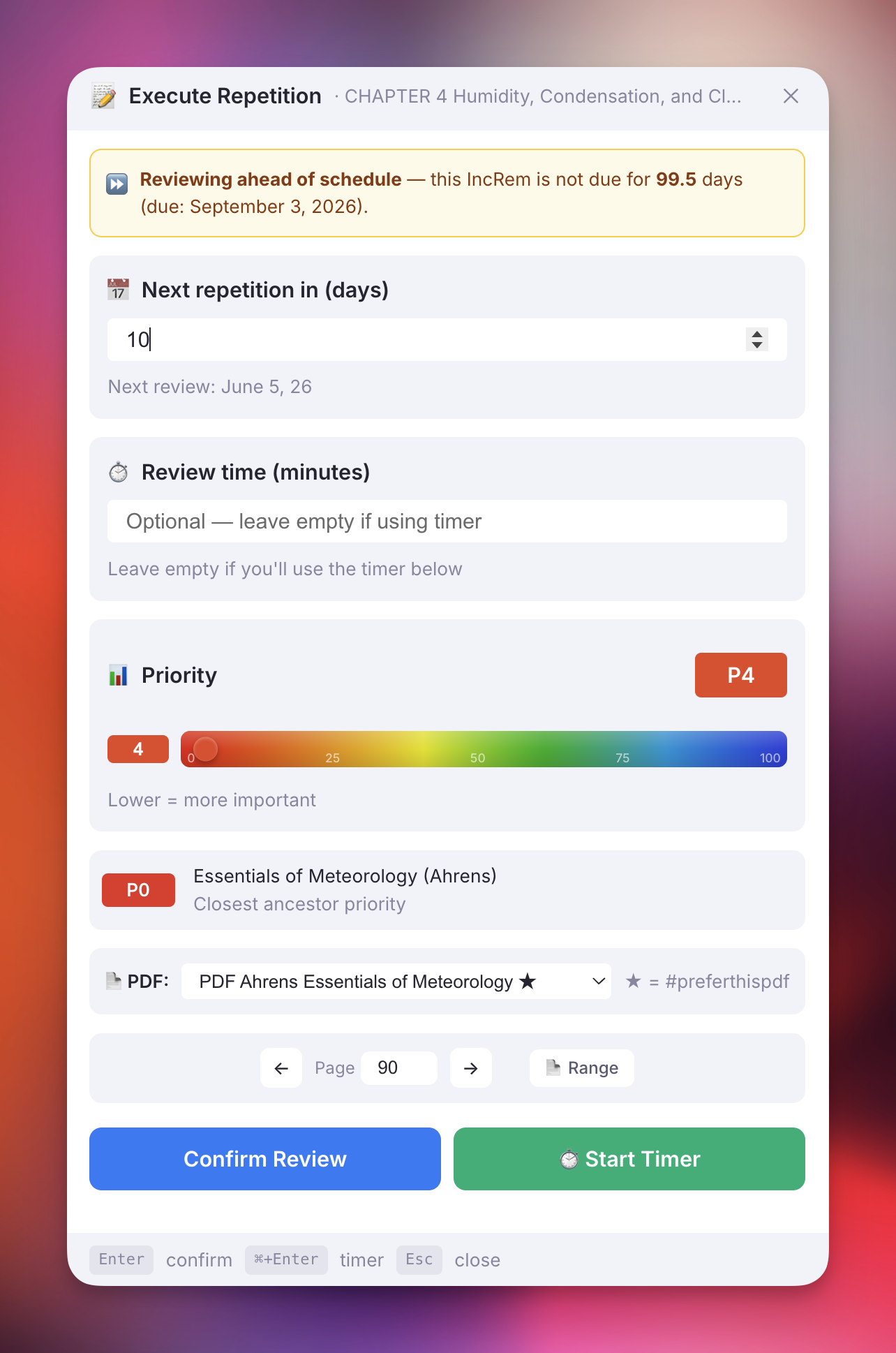
Ahead-of-Schedule Warning Banner: If you review an Incremental Rem before its scheduled due date, an amber warning banner will appear at the top of the popup informing you how many days early you are:
-
Scheduling Conflict (Next-Rep-Date Regression): When confirming a review (via Confirm Review or Start Timer) would calculate a new due date earlier than the currently scheduled one (e.g. if you previously rescheduled it far in the future), a Scheduling Conflict dialog is shown before proceeding:
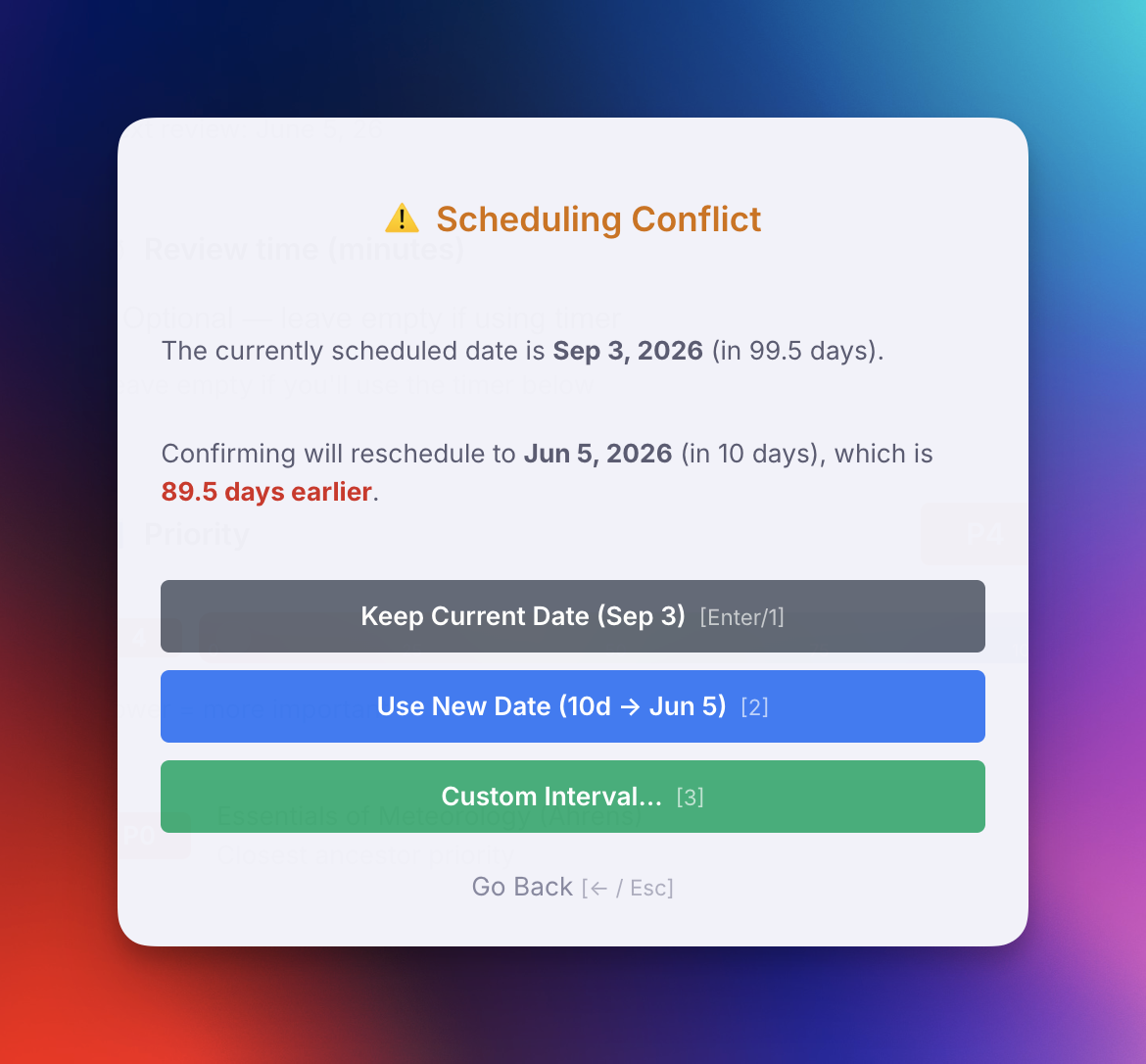
You can resolve the conflict using the following options (which also support keyboard shortcuts):
-
Keep Current Date (
Enteror1): Log the review and time in history but preserve the existing future due date. (Note: once you start typing a custom interval,Enterconfirms the typed interval instead). -
Use New Date (
2): Proceed with the calculated shorter interval. -
Custom Interval (
3): Reveals an inline input to set a custom review interval in days. -
Go Back (
←orEsc): Return to the main popup.
-
Keep Current Date (
| Action | Shortcut | Counts for Interval? | Purpose |
|---|---|---|---|
| Execute Repetition | Ctrl+Shift+J |
✅ Yes | Register a completed review with time tracking |
| Reschedule in Editor | Ctrl+J |
❌ No | Administratively adjust schedule without reviewing |
Use Execute Repetition when you've actually reviewed the content. Use Reschedule when you just want to move the due date without counting it as a review.
If you have a backlog of Incremental Rems and want to process them systematically in the editor instead of the queue, you can use the Sequential Review flow. This flow bridges the powerful filtering of the IncRem List and Main View with the time-tracking of the Editor Review Timer.
The standard queue interface is optimized for rapid flashcard review, but Incremental Rems often require heavy reading, complex restructuring, extracting quotes, and AI assistance. The native "Go to Rem" workflow breaks you out of the queue, but fails to track your review time or automatically queue up the next item.
Sequential Review solves this by creating a dedicated, queue-like experience that lives entirely inside the full RemNote editor.
- Open the All Inc Rems view (or an IncRem List in a document).
- Click the
Sortbutton and select Sort for Review (Queue Order).- Note: This locks your filters to "Due" and "Ascending". It authentically recreates the exact sorting mix you would experience in the standard queue: due Incremental Rems will be sorted by priority, incorporating the degree of randomness you have configured in your Sorting Criteria. If you want a completely random order, you can achieve this by setting the Incremental Rem randomness in the Sorting Criteria to 100% (full).
- Click the blue "Review in Editor" button at the top of the table.
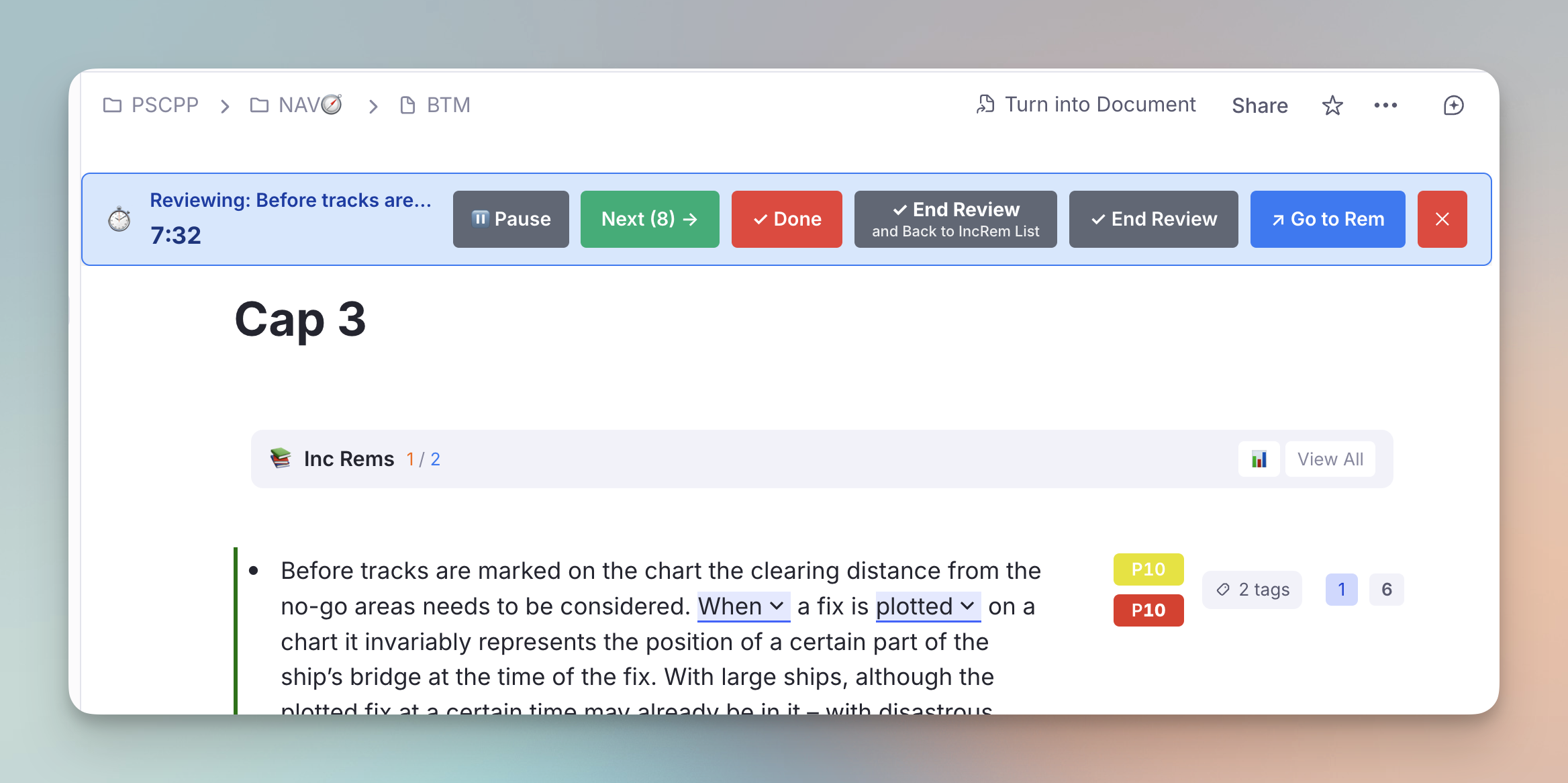
Once you click the button, you are transported to the editor for the first item in the list, and the Editor Review Timer widget appears at the bottom of your screen.
The timer provides a range of powerful controls to manage your session without the risk of overlapping text in smaller windows.
- Review your material: Read, edit, extract highlights, or create flashcards using the full power of the editor.
- Pause if needed: If you need to step away mid-review, click the ⏸ Pause button to freeze the timer. Click ▶ Resume to continue. Only active (non-paused) time is recorded when the repetition is saved.
-
✓ Dismiss Button: If you've completely finished with an item (e.g. you've finished reading the full chapter and extracted all your flashcards), click the ✓ Dismiss button (red, placed just before the cancel ✕). It is available in every flow that starts the timer — Sequential Review and
Ctrl+Shift+J(Review in Editor) + Start Timer.- What happens under the hood: Just like the "Dismiss" button in the queue, this records your final review time, transfers your history to the Dismissed powerup, and removes the Incremental status from the Rem, effectively clearing it from your active learning universe. The dismissal also appears in the Incremental Rem History sidebar with a 🔴 Dismissed badge.
-
When there are no further items queued (e.g. single-item flows via
Ctrl+Shift+J), Dismiss finalizes the item and ends the timer in place. When a queueList is present (Sequential Review), it dismisses the current item and advances to the next one.
-
Move to the next item: When you are finished with the current review but want the item to remain incremental for future sessions, click the Next (N) → button on the timer widget.
- What happens under the hood: The plugin instantly records your repetition (logging the time spent and pushing the Next Rep Date forward), saves this reading history to the Incremental Tracker, and instantly teleports you to the editor of the next item in your sorted list.
- Finish the session: If you want to stop reviewing before the list is empty, simply click "End Review" on the green primary button. The destination sub-label ("and Back to IncRem List") confirms where you will land.
- Cancel Timer: Discard the current item's timer and stay in the editor.
When the Inc Rem being reviewed has more than one PDF source, a small PDF dropdown appears in the timer's host section, next to the page controls. Switching:
-
Pins the chosen PDF as the active one for this Inc Rem (★ marks the
#preferthispdfsource), - Re-targets the page controls and the 🔖 Scroll button to the new PDF immediately,
-
Re-routes reading-time records (saved when you click Next / End Review / Dismiss) to the new
(IncRem, PDF)pair.
The switcher is hidden when the Inc Rem has zero or one PDF sources. See PDF Workflow → Multiple PDF Sources for the full resolution chain across surfaces.
The timer widget is designed to be fully responsive. If used in a narrow sidebar or a collapsed window, the buttons and controls will automatically wrap into multiple lines to prevent overlap and ensure the timer remains legible.
This flow provides the best of both worlds: the queue sorting, combined with the unrestricted creative workspace of the full editor!
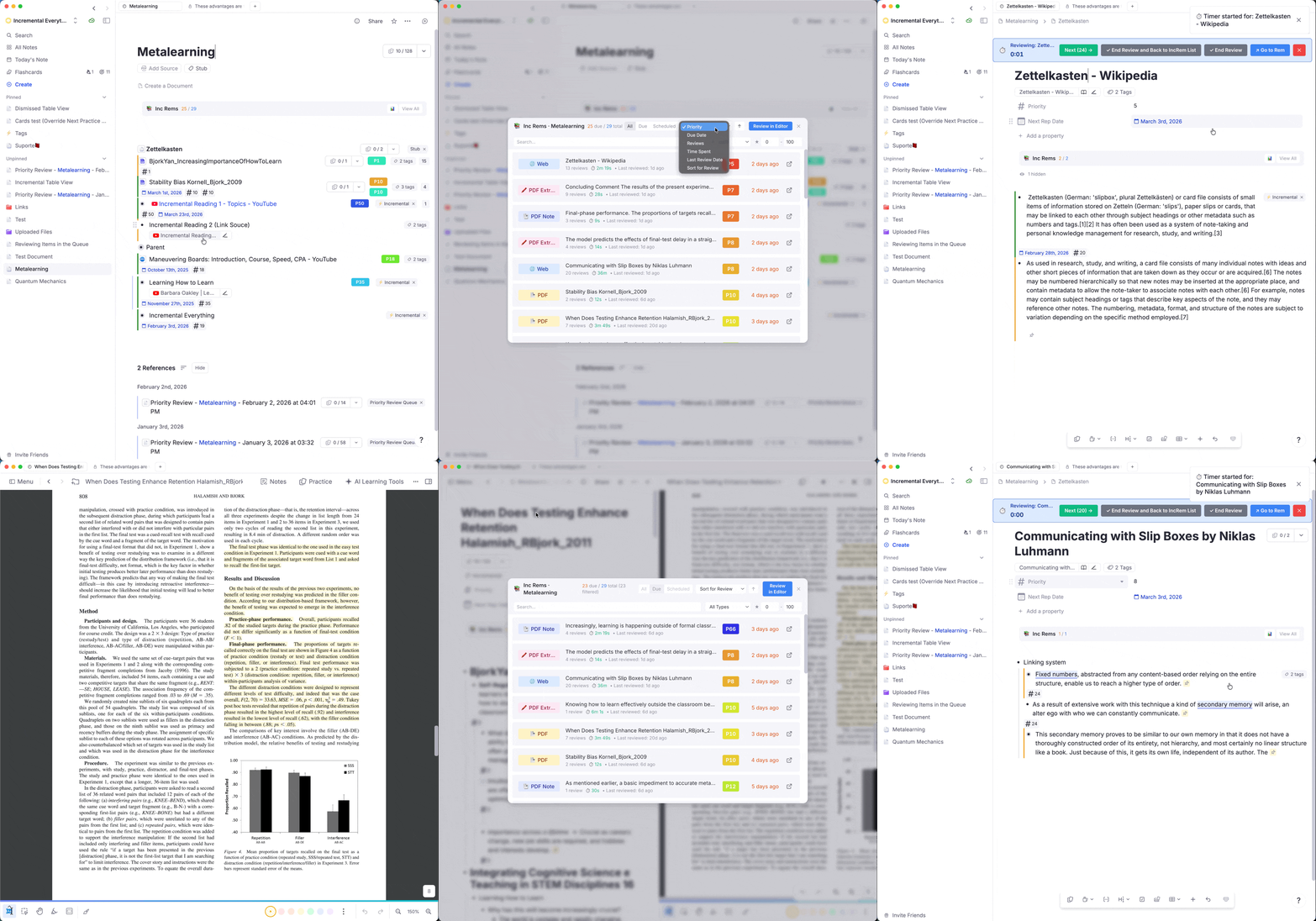
When reviewing PDF items in the editor, the Review in Editor Timer (a widget registered in the DocumentAboveToolbar location) does not appear directly inside the PDF viewer interface.
To access the timer and review controls, you must click the "Notes" button within the PDF viewer to open the associated document. The timer will then be visible at the top of the notes pane, above the document title.


When you are reading a PDF in the editor (instead of the queue), your reading position is not tracked automatically unless you use the extract/toggle widgets. To manually save an exact point as your current reading position:
- Create a highlight and click the Bookmark (🔖) widget in the PDF Highlight Toolbar.
- The popup will ask you to select which Incremental Rem you want to save the bookmark to (since a single PDF might be linked to multiple sibling chapters, and the plugin needs to know which one you are currently reviewing).
- Smart Suggestions: If you previously assigned page ranges to your chapters (via the PDF Control Panel or inline widget), the Bookmarks popup will automatically suggest the correct Incremental Rem (marked with a ★) based on the page you are currently on.
- Timer-aware: If you are currently using the Editor Review Timer (e.g. you clicked "Start Timer" from the Execute Repetition popup), the Bookmark popup will automatically detect the active IncRem — the same fast-path that works in the queue — and show an "Update Current Editor Review Reading" button at the top, letting you save the bookmark in one click.
Once you have a saved bookmark, the plugin gives you three ways to open the PDF and jump straight to it — all without closing your current document:
| Where | What to do | Result |
|---|---|---|
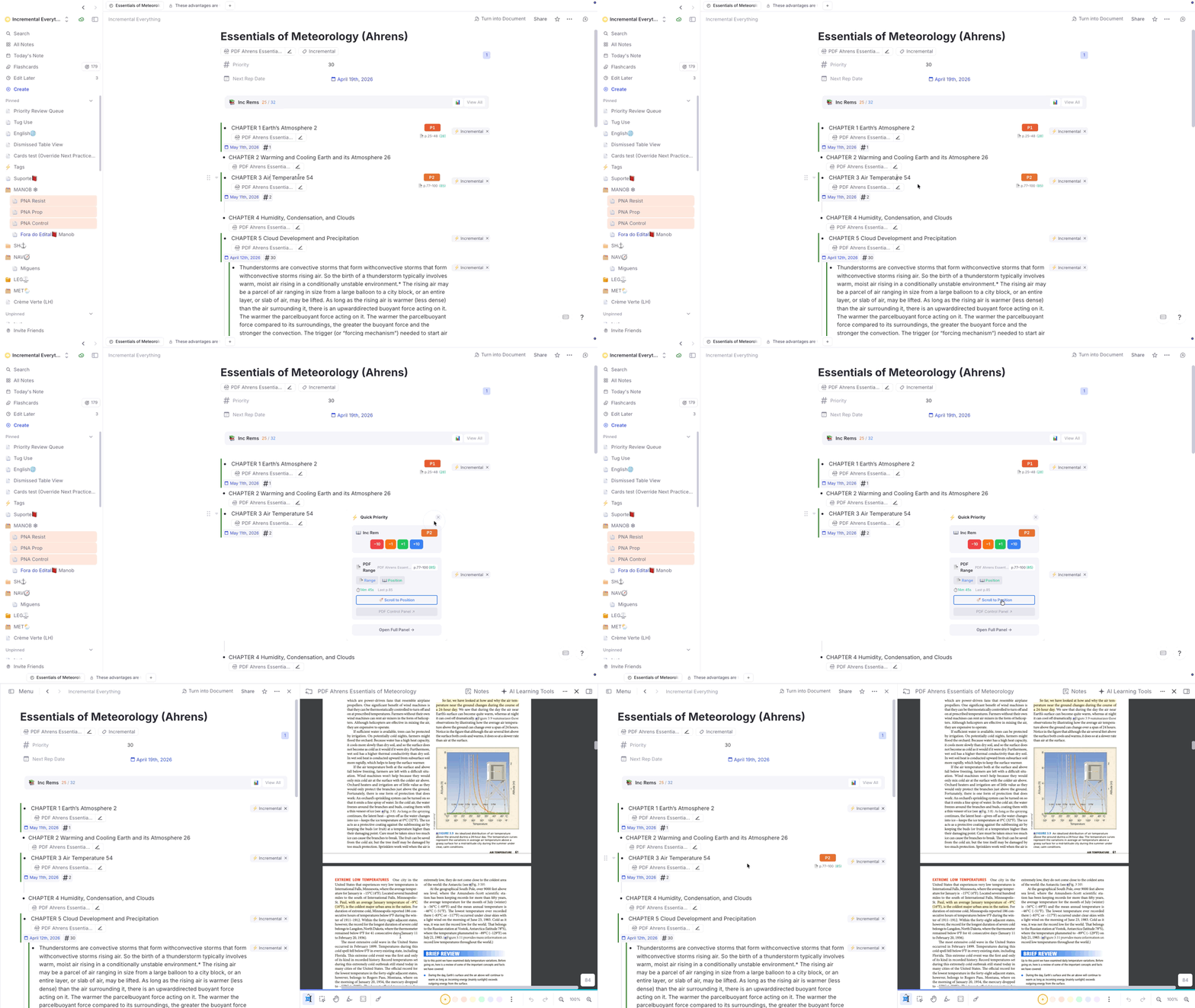
| Editor Toolbar (right of IncRem) | Click 🔖 Scroll to Position | PDF opens in a new pane to the right; reader scrolls to the bookmark |
| Execute Repetition popup | Click ⏱️ Start Timer | Same split-pane open + scroll, then timer begins |
| Editor Review Timer bar | Click 🔖 Scroll (appears next to page controls) | Same split-pane open + scroll |
In all three cases the PDF mounts to the right of your current layout — the Incremental Rem you were reading stays visible on the left. If the PDF is already open in another pane, the plugin focuses that pane instead of creating a duplicate split.
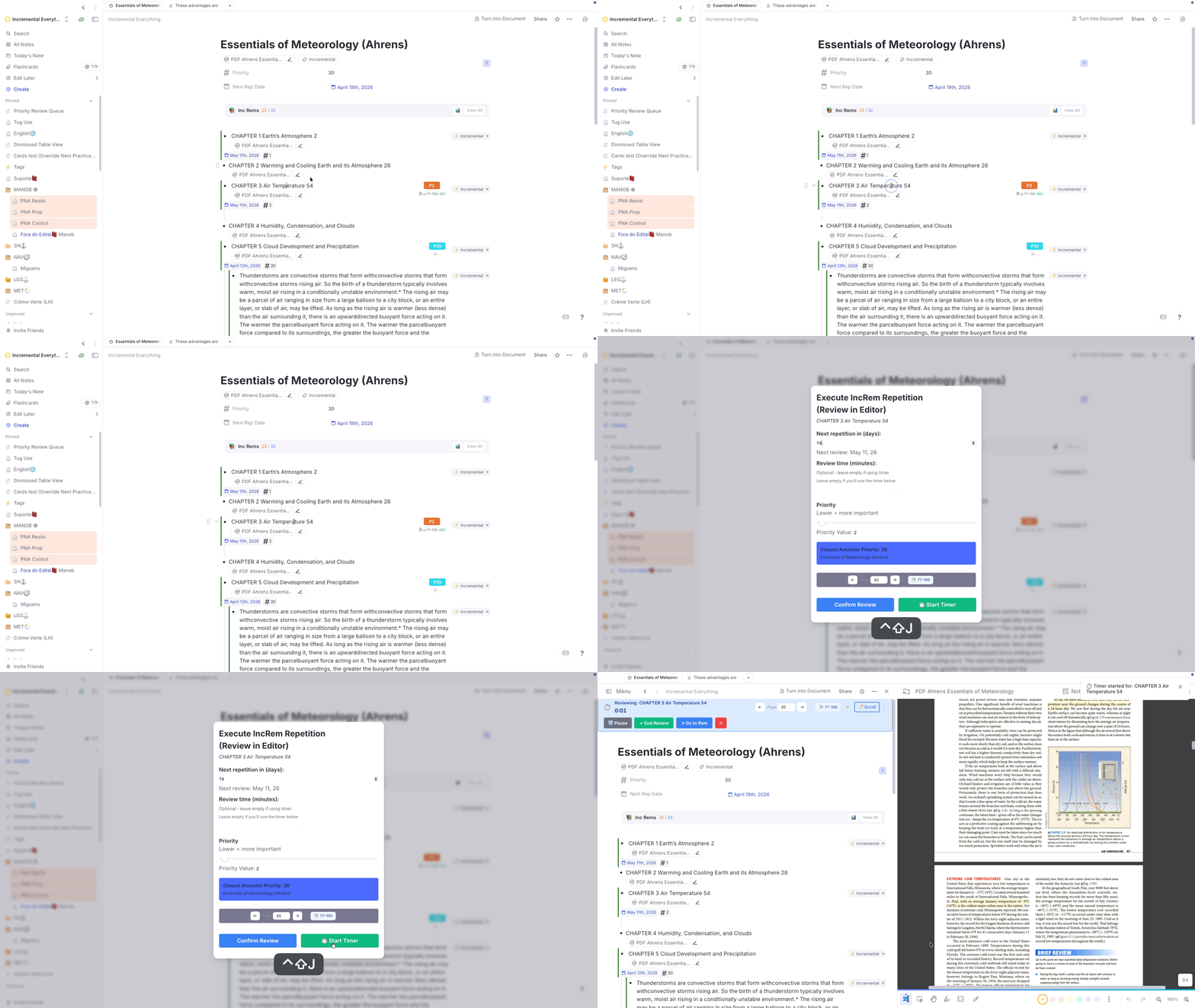
Note: The 🔖 Scroll button on the timer bar and the 🔖 Scroll to Position button in the Priority Editor only appear when the last entry in your reading history carries a saved highlight bookmark (i.e. you previously clicked the 🔖 toolbar button on a highlight). A manually recorded page position (set via the Position button in the Priority Editor) does not show the scroll button, since there is no specific highlight to jump to.
PDF and HTML Incremental Rems track your reading position with highlight bookmarks (see Jumping Back to Your Last Bookmark above). Rem-type Incremental Rems — outline headers whose reading content lives in their descendants (e.g. a chapter title holding paragraphs and sub-items beneath it) — get the equivalent feature: a read point.
A read point associates one descendant rem of the IncRem's outline as its current reading position, so when you return to a long note/outline you can jump straight to where you stopped instead of re-scanning from the top. Read points reuse the same reading-history infrastructure as PDF/HTML bookmarks, so every save is also kept in a read-point history (most recent = current position).
-
While reviewing (or simply editing) the outline, place your cursor in the descendant rem where you stopped reading.
-
Run Set Read Point (Bookmark) (
Ctrl+F7, quick codesrp). -
The plugin resolves which Incremental Rem the read point belongs to:
- the active review session (Editor Review Timer or queue) when its outline contains the focused rem; otherwise
- the nearest ancestor tagged Incremental.
A toast confirms the saved position (e.g.
🔖 Read point set: "…"). The focused rem must be a descendant of an Incremental outline — you can't bookmark the outline header against itself.
- Editor Review Timer — 🔖 Go to Read Point. When you review a Rem-type IncRem that has a read point set, a 🔖 Go to Read Point button appears in the Editor Review Timer bar (it parallels the PDF/HTML 🔖 Scroll button). Clicking it navigates the current pane to the bookmarked descendant.
-
View Read Points (History) (
Ctrl+Shift+F7, quick codevrp) opens the Read Points popup — the read-point history for the current IncRem (resolved from the focused rem or the active session). Each entry shows the descendant's text and date; click one to jump there, and the IncRem's name is shown under the title.
An IncRem can be both a reading source (PDF/HTML) and an outline with its own descendants. Read points and the document's highlight bookmark are stored independently, so such an IncRem can carry both — they point at genuinely different places (a node in the outline vs. a spot in the document) and jump differently. When both exist, the Editor Review Timer shows both buttons — 🔖 Scroll (to the PDF/HTML highlight) and 🔖 Go to Read Point (to the descendant) — and tags whichever was saved most recently with a small green latest badge so you know which reflects your last reading action.
Read points are also surfaced in the queue: see Read-point and status emphasis in Rem-type cards.
For users coming from SuperMemo, the plugin supports a native "Incremental Reading" workflow within the RemNote editor. This allows you to break down large documents into smaller pieces (Extracts) and create flashcards (Clozes) without interrupting your reading flow.
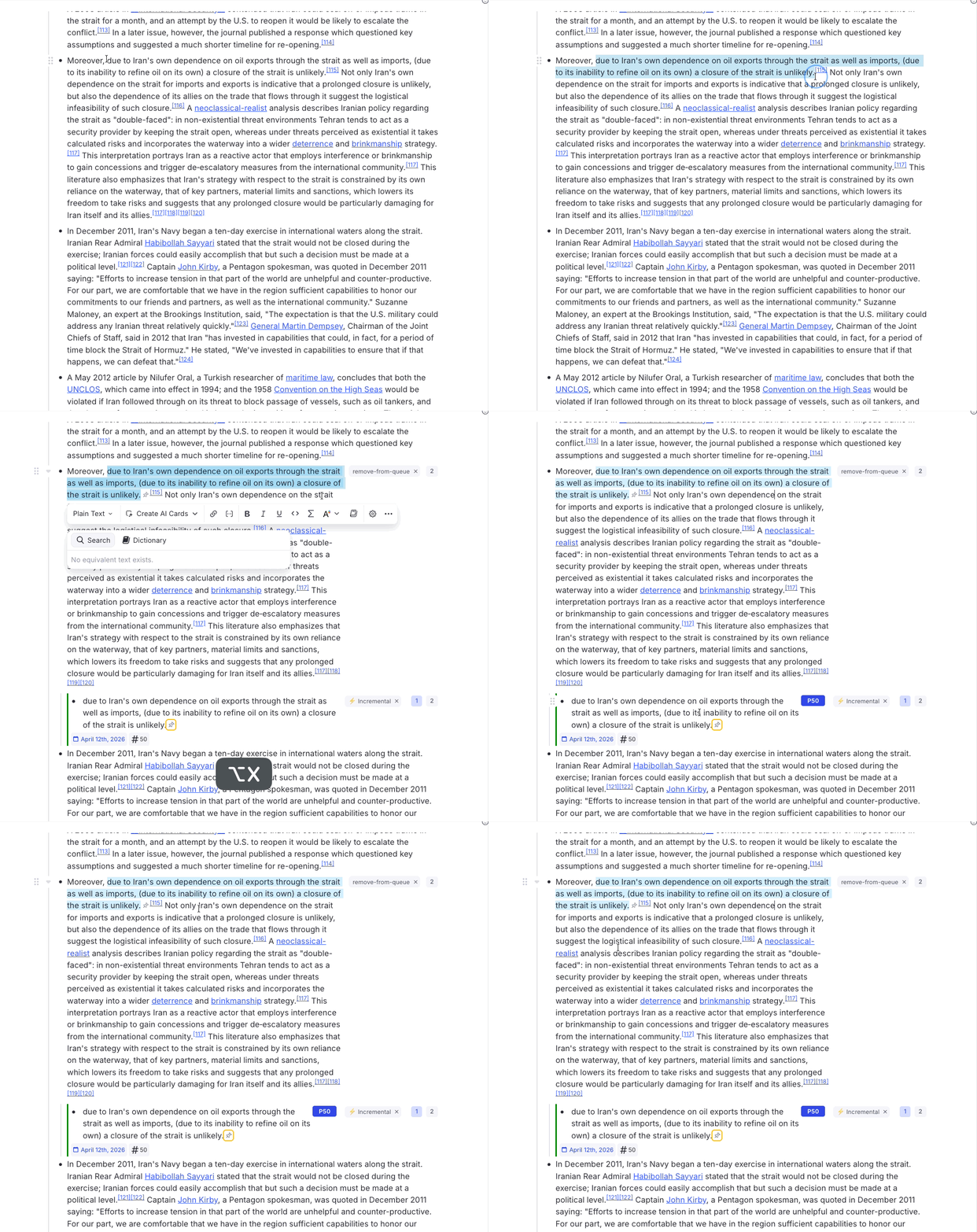
When reading a long Incremental Rem (like a chapter or an article) in the editor, you can create a "sub-extract" from any portion of text:
- Select the text you want to extract.
- Press
Alt+X(standard) orAlt+Shift+X(to set a specific priority for the new piece). -
What happens:
- The selected text in the original Rem is highlighted in blue.
- A reference pin (↗) is inserted immediately after the highlight. Clicking this pin takes you to the new child Rem.
- A new child Rem is created containing the selected text.
- The parent Rem is automatically tagged with
#remove-from-queueto prevent redundant queuing. - The new Rem is initialized as an Incremental Rem.
- The new Rem includes a back-reference pin at the end, pointing back to the source document.
This allows you to "shred" a document into its most important parts while maintaining perfect traceability.
To create flashcards during the reading process:
- Select the keyword or phrase.
- Press
Alt+Z. -
What happens: A standalone child Rem is created containing the parent's full text, with the selected word marked as a cloze deletion. The parent is tagged with
#remove-from-queueand the selected text is highlighted in yellow/red to signal it has been extracted. A violet ↑ badge appears on the card in the queue.
For a full explanation of what this command does, how it differs from native RemNote clozes, and when to use each approach, see IR Flow: Reading, Extracting & Clozing.
The plugin natively handles the styling for the #remove-from-queue tag used by extracts.
- When an extract is created, the parent/context Rem is tagged with
#remove-from-queueso that its queue item acts seamlessly. - This ensures that you only see the specific snippet you extracted or interact with it properly, focusing your review on the most atomic piece of information.