


An AI-powered code review assistant that understands your entire codebase — not just the diff.


BugViper is a GitHub App that automatically reviews your pull requests using a knowledge graph of your entire codebase. Instead of analyzing a diff in isolation, it understands the relationships between your functions, classes, and modules — so it catches bugs that context-blind tools miss.
Dashboard → frontend-service-760266971868.us-central1.run.app
Source → github.com/Pavel401/BugViper
PR opened → BugViper reads the diff
          → queries your codebase graph in Neo4j
          → finds callers, dependencies, blast radius
          → posts inline comments with fixes
- Install the GitHub App on your repository
- Ingest your codebase — BugViper parses and maps it into a knowledge graph
- Open a PR — BugViper automatically reviews it and posts inline feedback
- Iterate — the graph stays current as you push new commits
- Bare exception handling that swallows unexpected errors
- Incorrect error propagation
- Logic errors visible only when tracing call chains
- Sensitive data (API keys, error traces) leaking into responses
- Auth bypass patterns
- Injection-prone code paths
- High cyclomatic complexity functions
- Functions with too many callers — risky to change
- Missing error handling at system boundaries
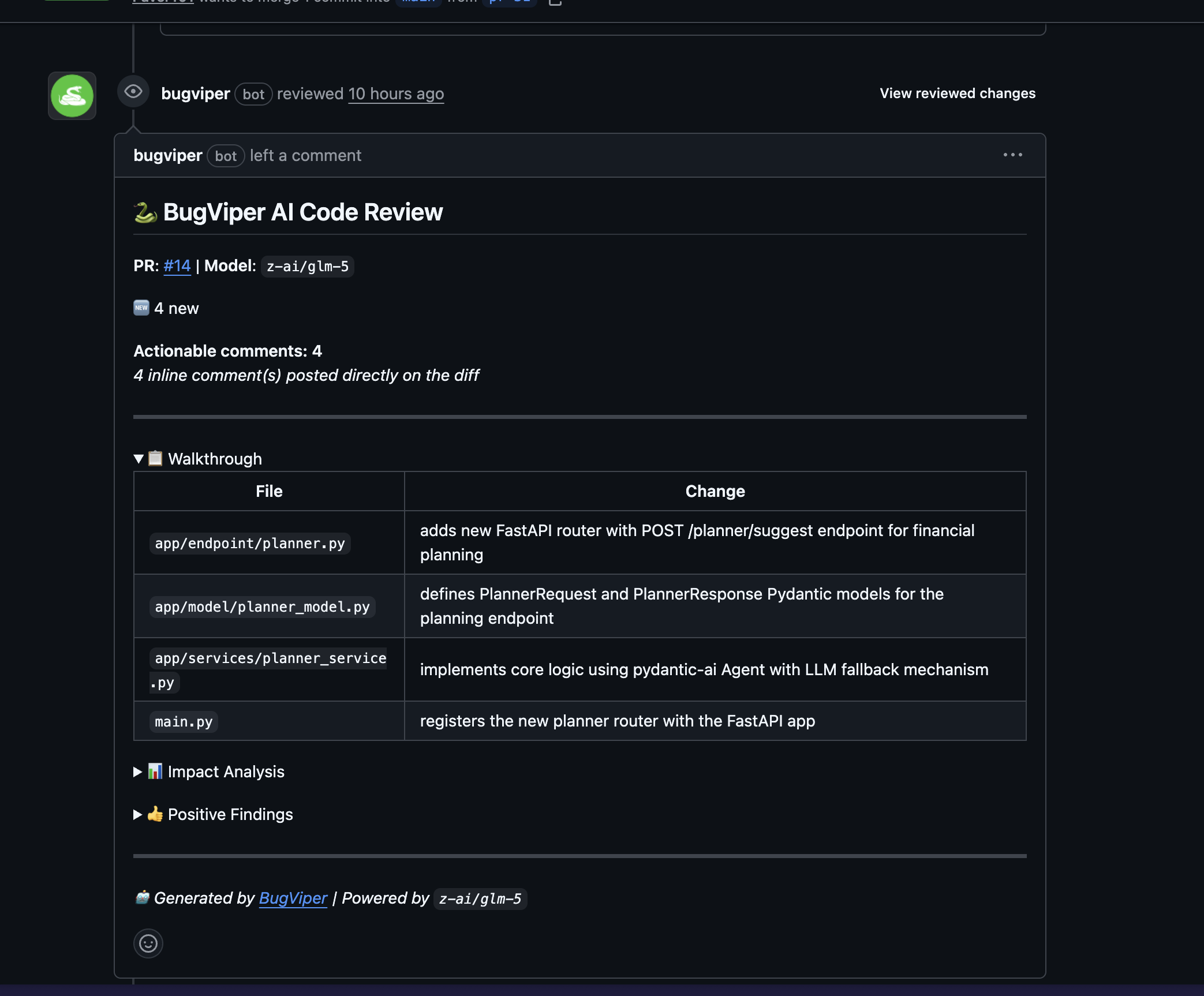
A top-level comment with a walkthrough of every changed file, model used, and actionable comment count.
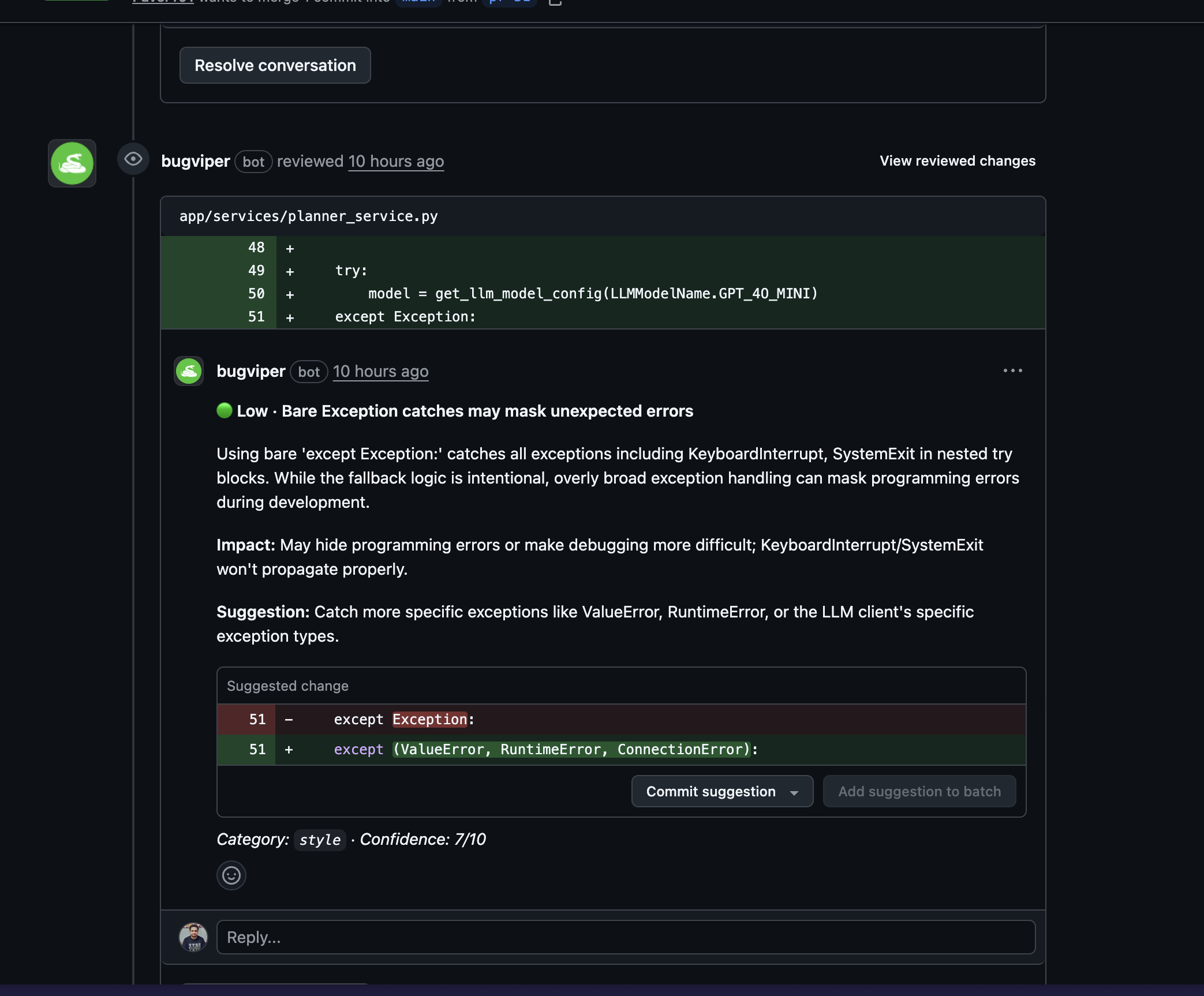
Each issue is pinned to the exact diff line with severity, confidence score, and a one-click suggested fix you can commit directly from GitHub.
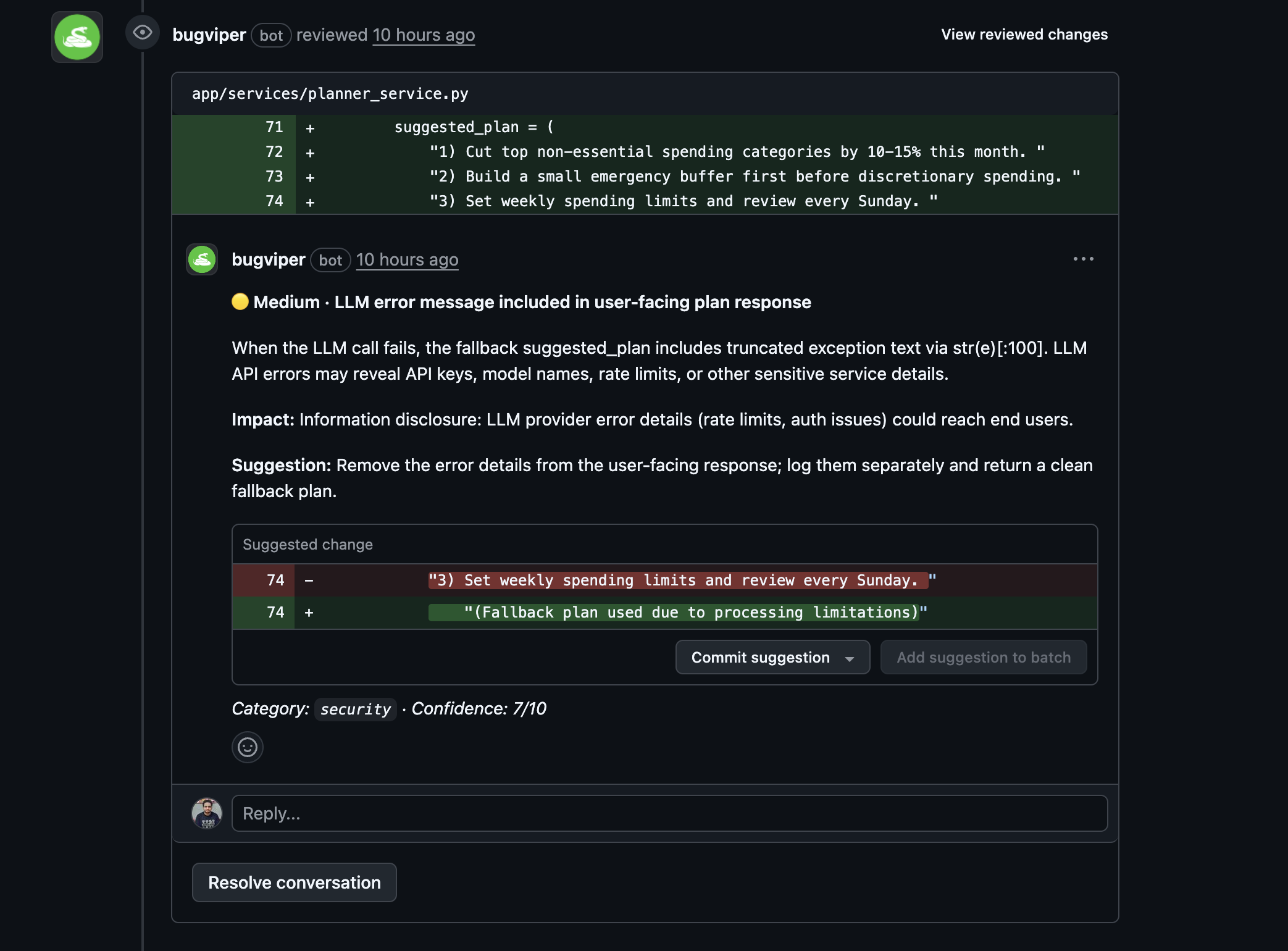
Security issues flagged with category and a concrete remediation suggestion.
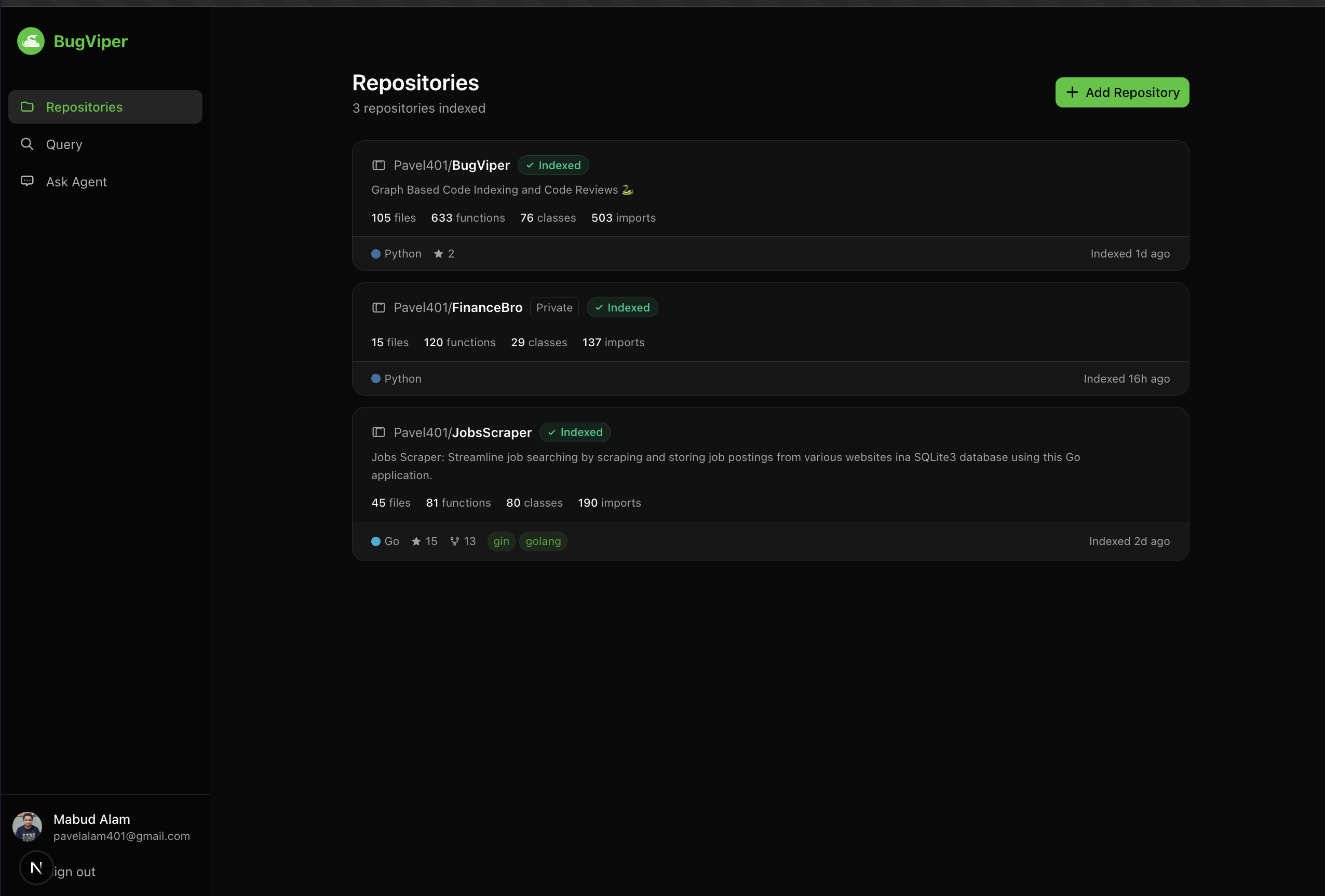
Manage all your indexed repositories and their graph stats from one place.
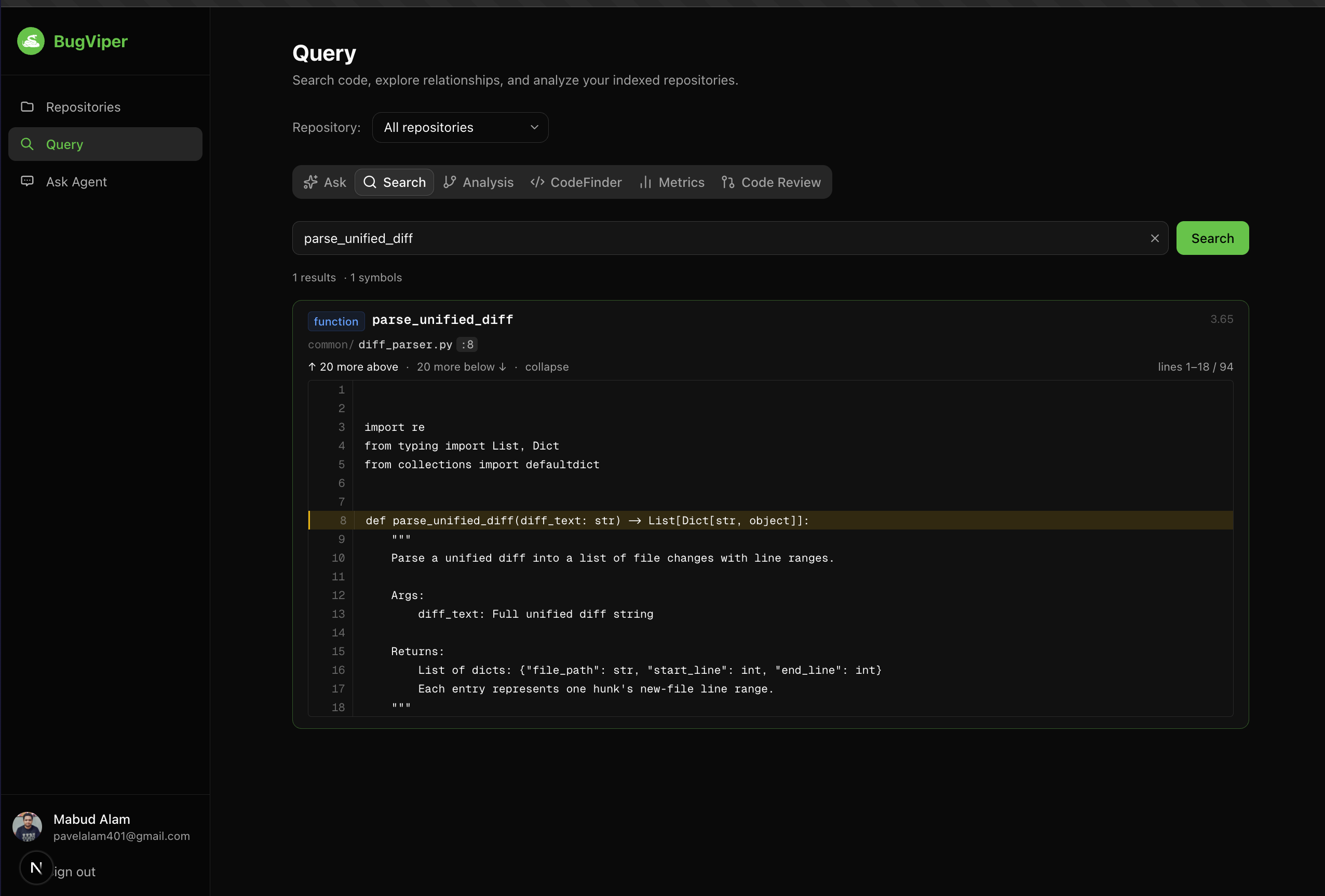
Full-text and semantic search across your entire codebase — find any function, class, or code pattern instantly.
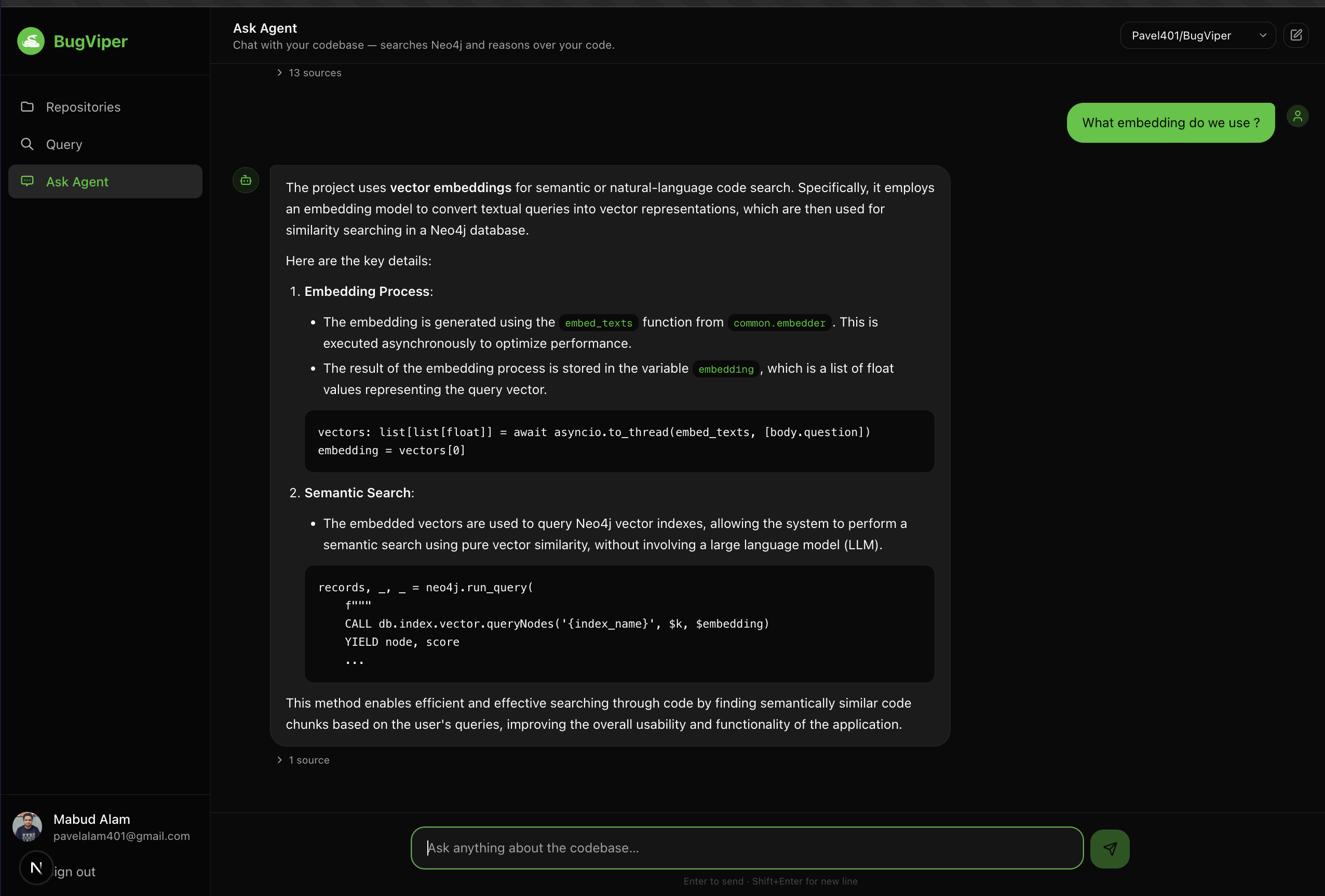
Chat with an AI that reasons directly over your graph. Ask anything about your codebase and get cited, code-backed answers.
| Traditional Code Review Tools | BugViper |
|---|---|
| Analyze the diff in isolation | Understands the full call graph |
| Generic lint rules | Context-aware, codebase-specific findings |
| No impact analysis | Shows blast radius of every change |
| One-time scans | Stays current with every push |
| File-level context | Cross-file dependency awareness |
Want to run BugViper on your own infrastructure?
git clone https://github.com/Pavel401/BugViper.git
cd BugViper
uv sync
cp .env.example .env   # add your Neo4j, OpenRouter, and GitHub App credentials
./start.sh             # starts API + Frontend + Ngrok
Full setup instructions in the repository.
BugViper: Because code review should understand your entire project, not just the diff.