Repository navigation
Interface
Screenshots of the web UI as it runs today (Rails 8.1.4.1, 2026). They were taken against a seeded demonstration dataset, so the hosts, users, and event text are fabricated — the layout, controls, and column sets are real.

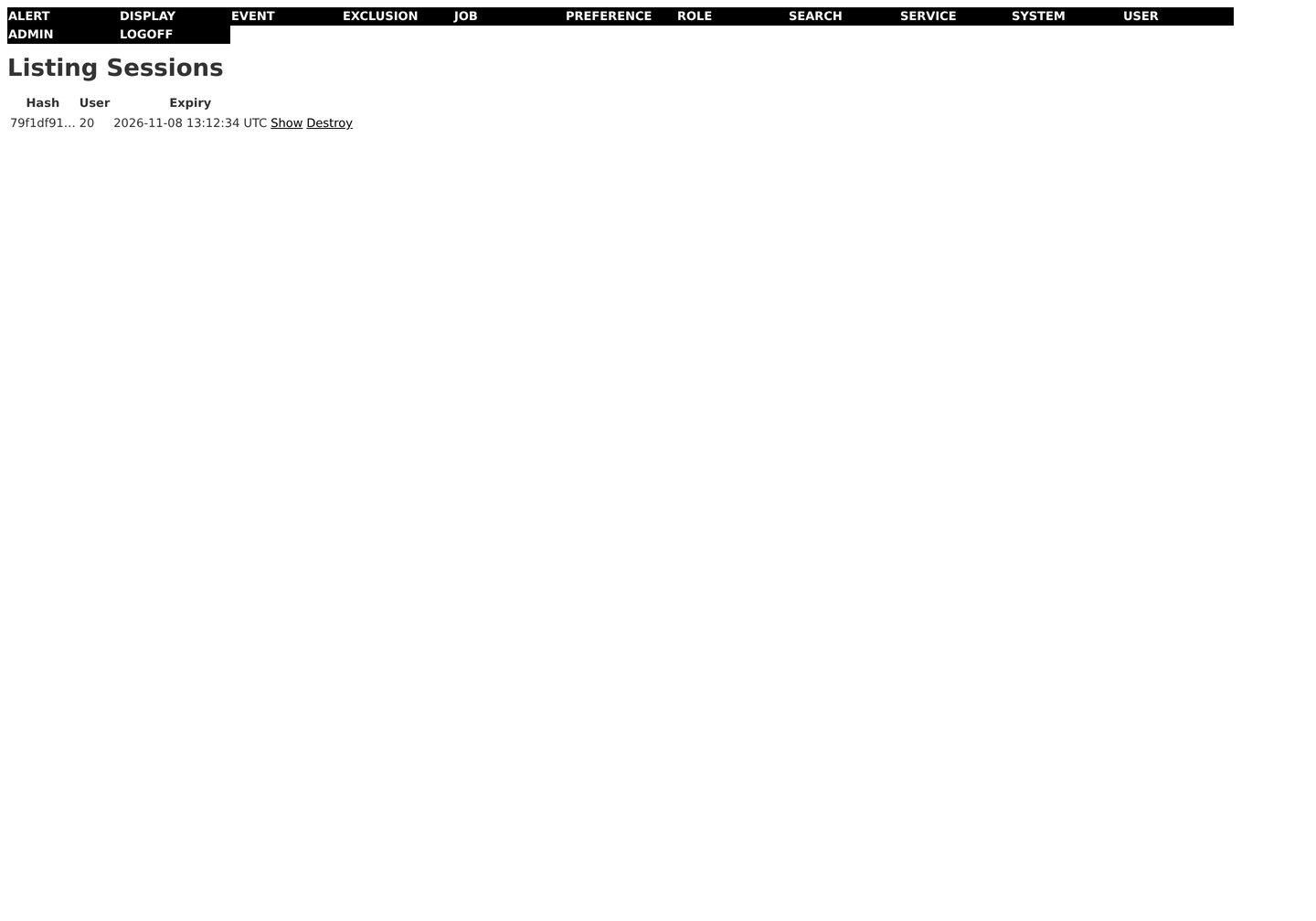
/users/logon posts to /users/do_logon. A successful logon mints a Session
row and sets a plain sessionID cookie — sessions are database rows looked up by
token, not signed cookies. See Access Control for the consequences, the
5-attempt lockout, and how rights are granted.
/ is the live feed plus the throughput charts. The feed is refreshed by
/events/recent, which Event.recent_events self-tunes and which must not
write — a page being looked at used to issue an UPDATE per poll per viewer.
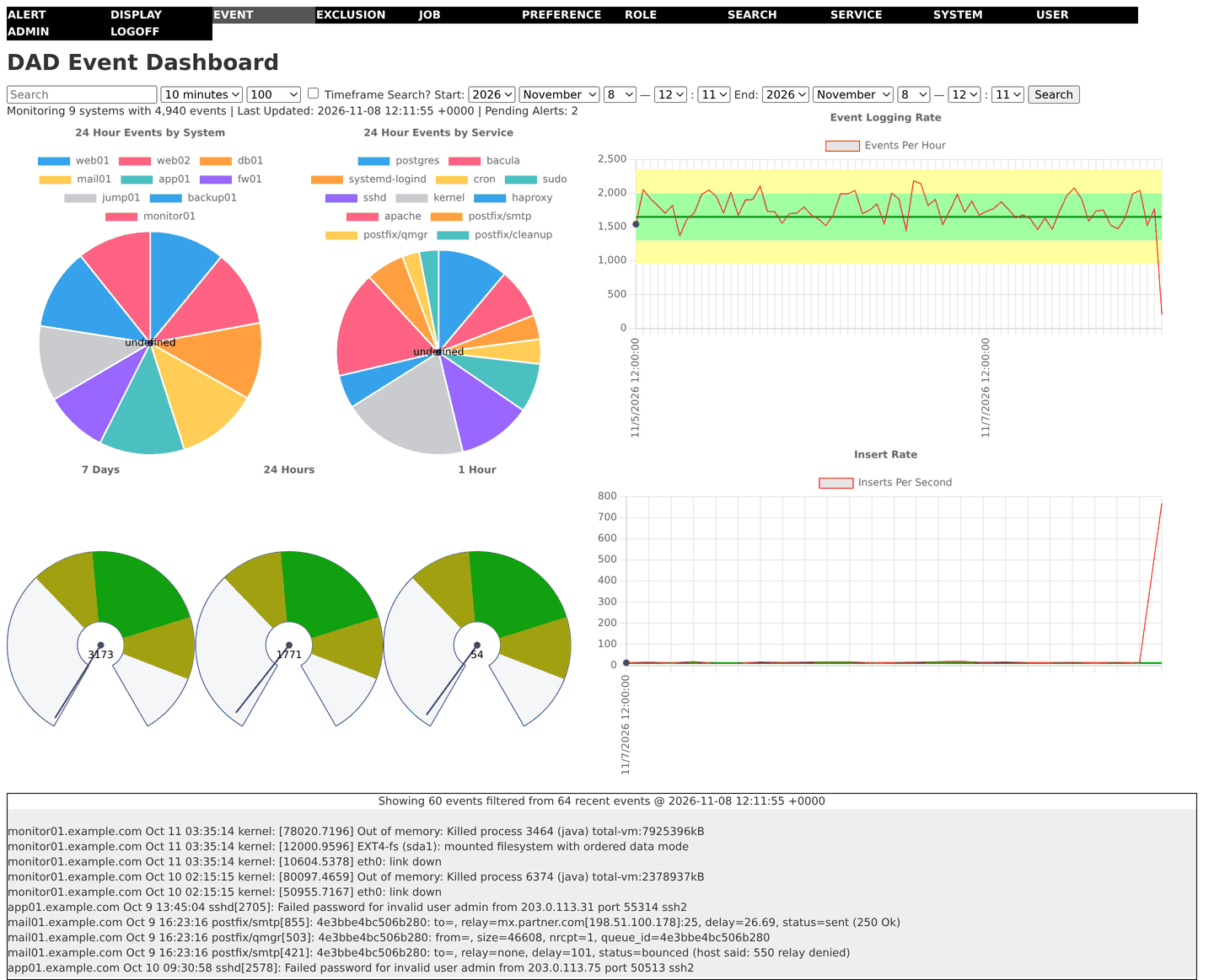
Six charts render, drawn by app/views/events/index.js.erb and refreshed every
60 seconds:
| chart | kind | shows |
|---|---|---|
7_days_chart, 1_day_chart, 1_hour_chart
|
gauge | total events over that window, against a mean and standard-deviation band derived from the hourly series |
systems_chart, services_chart
|
bar | events in the last 24 hours grouped by system and by service |
logging_rate |
longitudinal | events per hour over 7 days |
insert_rate |
longitudinal | inserts per second over 24 hours |
There is no disk utilization chart. A seventh draw_diskspace_graph call sits
commented out in that same file — bec738c ("Hiding disk gauge", 2015-02-28),
with the note "Removed for now. There is a configured alert for this." Disk usage
is reported by the disk_utilization job and controlled by the archive floor under
Preferences; see Retention and Archives. The job's reading goes to the
scheduler log — journalctl -u dad-scheduler — not to the Jobs screens.
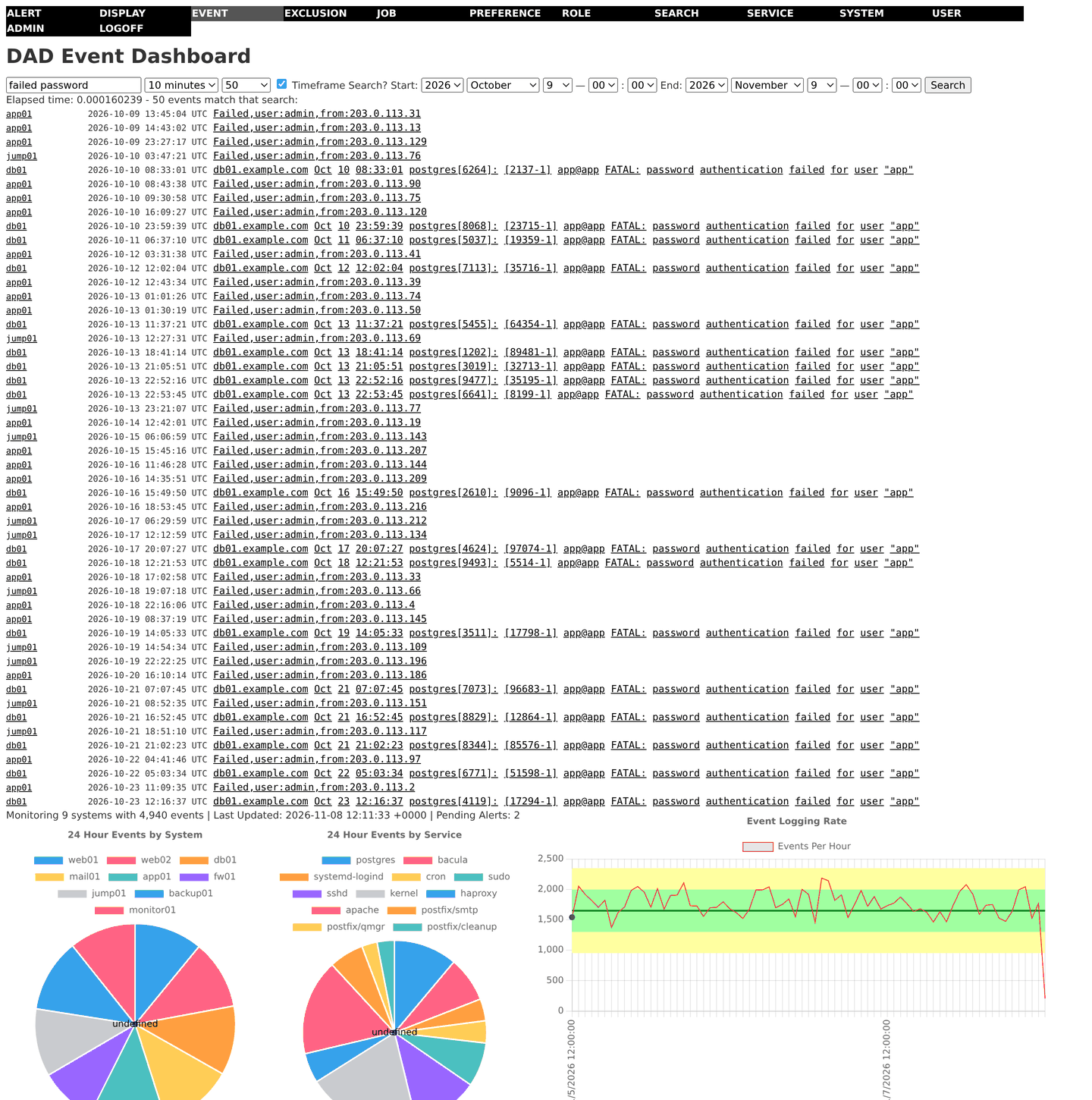
The search bar, timeframe, and result limit sit above the feed; results replace
the feed in place. Search is a word-prefix index, so failure finds
failures but never fail. Read Search before concluding a search missed
something.
Leaving Timeframe Search unticked searches the relative window from the Timeframe dropdown. Ticking it searches the absolute start/end range instead. If those date fields cannot be read, the result line says so rather than quietly answering a different question.
This toggle was broken until recently: the checkbox always submitted
timesearch_enabled[enabled]=0when unticked and the controller branched on the presence of that key, so every search from the form took the absolute-date branch with a now→now window and reported0 events match. Fixed in7e0f435(RECOMMENDATIONS §2.3). The screenshot above predates the fix and was taken by ticking the box.
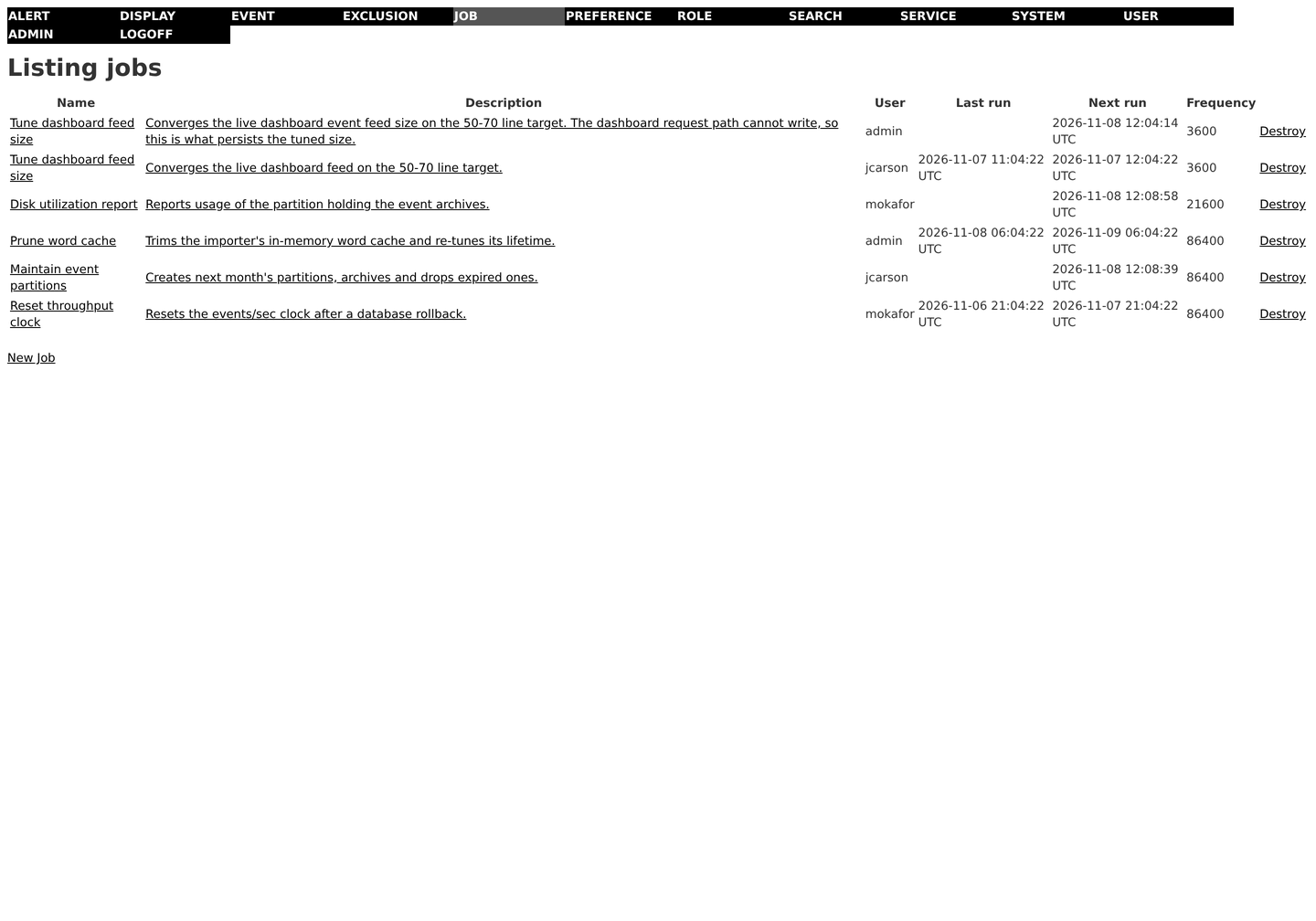
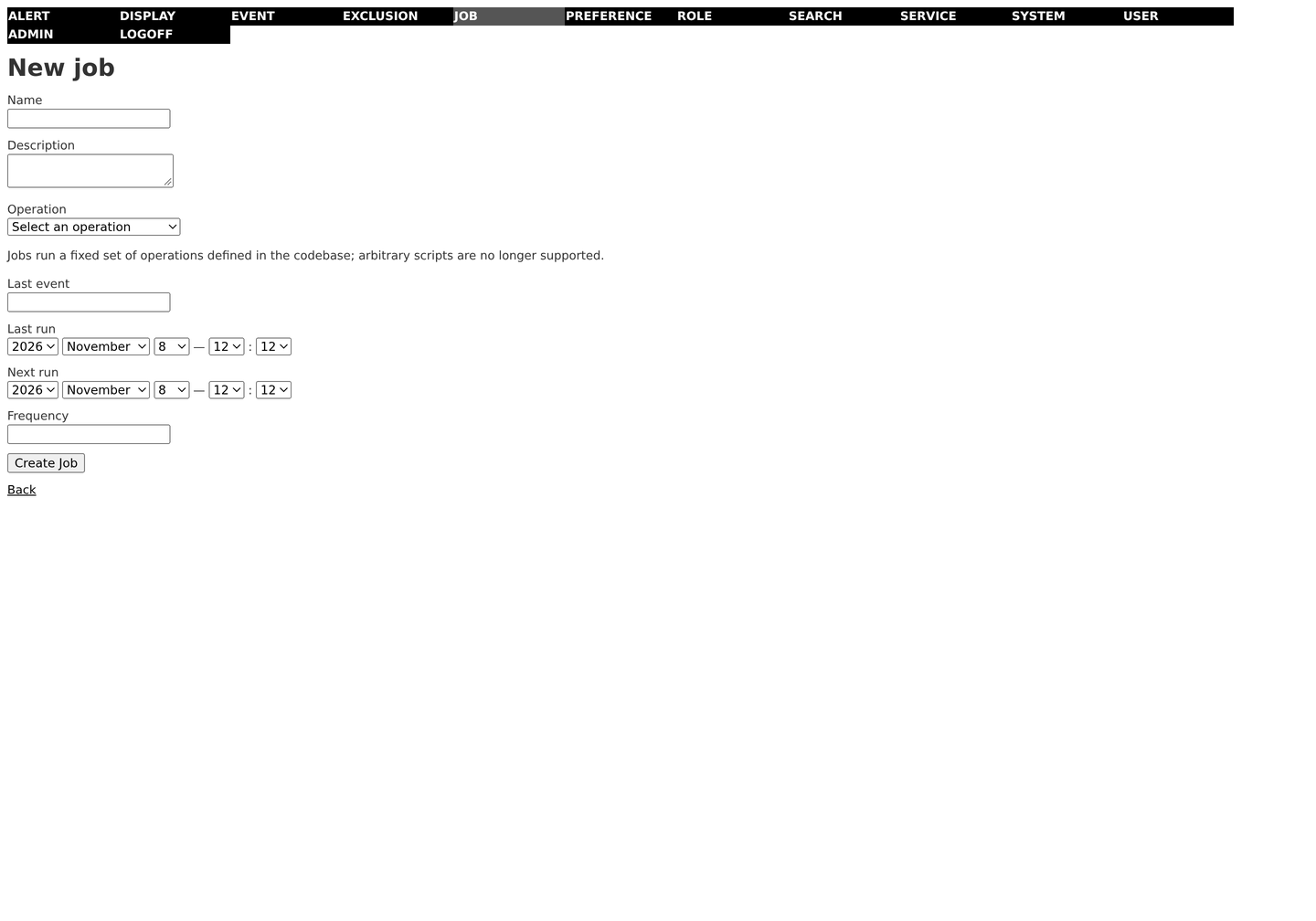
Creating a job means picking one of the registered JobHandler::HANDLERS names
from a dropdown — the form stores no code. See Jobs.
Every management index screen is paginated at 25 rows per page; ?page=N
selects one, and the line under the table reads Page 2 of 3 (64 total).
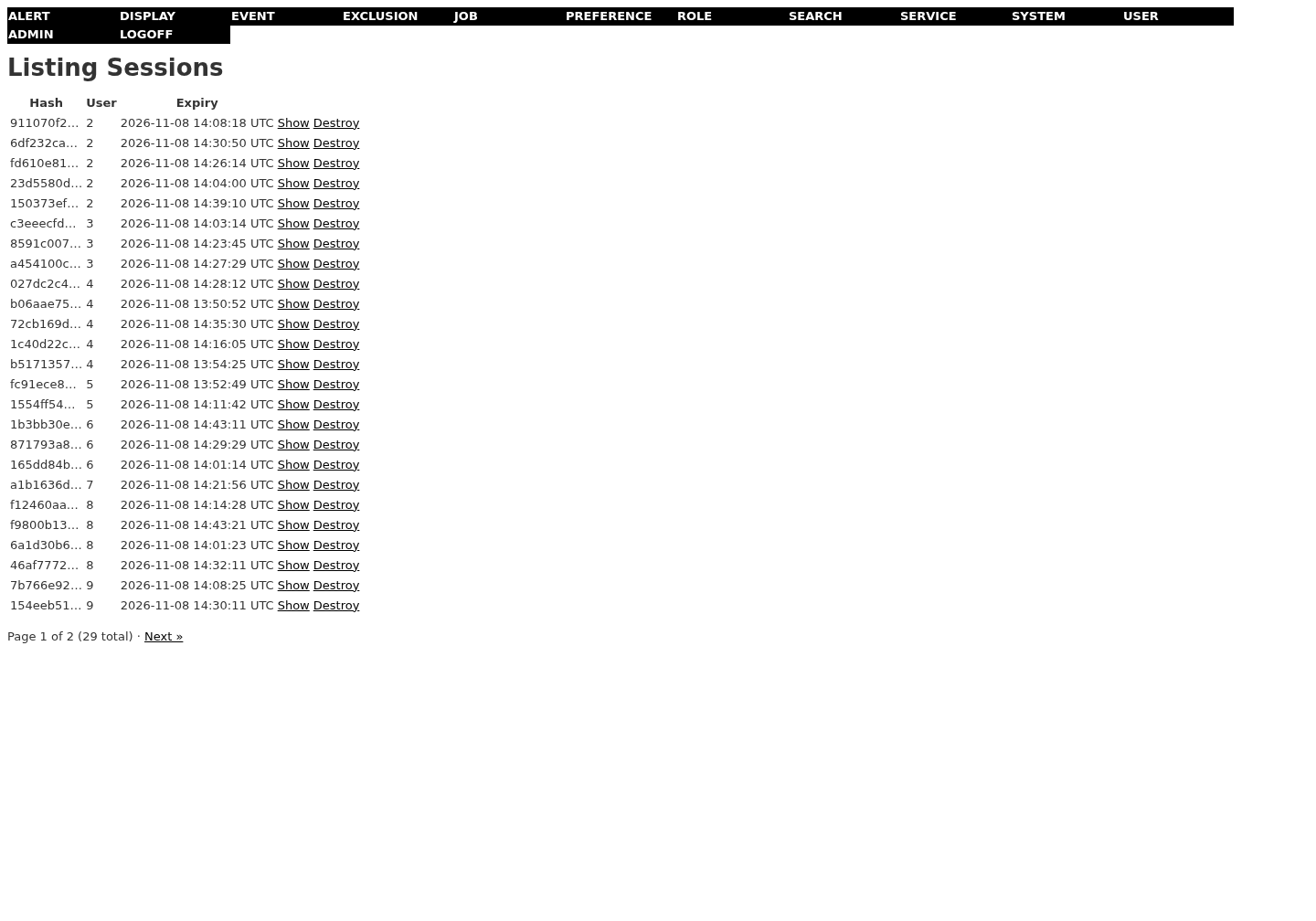
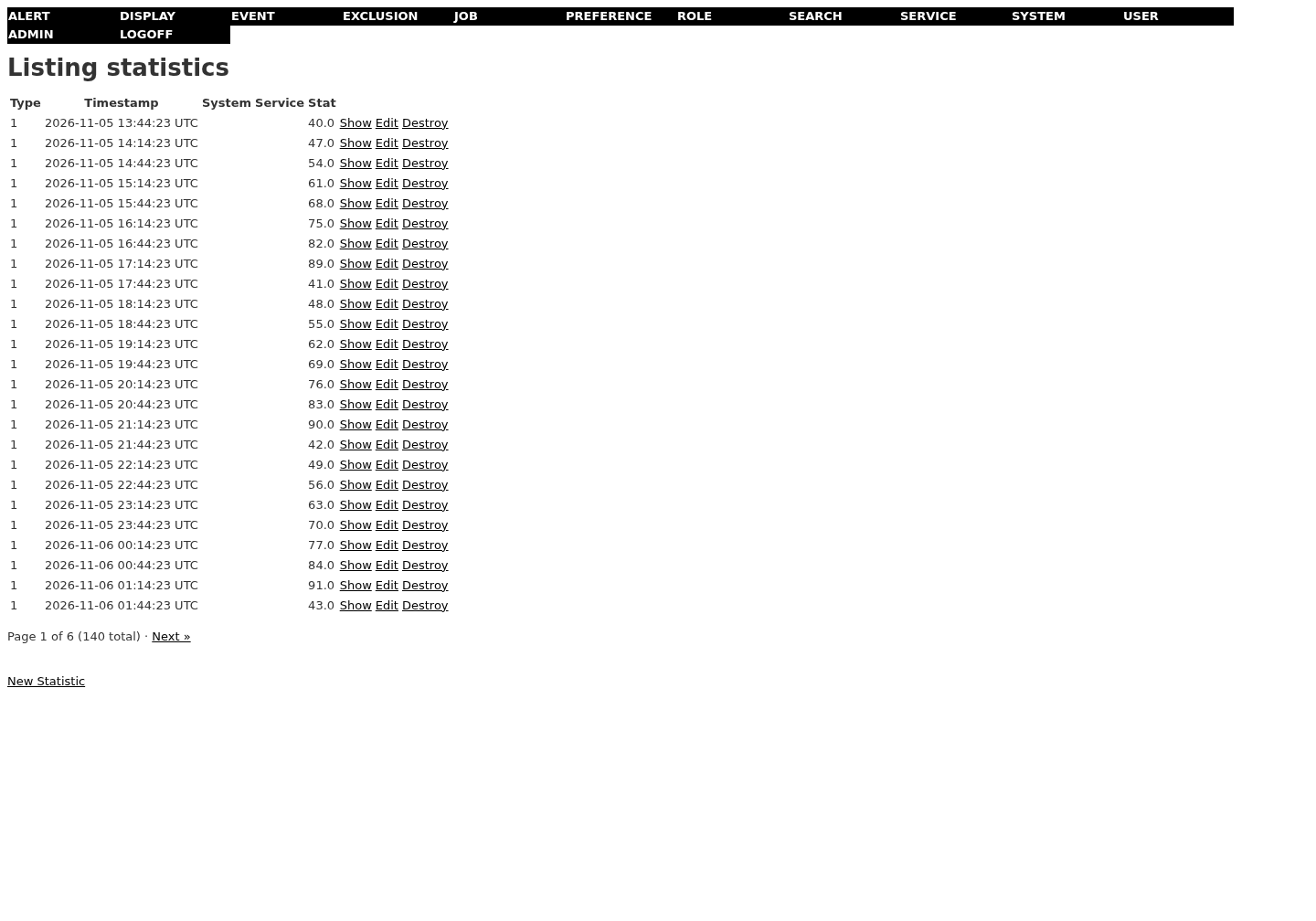
These screens used to assign a bare Model.all and render the whole table. Two of
them grow without bound — sessions through ordinary logins, and statistics, an
append-only series written by the ingestion pipeline — so they eventually stopped
rendering at all. ApplicationController#paginate plus the pagination_nav
helper replaced it on all twelve: users, sessions, jobs, roles, rights,
preferences, comments, exclusions, searches, displays, systems, statistics.
?page is clamped at both ends: a non-numeric or non-positive value falls back to
page 1, and a page past the last one is pulled back to it rather than rendering an
empty table. Pagination is hand-rolled rather than a gem — the app pins sprockets
3 and jquery-rails for asset-pipeline reasons, and a dependency is not worth
adding to page a table.
Rights are granted to roles, and roles to users. There is no per-user right.
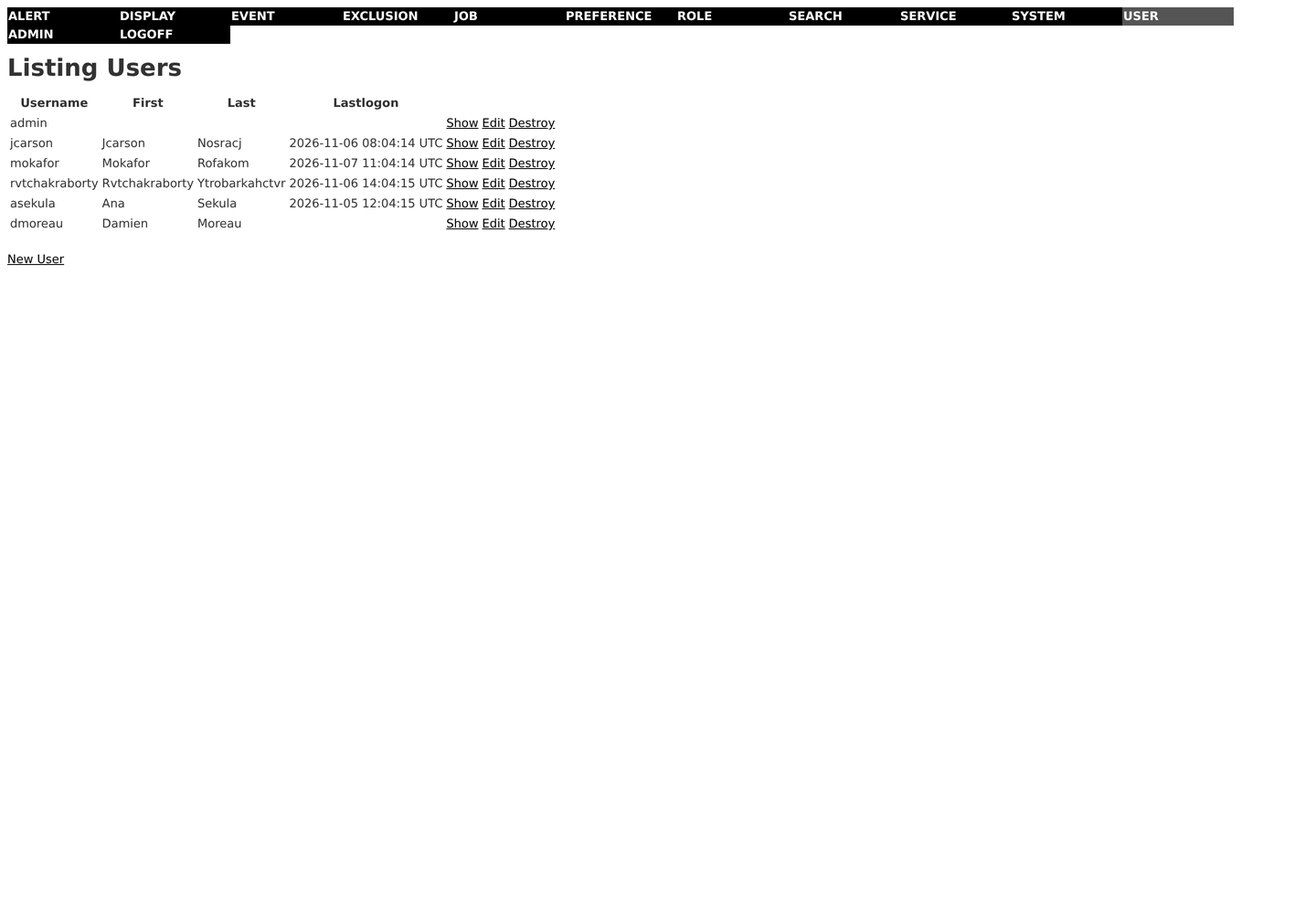
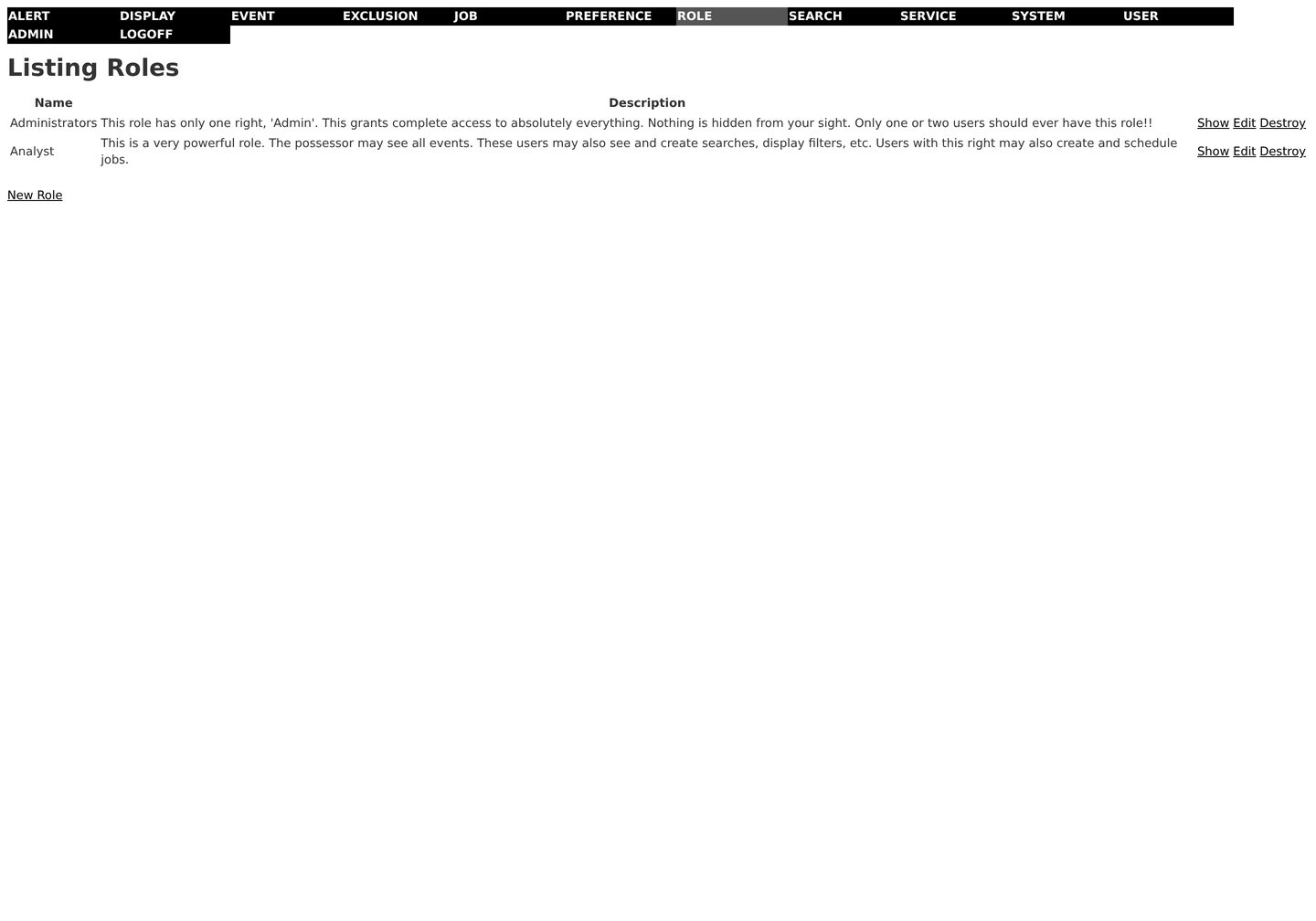
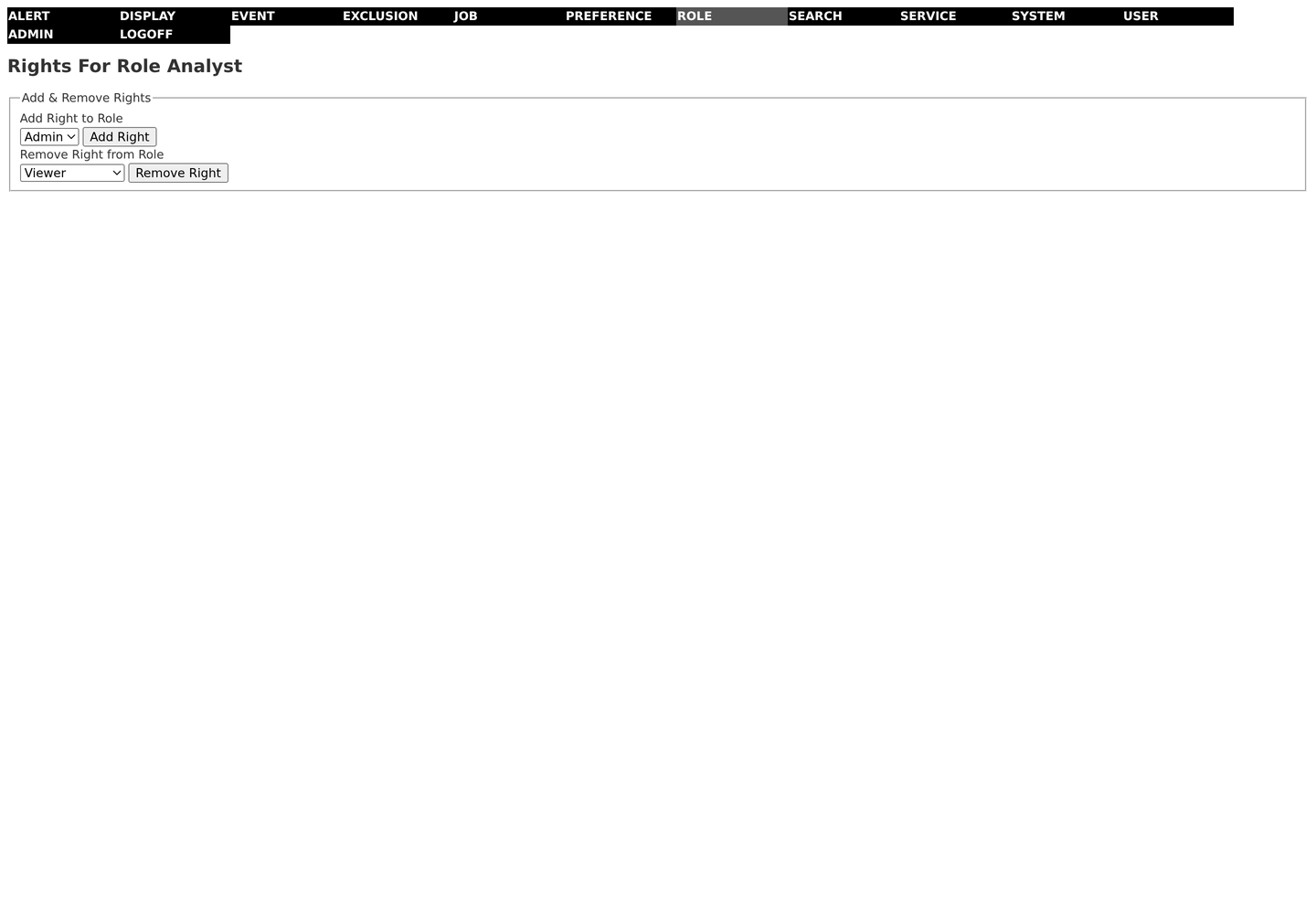
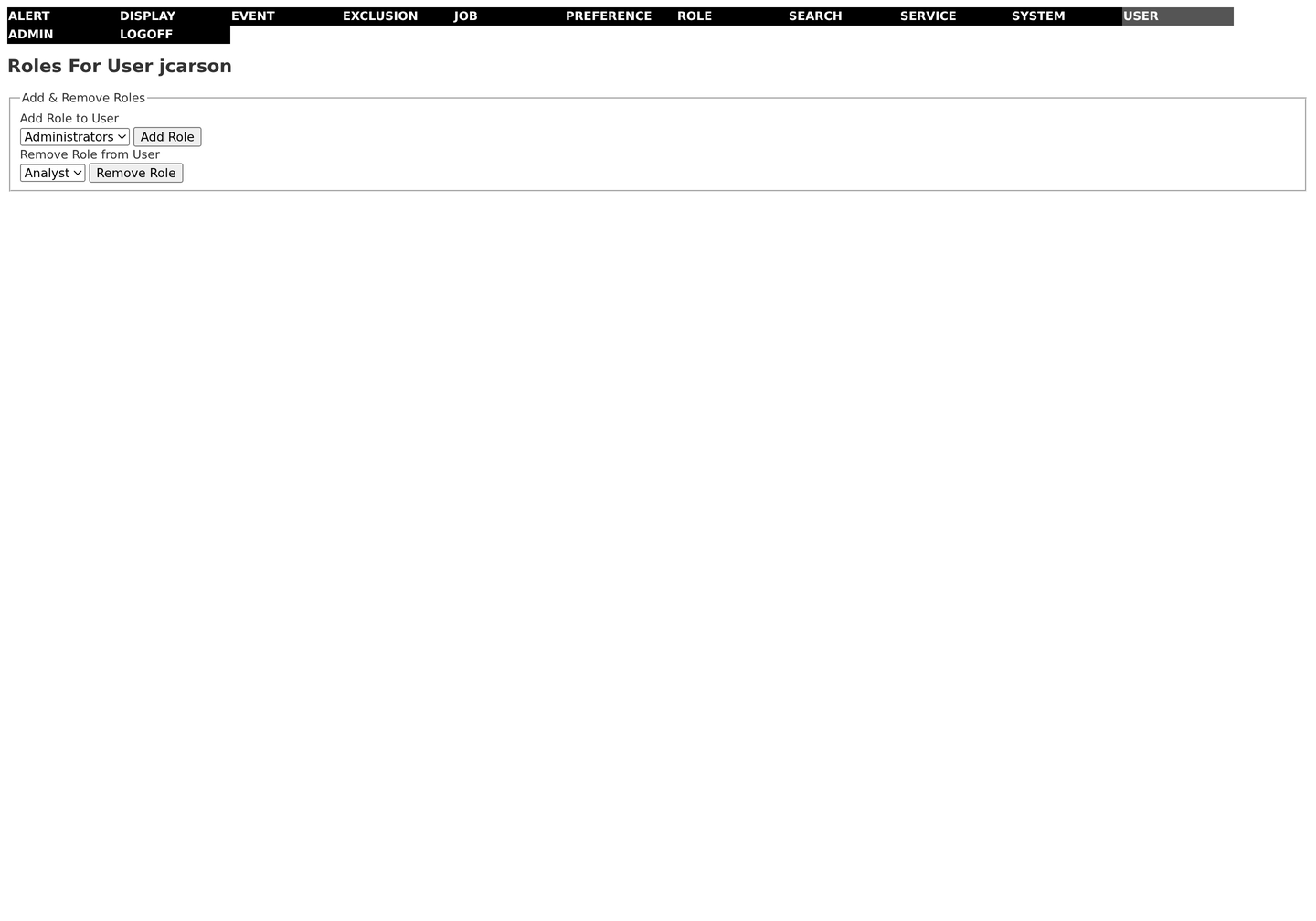
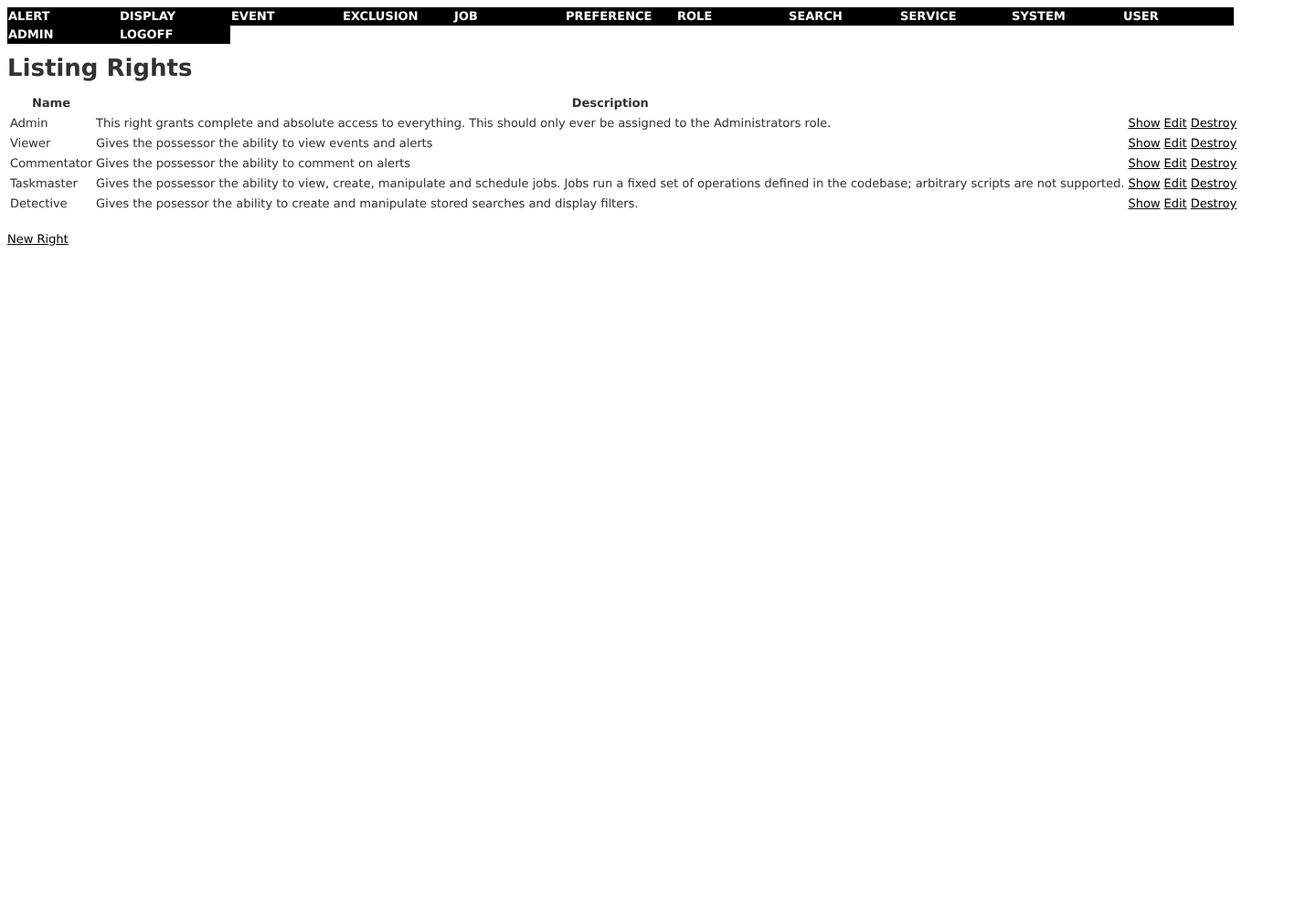
Admin unlocks everything, including these screens. A controller absent from
ApplicationController::CONTROLLER_RIGHTS is unreachable to everyone. Details in
Access Control.
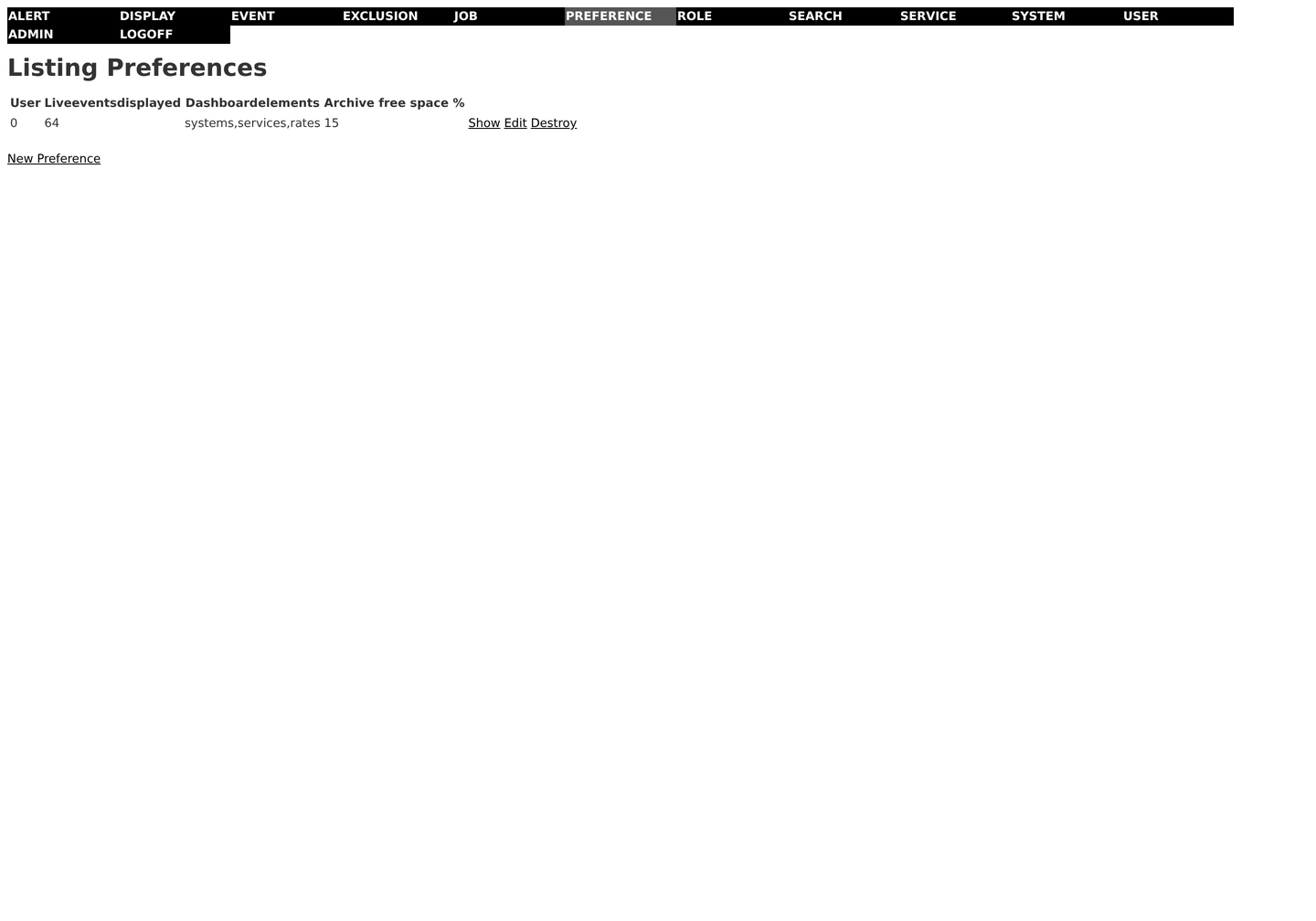
archiveFreeSpacePercent is the floor that lets DAD prune event archives when the
archive partition fills. It is off unless an admin sets it (nil or 0 means
off), it is clamped to 0..100 on write, and pruning is unrecoverable — an archive
is usually the only copy of a month the database already dropped. See
Retention and Archives.
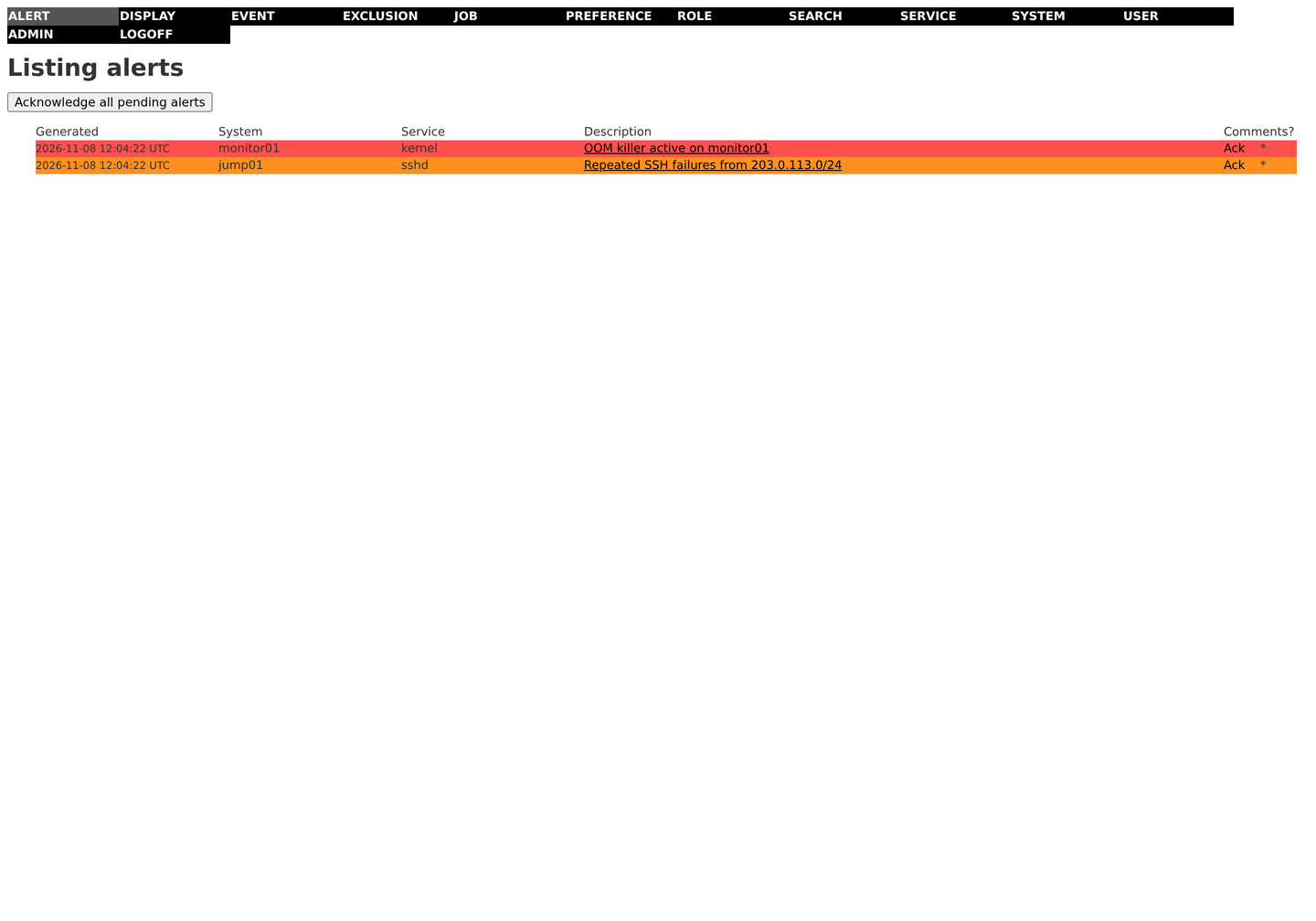
Alerts carry a criticality, an optional system and service, and the events that triggered them. Acknowledging is per-alert or all-at-once. See Statistical Alerting.
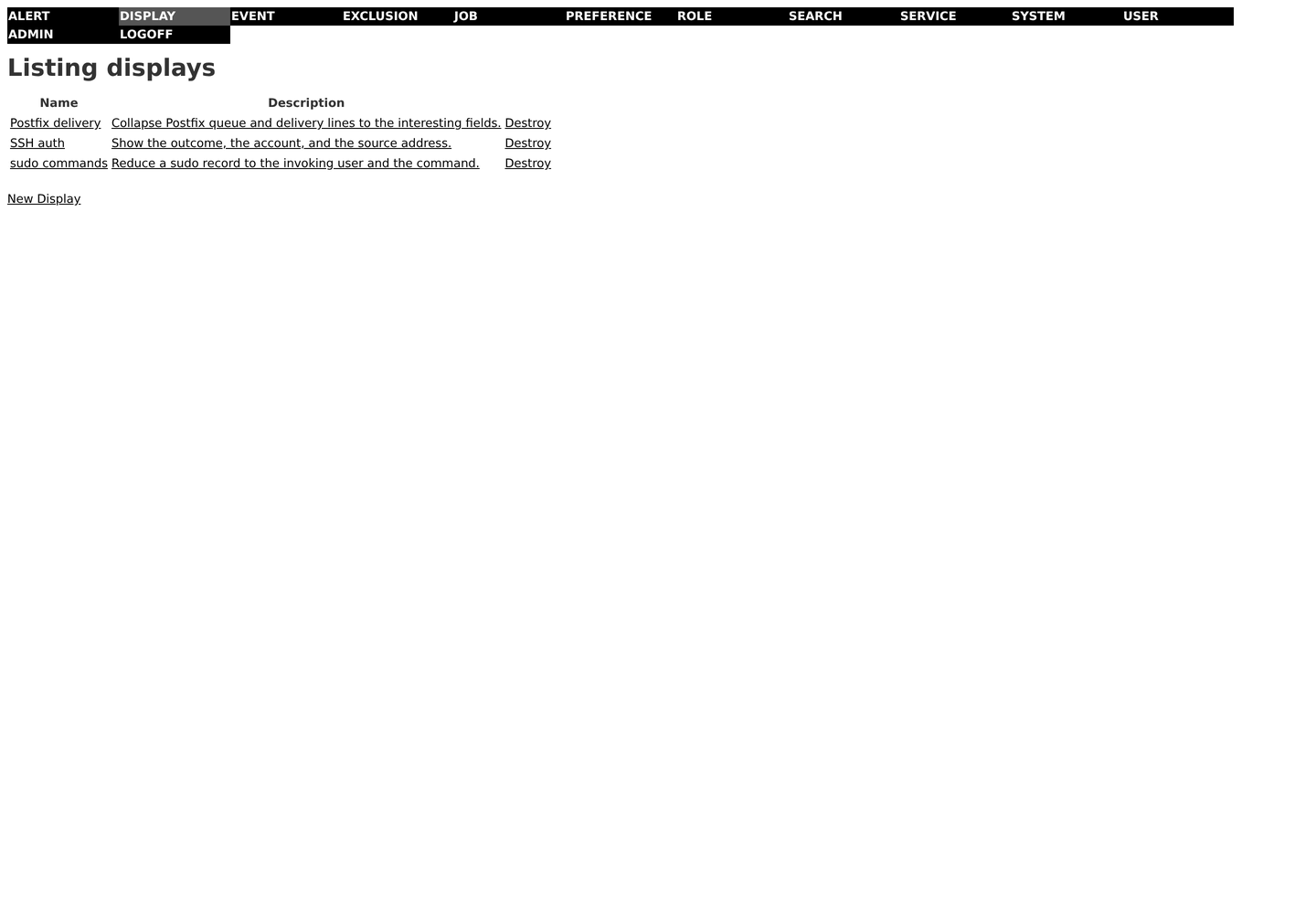
A Display reformats matching lines using a small directive language that is parsed, never evaluated. See Displays.
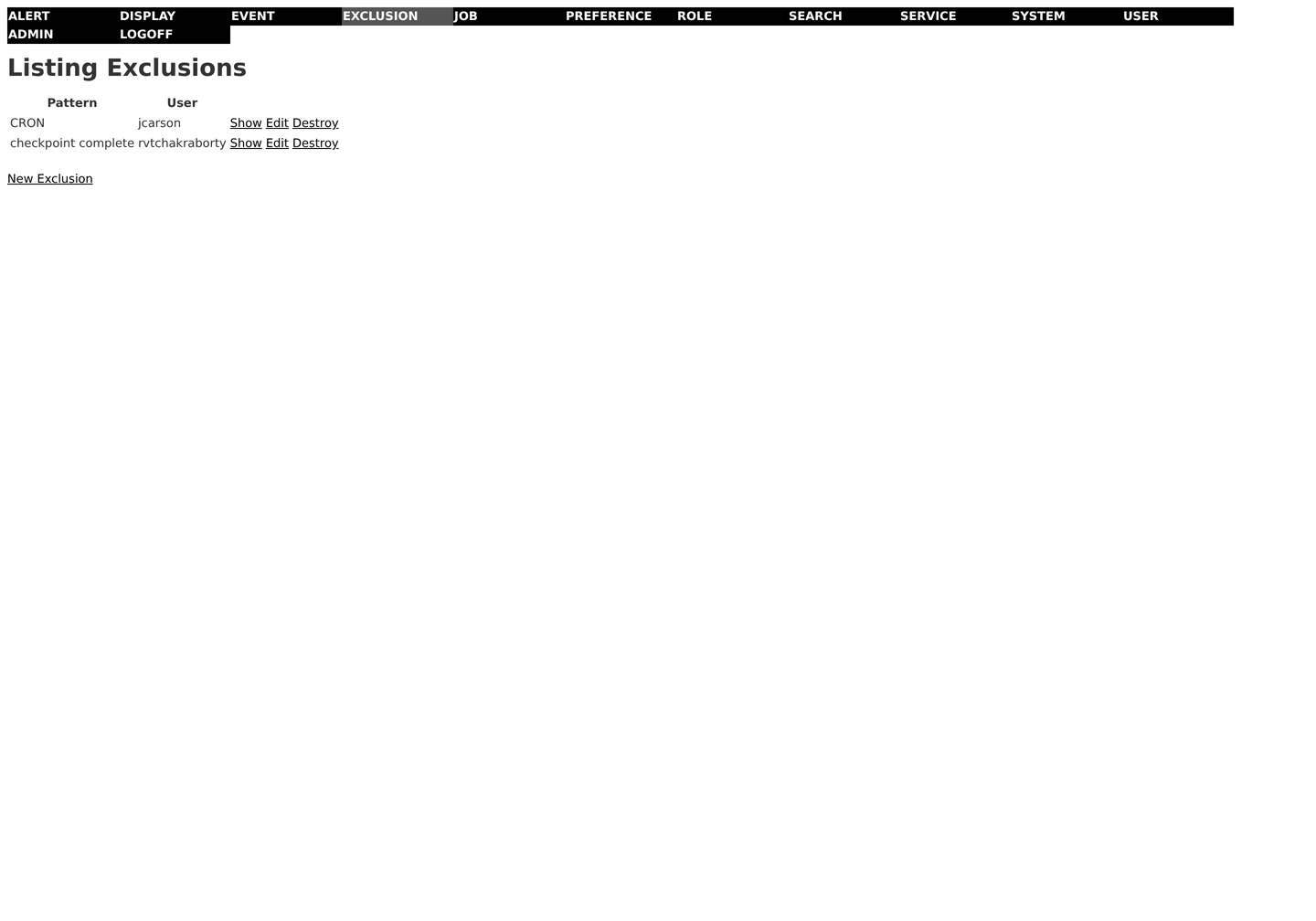
Exclusions only affect the live dashboard feed, not search. See Exclusions.
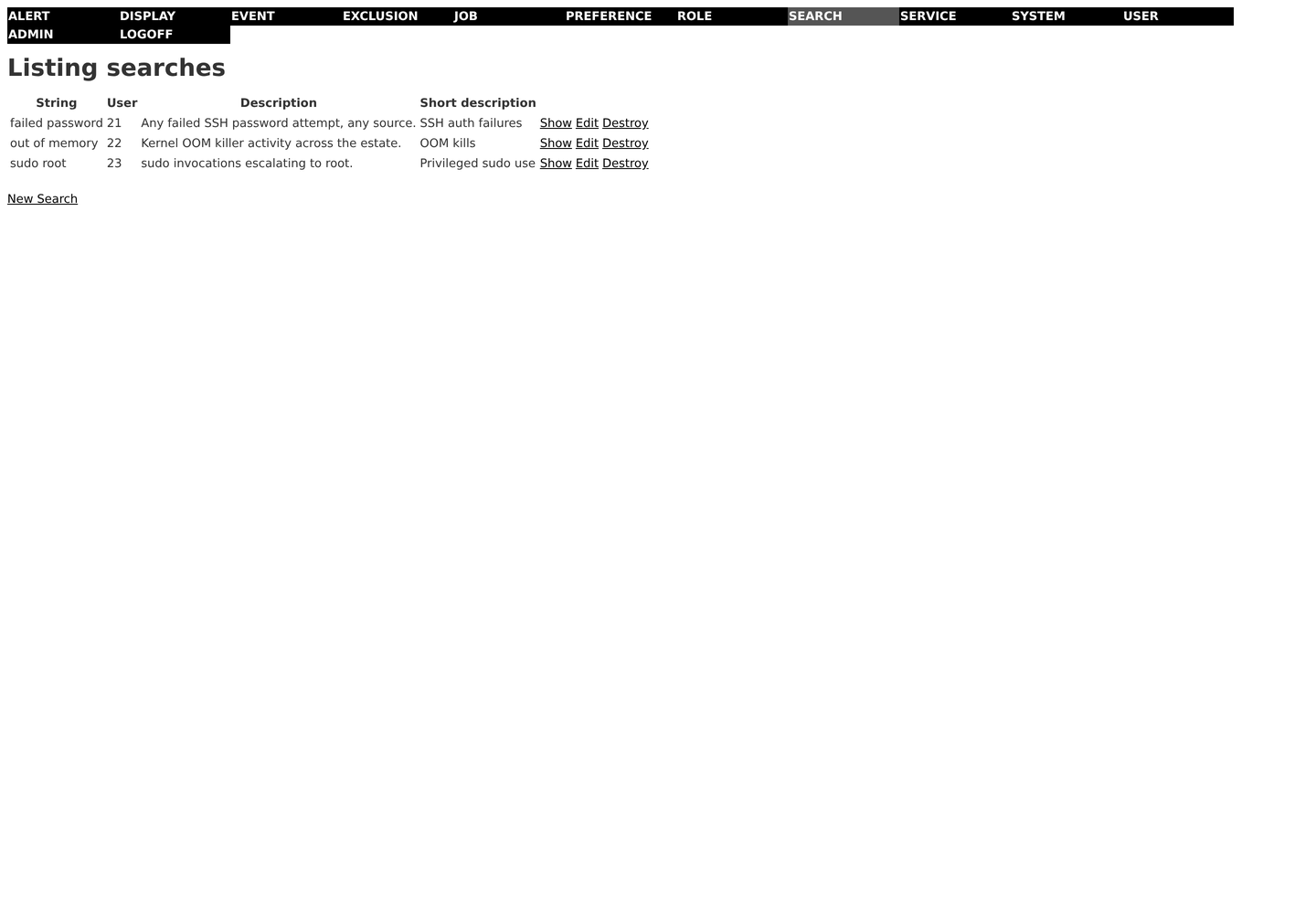
A stored search is a bookmark — a search string plus a time window. Nothing is cached. See Search.
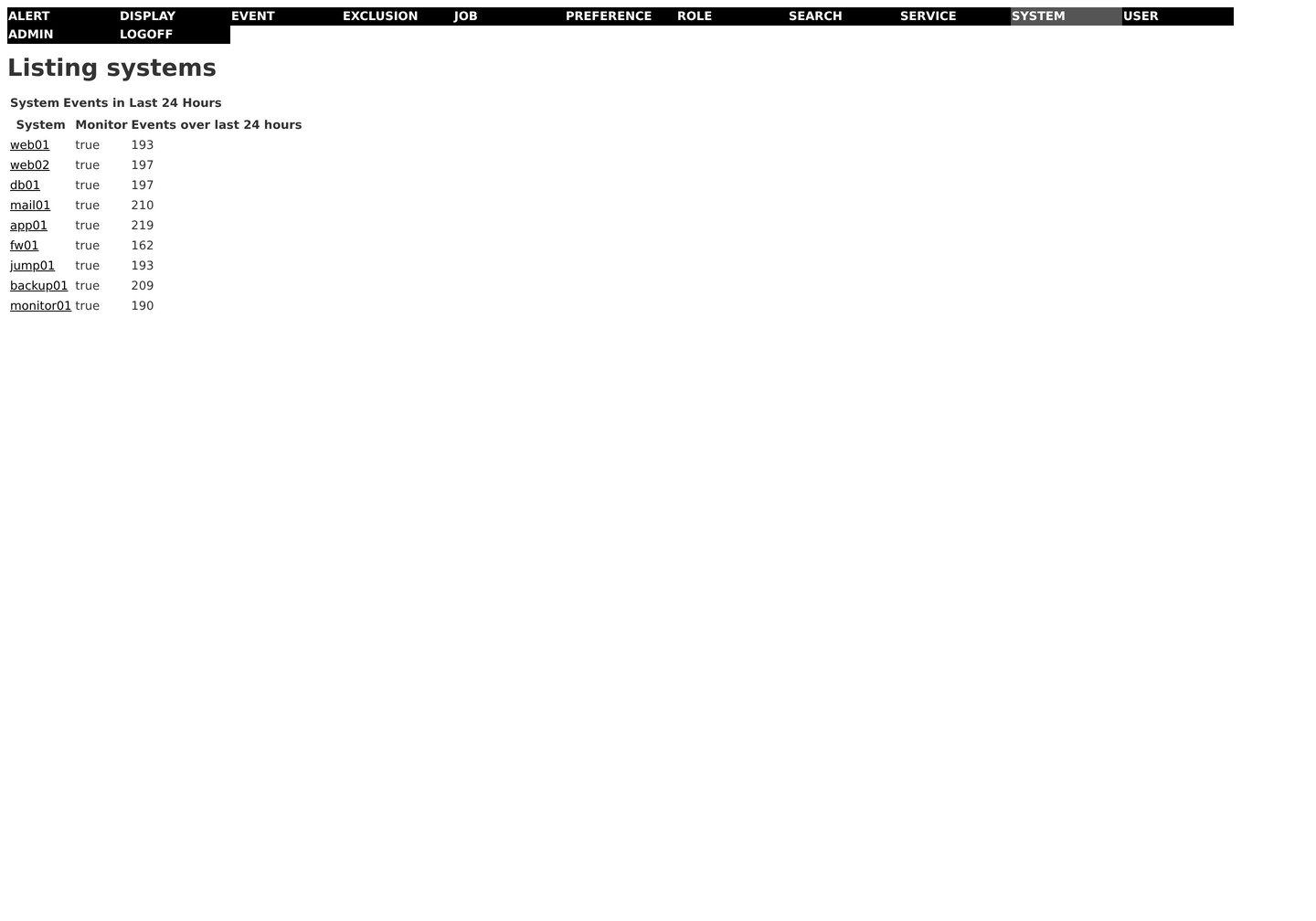
Systems are associated to incoming lines by System association rules, and drive
the per-host statistics behind the alerting recipes.