My mother-in-law recently gifted my son two very obnoxious puzzles from Lagoon Games:
| Fabulous Frogs | Leapin' Lizards |
|---|---|
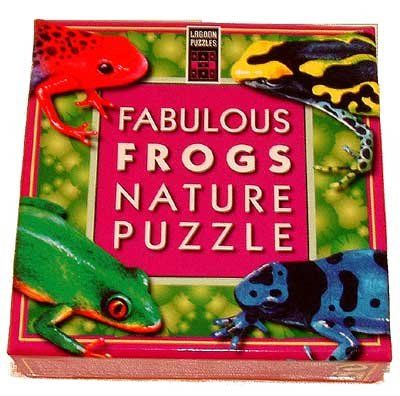 |
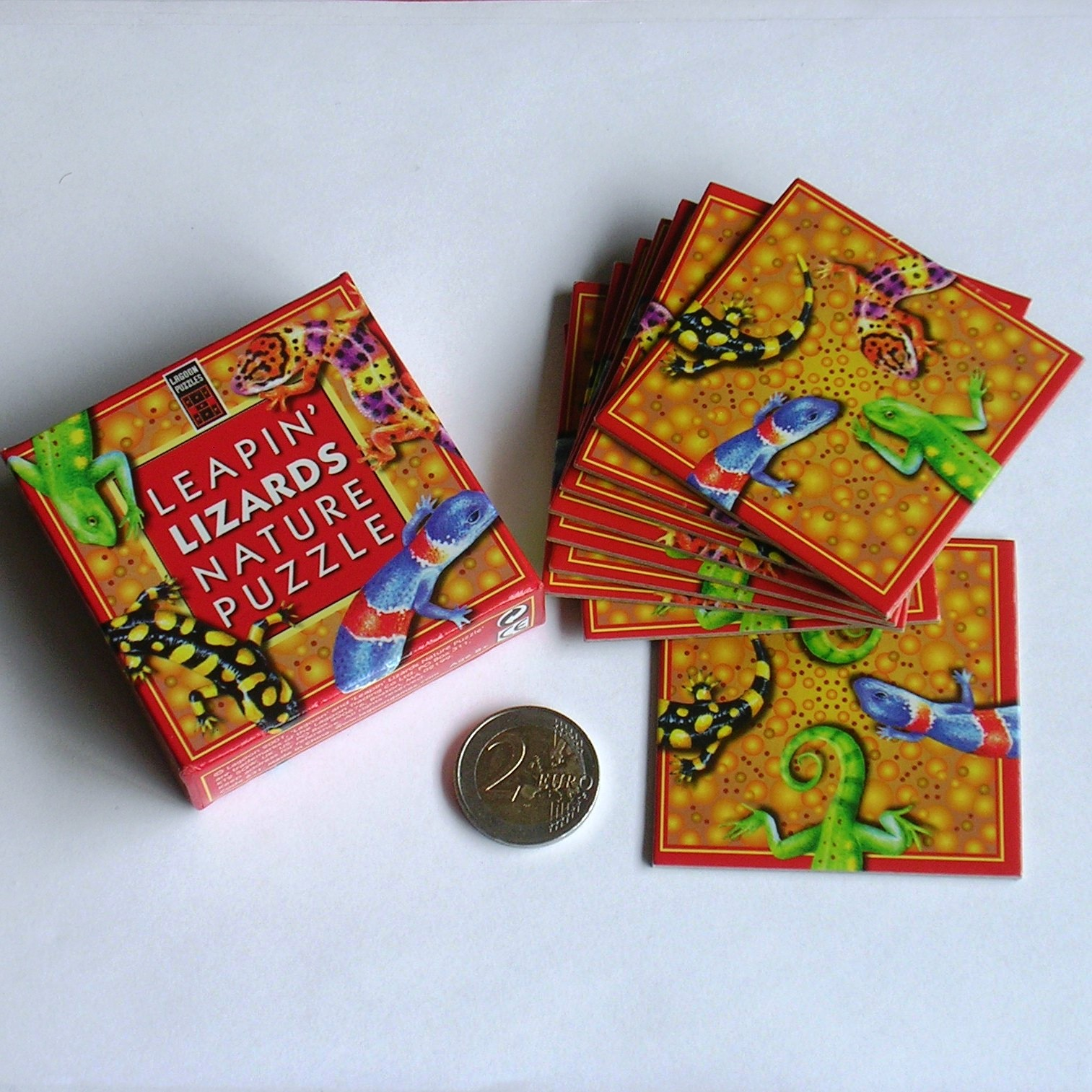 |
The goal of these puzzles is to arrange the nine tiles into a 3-by-3 grid such that all edges "match". This is essentially a directed graph assembly problem, and while there are a few tricks you can use to limit the combinatorial search required to find the solution, I couldn't solve the puzzle despite spending more hours trying than I care to admit.
So, I did what any good geek would do an wrote program to solve it. I chose to write the solver in C++ both for speed (potentially testing millions of edge combinations in a CPU-bound loop) and so I could play around with C++20's range algorithms and the mdarray type proposed for C++26, which have application to my day job. The program can solve both puzzles in about ~0.1sec with the -O2 flag.
-
The output of the solver routine is two 3x3 arrays: one specifying the position of each input tile in final arrangement, and another specifying the number of quarter-turns in the clockwise direction needed to orient each tile.
-
The solution process consists of two main steps. First, an outer loop generates a sequence of possible tile layouts using
std::next_permutation. Then, a series of nine inner loops perfom a brute force search of possible tile orientations for a given layout, exiting when either a solution is found or the layout is determined to be inconsistent. -
During the orientation search, tiles in the layout are "rotated" in place by applying
std::rotateto a tile's edge list (effectively a four-byte circular shift). The rotation count array keeps track of how many times a tile has been rotated and also serves as the loop control variable. This minimizes working memory used during these hot loops (9 4-byteTileobjects and 9uint8_tcounters). It also ensures we can use the same edge checking function at each stage of the search, which results in a very clear and elegant implementation. -
The edge check function itself simply verifies that a tile's left and top edges match its neighbors. It is templated on the (i,j) indices locating a given tile in the layout so that appropriate checks can be deleted via
if constexprif the tile doesn't have, e.g. a top neighbor. The appropritecheck<i,j>function is called after each tile is rotated, and the puzzle is solved whencheck<i,j>(t)returns true for all 9 tile positions.
g++ --std=c++20 -DNDEBUG -O2 puzz.cpp -o puzz
./puzz frogs.txt
./puzz lizards.txt