context: uMatrix is installed on Chrome, my default browser, in a Windows 10 environment.
Scenario: I've received an email about something I'm interested in:
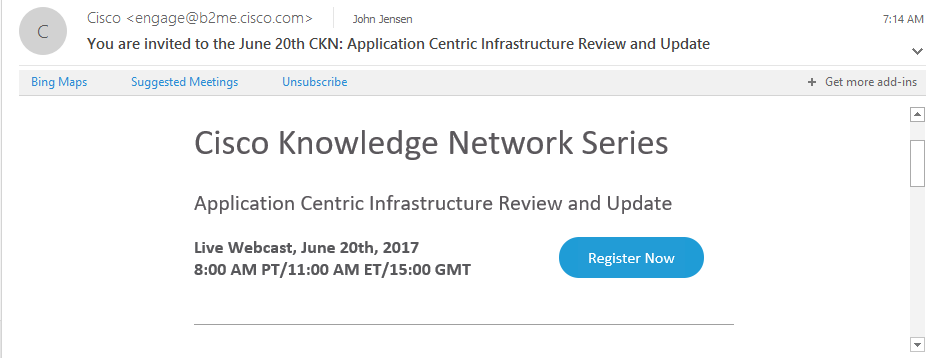
and click on the registration link
/* for repro purposes: http://app.b2me.cisco.com/e/er?s=177775138&lid=7625&elqTrackId=bfddee97e593496d88c4cf4eee6b37d9&elq=852340228edb476eb18cc91b597abe9a&elqaid=6288&elqat=1 */
and I get this:
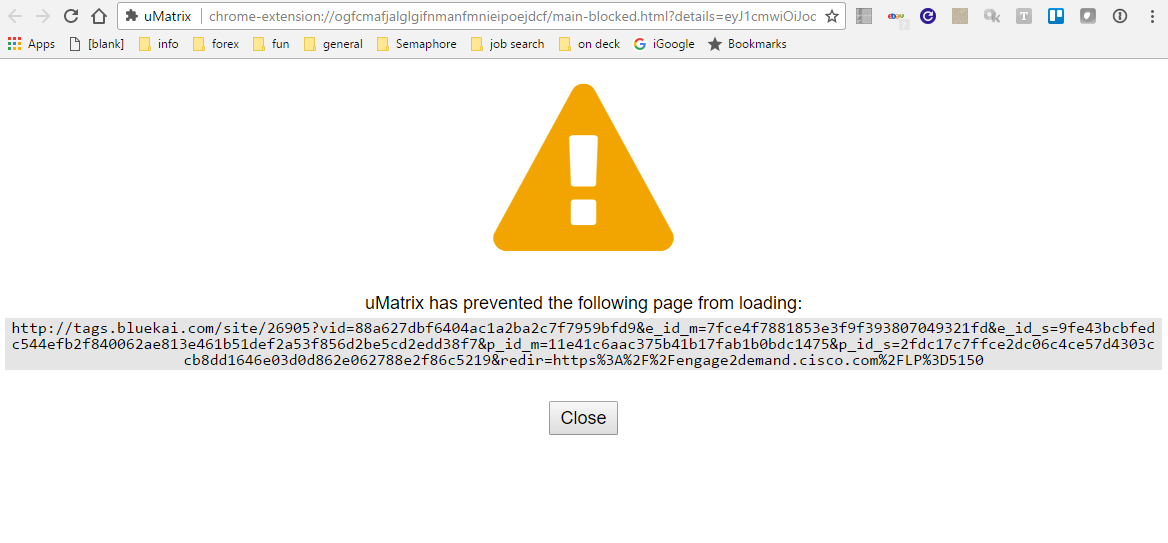
Great, uMatrix is doing its job! The only thing is, I actually desire to register for this webinar. When I go to the uMatrix extension to allow it to go, I get this:
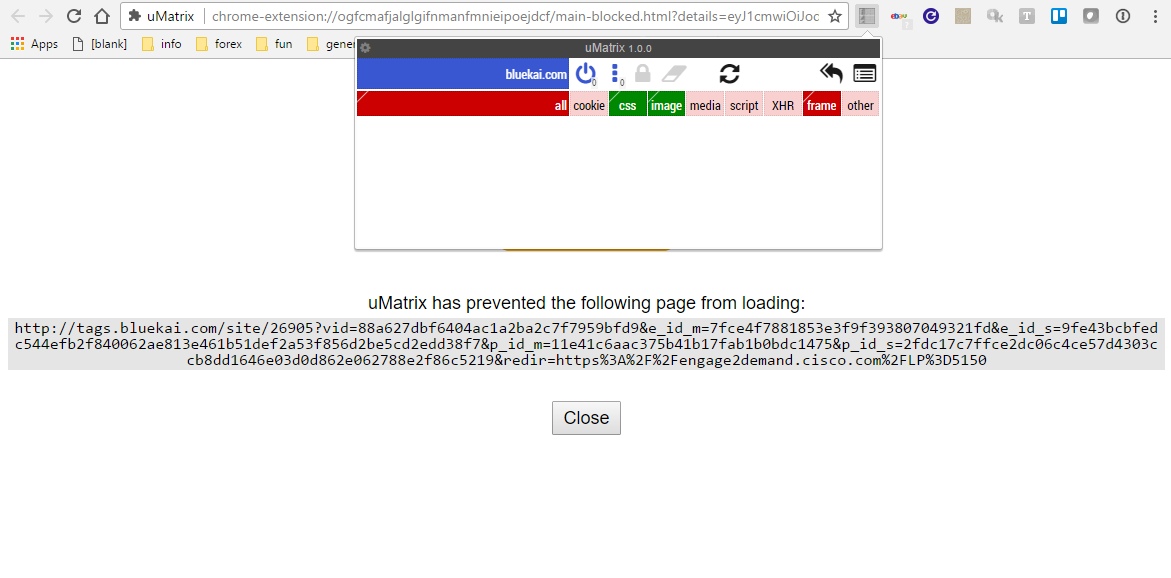
The only option I have here is to whitelist bluekai.com, which I do not desire to do.
What I desire is a one-http-request* contextual exception to blocking in this context. For sanity's sake, I'm ok if it lasts the duration of the browser session, but typically email tracking links are a one-time visit and aren't required for the rest of the website to work. Furthermore, when I have tried allowing the tracking domain through, it doesn't show up on the destination site, preventing me from turning those perms off. So I would have to visit bluekai.com directly in order to manage its permissions, and that seems klunky.
In practice, I'd prefer that if I clicked on the link, got the "uMatrix has blocked.../close/allow once," clicked "allow once," and it continued to the destination site; then, visited original email link again that it would block it again and give me the same option to bypass the block once. In other words, whenever that 'close' button appears, put another button right next to it that says "allow once."
In the past I've worked around it by copying the original link into another browser that doesn't have uMatrix installed (in my case, Firefox).
thanks
rogue-phoneix
*I would be very surprised if there was more than one HTTP/HTTPS request to the email tracking domain. Typically it's going to upload data about the marketing campaign and download the destination link. Full disclosure: I haven't actually run the traces to verify that. Also, if it does make a 2nd request to the tracking site, I'm fine with it blocking/being notified/clicking "allow once" again.

context: uMatrix is installed on Chrome, my default browser, in a Windows 10 environment.
Scenario: I've received an email about something I'm interested in:

and click on the registration link
/* for repro purposes: http://app.b2me.cisco.com/e/er?s=177775138&lid=7625&elqTrackId=bfddee97e593496d88c4cf4eee6b37d9&elq=852340228edb476eb18cc91b597abe9a&elqaid=6288&elqat=1 */
and I get this:

Great, uMatrix is doing its job! The only thing is, I actually desire to register for this webinar. When I go to the uMatrix extension to allow it to go, I get this:
The only option I have here is to whitelist bluekai.com, which I do not desire to do.
What I desire is a one-http-request* contextual exception to blocking in this context. For sanity's sake, I'm ok if it lasts the duration of the browser session, but typically email tracking links are a one-time visit and aren't required for the rest of the website to work. Furthermore, when I have tried allowing the tracking domain through, it doesn't show up on the destination site, preventing me from turning those perms off. So I would have to visit bluekai.com directly in order to manage its permissions, and that seems klunky.
In practice, I'd prefer that if I clicked on the link, got the "uMatrix has blocked.../close/allow once," clicked "allow once," and it continued to the destination site; then, visited original email link again that it would block it again and give me the same option to bypass the block once. In other words, whenever that 'close' button appears, put another button right next to it that says "allow once."
In the past I've worked around it by copying the original link into another browser that doesn't have uMatrix installed (in my case, Firefox).
thanks
rogue-phoneix
*I would be very surprised if there was more than one HTTP/HTTPS request to the email tracking domain. Typically it's going to upload data about the marketing campaign and download the destination link. Full disclosure: I haven't actually run the traces to verify that. Also, if it does make a 2nd request to the tracking site, I'm fine with it blocking/being notified/clicking "allow once" again.